Ο σκοπός της διαδικασίας είναι η διασφάλιση της διαφάνειας και της ίσης μεταχείρισης στην επιλογή για χρηματοδότηση πράξεων που συμβάλλουν στην επίτευξη των ειδικών στόχων και των δεικτών εκροών και αποτελέσματος, σύμφωνα με τη μεθοδολογία αξιολόγησης και τα κριτήρια επιλογής πράξεων που έχουν εγκριθεί από την Επιτροπή Παρακολούθησης των Προγραμμάτων ΤΑΜΕΥ.
2. Θεσμικό Πλαίσιο
Κανονισμός (ΕΕ) 2021/1060:
-άρθρο 40, παρ 2, περ. α),
-άρθρο 49,
-άρθρο 63,
-άρθρο 72, παρ. 1, περ. α) και
-άρθρο 73.
Νόμος 4914/2022, όπως ισχύει:-
-άρθρο 7,
-άρθρο 8, παρ. 1,
-άρθρο 34 και
-άρθρο 36.
Νόμος 4375/2016 όπως ισχύει:
-άρθρο 76, 78, και
Νόμος 4825/2021
-άρθρο 44
Υπ’ αρ. 199769/2024 κοινή απόφαση των υπουργών Ανάπτυξης και Επενδύσεων και Μετανάστευσης και Ασύλου “Σύστημα Διαχείρισης και Ελέγχου των Προγραμμάτων των Ταμείων Μετανάστευσης και Εσωτερικών Υποθέσεων (ΤΑΜΕΥ) (Ταμείο Ασύλου, Μετανάστευσης και Ένταξης -ΤΑΜΕ, Ταμείο Εσωτερικής Ασφαλείας-ΤΕΑ και Μέσο για τη Χρηματοδοτική Στήριξη της Διαχείρισης των Συνόρων και την Πολιτική Θεωρήσεων-ΜΔΣΘ) για την προγραμματική περίοδο 2021-2027” (Β’ 4817), Άρθρο 5, 6 και 10
3. Πεδίο Εφαρμογής
Η παρούσα διαδικασία εφαρμόζεται για την αξιολόγηση των προτάσεων (αιτήσεων χρηματοδότησης) και την επιλογή και ένταξη των προς συγχρηματοδότηση πράξεων.
4. Περιγραφή Διαδικασίας
4.1 Υποβολή προτάσεων
Οι προτάσεις [ΤΔΠ(έντυπο Ε.Ι.1 2) με συνημμένα όλα τα απαραίτητα έγγραφα, όπως αυτά έχουν προσδιοριστεί στην Πρόσκληση] υποβάλλονται αποκλειστικά ηλεκτρονικά μέσω του ΟΠΣ από τους δυνητικούς δικαιούχους, εντός της προθεσμίας που προσδιορίζεται από τη ΔΑ/ΕΦ στην Πρόσκληση. Κατά την κρίση της ΔΑ/ΕΦ και για διευκόλυνση του έργου της, δύναται να ζητηθεί, κατά τη διαδικασία αξιολόγησης, η υποβολή συγκεκριμένων εγγράφων και σε έντυπη μορφή. Επιπλέον, όσα συνημμένα της πρότασης δεν είναι τεχνικά εφικτό να υποβληθούν/ επισυναφθούν ηλεκτρονικά μέσω του ΟΠΣ, αποστέλλονται στη ΔΑ/ΕΦ μόνο σε έντυπη μορφή εντός προθεσμίας που προσδιορίζεται από τη ΔΑ/ΕΦ στην Πρόσκληση.
Για τον σκοπό αυτό, απαιτείται να υφίσταται ατομικός λογαριασμός χρήστη (αναγνωριστικό και συνθηματικό) για την πρόσβαση στο ΟΠΣ, αφενός τα στελέχη του Δικαιούχου για συμπλήρωση δελτίων και αφετέρου ο νόμιμος εκπρόσωπος του Δικαιούχου για υποβολή προτάσεων, ή άλλος χρήστης του συστήματος που έχει εξουσιοδοτηθεί από τον νόμιμο εκπρόσωπο του Δικαιούχου για την υποβολή. Αποκλειστικά αρμόδιος για την επικαιροποίηση των στοιχείων στο ΟΠΣ είναι ο εκάστοτε φορέας.
Ο δικαιούχος μετά την επιτυχή υποβολή της πρότασης ενημερώνεται σχετικά μέσω του ΟΠΣ.
Όλες οι προτάσεις [ΤΔΠ με συνημμένα όλα τα απαραίτητα έγγραφα] αρχειοθετούνται/ τηρούνται στο ΟΠΣ.
4.2 Αξιολόγηση προτάσεων
Η αξιολόγηση των προτάσεων ολοκληρώνεται σε δύο διαδοχικά και διακριτά στάδια και πραγματοποιείται με βάση τη μεθοδολογία αξιολόγησης και τα κριτήρια επιλογής πράξεων που εγκρίθηκαν από την Επιτροπή Παρακολούθησης των Προγραμμάτων ΤΑΜΕΥ και περιλαμβάνονται στην εκάστοτε Πρόσκληση:
α) Στάδιο Α΄: Έλεγχος πληρότητας & επιλεξιμότητας πρότασης και
β) Στάδιο Β΄: Αξιολόγηση των προτάσεων ανά κριτήριο/ ομάδα κριτηρίων
Η αξιολόγηση δύναται να είναι άμεση ή συγκριτική σύμφωνα με τα αναφερόμενα στις «Οδηγίες για την αξιολόγηση των προτάσεων» (Ο.Ι.1_1).
Η αξιολόγηση των προτάσεων πραγματοποιείται από το προσωπικό της ΔΑ/ΕΦ και, εφόσον προκύπτει ανάγκη, υπάρχει δυνατότητα αξιοποίησης εξωτερικών εμπειρογνωμόνων ή στελεχών ανεξάρτητων αρχών ή άλλων φορέων ή συμβούλων που συμμετέχουν σε ομάδα έργου οικονομικού φορέα, ο οποίος έχει συνάψει δημόσια σύμβαση τεχνικής υποστήριξης με την ΔΑ/ΕΦ, μετά από σχετική απόφαση της ΔΑ.
Για το προσωπικό των ΔΑ, τους εξωτερικούς εμπειρογνώμονες, τα στελέχη ανεξάρτητων αρχών ή άλλων φορέων ή τους συμβούλους που συμμετέχουν σε ομάδα έργου οικονομικού φορέα, ο οποίος έχει συνάψει δημόσια σύμβαση τεχνικής υποστήριξης με την ΔΑ/ΕΦ, που εμπλέκονται σε δραστηριότητες που αφορούν σε αξιολόγηση πράξεων, διασφαλίζεται ότι:
διαθέτουν την απαιτούμενη ανεξαρτησία, μέσω της υποβολής δήλωσης μη σύγκρουσης συμφερόντων. Το στέλεχος/ στελέχη της ΔΑ/ΕΦ ή οι εξωτερικοί αξιολογητές ή τα στελέχη ανεξάρτητων αρχών ή άλλων φορέων ή οι σύμβουλοι που συμμετέχουν σε ομάδα έργου οικονομικού φορέα, ο οποίος έχει συνάψει δημόσια σύμβαση τεχνικής υποστήριξης με την ΔΑ/ΕΦ, πριν διενεργήσουν την αξιολόγηση μιας υποβληθείσας πρότασης, οφείλουν να επιβεβαιώσουν σε σχετικό πεδίο στο ΟΠΣ ότι δεν υφίσταται σύγκρουση συμφερόντων κατά την άσκηση της αρμοδιότητας της αξιολόγησης της εν λόγω πρότασης.
διαθέτουν την απαιτούμενη εμπειρία και τεχνογνωσία, όπως αυτά αποτυπώνονται στις Περιγραφές Θέσεων Εργασίας (ΠΘΕ). Στην περίπτωση εξωτερικών εμπειρογνωμόνων ή συμβούλων που συμμετέχουν σε ομάδα έργου οικονομικού φορέα, ο οποίος έχει συνάψει δημόσια σύμβαση τεχνικής υποστήριξης με την ΔΑ/ΕΦ, η απαίτηση αυτή καλύπτεται μέσω της διαδικασίας επιλογής τους, σύμφωνα με τις ανάγκες της εκάστοτε αξιολόγησης.
Κατά τη διενέργεια της αξιολόγησης (άμεση ή συγκριτική), η ΔΑ/ΕΦ δύναται να ζητήσει σε οποιοδήποτε στάδιο της αξιολόγησης την υποβολή συμπληρωματικών στοιχείων και διευκρινήσεων.
Συμπληρωματικά στοιχεία είναι αυτά τα οποία, ενώ προβλέπονταν στην πρόσκληση, δεν υποβλήθηκαν λόγω παράλειψης του δυνητικού δικαιούχου και έχουν εκδοθεί πριν την υποβολή της πρότασης. Οι διευκρινίσεις είναι στοιχεία που ζητούνται από τον/τους αξιολογητή/τες με σκοπό την αποσαφήνιση των υποβληθέντων στοιχείων και την καλύτερη κατανόηση του περιεχομένου της πρότασης.
Ειδικά για την υποβολή συμπληρωματικών στοιχείων, η ΔΑ/ΕΦ ενημερώνει τον δυνητικό δικαιούχο, με τη χρήση του Εντύπου Ε.Ι.2_1 Επιστολή για υποβολή συμπληρωματικών στοιχείων για την εξέταση της πρότασης. Ο δυνητικός δικαιούχος θα πρέπει να αποστείλει τα αιτηθέντα συμπληρωματικά στοιχεία εντός συγκεκριμένης προθεσμίας που τίθεται από τη ΔΑ/ΕΦ. Εφόσον τα συμπληρωματικά στοιχεία δεν υποβληθούν εμπρόθεσμα η πρόταση απορρίπτεται. Στην περίπτωση άμεσης αξιολόγησης, η πρόταση αξιολογείται με βάση την ημερομηνία παραλαβής των συμπληρωματικών στοιχείων.
Διευκρινίζεται ότι, το αίτημα για υποβολή διευκρινίσεων δεν επηρεάζει τη σειρά με την οποία αξιολογείται η πρόταση (στην περίπτωση της άμεσης αξιολόγησης). Επιπλέον η μη υποβολή των αιτούμενων διευκρινίσεων από την πλευρά του δικαιούχου δεν αποτελεί αποκλειστικό λόγο απόρριψης της πρότασης αλλά, ανάλογα με τη φύση της διευκρίνισης, δύναται να λαμβάνεται υπόψη κατά την αξιολόγηση της πρότασης (π.χ. στη βαθμολόγηση της 1ης ομάδας κριτηρίων που αφορούν την πληρότητα και σαφήνεια του περιεχομένου της πρότασης).
Η επικοινωνία με το δικαιούχο για τα παραπάνω θέματα (συμπληρωματικά στοιχεία, διευκρινίσεις) πραγματοποιείται μέσω του ΟΠΣ.
Τα αποτελέσματα του κάθε σταδίου της αξιολόγησης και η σχετική τεκμηρίωση των αποτελεσμάτων του ελέγχου πληρότητας & επιλεξιμότητας και της αξιολόγησης της πρότασης ανά κριτήριο/ ομάδα κριτηρίων καταγράφονται αναλυτικά σε Λίστα ελέγχου πληρότητας & επιλεξιμότητας της πρότασης και στο Φύλλο Αξιολόγησης Πράξης, σύμφωνα με τα εγκεκριμένα κριτήρια επιλογής πράξεων όπως αυτά διαμορφώνονται ανά πρόσκληση/δράση και έχουν εγκριθεί από την Επιτροπή Παρακολούθησης των Προγραμμάτων ΤΑΜΕΥ.
Κατά την επιλογή και έγκριση των πράξεων λαμβάνεται υπόψη η τήρηση των εθνικών και κοινοτικών κανόνων ως προς τις δημόσιες συμβάσεις έργων, μελετών, προμηθειών και υπηρεσιών και εθνικών κανόνων για την απασχόληση προσωπικού, την προσβασιμότητα στα άτομα με αναπηρία και στα εμποδιζόμενα άτομα. Επίσης, επιβεβαιώνεται η αποτελεσματική εφαρμογή και υλοποίηση του Χάρτη των Θεμελιωδών Δικαιωμάτων της Ευρωπαϊκής Ένωσης, σύμφωνα και με τα αναφερόμενα στις «Οδηγίες για την αξιολόγηση και την επιλογή πράξεων» (Ο.Ι.1_1). Στο πλαίσιο αυτό, δίδεται ιδιαίτερη προσοχή στα σχετικά δικαιώματα/ αρχές του Χάρτη όπως προστασία της ανθρώπινης αξιοπρέπειας και δικαίωμα στη ζωή, δικαίωμα ασύλου, προστασία των δεδομένων προσωπικού χαρακτήρα, ισότητα απέναντι στον νόμο, απαγόρευση των διακρίσεων, ισότητα ανδρών και γυναικών, ένταξη ατόμων με αναπηρίες.
Η αξιολόγηση των προτάσεων, στην περίπτωση της άμεσης αξιολόγησης, θα πρέπει να ολοκληρώνεται κατά κανόνα εντός σαράντα (40) ημερών από την ημερομηνία υποβολής στη ΔΑ ή ΕΦ της σχετικής πρότασης. Στην περίπτωση συγκριτικής αξιολόγησης, η αξιολόγηση των προτάσεων θα πρέπει να ολοκληρώνεται στις ενενήντα (90) μέρες μετά την ημερομηνία λήξης της προθεσμίας υποβολής των προτάσεων. Οι προθεσμίες αυτές είναι δυνατόν να προσαρμόζονται και να προσαυξάνονται σε ειδικές περιπτώσεις όπως σύνθετων προτάσεων ή όταν υπάρχει μεγάλος αριθμός προτάσεων που υποβάλλονται στο ίδιο χρονικό διάστημα ή καθυστερήσεις που δεν οφείλονται στη ΔΑ/ΕΦ. Επίσης, το χρονικό διάστημα από την ενημέρωση του δικαιούχου μέχρι την αποστολή από αυτόν των συμπληρωματικών στοιχείων δεν προσμετράται στην προθεσμία που έχει η ΔΑ/ΕΦ στη διάθεσή της για να ολοκληρώσει την αξιολόγηση.
Ειδικότερα για τα επιμέρους στάδια αξιολόγησης επισημαίνονται τα ακόλουθα.
Κατά την ηλεκτρονική υποβολή της πρότασης, γίνεται από το σύστημα (ΟΠΣ) ένας αρχικός έλεγχος συμβατότητας ένας αρχικός έλεγχος συμβατότητας και επιλεξιμότητας της πρότασης, με τον οποίο ελέγχονται στοιχεία όπως η ημερομηνία υποβολής της πρότασης, η επαρκής συμπλήρωση του Τεχνικού Δελτίου Πράξης κλπ, προκειμένου να επιτραπεί ή όχι η υποβολή της πρότασης.
Στη συνέχεια εξετάζεται η πληρότητα και επιλεξιμότητα της πρότασης ως προς τα κριτήρια του Σταδίου Α’ βάσει της Λίστας ελέγχου πληρότητας & επιλεξιμότητας της πρότασης, που συμπληρώνεται στο ΟΠΣ από την ΔΑ/ΕΦ.
Ανάλογα με το αποτέλεσμα της εξέτασης του Σταδίου Α’, η ΔΑ/ΕΦ είτε προχωρά στην περαιτέρω αξιολόγηση της πρότασης (Στάδιο Β’), είτε η πρόταση απορρίπτεται. Στην περίπτωση απόρριψης, η ΔΑ/ΕΦ συντάσσει το έντυπο Ε.Ι.2_3 Απόφαση Απόρριψης Πρότασης, στο οποίο τεκμηριώνονται πλήρως οι λόγοι της απόρριψης. Ο Προϊστάμενος της ΔΑ/ΕΦ εισηγείται την Απόφαση Απόρριψης Πρότασης και ο Γενικός Γραμματέας που εποπτεύει την ΔΑ ή το αρμόδιο όργανο που εποπτεύει τον ΕΦ την εκδίδει. Ο δικαιούχος ενημερώνεται για την Απόφαση Απόρριψης Πρότασης εγγράφως ή ηλεκτρονικά ή με κάθε οποιοδήποτε άλλο μέσο το οποίο καθιστά εφικτό τον ακριβή προσδιορισμό της ημέρας και ώρας κοινοποίησής της (ηλεκτρονικό ταχυδρομείο, ΟΠΣ, ή άλλο κατάλληλο μέσο). Οι δυνητικοί δικαιούχοι δύνανται να υποβάλουν ένσταση σύμφωνα με την παράγραφο 4.5 της παρούσας διαδικασίας.
β) Στάδιο Β΄: Αξιολόγηση των προτάσεων ανά κριτήριο/ ομάδα κριτηρίων
Η αξιολόγηση των προτάσεων σε αυτό το στάδιο από την ΔΑ/ΕΦ περιλαμβάνει μόνο τις προτάσεις που έχουν κριθεί θετικά ως προς την πληρότητα και επιλεξιμότητά τους (Στάδιο Α’), με βάση τη μεθοδολογία αξιολόγησης και τα κριτήρια επιλογής δράσεων. Για την αξιολόγηση, χρησιμοποιείται το Φύλλο Αξιολόγησης δράσης, που συμπληρώνεται στο ΟΠΣ από την ΔΑ/ΕΦ.
Επιλέγονται από τη ΔΑ/ΕΦ για χρηματοδότηση πράξεις έως το ύψος της συγχρηματοδοτούμενης δημόσιας δαπάνης της Πρόσκλησης. Η ΔΑ/ΕΦ, στο πλαίσιο της ορθής διαχείρισης του Προγράμματος, εκτιμώντας κατά περίπτωση τα δεδομένα υλοποίησης του Προγράμματος, την εξειδίκευση του Προγράμματος, καθώς και τη φύση των δράσεων, δύναται να εντάξει πράξεις έως το προκαθορισμένο ποσοστό, το οποίο έχει καθοριστεί στην Πρόσκληση.
Στην περίπτωση άμεσης αξιολόγησης κάθε πρόταση αξιολογείται αυτοτελώς, με σειρά προτεραιότητας η οποία καθορίζεται από την ημερομηνία υποβολής της στην ΔΑ/ΕΦ, ως προς τη συμμόρφωσή της ανά κριτήριο/ ομάδα κριτηρίων αξιολόγησης.
Στην περίπτωση συγκριτικής αξιολόγησης, η αξιολόγηση των προτάσεων από τη ΔA/ ΕΦ αρχίζει μετά τη λήξη της προθεσμίας υποβολής προτάσεων (όπως ορίζεται στην εκάστοτε πρόσκληση) και οι προτάσεις αξιολογούνται προς τη συμμόρφωσή τους ανά κριτήριο/ ομάδα κριτηρίων επιλογής πράξεων και κατατάσσονται σε φθίνουσα σειρά με βάση τη βαθμολογία τους. Στη συνέχεια, παράγεται από το ΟΠΣ Πίνακας κατάταξης των προτάσεων που αξιολογήθηκαν [έντυπο Ε.Ι.2_5 Πίνακας Κατάταξης Αξιολογημένων Προτάσεων], ο οποίος εγκρίνεται από τον προϊστάμενο της ΔΑ/ΕΦ. Ανάλογα με το είδος των προτάσεων δίνεται η δυνατότητα στη ΔΑ/ΕΦ να εκτυπώσει τον Πίνακα Κατάταξης Αξιολογημένων Προτάσεων ανά κατηγορία περιφέρειας. Ο Πίνακας αυτός είναι η βάση για την έκδοση των Αποφάσεων Ένταξης και των Αποφάσεων Απόρριψης.
Μετά την ολοκλήρωση της αξιολόγησης (άμεση ή συγκριτική) και εφόσον:
Η αξιολόγηση αποβεί θετική, η ΔΑ/ΕΦ οριστικοποιεί στο ΟΠΣ τα εγκεκριμένα στοιχεία της κάθε πράξης και εκδίδονται κατά σειρά τα εξής έγγραφα:
η Εισήγηση Ένταξης Πράξης (έντυπο Ε.Ι.2_2: Εισήγηση Ένταξης/ Απόρριψης Πράξης)
η Απόφαση Ένταξης Πράξης (έντυπο Ε.Ι.2_4: Απόφαση Ένταξης, παράγεται μέσω ΟΠΣ).
το οριστικοποιημένο Τεχνικό Δελτίο Πράξης (έντυπο Ε.Ι.1_2: Τεχνικό Δελτίο Πράξης, παράγεται μέσω ΟΠΣ)
Ο Προϊστάμενος της ΔΑ/ΕΦ εισηγείται την Απόφαση Ένταξης Πρότασης και ο Γενικός Γραμματέας που εποπτεύει την ΔΑ ή το αρμόδιο όργανο που εποπτεύει τον ΕΦ την εκδίδει. Ο δικαιούχος ενημερώνεται για την έκδοση της απόφασης ένταξης εγγράφως ή ηλεκτρονικά ή με οποιοδήποτε άλλο μέσο το οποίο καθιστά εφικτό τον ακριβή προσδιορισμό της ημέρας και ώρας κοινοποίησής της (ηλεκτρονικό ταχυδρομείο, ΟΠΣ, ή άλλο κατάλληλο μέσο).
Η απόφαση ένταξης αποτελεί αυτοδίκαιη πρόταση εγγραφής στο Πρόγραμμα Δημοσίων Επενδύσεων και ο Φορέας Χρηματοδότησης ενημερώνεται σχετικά σύμφωνα με τα οριζόμενα στη Διαδικασία ΔΙV_1: Χρηματοδότηση Πράξεων και πληρωμές. Η εγγραφή της πράξης στο Πρόγραμμα Δημοσίων Επενδύσεων ολοκληρώνεται με την έκδοση σχετικής απόφασης από τον Υπουργό Ανάπτυξης και Επενδύσεων.
Η αξιολόγηση αποβεί αρνητική, ή η συνολική συγχρηματοδοτούμενη δημόσια δαπάνη της πρόσκλησης δεν επαρκεί για τη χρηματοδότηση της προτεινόμενης πράξης, η πρόταση απορρίπτεται και εκδίδονται κατά σειρά τα ακόλουθα έγγραφα:
η Εισήγηση απόρριψης πράξης [έντυπο Ε.Ι.2_2 Εισήγηση Ένταξης/ Απόρριψης Πράξης].
η Απόφαση Απόρριψης Πρότασης [έντυπο Ε.Ι.2_3: Απόφαση Απόρριψης Πρότασης] η οποία παράγεται από το ΟΠΣ και στην οποία τεκμηριώνονται πλήρως οι λόγοι της απόρριψης.
Ο Προϊστάμενος της ΔΑ/ΕΦ εισηγείται την Απόφαση Απόρριψης Πρότασης και ο Γενικός Γραμματέας που εποπτεύει την ΔΑ ή το αρμόδιο όργανο που εποπτεύει τον ΕΦ την εκδίδει. Ο δικαιούχος ενημερώνεται εγγράφως ή ηλεκτρονικά ή με οποιοδήποτε άλλο μέσο το οποίο καθιστά εφικτό τον ακριβή προσδιορισμό της ημέρας και ώρας κοινοποίησής της (ηλεκτρονικό ταχυδρομείο, ΟΠΣ, ή άλλο κατάλληλο μέσο) για την Απόφαση Απόρριψης Πρότασης. Οι δυνητικοί δικαιούχοι δύνανται να υποβάλουν ένσταση επί αυτής, σύμφωνα με την παράγραφο 4.5 της παρούσας διαδικασίας.
Επισημαίνεται ότι η αξιολόγηση των προτάσεων περιλαμβάνει και όλα τα Σχέδια Τεχνικών Παραρτημάτων Υλοποίησης Έργου με ίδια μέσα (Ε Ι_1.2) που υποβάλλονται συνημμένα στο ΤΔΠ και διενεργείται στη βάση των κριτηρίων επιλογής.
Για τις δημόσιες συμβάσεις που κατά τη φάση αξιολόγησης της αίτησης χρηματοδότησης έχει ήδη δημοσιευτεί η σχετική προκήρυξη ή/ και έχει ήδη συναφθεί η σύμβαση, η εξέταση των σταδίων δημοσίων συμβάσεων διενεργείται κατά την αξιολόγηση της πρότασης με την επισύναψη από τον δυνητικό δικαιούχο των σχετικών λιστών ελέγχου.
Αν στο πλαίσιο της εξέτασης της διαδικασίας διακήρυξης (βλ. ΔΙΙ_2) και της διαδικασίας ανάληψης νομικής δέσμευσης (βλ. ΔΙΙ_3) εντοπιστεί παρατυπία, η ΔΑ προτείνει κατά περίπτωση διορθωτικά μέτρα ή την επιβολή δημοσιονομικής διόρθωσης στο Υποέργο, λαμβάνοντας υπόψη την Απόφαση C(2019) 3452 final/14.5.2019 (κατευθυντήριες γραμμές της ΕΕ για δημοσιονομικές διορθώσεις σε δημόσιες συμβάσεις) και την ΚΥΑ Δημοσιονομικών Διορθώσεων. Η σχετική περικοπή απομειώνει την επιλέξιμη δημόσια δαπάνη που περιλαμβάνεται στην απόφαση ένταξης. Ο δυνητικός δικαιούχος δύναται να υποβάλει ένσταση σύμφωνα με την παράγραφο 4.5 της παρούσας διαδικασίας. Εάν στο πλαίσιο της εξέτασης, εντοπιστούν παρατυπίες που καθιστούν μη αποδεκτή την εν λόγω νομική δέσμευση, η πρόταση δύναται να απορριφθεί.
Για τις δημόσιες συμβάσεις συγχρηματοδοτούμενων πράξεων που υλοποιούνται κατά φάσεις στις περιόδους προγραμματισμού 2014-2020 και 2021-2027 (phased), η ΔΑ δύνανται να μην επαναλαμβάνει τον έλεγχο που διενεργήθηκε κατά την περίοδο προγραμματισμού που προηγήθηκε. Η εγκριτική γνώμη της/του αρμόδιας ΔΑ της αρχικής προγραμματικής περιόδου, όπως αυτή είχε αποτυπωθεί, καταχωρίζεται στο ΟΠΣ. Σε περίπτωση που είχαν τεθεί και ειδικές προϋποθέσεις έγκρισης, εξετάζεται από την ΔΑ κατά την ένταξη της πράξης στη νέα προγραμματική περίοδο, εάν αυτές έχουν πληρωθεί.
Η ΔΑ/ΕΦ, κατά την ένταξη των πράξεων, δύναται να ορίζει τη μέγιστη προθεσμία ενεργοποίησης του/των υποέργου/ων, τα οποία θεωρούνται κρίσιμα για την υλοποίηση της πράξης λαμβάνοντας υπόψη στοιχεία όπως:
το χρονοδιάγραμμα υλοποίησης της πράξης σε συνδυασμό με τη φύση της,
τον τρόπο υλοποίησής της,
τα αναμενόμενα αποτελέσματα (δείκτες της πράξης), καθώς και
τα γενικότερα στοιχεία υλοποίησης του εκάστοτε Προγράμματος.
4.3 Έκδοση Απόφασης Ένταξης
Η Απόφαση Ένταξης συνοδεύεται από συνημμένο παράρτημα με τους Όρους Χρηματοδότησης Πράξης/Υποχρεώσεις Δικαιούχου για τις πράξεις που επελέγησαν για χρηματοδότηση από το/α Πρόγραμμα/τα με βάση τα αποτελέσματα της αξιολόγησης των προτάσεών τους.
Σε περίπτωση που Δικαιούχος είναι Διεθνής Οργανισμός στην απόφαση ένταξης δύναται να παρατίθεται το ειδικότερο θεσμικό πλαίσιο που υπαγορεύεται από και είναι σύμφωνο με τη νομική φύση, το ειδικό καθεστώς, τους εσωτερικούς κανονισμούς, οδηγίες, πολιτικές και διαδικασίες του Δικαιούχου Διεθνούς Οργανισμού.
4.4 Δημοσιοποίηση Απόφασης Ένταξης
Οι αποφάσεις ένταξης δημοσιεύονται στην οικεία ιστοσελίδα της ΔΑ/ΕΦ, αντίστοιχα και στο Πρόγραμμα Διαύγεια. Αποφάσεις ένταξης που εκδίδονται από τους ΕΦ αναρτώνται και στη σελίδα της ΔΑ. Ο Προϊστάμενος του ΕΦ ενημερώνει τη ΔΑ αμελλητί για την έκδοση απόφασης ένταξης αρμοδιότητας της υπηρεσίας του έτσι ώστε να ενημερώνεται η σελίδα της ΔΑ. Μετά την έκδοση της Απόφασης Ένταξης ενημερώνονται τα πεδία του καταλόγου πράξεων [σύμφωνα με το άρθρο 49 του Καν. (ΕE) 2021/1060 και το άρθρο 8 του ν. 4914/2022].
4.5 Υποβολή και εξέταση ενστάσεων
Οι δυνητικοί δικαιούχοι δύνανται να υποβάλουν ένσταση στην αρμόδια ΔΑ/ΕΦ σχετικά με τα αποτελέσματα της αξιολόγησης σύμφωνα με τα οριζόμενα στο άρθρο 6 της υπ’ αρ. 199769/2024 ΚΥΑ (Β’ 4817). Κατά τη διαδικασία αξιολόγησης προτάσεων για την ένταξη των πράξεων στα Προγράμματα, οι δυνητικοί δικαιούχοι μπορούν να υποβάλουν ενστάσεις σε κάθε στάδιο αξιολόγησης, εντός αποκλειστικής προθεσμίας επτά (7) εργάσιμων ημερών από την επομένη ημέρα της κοινοποίησης των αποτελεσμάτων της αξιολόγησης, ήτοι:
α) της Απόφασης Απόρριψης Πρότασης που εκδίδεται κατά το Στάδιο Α’ της αξιολόγησης
β) της Απόφασης Απόρριψης Πρότασης που εκδίδεται κατά το Στάδιο Β’ της αξιολόγησης
γ) της Απόφασης Ένταξης.
Η ένσταση θα πρέπει να υποβάλλεται εγγράφως ή ηλεκτρονικά ή με οποιοδήποτε άλλο μέσο το οποίο καθιστά εφικτό τον ακριβή προσδιορισμό της ημέρας και ώρας κατάθεσής της (ηλεκτρονικό ταχυδρομείο, ΟΠΣ ή άλλο κατάλληλο μέσο).
Η ένσταση αναφέρει απαραιτήτως την πράξη (Απόφαση Απόρριψης Πρότασης ή Απόφαση Ένταξης) κατά της οποίας στρέφεται και θα πρέπει να είναι αιτιολογημένη, δηλαδή να περιέχει τους ειδικότερους λόγους για τους οποίους η Απόφαση Απόρριψης Πρότασης ή η Απόφαση Ένταξης οφείλει κατά τη γνώμη του ενιστάμενου να αναμορφωθεί, είτε λόγω έλλειψης νομιμότητάς της είτε για λόγους ουσίας. Επίσης η ένσταση περιλαμβάνει όλα τα δικαιολογητικά και λοιπά υποστηρικτικά έγγραφα που τεκμηριώνουν το αίτημα και είναι ενυπόγραφη από τον νόμιμο εκπρόσωπο του δικαιούχου ή τον νομίμως εξουσιοδοτημένο από αυτό πρόσωπο ή τον νόμιμο εκπρόσωπο του κύριου δικαιούχου ή το νομίμως εξουσιοδοτημένο από αυτό πρόσωπο (στην περίπτωση πολλαπλών δικαιούχων).
Η ένσταση θα πρέπει να υποβάλλεται εγγράφως ή ηλεκτρονικά ή με οποιοδήποτε άλλο μέσο το οποίο καθιστά εφικτό τον ακριβή προσδιορισμό της ημέρας και ώρας κατάθεσής της (ηλεκτρονικό ταχυδρομείο, ΟΠΣ ή άλλο κατάλληλο μέσο).
Η ΔΑ/ΕΦ πρωτοκολλεί και εξετάζει όλες τις υποβαλλόμενες ενστάσεις. Αρμόδιο όργανο για την αποδοχή ή απόρριψη της ένστασης είναι το όργανο που έχει κάθε φορά εκδώσει την προσβαλλόμενη απόφαση, μετά από εισήγηση της αρμόδιας Διαχειριστικής Αρχής/Ενδιάμεσου Φορέα Διαχείρισης, ή της τυχόν Επιτροπής που έχει συσταθεί για το σκοπό αυτό ή που έχει σχετική αρμοδιότητα. Οι αποφάσεις επί των ενστάσεων εκδίδονται και κοινοποιούνται αμελλητί εντός προθεσμίας δεκαπέντε (15) εργασίμων ημερών από την καταληκτική ημερομηνία υποβολής της ένστασης στους δυνητικούς δικαιούχους εγγράφως ή ηλεκτρονικά ή με οποιοδήποτε άλλο μέσο το οποίο καθιστά τον ακριβή προσδιορισμό της ημέρας και ώρας κοινοποίησης της (ηλεκτρονικό ταχυδρομείο, ΟΠΣ ή άλλο κατάλληλο μέσο).
Οι ενστάσεις δύναται να εξετάζονται από επιτροπή αξιολόγησης ενστάσεων, η οποία συγκροτείται με απόφαση του προϊσταμένου της ΔΑ/του ΕΦ. Η εν λόγω απόφαση εκδίδεται το αργότερο εντός τριών (3) εργάσιμων ημερών από την καταληκτική ημερομηνία υποβολής της ένστασης.
Στη διαδικασία εξέτασης των ενστάσεων δεν μπορούν να συμμετέχουν στελέχη της ΔΑ/ΕΦ που συμμετείχαν στη διαδικασία αξιολόγησης της συγκεκριμένης πρότασης την οποία αφορά η ένσταση. Επιπλέον, θα πρέπει να διασφαλίζεται ότι τα στελέχη που εξετάζουν την ένσταση διαθέτουν την απαιτούμενη ανεξαρτησία, μέσω της υποβολής δήλωσης μη σύγκρουσης συμφερόντων και της επιβεβαίωσης σε σχετικό πεδίο στο ΟΠΣ ότι δεν υφίσταται σύγκρουση συμφερόντων κατά την άσκηση της αρμοδιότητας της εξέτασης της ένστασης.
Αν η υποβληθείσα ένσταση η οποία αφορά τα αποτελέσματα του Σταδίου Α’ (άμεση ή συγκριτική αξιολόγηση) γίνει αποδεκτή, η ΔΑ/ΕΦ προβαίνει στην αξιολόγηση του Σταδίου Β’.
Αν η υποβληθείσα ένσταση αφορά το στάδιο Β’ της αξιολόγησης:
Στην περίπτωση εφαρμογής άμεσης αξιολόγησης, εφόσον γίνει αποδεκτή η ένσταση, η πρόταση επιλέγεται για χρηματοδότηση με βάση τη σειρά υποβολής των προτάσεων και η ΔΑ/ΕΦ εισηγείται την έκδοση απόφασης ένταξης της πράξης.
Στην περίπτωση εφαρμογής συγκριτικής αξιολόγησης, με την ολοκλήρωση της εξέτασης των ενστάσεων επικαιροποιείται ο πίνακας κατάταξης με τη συμπερίληψη των προτάσεων, για τις οποίες γίνεται αποδεκτή η ένσταση, στη σειρά που τις κατατάσσει η βαθμολογία τους. Στην περίπτωση αυτή γίνεται αποδεκτή η ένταξη πράξεων με συνολικό προϋπολογισμό μεγαλύτερο του ύψους της συνολικής συγχρηματοδοτούμενης δημόσιας δαπάνης της Πρόσκλησης (με την επιφύλαξη της παρ. 9, του άρθρου 36 του ν. 4914/2022). Στη συνέχεια η ΔΑ/ΕΦΔ εισηγείται την έκδοση απόφασης ένταξης της πράξης.
Λόγο απόρριψης της ένστασης δύναται να αποτελεί και η εξάντληση της δημόσιας δαπάνης της πρόσκλησης ή του Προγράμματος.
Αν η υποβληθείσα ένσταση αφορά την απόφαση ένταξης και γίνει αποδεκτή, η εν λόγω απόφαση ένταξης τροποποιείται.
4.6 Συμπλήρωση και υποβολή ΤΔΥ
Μετά την έκδοση της απόφασης ένταξης της πράξης ο δικαιούχος συμπληρώνει και υποβάλει για κάθε υποέργο το Τεχνικό Δελτίο Υποέργου (ΤΔΥ), σύμφωνα με το τυποποιημένο έντυπο E.Ι.2_7 Τεχνικό Δελτίο Υποέργου και τις Οδηγίες συμπλήρωσης ΤΔΥ(Ο_E.Ι.2_7).
Το ΤΔΥ υποβάλλεται σε κάθε περίπτωση μετά την έκδοση της Απόφασης Ένταξης της πράξης και για ορισμένα είδη υποέργων, μετά από ένα συγκεκριμένο ορόσημο που έπεται της Απόφασης Ένταξης (όπως η υπογραφή μίας δημόσιας σύμβασης).
Το οριστικό Τεχνικό Παράρτημα Υλοποίησης με ίδια Μέσα θα πρέπει να εγκρίνεται με απόφαση του αρμοδίου οργάνου του εκάστοτε Δικαιούχου και υποβάλλεται ως αναπόσπαστο μέρος της απόφασης αυτής. Με τον τρόπο αυτό, το εν λόγω Τεχνικό Παράρτημα είναι ισοδύναμο ανάληψης νομικής δέσμευσης του δικαιούχου για την υλοποίησης της πράξης.
Σχετικά έντυπα
Στη Διαδικασία αυτή χρησιμοποιούνται και τυποποιημένα έντυπα – οδηγίες:
Ο σκοπός της διαδικασίας είναι η ενημέρωση των δυνητικών δικαιούχων σχετικά με τους στόχους και τις ευκαιρίες χρηματοδότησης που παρέχει η από κοινού συνεισφορά της Ένωσης και της χώρας μέσω των Προγραμμάτων του Ταμείου Ασύλου, Μετανάστευσης και Ένταξης, του Ταμείου Εσωτερικής Ασφάλειας και του Μέσου Χρηματοδοτικής Στήριξης για τη Διαχείριση των Συνόρων και την Πολιτική Θεωρήσεων ως μέρος του Ταμείου για την Ολοκληρωμένη Διαχείριση των Συνόρων, και του συγκεκριμένου κάθε φορά ειδικού στόχου αυτών .
2.Θεσμικό Πλαίσιο
Κανονισμός (ΕΕ) 2021/1060:
Άρθρο 40 , παρ. 2, στοιχείο α) ,
Άρθρα 46, 47, 49, 50
Άρθρο 73
Παράρτημα ΙX
Νόμος 4914/2022:
Άρθρα 8, 34, 35, 36
Υπ’ αρ. 199769/2024 κοινή απόφαση των υπουργών Ανάπτυξης και Επενδύσεων και Μετανάστευσης και Ασύλου “Σύστημα Διαχείρισης και Ελέγχου των Προγραμμάτων των Ταμείων Μετανάστευσης και Εσωτερικών Υποθέσεων (ΤΑΜΕΥ) (Ταμείο Ασύλου, Μετανάστευσης και Ένταξης -ΤΑΜΕ, Ταμείο Εσωτερικής Ασφαλείας-ΤΕΑ και Μέσο για τη Χρηματοδοτική Στήριξη της Διαχείρισης των Συνόρων και την Πολιτική Θεωρήσεων-ΜΔΣΘ) για την προγραμματική περίοδο 2021-2027” (Β’ 4817): Άρθρο 4
3. Εξειδίκευση των Προγραμμάτων – Προγραμματισμός Προσκλήσεων
Πρότερο στάδιο για την κατάρτιση και έκδοση των προσκλήσεων είναι η εξειδίκευση του κάθε Προγράμματος. O Προϊστάμενος της ΔΑ εισηγείται στον Γενικό Γραμματέα Μεταναστατευτικής Πολιτικής, που εποπτεύει την ΔΑ, την έγκριση της εξειδίκευσης του κάθε Προγράμματος και του προγραμματισμού των προσκλήσεων και ακολουθεί η δημοσίευση αυτού κατά την παρ. 4 του άρθρου 35 του ν. 4914/2022 και μέχρι τα όρια που καθορίζονται στην παρ. 9 του άρθρου 36 του ίδιου ως άνω νόμου.
Το χρονοδιάγραμμα των προγραμματισμένων προσκλήσεων, δημοσιεύεται στην ιστοσελίδα της ΕΥΣΥΔ-ΜΕΥ, επικαιροποιείται τουλάχιστον τρεις (3) φορές κατ’ έτος, σύμφωνα με την παρ. 2 του άρθρου 49 του Γενικού Κανονισμού, ήτοι τον Ιανουάριο, το Μάϊο και το Σεπτέμβριο κάθε έτους και περιλαμβάνει τις προσκλήσεις που προγραμματίζεται να εκδοθούν εντός του ίδιου τετραμήνου ή και μεταγενέστερα.
Με τη δημοσίευση του προγραμματισμού των προσκλήσεων του κάθε τετραμήνου, επικαιροποιείται ο προγραμματισμός των προσκλήσεων που έχει δημοσιευθεί κατά το προηγούμενο τετράμηνο, καθώς ο προγραμματισμός αποτελεί συνεχή διαδικασία καθ’ όλη τη διάρκεια εφαρμογής των Προγραμμάτων. Στην κάθε επικαιροποίηση θα πρέπει να αφαιρούνται από τον προγραμματισμό όλες οι προσκλήσεις που έχουν εκδοθεί κατά το προηγούμενο διάστημα.
Η ΔΑ/ΕΦ είναι δυνατόν να επικαιροποιήσει τον προγραμματισμό των προσκλήσεων περισσότερες φορές, ανάλογα με τις αλλαγές που μπορεί να επέλθουν σε προγραμματισμένες προσκλήσεις για τις οποίες κρίνει ότι θα πρέπει να ενημερωθούν έγκαιρα οι δυνητικοί δικαιούχοι.
4.Πεδίο εφαρμογής – Προετοιμασία Πρόσκλησης
Η παρούσα διαδικασία εφαρμόζεται για την έκδοση πρόσκλησης, προκειμένου να υποβληθούν αιτήματα χρηματοδότησης Πράξεων όλων των ενδεικτικών κατηγοριών των Προγραμμάτων ΤΑΜΕΥ.
Στην περίπτωση «Ειδικών Δράσεων» σύμφωνα με τα άρθρα 18 του Καν. 1147/2021, 15 του Καν. 1148/2021 και 15 του Καν. 1149/2021, ακολουθείται η διαδικασία που αναφέρεται στον Οδηγό για τη διαχείριση «Ειδικών Δράσεων» στο πλαίσιο των Ταμείων Μετανάστευσης και Εσωτερικών Υποθέσεων (ΤΑΜΕΥ) (Ο.Ι.1.2 : Οδηγίες για τη διαχείριση «Ειδικών Δράσεων» στο πλαίσιο των Ταμείων Μετανάστευσης και Εσωτερικών Υποθέσεων (ΤΑΜΕΥ).
Η ΔΑ/ Ο ΕΦ, προκειμένου να εκδώσει πρόσκληση για υποβολή προτάσεων, θα πρέπει να έχει ολοκληρώσει μία σειρά ενεργειών, όπως:
Την εξειδίκευση του Προγράμματος, σύμφωνα με το άρθρο 4 της υπ’ αρ. 199769/2024 ΚΥΑ Συστήματος Διαχείρισης και Ελέγχου
Την ανάρτηση στον ιστότοπο της ΕΥΣΥΔ-ΜΕΥ του προγραμματισμού των προσκλήσεων υποβολής προτάσεων.
Τον καθορισμό μεθοδολογίας και κριτηρίων επιλογής των πράξεων, λαμβάνοντας υπόψη τις ειδικότερες απαιτήσεις των προκηρυσσόμενων δράσεων και την εισήγησή τους προς έγκριση στην Επιτροπή Παρακολούθησης των Προγραμμάτων ΤΑΜΕΥ από το αρμόδιο όργανο που εποπτεύει άμεσα τη ΔΑ.
Την έγκριση από την Επιτροπή Παρακολούθησης των Προγραμμάτων ΤΑΜΕΥ της μεθοδολογίας και των κριτηρίων επιλογής των πράξεων, συμπεριλαμβανομένων τυχόν σχετικών αλλαγών σε αυτά.
Η πρόσκληση για την υποβολή αιτήματος χρηματοδότησης δύναται να είναι κλειστή, εφόσον απευθύνεται μόνο σε επιλεγμένους δικαιούχους λόγω της ιδιαίτερης φύσης της πράξης/του έργου ή των τεχνικών διοικητικών αρμοδιοτήτων των φορέων που καλούνται να υποβάλλουν προτάσεις. Οι λόγοι που δικαιολογούν την προσφυγή σε κλειστή πρόσκληση υποβολής προτάσεων καθορίζονται στην πρόσκληση υποβολής προτάσεων.
Σε περίπτωση που η ΔΑ, βάσει του άρθρου 71 του Καν. (ΕΕ) 1060/2021, αναθέτει σε Ενδιάμεσο Φορέα (ΕΦ) την άσκηση αρμοδιοτήτων διαχείρισης μέρους Προγράμματος/Προγραμμάτων ή συγκεκριμένα καθήκοντά της, που αφορούν στην παρούσα διαδικασία, οι σχετικές υποχρεώσεις που αναλαμβάνει ο ΕΦ περιλαμβάνονται στην Απόφαση Ορισμού του (βλ. Διαδικασία ΔV_1. «Ορισμός Ενδιάμεσου Φορέα» και Έντυπο Ε.V.1_1α), ενώ η άσκηση των αρμοδιοτήτων του παρακολουθείται από τη ΔΑ σύμφωνα με τη διαδικασία Ε.V.1_1γ «Παρακολούθηση Ενδιάμεσου Φορέα».
Η ΔΑ/ΕΦ δύναται να χρηματοδοτεί πράξεις απευθείας, δηλαδή χωρίς δημοσίευση πρόσκλησης για την υποβολή προτάσεων, ήτοι ενδεικτικά και όχι περιοριστικά, όταν η δημοσιοποίηση θα υποχρέωνε την Ελλάδα να παράσχει πληροφορίες, η αποκάλυψη των οποίων θεωρεί ότι είναι αντίθετη προς τα ουσιώδη συμφέροντα ασφαλείας της, όταν η ιδιαίτερη φύση της πράξης/του έργου ή οι τεχνικές ή διοικητικές αρμοδιότητες των σχετικών φορέων/δικαιούχων δεν επιτρέπουν άλλες επιλογές, όπως στην περίπτωση των de jure ή de facto μονοπωλίων ή σε δεόντως αιτιολογημένες περιπτώσεις, συμπεριλαμβανομένης της συνέχισης πολυετών πράξεων που επελέγησαν μετά από προηγούμενη πρόσκληση υποβολής προτάσεων ή σε καταστάσεις κατεπείγουσας ανάγκης. Οι λόγοι που δικαιολογούν τη χρήση της απευθείας χρηματοδότησης, χωρίς πρόσκληση υποβολής προτάσεων, καθορίζονται στην απόφαση ένταξης της πράξης.
Ως προς την ως άνω επιλογή συνέχισης πολυετών πράξεων, χωρίς δημοσίευση πρόσκλησης, αφορά τις περιπτώσεις που παρουσιάζεται ανάγκη συνέχισης ενταγμένων πράξεων, οι οποίες έχουν ενταχθεί μετά από προηγούμενη πρόσκληση υποβολής προτάσεων, η οποία συνεπάγεται αύξηση του προϋπολογισμού της Πράξης πέραν του προϋπολογισμού της αρχικής πρόσκλησης, λόγω επέκτασης του φυσικού αντικειμένου και του χρονοδιαγράμματος της αρχικής ενταγμένης δράσης. Βασική προϋπόθεση για την εφαρμογή αυτής της διαδικασίας είναι ότι τα βασικά στοιχεία της αρχικής πρόσκλησης, όπως ο δικαιούχος, το ταμείο χρηματοδότησης, οι ειδικοί και εθνικοί στόχοι, η φύση, το περιεχόμενο και το αντικείμενο της πρόσκλησης, η σκοπιμότητα και το λειτουργικό αποτέλεσμά της δεν μεταβάλλονται ουσιαστικά. Στις περιπτώσεις που εφαρμόζεται η παραπάνω διαδικασία, ο δικαιούχος υποβάλλει σχετικό αίτημα τροποποίησης της Πράξης στην ΔΑ/ΕΦ με τη διαδικασία που προβλέπεται στη ΔΙΑΔΙΚΑΣΙΑ ΔΙΙ_10: ΤΡΟΠΟΠΟΙΗΣΗ ΑΠΟΦΑΣΗΣ ΕΝΤΑΞΗΣ. Επιπλέον, γίνεται επαναξιολόγηση της υπό τροποποίηση Πράξης από την αρμόδια Μονάδα της ΔΑ/ΕΦ με τη ΔΙΑΔΙΚΑΣΙΑ ΔΙ_2: ΕΠΙΛΟΓΗ ΚΑΙ ΕΓΚΡΙΣΗ ΠΡΑΞΗΣ.
i.Κατάρτιση πρόσκλησης
Η ΔΑ/ΕΦ προβαίνει στην κατάρτιση της πρόσκλησης για την υποβολή προτάσεων για χρηματοδότηση συγκεκριμένων πράξεων στο πλαίσιο του εκάστοτε Προγράμματος, η οποία εκδίδεται από τον Γενικό Γραμματέα που εποπτεύει άμεσα τη ΔΑ ή το αρμόδιο όργανο που εποπτεύει άμεσα τον ΕΦ.
Το περιεχόμενο της πρόσκλησης περιλαμβάνει όλα τα απαραίτητα στοιχεία ενημέρωσης των δυνητικών δικαιούχων σχετικά με τις δυνατότητες και τους όρους χρηματοδότησης πράξεων. Ειδικότερα, η πρόσκληση περιλαμβάνει πληροφορίες τουλάχιστον σχετικά με:
α. τις προκηρυσσόμενες δράσεις και το ύψος της συγχρηματοδοτούμενης δημόσιας δαπάνης που διατίθεται στη συγκεκριμένη πρόσκληση,
β. τους φορείς στους οποίους απευθύνεται (κατηγορίες δυνητικών δικαιούχων),
γ. τους στόχους (περιγραφή, αναμενόμενες τιμές δεικτών) στους οποίους θα πρέπει να συνεισφέρουν οι προτάσεις που θα υποβληθούν,
δ. τις δυνατότητες και τους όρους χρηματοδότησης των πράξεων στο πλαίσιο της συγκεκριμένης πρόσκλησης (κανόνες επιλεξιμότητας δαπανών, αποζημίωση δαπανών βάσει απλοποιημένου κόστους, ελάχιστος/μέγιστος προϋπολογισμός προτεινόμενης πράξης, κλπ),
ε. τη διαδικασία υποβολής των προτάσεων, τις σχετικές προθεσμίες και τα δικαιολογητικά/έγγραφα, τα οποία συνοδεύουν το Τεχνικό Δελτίο Πράξης,
στ. τη διαδικασία επιλογής και ένταξης πράξεων (μεθοδολογία αξιολόγησης των προτάσεων, κριτήρια επιλογής, υποβολή ένστασης κατά τη διαδικασία αξιολόγησης πράξεων, κλπ),
ζ. τους αρμόδιους επικοινωνίας που μπορούν να δώσουν πληροφορίες σχετικά με την πρόσκληση και τα Προγράμματα,
η. τις υποχρεώσεις των δικαιούχων.
Η πρόσκληση αποτελείται από το κυρίως σώμα και τα ακόλουθα Παραρτήματα:
Παράρτημα Ι: Στοιχεία Προγράμματος στα οποία εμπίπτουν οι προκηρυσσόμενες δράσεις της Πρόσκλησης
Παράρτημα ΙΙ: Υποχρεώσεις Δικαιούχων τα οποία αποτελούν αναπόσπαστα μέρη της Πρόσκλησης
Παράρτημα ΙΙΙ: Επιπρόσθετα στοιχεία Πρόσκλησης
Η ΔΑ/ΕΦ διαμορφώνει το έντυπο της Πρόσκλησης Υποβολής Προτάσεων (Ε.Ι.1_1), έτσι ώστε να περιλαμβάνει τα απαιτούμενα συνοδευτικά έγγραφα, ανάλογα με το είδος των δράσεων και το βαθμό ωριμότητας/υλοποίησής τους.
Οι προσκλήσεις υποβολής προτάσεων δημοσιοποιούνται με τρόπο που διασφαλίζει τον ανοικτό ανταγωνισμό και την κατάλληλη δημοσιότητα μεταξύ των δυνητικών δικαιούχων. Κάθε ουσιώδης μεταβολή στις προσκλήσεις δημοσιεύεται με όμοιο τρόπο.
Επίσης, σε κάθε Πρόσκληση συνδέονται τα Δελτία Ταυτότητας Δεικτών, στα οποία περιλαμβάνονται όλα τα στοιχεία που αφορούν στους δείκτες εκροών και αποτελεσμάτων της πρόσκλησης (ορισμός, συχνότητα δήλωσης τιμής στόχου, πηγή δεδομένων, κα).
Τα στοιχεία της Πρόσκλησης καταχωρίζονται στο ΟΠΣ, προκειμένου να δημιουργηθεί το προς υπογραφή έγγραφο της πρόσκλησης.
Τα επιπρόσθετα στοιχεία συμπληρώνονται από τη ΔΑ στο ΟΠΣ, καθώς κατά κύριο λόγο αφορούν σε στοιχεία της πρόσκλησης και του Προγράμματος, για τα οποία δεν έχουν γνώση οι δυνητικοί δικαιούχοι, αλλά απαιτούνται, ώστε να είναι δυνατή η συμπλήρωση των σχετικών πεδίων στο Τεχνικό Δελτίο Πράξης. Σημειώνεται ότι τα εν λόγω στοιχεία δεν θα συνοδεύουν την κάθε πρόσκληση.
ii.Έκδοση και Δημοσίευση πρόσκλησης
Η Πρόσκληση Υποβολής Προτάσεων (Ε.Ι.1_1) εκδίδεται από τον Γενικό Γραμματέα που εποπτεύει άμεσα τη ΔΑ ή το αρμόδιο όργανο που εποπτεύει άμεσα τον ΕΦ και αναρτάται στο Πρόγραμμα Διαύγεια.
Με την έκδοση της πρόσκλησης, η ΔΑ προβαίνει σε όσο το δυνατό ευρεία δημοσίευσή της στον ιστότοπο της ΕΥΣΥΔ-ΜΕΥ, ή του ΕΦ και, ανάλογα με τη φύση των προκηρυσσόμενων δράσεων σε άλλες ιστοσελίδες ή και σε εφημερίδες εθνικής ή περιφερειακής εμβέλειας, κλπ, έτσι ώστε να εξασφαλίζεται ότι όλοι οι δυνητικοί δικαιούχοι έλαβαν έγκαιρα γνώση για την ύπαρξη και το περιεχόμενό της.
Στις περιπτώσεις δικαιούχων που έχουν αποκλειστική αρμοδιότητα υλοποίησης των προκηρυσσόμενων πράξεων, η πρόσκληση αποστέλλεται στους δικαιούχους αυτούς και δημοσιεύεται ταυτόχρονα στον ιστότοπο της ΕΥΣΥΔ-ΜΕΥ ή του ΕΦ.
Στην περίπτωση που τροποποιείται η διαθέσιμη συγχρηματοδοτούμενη δημόσια δαπάνη, ή/και η προθεσμία υποβολής προτάσεων στο πλαίσιο μιας πρόσκλησης, η ΔΑ/ΕΦ εκδίδει τροποποίηση της πρόσκλησης (δημιουργώντας νέα έκδοση αυτής στο ΟΠΣ).
Επίσης, η ΔΑ/ΕΦ δύναται να προβεί σε αιτιολογημένη ανάκληση ισχύος της πρόσκλησης, εφόσον υφίστανται λόγοι που αιτιολογημένα το επιβάλλουν όπως η μη υποβολή προτάσεων στο πλαίσιο της πρόσκλησης κ.ά.. Η ΔΑ/ΕΦ διαμορφώνει έγγραφο Ανάκλησης Ισχύος της Πρόσκλησης, το οποίο εκδίδεται από το αρμόδιο όργανο που εξέδωσε την πρόσκληση.
Και στις δύο περιπτώσεις, η ΔΑ/ΕΦ ενημερώνει τους δυνητικούς δικαιούχους μέσω του ιστότοπου της ΔΑ/ΕΦ, καθώς και με όποιο άλλο μέσο (αντίστοιχο με αυτό της αρχικής δημοσίευσης) κρίνει.
Σημειώνεται ότι μετά την έκδοση μιας πρόσκλησης δεν μπορεί να τροποποιηθούν τα εγκεκριμένα από την Επιτροπή Παρακολούθησης στοιχεία όπως μεθοδολογία και κριτήρια επιλογής πράξεων.
Η πρόσκληση δεν δύναται να τροποποιηθεί μετά τη λήξη της, εκτός από εξαιρετικές περιπτώσεις όπως η αναθεώρηση των Προγραμμάτων, προκειμένου να προσαρμοστούν τα αντίστοιχα στοιχεία αποκλειστικά εντός του ΟΠΣ.
Κάθε πρόσκληση διαμορφώνεται κατάλληλα ώστε να διασφαλίζονται οι αρχές και τα δικαιώματα του Χάρτη Θεμελιωδών Δικαιωμάτων της Ευρωπαϊκής Ένωσης, ιδίως η απαγόρευση διακρίσεων, η προάσπιση και προαγωγή της ισότητας ανδρών και γυναικών, η εξασφάλιση της προσβασιμότητας ατόμων με αναπηρία.
Η ΔΑ/ΕΦ διατηρεί τα αποδεικτικά στοιχεία της δημοσιοποίησης των ανοιχτών προσκλήσεων σε αρχείο.
Στο πλαίσιο της ίδιας πρόσκλησης, η ΔΑ ή ο ΕΦ δύναται να δημιουργήσει νέα έκδοση πρόσκλησης στην περίπτωση που τροποποιούνται στοιχεία όπως η διαθέσιμη συγχρηματοδοτούμενη δημόσια δαπάνη και η προθεσμία υποβολής προτάσεων (παράταση). Η ΔΑ/ΕΦ ενημερώνει τους δυνητικούς δικαιούχους μέσω της ιστοσελίδας της ΕΥΣΥΔ-ΜΕΥ ή του ΕΦ καθώς και με όποιο άλλο μέσο (αντίστοιχο με αυτό της αρχικής δημοσίευσης) κρίνει η ΔΑ/ΕΦ.
02η Συνεδρίαση της Επιτροπής Παρακολούθησης ΤΑΜΕΥ 2021-2027
2η Συνεδρίαση της Επιτροπής Παρακολούθησης, Τρίτη 17/1/2023
Πρόσκληση
Δια της παρούσης σας προσκαλούμε να συμμετάσχετε στις εργασίες της 2ης Συνεδρίασης της Επιτροπής Παρακολούθησης των Προγραμμάτων Ταμείων Μετανάστευσης και Εσωτερικών Υποθέσεων (ΕπΠα ΤΑΜΕΥ) της Προγραμματικής Περιόδου 2021-2027 και συγκεκριμένα του Ταμείου Ασύλου, Μετανάστευσης και Ένταξης (ΤΑΜΕ/AMIF), του Ταμείου Εσωτερικής Ασφάλειας (TEA/ISF) και του Μέσου Χρηματοδοτικής Στήριξης για τη Διαχείριση των Συνόρων και την Πολιτική Θεωρήσεων ως μέρος του Ταμείου για την Ολοκληρωμένη Διαχείριση των Συνόρων (ΜΔΣΘ/BMVI), η οποία συγκροτήθηκε με την υπ’ αρ. 737910/07.12.2022 Απόφαση του Υπουργού Μετανάστευσης και Ασύλου (B’ 6238), όπως έχει τροποποιηθεί και ισχύει.
Η 2η Συνεδρίαση της ΕπΠα ΤΑΜΕΥ θα πραγματοποιηθεί την Τρίτη 17.01.2023 στο Ζάππειο Μέγαρο
Η ώρα προσέλευσης/ελέγχου συνδεσιμότητας έχει ορισθεί στις 11:00 και η ώρα έναρξης στις 12:00. Η προτεινόμενη Ημερήσια Διάταξη της Συνεδρίασης επισυνάπτεται. Το υλικό του φακέλου της 2ης Συνεδρίασης θα κοινοποιηθεί στους ορισμένους εκπροσώπους των Μελών της Επιτροπής Παρακολούθησης ηλεκτρονικά μέσω του ηλεκτρονικού συστήματος Δίαυλος. Σημειώνεται ότι κατά τη συνεδρίαση της Επιτροπής δεν θα διατίθεται υλικό σε έντυπη μορφή. Εναλλακτικά, τα μέλη της Επιτροπής Παρακολούθησης δύνανται να συμμετέχουν στις εργασίες της 2ης Συνεδρίασης διαδικτυακά, με χρήση της σύνδεσης που θα κοινοποιηθεί στους εκπροσώπους τους. Παρακαλούμε όπως η σχετική ενημέρωση περί συμμετοχής του/των εκπροσώπου/ων εκάστοτε φορέα με φυσική παρουσία ή μέσω τηλεδιάσκεψης αποσταλεί ηλεκτρονικά στην Γραμματεία της Ε.Υ.ΣΥ.Δ.-Μ.Ε.Υ. (ma@migration.gov.gr), το αργότερο έως την Πέμπτη 12.01.2023 πέρας εργασιών.
Ο Πρόεδρος της EπΠα ΤΑΜΕΥ ΠΠ 2021-2027 Πάτροκλος Γεωργιάδης Γενικός Γραμματέας Μεταναστευτικής Πολιτικής
Η 2η Συνεδρίαση της Επιτροπής Παρακολούθησης των Προγραμμάτων ΤΑΜΕΥ 2021-2027 θα πραγματοποιηθεί αύριο δια ζώσης στο Ζάππειο Μέγαρο, εντούτοις δίνεται η δυνατότητα συμμετοχής εξ αποστάσεως. Προς το σκοπό αυτό, αποστέλλεται ο παρακάτω σύνδεσμος σύνδεσης και οδηγίες προς τα Μέλη που επιθυμούν να συμμετέχουν στις εργασίες της Επιτροπής μέσω τηλεδιάσκεψης:
Κατόπιν της σύνδεσης στην πλατφόρμα θα πρέπει να αναγραφεί στο Chat Ονοματεπώνυμο, Ιδιότητα και η ένδειξη «ΕΝΑΡΞΗ» για τον έλεγχο της απαρτίας.
Στην πλατφόρμα, κατόπιν της σύνδεσης, σας δίνεται η δυνατότητα διερμηνείας με εναλλαγή γλώσσας ελληνικών/αγγλικών και αγγλικών /ελληνικών.
Μπορούν να παρακολουθήσουν τις εργασίες της 2ης Συνεδρίασης της Επιτροπής Παρακολούθησης χωρίς δικαίωμα παρέμβασης, ενδιαφερόμενες/οι από τους φορείς των Μελών της Επιτροπής, εφόσον τους προωθηθούν οι κάτωθι σύνδεσμοι:
The 2nd Meeting of the Monitoring Committee of the Migration and Home Affairs Funds 2021-2027 Programs will be held live tomorrow at Zappeio Megaro. with the possibility to participate remotely if needed. For this reason, the following link and instructions are sent to Members who wish to participate in the works of the Committee through teleconference:
After connecting to the platform, each Member should indicate in the Chat her/his Name, Title and the indication “START” to check the quorum.
On the platform after the connection, you are given the possibility of interpretation from Greek to English and from English to Greek.
Other officers from the public bodies of the Committee Members can follow the works of the 2nd Meeting of the Monitoring Committee as observers without the right to intervene, provided that these links are forwarded to them.:
Τοποθέτηση της Υφυπουργού Μετανάστευσης και Ασύλου με θέμα την Κοινωνική Ένταξη
Τοποθέτηση του Fundamental Rights Officer της Frontex σχετικά με τα Θεμελιώδη Δικαιώματα
Παρουσίαση από τον Προϊστάμενο της Διαχειριστικής Αρχής (ΕΥΣΥΔ-ΜΕΥ):
Της πορείας υλοποίησης των ΤΑΜΕΥ 2021-2027, το νέο Σύστημα Διαχείρισης και Ελέγχου και της διαβούλευσης με τους φορείς που αποτελούν την Εταιρική Σχέση των ΤΑΜΕΥ 2021-2027 (παρ. 2(α) άρθρο 2 ΥΑ 737910/2022 (Β’ 6238))
Της εξειδίκευσης των Προγραμμάτων και του χρονοδιαγράμματος των προγραμματισμένων προσκλήσεων (παρ. 2(θ) άρθρο 2 ΥΑ 737910/2022 (Β’ 6238))
Της στρατηγικής επικοινωνίας των ΤΑΜΕΥ 2021-2027 και των δράσεων επικοινωνίας και δημοσιότητας έτους 2023 (παρ. 2(στ) άρθρο 2 ΥΑ 737910/2022 (Β’ 6238))
Της αναφοράς σχετικά με την εκπλήρωση των αναγκαίων όρων (παρ. 2(η) άρθρο 2 ΥΑ 737910/2022 (Β’ 6238))
Των μέτρων που έχει λάβει η Διαχειριστική Αρχή για την αποτελεσματική υλοποίηση των προγραμμάτων (παρ. 2(β) άρθρο 2 ΥΑ 737910/2022 (Β’ 6238))
Παρουσίαση από τον Διευθυντή του Ενδιάμεσου Φορέα (ΥΔΕΑΠ) του ρόλου του Ενδιάμεσου φορέα και των δράσεων που θα διαχειριστεί στο πλαίσιο της 2ης Εξειδίκευσης Δράσεων
Παρουσίαση από την Προϊσταμένη της Γενικής Διεύθυνσης ΣΥΔ-ΜΕΥ της μεθοδολογίας και των κριτηρίων αξιολόγησης πράξεων (παρ. 3(α) άρθρο 2 ΥΑ 737910/2022 (Β’ 6238)) για:
το Ταμείο Ασύλου, Μετανάστευσης και Ένταξης (ΤΑΜΕ/AMIF) 2021-2027
το Μέσο Χρηματοδοτικής Στήριξης για τη Διαχείριση των Συνόρων και την Πολιτική Θεωρήσεων (ΜΔΣΘ/BMVI) 2021-2027
το Ταμείο Εσωτερικής Ασφάλειας (TEA/ISF) 2021-2027
Τοποθέτηση Εκπροσώπου της Ευρωπαϊκής Επιτροπής και λοιπών μελών
Υπηρεσιακή Γραμματέας του Υπουργείου Μετανάστευσης και Ασύλου
Ουρανία Σταυροπούλου
Τακτικό Μέλος
ΝΑΙ
16
Γενική Διεύθυνση ΣΥ.Δ. Μ.Ε.Υ. του Υπουργείου Μετανάστευσης και Ασύλου
Φλωρεντία Βοκοτούζη
Τακτικό Μέλος
ΝΑΙ
17
Εθνική Αρχή Συντονισμού ΕΣΠΑ του Υπουργείου Ανάπτυξης και Επενδύσεων
Ιωάννης Φίρμπας
Τακτικό Μέλος
ΝΑΙ
18
Ειδική Υπηρεσία ΣΥ.Δ. Μ.Ε.Υ. του Υπουργείου Μετανάστευσης και Ασύλου
Θεοφάνης Παπαδόπουλος
Τακτικό Μέλος
ΝΑΙ
19
Ειδική Υπηρεσία Αρχής Πιστοποίησης και Εξακρίβωσης Συγχρηματοδοτούμενων Προγραμμάτων
Ιωάννης Γραβιάς
Αναπληρωτής
ΝΑΙ
20
Υπηρεσία Διαχείρισης Ευρωπαϊκών και Αναπτυξιακών Προγραμμάτων (Υ.Δ.Ε.Α.Π.) του Υπουργείου Προστασίας του Πολίτη
Αθανάσιος Οπριανός
Τακτικό Μέλος
ΝΑΙ
21
Ειδική Υπηρεσία Στρατηγικής Σχεδιασμού και Αξιολόγησης (ΕΥΣΣΑ) του Υπουργείου Ανάπτυξης και Επενδύσεων
Ιουλία Κονδύλη
Αναπληρώτρια
ΝΑΙ
22
Ειδική Υπηρεσία Συντονισμού και Παρακολούθησης Δράσεων του Ευρωπαϊκού Κοινωνικού Ταμείου (ΕΥΣΕΚΤ) του Υπουργείου Ανάπτυξης και Επενδύσεων
Εμμανουέλα Κουρούση
Τακτικό Μέλος
ΝΑΙ
23
ΜΟΔ ΑΕ
Μαρία Δημητριάδη
Αναπληρώτρια
ΝΑΙ
24
Εθνική Επιτροπή για τα Δικαιώματα του Ανθρώπου
Εύα Τζαβαλά
Τακτικό Μέλος
ΝΑΙ
25
Ένωση Περιφερειών Ελλάδας
(ΕΝΠΕ)
Γεώργιος Βλάχος
Αναπληρωτής
ΝΑΙ
26
Εκπρόσωπος της Επιτροπής Δημοσιονομικού Ελέγχου (ΕΔΕΛ)
Λεοντίου Γεωργία
Αναπληρώτρια
ΟΧΙ
27
Εθνική Αρχή Διαφάνειας
Δημοσθένης Αβρακιώτης
Αναπληρωτής
ΟΧΙ
ΜΕΣΩ ΤΗΛΕΔΙΑΣΚΕΨΗΣ
α/α
ΦΟΡΕΑΣ
ΕΚΠΡΟΣΩΠΟΣ Ή ΑΝΑΠΛΗΡΩΤΗΣ
ΤΑΚΤΙΚΟ ΜΕΛΟΣ/ ΑΝΑΠΛΗΡΩΤΗΣ
ΔΙΚΑΙΩΜΑ ΨΗΦΟΥ
28
Γενικός Γραμματέας Δημόσιας Υγείας
Στεφανία Ξεναρίου
Τακτικό Μέλος
ΝΑΙ
29
Γενική Γραμματεία Δημογραφικής και Οικογενειακής Πολιτικής και Ισότητας των Φύλων του Υπουργείου Εργασίας και Κοινωνικών Υποθέσεων
Καλυψώ Γούλα
Τακτικό Μέλος
ΝΑΙ
30
Εκπρόσωπος της Εθνικής Συνομοσπονδίας Ατόμων με Αναπηρία
Δημήτριος Λογαράς
Αναπληρωτής
ΝΑΙ
Βίντεο Συνεδρίασης
Πρακτικά Συνεδρίασης – Ελληνικά
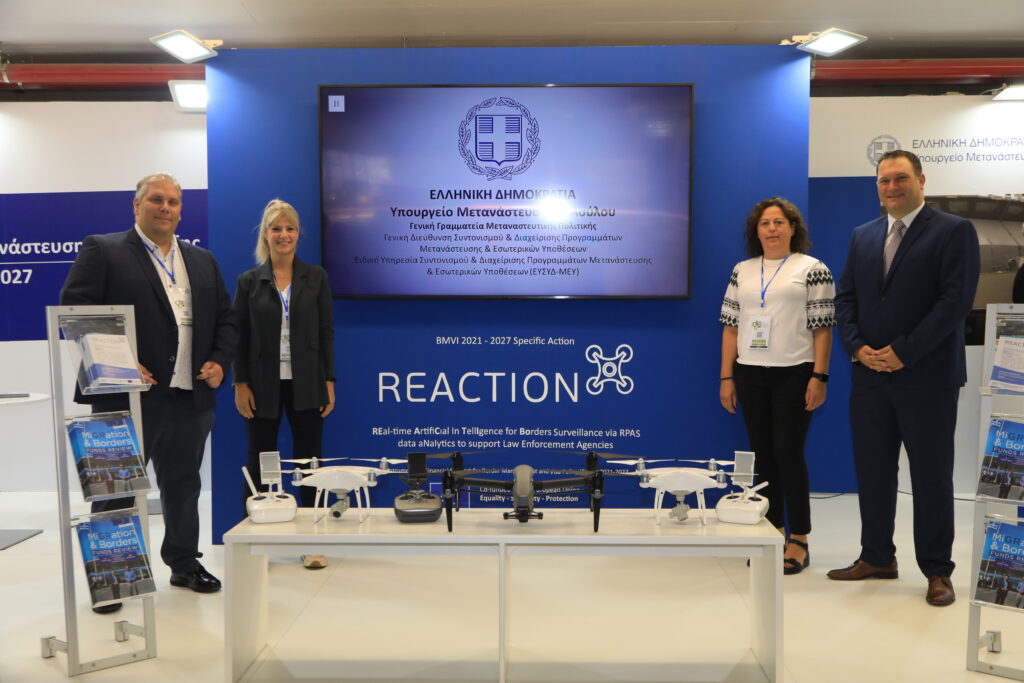
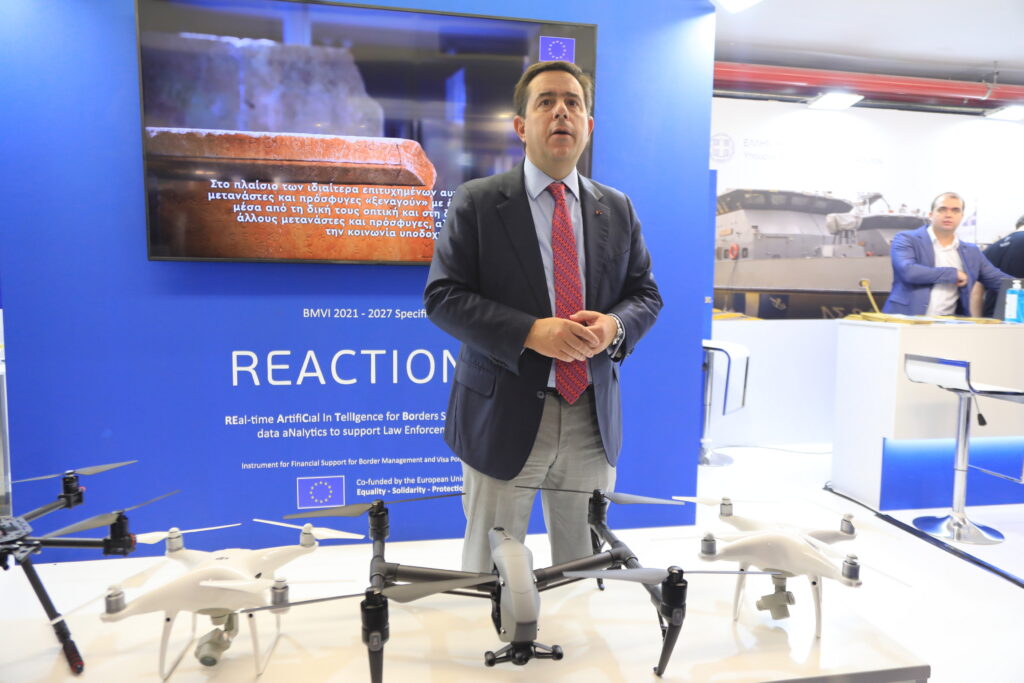
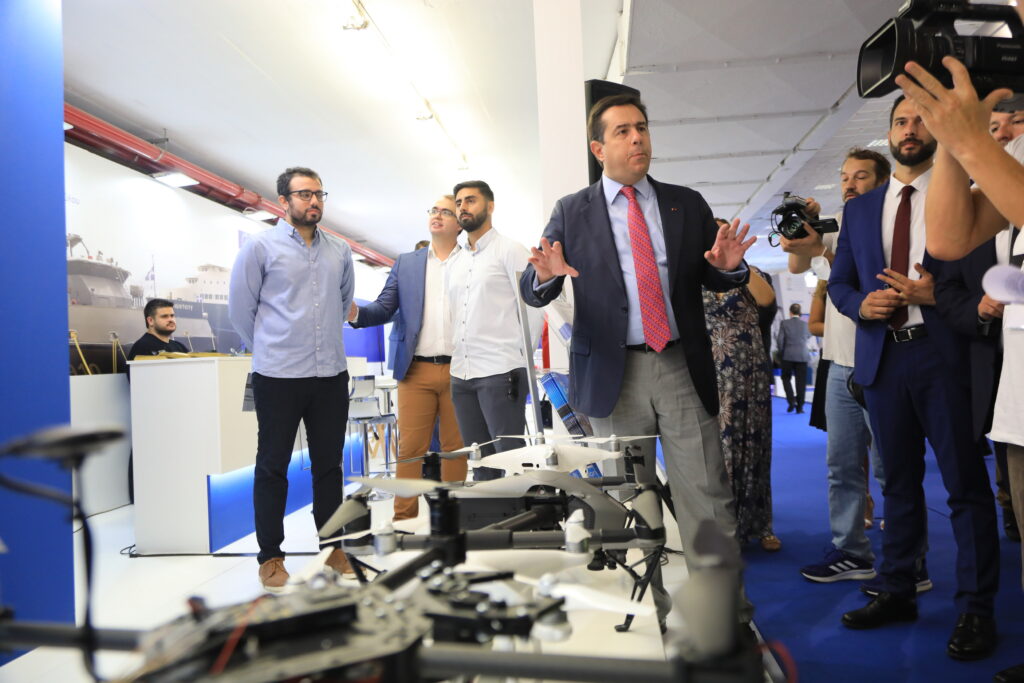
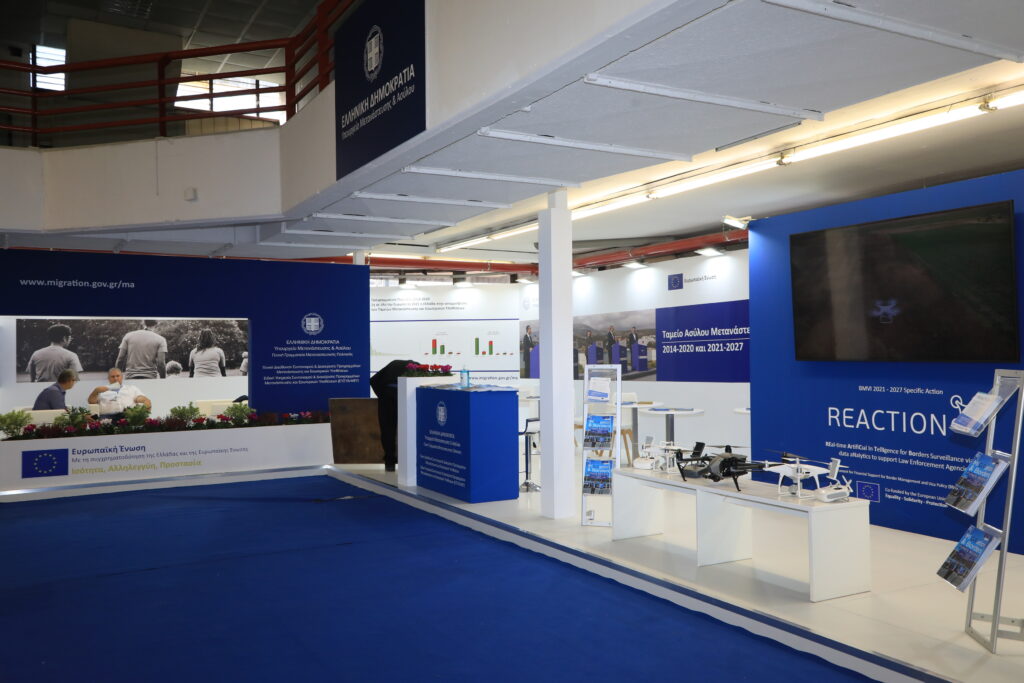
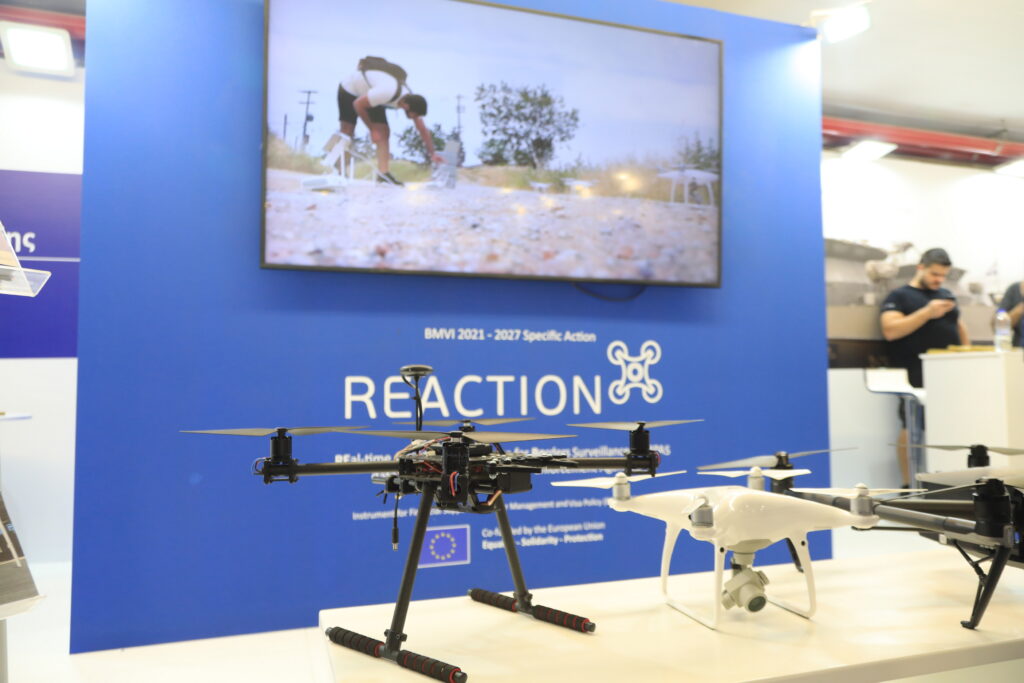
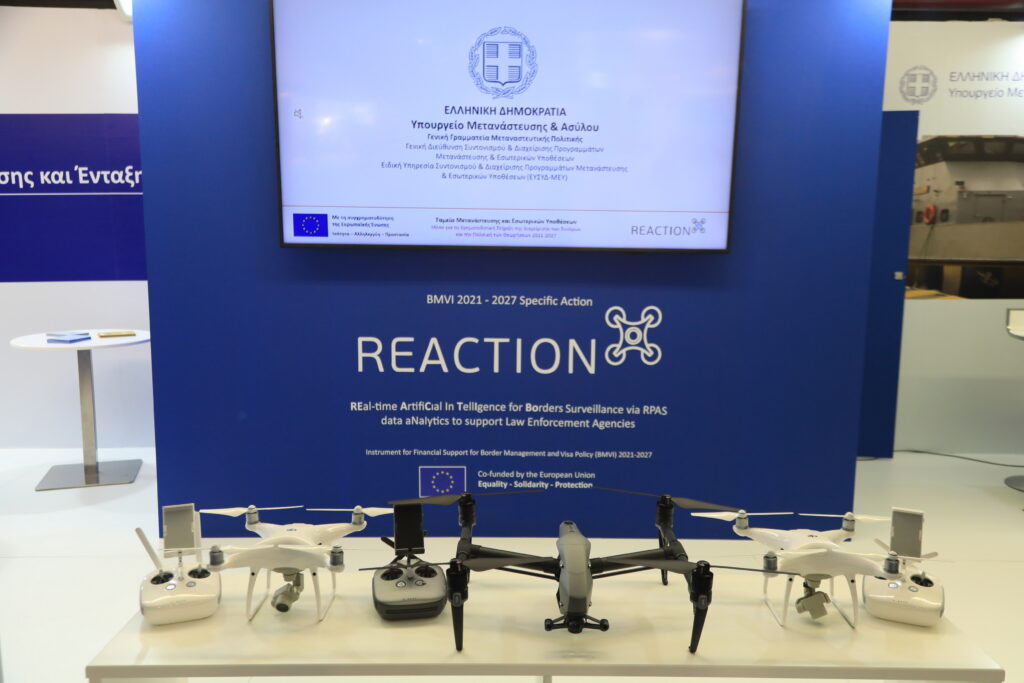
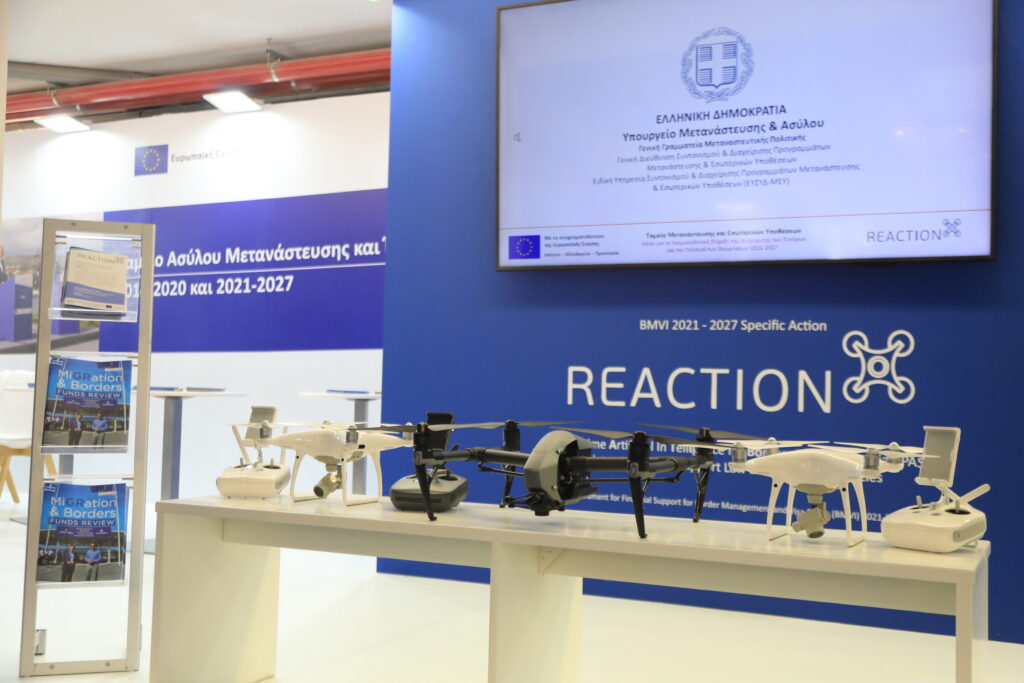
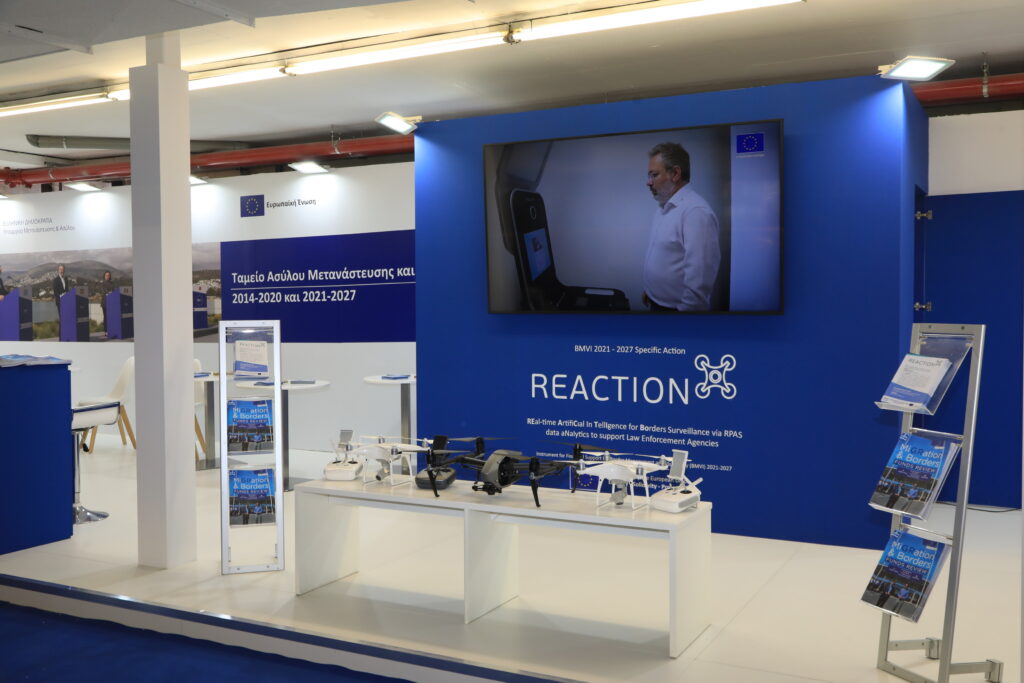
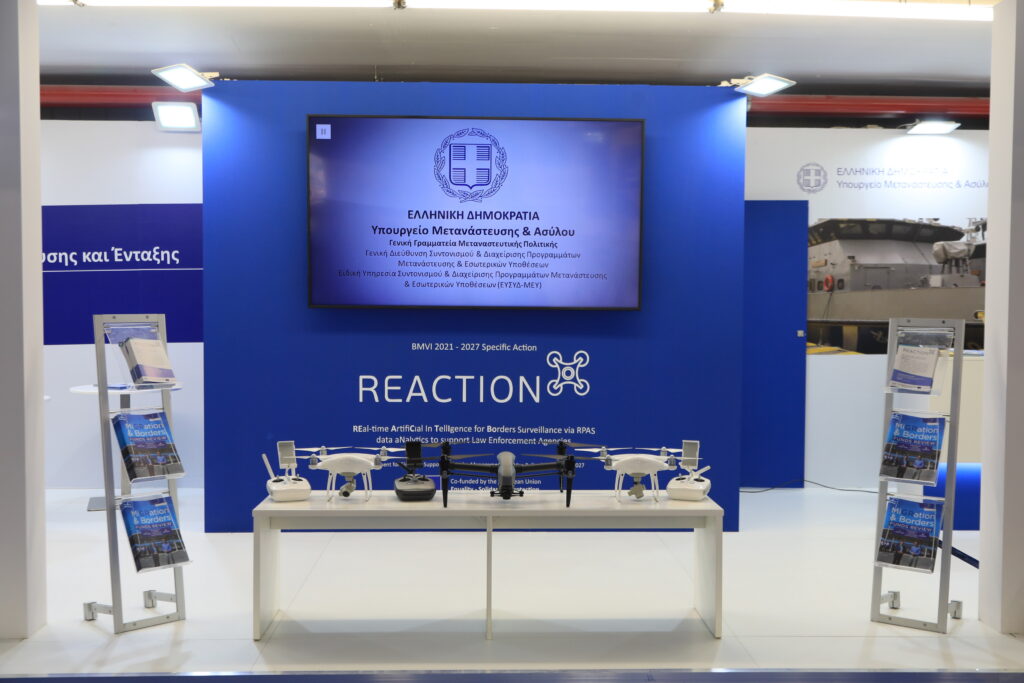
Πάτροκλος Γεωργιάδης: Κύριε πρόεδρε της κυβερνήσεως, κύριοι υπουργοί, αναπληρωτές υπουργοί, κ. υφυπουργέ, αγαπητοί συνάδελφοι, γενικοί και ειδικοί γραμματείς, αγαπητά στελέχη των φορέων του συστήματος διαχείρισης των ταμείων μετανάστευσης και ασύλου, κυρίες και κύριοι με ικανοποίηση παρουσιάζουμε σήμερα τα τρία νέα ταμεία. Τα ταμεία Μετανάστευσης και Εσωτερικών Υποθέσεων της νέας προγραμματικής περιόδου τα οποία ξεκινούν ουσιαστικά από τον Ιανουάριο του 2023 δηλαδή από αυτόν το μήνα. Η ασφάλεια μας ενώνει. Αυτή είναι η κεντρική ιδέα της πολιτικής μας στη νέα προγραμματική περίοδο. Ασφάλεια για τις τοπικές κοινωνίες της χώρας και φυσικά ασφάλεια για τους πρόσφυγες. Και αυτό σημαίνει απόλυτο σεβασμό στα θεμελιώδη ανθρώπινα δικαιώματα και στο διεθνές δίκαιο. Προς αυτήν την κατεύθυνση είναι και ο ορισμός του υπεύθυνου προστασίας θεμελιωδών δικαιωμάτων στο Υπουργείο μας, ο οποίος θα λειτουργεί σε συνεργασία με την ειδική επιτροπή για τη συμμόρφωση με τα θεμελιώδη δικαιώματα που συστάθηκε πρόσφατα, σε συνεργασία με την Ευρωπαϊκή Επιτροπή. Αντικείμενο του θα αποτελεί η παρακολούθηση των διαδικασιών και της εφαρμογής της εθνικής ενωσιακής και διεθνούς νομοθεσίας στους τομείς της προστασίας των συνόρων, της υποδοχής και της χορήγησης διεθνούς προστασίας, ειδικά μάλιστα σε σχέση με τα συγχρηματοδοτούμενα προγράμματα. Τα τρία ταμεία λοιπόν τα οποία αντιμετωπίζονται ενιαία τόσο στη χώρα μας όσο και στην υπόλοιπη Ευρώπη αφορούν στην αντιμετώπιση εν γένει του μεταναστευτικού ζητήματος, την εσωτερική ασφάλεια και την ελεύθερη διακίνηση εντός της Ευρωπαϊκής Ένωσης. Τα ταμεία αυτά λειτουργούν μεταξύ τους συμπληρωματικά καθώς αντιμετωπίζουν διαφορετικές πτυχές του ίδιου ζητήματος με ενιαία στρατηγική και στόχευση. Στο σημείο αυτό είναι σημαντικό να τονιστεί πως σύμφωνα με τα στοιχεία που έχουν δηλωθεί στην Ευρωπαϊκή Επιτροπή μέχρι τις 15 Οκτωβρίου του 2022, η απορρόφηση ανά εθνικό πρόγραμμα υπολογίζεται ως εξής: Για το Ταμείο ασύλου, μετανάστευσης και ένταξης στο 87%, για το Ταμείο εσωτερικής ασφάλειας στον κλάδο ασφάλεια στο 76,2%, ενώ για το Ταμείο εσωτερικής ασφαλείας με θέμα τα σύνορα στο 70,8%. Με βάση τις προβλέψεις των πληρωμών έως και 31/12/2023 η απορρόφηση εκτιμάται ότι θα ανέλθει πάνω από 99%. Για τη νέα προγραμματική περίοδο 2021-2027 τα Ταμεία εσωτερικών υποθέσεων θα αποτελούνται από το ευρωπαϊκό ταμείο ασύλου, μετανάστευσης και ένταξης, το μέσο για τη χρηματοδοτική στήριξη της διαχείρισης των συνόρων και την πολιτική θεωρήσεων και τρίτον το ταμείο εσωτερικής ασφαλείας. Το ταμείο ασύλου και μετανάστευσης έχει ως βασικό του στόχο να συμβάλει στην αποδοτική διαχείριση των μεταναστευτικών ροών και στην υλοποίηση και ενίσχυση και ανάπτυξη μίας κοινής πολιτικής για το άσυλο και μίας κοινής μεταναστευτικής πολιτικής σύμφωνα με το συναφές κεκτημένο της Ευρωπαϊκής Ένωσης. Το μέσο χρηματοδοτικής στήριξης για τη διαχείριση των συνόρων και την πολιτική θεωρήσεων έχει ως βασικό του στόχο την ισχυρή, αποτελεσματική και ολοκληρωμένη διαχείριση των συνόρων, τη διασφάλιση υψηλού επιπέδου εσωτερικής ασφάλειας, τη διευκόλυνση της νόμιμης διέλευσης των συνόρων, την αποτροπή και τον εντοπισμό της παράνομης μετανάστευσης και του διασυνοριακού εγκλήματος και την κοινή πολιτική θεωρήσεων για τη διευκόλυνση των νόμιμων ταξιδίων. Τέλος το Ταμείο εσωτερικής ασφαλείας έχει ως βασικό του στόχο την εξασφάλιση υψηλού επιπέδου ασφάλειας, την καταπολέμηση της τρομοκρατίας, της ριζοσπαστικοποίησης, του κυβερνοεγκλήματος, την παροχή βοήθειας και την προστασία θυμάτων εγκληματικών πράξεων. Από τις 15 Ιουλίου του 2021, οπότε και θεσπίστηκαν οι ειδικοί κανονισμοί των τριών ταμείων, το γραφείο του υπουργού -ο ίδιος ο κύριος Μηταράκης-, η Γενική Γραμματεία Μεταναστευτικής Πολιτικής μέσω της διαχειριστικής αρχής ήταν σε συνεχή διαπραγμάτευση με την Ευρωπαϊκή Επιτροπή για τα κείμενα των Ταμείων. Η τελική έγκριση η οποία επήλθε το Νοέμβριο του 2022 δικαίωσε τη διαπραγματευτική ομάδα με την έγκριση προγραμμάτων ύψους 2 δισεκατομμυρίων ευρώ, χωρίς αυτό να σημαίνει ότι στην πορεία δεν θα χρειαστεί επιπλέον χρηματοδότηση. Γιατί η χώρα μας έχει θέσει ως βασική προτεραιότητα του ταμείου αυτού την πλήρη τήρηση του ευρωπαϊκού κεκτημένου και τη διασφάλιση αξιοπρεπών συνθηκών διαβίωσης για όλους τους πολίτες τρίτων χωρών, τόσο εκείνων που περνούν παράνομα τα σύνορα μας όσο και εκείνων που το κάνουν νόμιμα. Η στρατηγική αυτή επιλογή ουσιαστικά μεταφράζεται σε παροχή ποιοτικών συνθηκών υποδοχής, δίκαιες και αποτελεσματικές διαδικασίες ασύλου, νομική συνδρομή και εκπροσώπηση στον δεύτερο βαθμό, ενημέρωση για τα δικαιώματα όσων βρίσκονται στη διαδικασία ασύλου, αυτοματοποιημένες ηλεκτρονικές υπηρεσίες για όλους, γρήγορες και δίκαιες διαδικασίες για τη νόμιμη μετανάστευση και αποτελεσματική κοινωνική ένταξη. Ειδική μέριμνα έχει γίνει για τις ευάλωτες ομάδες με έμφαση στα ασυνόδευτα ανήλικα. Επιπλέον σε όσους πολίτες τρίτων χωρών τελεσιδίκως δεν έχουν τα χαρακτηριστικά του δικαιούχου διεθνούς προστασίας η χώρα μας διασφαλίζει αξιοπρεπείς συνθήκες επιστροφής και επανεισδοχής ενώ δίνονται ισχυρά κίνητρα σε όσους αποφασίσουν να επιστρέψουν οικειοθελώς. Ως προς το Ταμείο συνόρων η χώρα μας αύξησε τον προϋπολογισμό με το 3% που μεταφέρθηκε από το ΕΣΠΑ σε αυτό και ευχαριστούμε για αυτό το Υπουργείο ανάπτυξης. Επενδύουμε στρατηγικά στην ανεύρεση επιπλέον πόρων από το θεματικό μέσο παρά το 1,4 δις που έχει ως προϋπολογισμό. Με βασική στόχευση την ελεύθερη κυκλοφορία προσώπων, την αποτροπή των παράνομων διελεύσεων στα σύνορα και την αποτροπή της παράνομης μετανάστευσης και του διασυνοριακού εγκλήματος από το Ταμείο αυτό, έχει σχεδιαστεί με σκοπό να βελτιώσει τα σημεία του συνοριακού ελέγχου, να διασφαλίσει καλύτερη εφαρμογή του Eurosur, να ενισχύσει τις επιχειρήσεις επιτήρησης, να βελτιώσει τη συνεργασία με τον frontex, να προωθήσει δράσεις εκπαίδευσης και κατάρτισης σχετικά με τα θεμελιώδη δικαιώματα, να αποτρέψει τις μη εξουσιοδοτημένες εισόδους, να ενισχύσει την κοινή πολιτική θεωρήσεων, να αναπτύξει το σύστημα πληροφοριών θεωρήσεων (το γνωστό VIS) σε πλήρη διαλειτουργικότητα με άλλα συστήματα πληροφορικής, να εκσυγχρονίσει τις προξενικές αρχές, να ψηφιοποιήσει τη διαδικασία έκδοσης θεωρήσεων και να αυξήσει την προξενική κάλυψη. Ακούγεται φιλόδοξο αλλά είναι εφικτό. Τέλος το Ταμείο εσωτερικής ασφαλείας θωρακίζει και διασφαλίζει την εφαρμογή της εθνικής στρατηγικής εσωτερικής ασφάλειας 2125 [00:15:53], ενισχύει τη συνεργασία μεταξύ των αρχών επιβολής του νόμου και της Ευρωπαϊκής Ένωσης και των κρατών-μελών, βελτιώνει το δίκτυο ανταλλαγής πληροφοριών για τα ναρκωτικά μέσω της Εuropol, δημιουργεί δίκτυα ανταλλαγής πληροφοριών και συνεργασίας, βελτιώνει την ικανότητα διερεύνησης και καταπολέμησης του εγκλήματος στον κυβερνοχώρο κυρίως στο Deep and Darkweb και παρέχει υποστήριξη σε θύματα trafficking. Με τα τρία ταμεία που αναφέραμε η χώρα μας θα μπορέσει να ανταποκριθεί στις προκλήσεις του μεταναστευτικού ζητήματος, του μεταναστευτικού ζητήματος και της εσωτερικής ασφαλείας. Με την ίδρυσή τους καλύπτουμε ήδη περίπου το 30% των συνολικών μας αναγκών μέχρι το 2029. Παράλληλα στοχεύουμε στην εύρεση νέων πόρων μέσω προτάσεων για ειδικές δράσεις από το θεματικό μέσο των ταμείων μέσω της έγκρισης εκτάκτων επιχορηγήσεων και φυσικά μέσω της ανεύρεσης πόρων από άλλα ταμεία. Στο σημείο αυτό είναι πολύ σημαντικό να αναφέρουμε ότι πετύχαμε αύξηση της κοινοτικής χρηματοδότησης των εθνικών προγραμμάτων κατά έξι ακόμα περίπου εκατομμύρια ευρώ μέσω του θεματικού μέσου των ταμείων. Πιο συγκεκριμένα έχουν εγκριθεί 6 προτάσεις για ειδικές δράσεις που υποβάλαμε, με κυριότερες τη δράση για την προστασία των θυμάτων trafficking, τη δράση REACTION για τη χρησιμοποίηση μέσων τεχνητής νοημοσύνης για τη φύλαξη των συνόρων και της πρότασης για την ενδυνάμωση της Ελληνικής Αστυνομίας. Σήμερα ξεκινάμε και επίσημα τη νέα προγραμματική περίοδο. Έχει ήδη φυσικά πραγματοποιηθεί η πρώτη συνεδρίαση της επιτροπής παρακολούθησης των ταμείων Μετανάστευσης και Εσωτερικών υποθέσεων τον Δεκέμβριο που μας πέρασε του 2022, όπου υπήρξε και η πρώτη εξειδίκευση των εθνικών προγραμμάτων της νέας προγραμματικής περιόδου. Εκεί εξειδικεύτηκαν 10 δράσεις ως προς το Ταμείο ασύλου, μετανάστευσης και ένταξης προϋπολογισμού 247 εκατομμυρίων ευρώ, 5 δράσεις ως προς το μέσο για τη χρηματοδότηση της διαχείρισης των συνόρων και την πολιτική θεωρήσεων προϋπολογισμού 135 εκατομμυρίων ευρώ και μία δράση ως προς το ταμείο εσωτερικής ασφάλειας συνολικού προϋπολογισμού 2,5 εκατομμυρίων ευρώ. Σήμερα αμέσως μετά θα πραγματοποιηθεί εδώ σε αυτό το χώρο και η δεύτερη συνεδρίαση της επιτροπής παρακολούθησης ούτως ώστε να προχωρήσουμε άμεσα και στη δεύτερη εξειδίκευση των προγραμμάτων. Όπως γίνεται εύκολα αντιληπτό η διαχειριστική αρχή, ο ενδιάμεσος φορέας διαχείρισης η ΥΔΕΑΠ από τη μεριά της Ελληνικής Αστυνομίας, η Αρχή Ελέγχου η Ε.Δ.ΕΛ., η Αρχή πιστοποίησης και όλοι οι φορείς υλοποίησης έχουν να αντιμετωπίσουν πολλές προκλήσεις και την περίοδο αυτή. Πιστεύω ότι όλοι μαζί και πάλι θα τα καταφέρουμε και θα φέρουμε αυτό το δύσκολο έργο εις πέρας. Καλή αρχή σε όλους, σας ευχαριστώ πολύ για την προσοχή σας.
Συντονίστρια: Κύριε γενικέ σας ευχαριστούμε θερμά για την πολύ ενδιαφέρουσα παρουσίαση. Σε αυτό το σημείο θα υποδεχτούμε την κυρία Beate Gminder, αναπληρώτρια γενική διευθύντρια της γενικής διεύθυνσης Μετανάστευσης και Εσωτερικών υποθέσεων της Ευρωπαϊκής Επιτροπής και επικεφαλής της task force για τη διαχείριση της μετανάστευσης η οποία θα απευθύνει ένα χαιρετισμό εκ μέρους της Ευρωπαϊκής Επιτροπής.
Beate Gminder: Αγαπητέ πρωθυπουργέ, κύριε Υπουργέ, αγαπητοί υπουργοί, υφυπουργοί, γενικοί γραμματείς και αγαπητοί συνάδελφοι είναι τιμή και χαρά για εμένα να είμαι εδώ σήμερα ως εκπρόσωπος της ευρωπαϊκής επιτροπής και με την ιδιότητά μου ως επικεφαλής της task force για τη διαχείριση της μετανάστευσης. Είχαμε ένα μνημόνιο συνεργασίας για τη μετανάστευση. Συμμετείχαν η frontex, η Εuropol και τα κράτη-μέλη και είστε στην πρώτη γραμμή της προόδου. Έχουμε την υποστήριξη των Ηνωμένων Εθνών και μέσα σε αυτά περιλαμβάνεται και η μείωση της υπερπληθώρας κόσμου στις διάφορες δομές, την επιτάχυνση των διαδικασιών χορήγησης ασύλου, τη μείωση της γραφειοκρατίας, τη βελτίωση της κατάστασης των μη συνοδευόμενων ανηλίκων. Έχετε δουλέψει όλοι πολύ σκληρά για να πετύχετε όλους αυτούς τους στόχους και έχετε δώσει πολλές ώρες, πολύ ενθουσιασμό. Πολλές φορές διαφωνήσαμε γιατί πιστεύατε ότι πηγαίναμε εμείς πολύ αργά. Η προηγούμενη γενιά των ταμείων της Ευρωπαϊκής Ένωσης έδωσε στην Ελλάδα περισσότερα από 3 δισεκατομμύρια ευρώ για να μπορέσει να θέσει τα θεμέλια για την πρόοδο που έχει γίνει σήμερα. Θέλουμε να δώσουμε στην Ελλάδα τα μέσα που χρειάζεται για να συνεχίσει και να διασφαλίσουμε ότι οι προηγούμενες επενδύσεις που έχουμε κάνει έπιασαν όντως τόπο. Υπάρχει αλληλεγγύη, υποστήριξη, θέλουμε να βοηθήσουμε τον κόσμο να προστατεύει τα σύνορα, να δημιουργήσουμε θέσεις εργασίας, θέλουμε να είμαστε πλήρως διαφανείς, να λογοδοτούμε και να σεβόμαστε τα θεμελιώδη δικαιώματα. Σε αυτό το ταμείο λοιπόν λειτουργούμε στρατηγικά προκειμένου να μπορέσουμε να αντιμετωπίσουμε τις προκλήσεις που βλέπουμε σήμερα στα σύνορα, όχι μόνο τώρα αλλά και μακροπρόθεσμα. Βραχυπρόθεσμα πρέπει να δουλέψουμε μαζί για να μπορέσουμε να αντιμετωπίσουμε την παράτυπη μετανάστευση και στέλνουμε ένα σαφές μήνυμα ότι είμαστε ανοιχτοί στους ανθρώπους που αντιμετωπίζουν διαμάχες και προβλήματα στη χώρα τους. Και προχωρώντας και πέρα από αυτό θα πρέπει να δούμε μακροπρόθεσμα τι θα κάνουμε ως προς το δημογραφικό. Βλέπουμε την κλιματική αλλαγή, την ασφάλεια. Θέλουμε ισότητα στον κόσμο και αυτό προσπαθούμε να επιτύχουμε κάθε μέρα στην κοινωνία μας. Ο πρόεδρος της επιτροπής ήδη ανακοίνωσε τις δεξιότητες για το 2023 και πιστεύει ότι θα είναι ένας καταλύτης, θα λειτουργήσουν καταλυτικά για τη χώρα και θα βελτιώσουν την κατάσταση στο μεταναστευτικό. Και πρέπει να περάσουμε από την ad hoc την ανταπόκριση σε λύσεις. Η Ευρωπαϊκή λύση λοιπόν είναι αναγκαία για να μπορέσουμε να αποκαταστήσουμε την εμπιστοσύνη μεταξύ μας και με τους πολίτες και να αντιμετωπίσουμε το μεταναστευτικό ως Ένωση. Επίσης χρειάζονται βελτιώσεις και σε άλλους τομείς όπου θα πρέπει να λάβουμε επείγοντα μέτρα για να αντιμετωπίσουμε τις προκλήσεις που έχουμε. Θέλω να σας ευχαριστήσω εκ μέρους της επιτροπής και να σας διαβεβαιώσω για τη συνεχή μας υποστήριξη τα επόμενα χρόνια. Σας ευχαριστώ.
Συντονίστρια: Στο σημείο αυτό ήρθε η στιγμή να μας μιλήσει για όλα όσα έγιναν αυτά τα τρία χρόνια στο Υπουργείο μετανάστευσης και ασύλου ο αρμόδιος Υπουργός κ. Νότης Μηταράκης τον οποίο και καλώ στο βήμα για να λάβει το λόγο. Κύριε Υπουργέ.
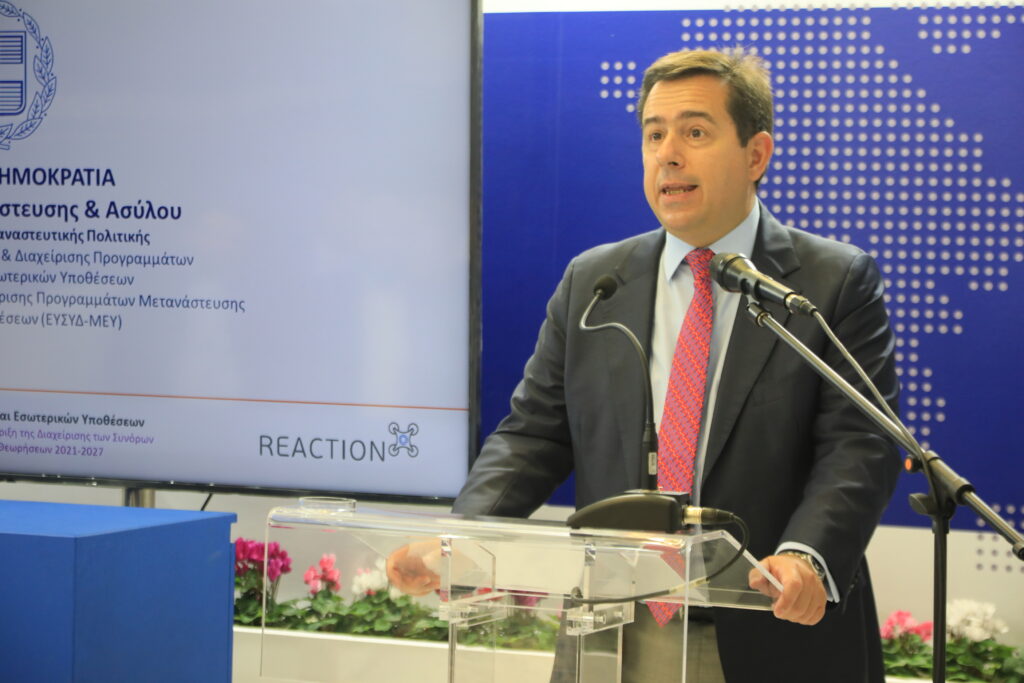
Νότης Μηταράκης: Κύριε πρωθυπουργέ, αγαπητοί συνάδελφοι στην Βουλή και στην κυβέρνηση, εκλεκτοί προσκεκλημένοι κυρίες και κύριοι, με ιδιαίτερη χαρά, δεν σας κρύβω ότι με συγκίνηση σας υποδέχομαι σήμερα στο Ζάππειο Μέγαρο, στην τρίτη επέτειο ίδρυσης του Υπουργείου μετανάστευσης και ασύλου. Θέλω να ευχαριστήσω από καρδιάς όλους τους εργαζόμενους και συνεργάτες μας στο Υπουργείο μετανάστευσης και ασύλου, όλους όσους μας βοηθήσατε τα τελευταία τρία χρόνια για να αντιμετωπίσουμε τις προκλήσεις της μεταναστευτικής κρίσης. Όσους μας βοηθήσατε στην αντιστροφή των επιπτώσεων της μεταναστευτικής κρίσης στην Ελληνική κοινωνία. Επιτρέψτε μου κύριε πρόεδρε να σας ευχαριστήσω προσωπικά για την εμπιστοσύνη που δείξατε στην πολιτική ηγεσία του υπουργείου και σε όλους τους συνεργάτες. Θυμάμαι την απόφασή σας να ιδρύσετε το Υπουργείο τον Ιανουάριο του 2020 καθώς οι αυξημένες μεταναστευτικές ροές των προηγούμενων ετών είχαν δημιουργήσει έντονες πιέσεις και στα νησιά μας και στην ηπειρωτική Ελλάδα. Θυμάμαι μου είπατε να το κάνουμε σωστά, δίνοντας έμφαση στην ανάγκη για αποτελεσματικότητα, διορθώνοντας πιθανές δομικές αστοχίες. Σήμερα που η μεταναστευτική κρίση βιώνεται σε πρωτόγνωρα μεγέθη σε άλλες χώρες της Ευρωπαϊκής Ένωσης, η χώρα μας αντιμετωπίζει περιορισμένες επιπτώσεις. Κυρίες και κύριοι τις πρώτες εβδομάδες του 2020 κληθήκαμε να αντιμετωπίσουμε αφενός τις επιπτώσεις των ιδιαίτερα αυξημένων ροών της περιόδου 2015-2019 και αφετέρου την υβριδική απειλή στον Έβρο και στα νησιά μας. Ενώ το Υπουργείο έπρεπε αμέσως να αποκτήσει δομή και οργάνωση. Με ταχύτατες κινήσεις να στηρίξουμε την υπηρεσία υποδοχής και ταυτοποίησης, να στηρίξουμε την υπηρεσία ασύλου και την αρχή προσφυγών, να δημιουργήσουμε την τεχνική υπηρεσία, τη νομική υπηρεσία, τη διεύθυνση διεθνών σχέσεων. Με ταχύτατες κινήσεις τεχνολογικής αναβάθμισης και ενίσχυσης του ανθρώπινου δυναμικού και στην κεντρική υπηρεσία και στις δομές, με ανάληψη της διοίκησης των δομών από τις ΜΚΟ. Σε δύσκολες στιγμές όπως τα γεγονότα στον Έβρο και τα νησιά, στον εμπρησμό της Μόρια, ανταποκριθήκαμε στις πιο ακραίες συνθήκες με υψηλό αίσθημα ευθύνης και αποστολής με την ουσιαστική καθοδήγηση και στήριξη του πρωθυπουργού. Θυμάμαι χαρακτηριστικά τη συνεδρίαση του ΚΥΣΕΑ της 1ης Μαρτίου του 2020 όταν αποφασίστηκε η μέγιστη προστασία των εξωτερικών μας συνόρων, αλλά και στη Μόρια 2,5 χρόνια πριν, όπου αποφύγαμε μία ανθρωπιστική κρίση σε εποχή πανδημίας και η κρίση έγινε ευκαιρία. Ευκαιρία να αναβαθμίσουμε τις συνθήκες διαβίωσης αλλά και τις συνθήκες ασφάλειας για τους ωφελούμενους, το προσωπικό μας και την τοπική κοινωνία. Από την πρώτη στιγμή κυρίες και κύριοι βάλαμε δύο συγκεκριμένους και μετρήσιμους στόχους. Πρώτον, την ουσιαστική μείωση των ροών και δεύτερον τον δραστικό περιορισμό των επιπτώσεων της κρίσης στις τοπικές κοινωνίες. Μετά την έκρηξη αφίξεων της περιόδου 2015-2019, το 2021 είχαμε τις χαμηλότερες ροές της δεκαετίας και σταθερά χαμηλές και το 2022. Αποτέλεσμα: αντί για 92.000 διαμένοντες σε 121 δομές σε όλη τη χώρα, σήμερα να φιλοξενούμε 14.000 σε 33 δομές. Παρουσία του πρωθυπουργού παραδώσαμε την έκταση στο Βαθύ Σάμου, την έκταση στον Ελαιώνα στους οικείους δήμους. Ομοίως στη Μόρια στο Δήμο Μυτιλήνης. Την ώρα όμως που η Ελλάδα καταγράφει μία αξιοσημείωτη πρόοδο αυτό δεν είναι κανόνας για την Ευρώπη. Αλλά οι αφίξεις το 2022 στην Ελλάδα αποτελούν μόνο το 5% των συνολικών αφίξεων στην Ευρωπαϊκή Ένωση ενώ το 2015 οι αφίξεις στην Ελλάδα αποτελούσαν το 75% των αφίξεων στην Ευρωπαϊκή Ένωση. Προχωρήσαμε σε 7 βασικές δράσεις, χάρη στις οποίες μπορέσαμε να πετύχουμε τους στόχους μας. Μας επέτρεψε να βάλουμε τις βάσεις για βιώσιμο έλεγχο της μεταναστευτικής κρίσης. 1) Φυλάμε αποτελεσματικά τα σύνορά μας τα οποία είναι και τα εξωτερικά σύνορα της Ευρωπαϊκής Ένωσης με τη χρηματοδότηση των ταμείων μετανάστευσης που διαχειρίζεται το Υπουργείο. Αποδείξαμε δε πως η προστασία των συνόρων είναι αυτή που αποτρέπει την απώλεια ανθρώπινων ζωών στα σύνορα και μπορεί να συνάδει με την τήρηση των θεμελιωδών δικαιωμάτων. 2) Μπορέσαμε να ψηφιοποιήσουμε τις διαδικασίες ασύλου, να επιταχύνουμε το διαχωρισμό μεταξύ προσφύγων και οικονομικών μεταναστών, στέλνοντας έτσι ένα σαφές μήνυμα στα κυκλώματα λαθροδιακινητών. 3) Κατασκευάσαμε κλειστές ελεγχόμενες δομές και ήδη λειτουργούν στη Σάμο, στην Κω και στη Λέρο. Έπονται οι δομές στη Λέσβο και στη Χίο και ολοκληρώνεται η αναβάθμιση του Κ.Υ.Τ. Φυλακίου στον Έβρο, επιτρέποντας με ασφάλεια την καταγραφή των αιτούντων συμβάλλοντας σε αποτελεσματικές διαδικασίες, προβλέποντας κλειστές δομές για όσους δεν χρήζουν διεθνούς προστασίας και μετατρέποντας όλες τις δομές της χώρας από άναρχες δομές σε ελεγχόμενες δομές. 4) Προχωράμε σύμφωνα με το νόμο σε απελάσεις όσων δεν δικαιούνται διεθνούς προστασίας, βελτιώνοντας τη νομοθεσία, τις διαδικασίες για εθελοντικές και αναγκαστικές επιστροφές, ενισχύουμε τη συνεργασία μας με τη frontex και προχωράμε σε διμερείς συμφωνίες επιστροφών όπως πρόσφατα με το Μπαγκλαντές. 5) Αυστηροποιήσαμε τη νομοθεσία μας. Χαρακτηρίσαμε την Τουρκία ασφαλή χώρα καθώς είναι ξεκάθαρη η υποχρέωση της Τουρκίας να παράσχει όπου απαιτείται διεθνή προστασία, αλλά και να εφαρμόζει την κοινή δήλωση του 2016 αποτρέποντας παράνομες ροές από την Τουρκία προς την Ευρωπαϊκή Ένωση. 6) Θέσαμε κανόνες στη δράση των ΜΚΟ, αξιολογικά κριτήρια για την εγγραφή τους στο μητρώο ΜΚΟ καθώς και των μελών τους στο αντίστοιχο μητρώο. Και 7) Κάναμε έναν εξορθολογισμό των επιδομάτων ώστε να μη λειτουργούν ως κίνητρο παράνομων αφίξεων στην Ευρώπη. Το έργο μας περιλαμβάνει τη στήριξη των τοπικών κοινωνιών. Ενισχύσαμε 41 Δήμους με 100 εκατομμύρια ευρώ για αποζημιώσεις και τέλη, στηρίξαμε 134 τοπικά έργα υποδομών, μονιμοποιήσαμε το νησιωτικό ΦΠΑ στα νησιά του Αιγαίου που φιλοξενούν δομές, ενισχύσαμε μέσα του ΕΟΤ τουριστικά αυτά τα νησιά. Υλοποιούμε για πρώτη φορά στην Ελλάδα ένα πρόγραμμα ένταξης αναγνωρισμένων προσφύγων, αντιμετωπίσαμε το οξύ ζήτημα των ασυνόδευτων ανήλικων, ανοίξαμε τις πόρτες της χώρας στους εκτοπισμένους από την Ουκρανία και παίξαμε καταλυτικό ρόλο και στη σχετική απόφαση του Συμβουλίου της Ευρωπαϊκής Ένωσης. Ιδιαίτερα σημαντικό, δώσαμε έμφαση στη διαφάνεια, καταργώντας την ειδική νομοθεσία ΣΥΡΙΖΑ για απευθείας αναθέσεις, προχωρώντας σε ανοιχτούς διεθνείς διαγωνισμούς-πλαίσιο, τη βέλτιστη Ευρωπαϊκή πρακτική, με συστηματική ενημέρωση της αρμόδιας επιτροπής της Βουλής, με την ενεργοποίηση και την ορθή λειτουργία της επιτροπής παρακολούθησης που συνεδριάζει ξανά σήμερα. Η έγκριση των ταμείων μετανάστευσης και εσωτερικών υποθέσεων της περιόδου 2021-2027 προβλέπει δράσεις 2,1 δισεκατομμύρια ευρώ εκ των οποίων και με τη στήριξη του ΕΣΠΑ 1,4 δισεκατομμύρια ευρώ για την ασφάλεια των συνόρων μας. Κυρίες και κύριοι το μεταναστευτικό δεν τελειώνει και αποτελεί συγχρόνως πρόκληση και ανάγκη. Η χώρα μας εφαρμόζει μία αυστηρή αλλά δίκαιη μεταναστευτική πολιτική. Δίνουμε έμφαση στη μετανάστευση με κανόνες, με κριτήρια σύμφωνα με τις δικές μας ανάγκες και είμαστε συγχρόνως σθεναρά απέναντι στα κυκλώματα λαθροδιακινητών. Όλους αυτούς οι οποίοι στηρίζουν και εκμεταλλεύονται ανθρώπους μέσω της παράνομης μετανάστευσης. Προχωράμε στην αλλαγή του κώδικα μετανάστευσης για να μπορέσουμε να προσελκύσουμε όπου χρειάζεται εργατικό δυναμικό είτε στον πρωτογενή τομέα είτε εξειδικευμένο προσωπικό υψηλής ειδίκευση όπως στον κλάδο των Τηλεπικοινωνιών και της πληροφορικής. Αλλά και επενδυτικό κοινό που αναγνωρίζει τις προοπτικές της Ελληνικής οικονομίας. Έχουμε ήδη να δείξουμε επιτυχημένα project και ήθελα για ένα δευτερόλεπτο να αναφερθώ στη μεταφορά του softwarehouse, διεθνούς πολυεθνικής από την Αγία Πετρούπολη και την Αττάλεια στη Θεσσαλονίκη όπου ήδη 500 μηχανικοί ηλεκτρονικών υπολογιστών και οι οικογένειές τους έχουν μετακομίσει και εργάζονται στη Θεσσαλονίκη. Μπορέσαμε να αδειοδοτήσουμε με τις διαδικασίες fast-track τις απαραίτητες άδειες παραμονής για να μπορέσουμε να συναγωνιστούμε άλλες χώρες της Ευρωπαϊκής Ένωσης που διεκδικούσαν την ίδια επένδυση. Η χώρα μας συνάπτει διμερείς συμφωνίες με τρίτες χώρες με σκοπό αφενός τη στόχευση σε συγκεκριμένο κοινό από αυτές τις χώρες, αφετέρου στην ενίσχυση των επιστροφών όσων έχουν έρθει παράνομα στη χώρα μας. Και θεσπίσαμε όπως γνωρίζετε μία καινοτόμα άδεια παραμονής εποχική για μέχρι 9 μήνες ανά έτος και ως 5 έτη. Στη μάχη την ίδια στιγμή για την καταπολέμηση της παράνομης μετανάστευσης η Ελλάδα πρωταγωνιστεί σε Ευρωπαϊκό επίπεδο. Το Μάρτιο του 2021 συγκαλέσαμε στην Αθήνα την πρωτοβουλία ΜΕD-5 μαζί με την Ιταλία, την Ισπανία, τη Μάλτα και την Κύπρο, μία συνάντηση που έγινε πλέον θεσμός. Συντονισμένα οι χώρες πρώτης υποδοχής διεκδικούμε μέτρα έμπρακτης και δεσμευτικής αλληλεγγύης, καθώς και τη δημιουργία -και αυτό είναι ελληνική θέση- ενός κοινού ευρωπαϊκού χώρου προστασίας που θα επιτρέπει την ελεύθερη μετακίνηση εντός της Ευρωπαϊκής Ένωσης των αναγνωρισμένων προσφύγων, όπως αποφάσισε και το συμβούλιο υπουργών στην περίπτωση της Ουκρανίας. Παράλληλα η χώρα μας είναι συνιδρυτής της διαδικασίας του Βίλνιους τον Ιανουάριο του 2022 μαζί με την Αυστρία, την Πολωνία και τη Λιθουανία. Στο Βίλνιους 16 κράτη-μέλη, η πλειοψηφία των κρατών-μελών, επιβεβαίωσαν τη σημασία της προστασίας των εξωτερικών μας συνόρων, καθώς και την ανάγκη χρηματοδότησης από την Ευρωπαϊκή Ένωση της κατασκευής τεχνητών εμποδίων στα εξωτερικά σύνορα. Και τον επόμενο μήνα εδώ στην Αθήνα η Ελλάδα θα φιλοξενήσει 27 υπουργούς Εσωτερικών υποθέσεων στη δεύτερη διάσκεψη της Αθήνας. Σε αυτό το πλαίσιο απαιτούνται δύσκολες αλλά και αποτελεσματικές αποφάσεις σε επίπεδο Ευρωπαϊκής Ένωσης, Συμβουλίου, Κοινοβουλίου και Επιτροπής. Εμείς, η Ελλάδα παραμένει σε εγρήγορση για το μέλλον. Η γεωγραφική μας θέση σε συνδυασμό με εξωτερικές απειλές δεν μας αφήνει περιθώρια εφησυχασμού. Η Ελλάδα είναι το σύνορο της Ευρωπαϊκής Ένωσης και έχουμε χρέος να το διαφυλάξουμε. Είμαστε προετοιμασμένοι για κάθε πρόκληση που θα προκύψει στο μεταναστευτικό. Έχουμε τις υποδομές, έχουμε την τεχνογνωσία, έχουμε το ανθρώπινο δυναμικό και πάνω από όλα σχέδιο και αποφασιστικότητα. Σας ευχαριστώ, καλή συνέχεια.
Συντονίστρια: Σας ευχαριστώ κύριε Υπουργέ. Κυρίες και κύριοι σας καλώ να υποδεχτούμε στο βήμα τον Πρωθυπουργό της Ελληνικής Δημοκρατίας, κύριο Κυριάκο Μητσοτάκη, τον οποίο είναι τιμή να έχουμε μαζί μας. Κύριε πρόεδρε ο λόγος σε εσάς.
Κυριάκος Μητσοτάκης: Κύριε Υπουργέ, κυρία αναπληρώτρια Υπουργέ, κυρία υφυπουργέ, κύριοι υφυπουργοί, κύριοι γενικοί, κύριοι ειδικοί γραμματείς, φίλες και φίλοι, στελέχη της Ελληνικής Αστυνομίας, των Ενόπλων Δυνάμεων, του Λιμενικού μας ύστερα από 3,5 χρόνια διακυβέρνησης υπάρχουν πολλά πεδία που δηλώνουν ότι η Ελλάδα έχει γυρίσει σελίδα από το χθες. Ανάμεσα στα πρώτα όμως συγκαταλέγεται αναμφισβήτητα το μεταναστευτικό γιατί εκεί άλλαξαν όλα. Το διοικητικό χάος που επικρατούσε μέχρι το καλοκαίρι του 2019 διαδέχτηκε ένα αποτελεσματικό Υπουργείο, το Υπουργείο μετανάστευσης και ασύλου. Και θυμάμαι πολύ καλά την απόφαση την οποία πήραμε τότε να ιδρύσουμε το Υπουργείο αυτό. Θεωρώ ότι το έργο το οποίο σας παρουσίασε ο υπουργός αλλά και ο γενικός γραμματέας δικαιώνουν απόλυτα την επιλογή αυτή. Ταυτόχρονα όμως εκτός από τη δημιουργία του Υπουργείου θωρακίσαμε τα σύνορά μας στον Έβρο και αυτά που τάχα δεν υπήρχαν υψώθηκαν επιτέλους στη θάλασσα του Αιγαίου. Ενώ τα αίσχη της Μόριας και της Ειδομένης έδωσαν τη θέση τους σε σύγχρονες δομές. Δεν νομίζω ότι χρειάζεται σήμερα να επαναλάβω όσα βίωσε από πρώτο χέρι ο λαός μας στις μεταναστευτικές εισβολές τον Μάρτιο του 2020. Θυμήθηκε ο υπουργός αυτό το κρίσιμο ΚΥΣΕΑ το οποίο έλαβε χώρα την 1η Μαρτίου αυτού του έτους, όταν πήραμε την πολιτική απόφαση να θωρακίσουμε τα σύνορά μας και να χρησιμοποιήσουμε κάθε μέσο προκειμένου να αποτρέψουμε αυτήν την εργαλειοποίηση κατατρεγμένων ανθρώπων που κατά δεκάδες χιλιάδες επιχείρησαν τότε να εισβάλουν στη χώρα μας από τα βορειοανατολικά μας σύνορα. Ήταν λοιπόν αυτή μία βόμβα την οποία απασφάλισε η αποφασιστική ετοιμότητα της πολιτείας, αλλά και η ενότητα των πολιτών ειδικά των ακριτών μας στον Έβρο αλλά και στα νησιά μας. Θα επισημάνω ωστόσο την τεράστια σημασία που είχε εκείνες τις ώρες η επίσημη και επί του πεδίου καθιέρωση των συνόρων μας ως των ανατολικών ορίων της Ευρώπης. Και θυμάμαι πως 48 ώρες μετά την πρώτη αποτροπή αυτής της εισβολής βρέθηκαν στα σύνορά μας στον Έβρο όλοι οι ευρωπαϊκοί θεσμοί, πρόεδρος της ευρωπαϊκής επιτροπής, πρόεδρος του Συμβουλίου, προεδρεύων του Συμβουλίου, πρωθυπουργός της Κροατίας αλλά και ο Νταβίντ Σασόλι πρόεδρος του ευρωπαϊκού κοινοβουλίου, ο οποίος δεν είναι σήμερα πια μαζί μας. Και βέβαια μετά από αυτήν την αποτελεσματική άμυνα την οποία υψώσαμε ακολούθησε ένα πολύ σημαντικό έργο. Ένα έργο το οποίο αποτυπώνεται στα στοιχεία, αποτυπώνεται όμως και στην καθημερινότητα, ειδικά των ακριτικών περιοχών μας. Πέρσι για παράδειγμα εισήλθαν στη χώρα μας 17 χιλιάδες μετανάστες. Μόνο το 2015 είχανε εισέλθει παραπάνω από 900.000. Tο νούμερο το οποίο ακούσατε είναι ενδεικτικό. To 2015 το 75% των παράνομων εισόδων στην Ευρωπαϊκή Ένωση πέρασαν μέσα από την Ελλάδα. Πέρυσι ήταν μόλις το 5%. Στον ίδιο χρόνο απετράπησαν περί τις 250.000 παράνομες είσοδοι στα χερσαία σύνορα και σχεδόν 45.000 στα θαλάσσια σύνορα μας. Ταυτόχρονα ανέπνευσαν και τα νησιά μας. 40.000. 40.000 βρισκόντουσαν στα νησιά του Αιγαίου το 2019. Σήμερα εκεί είναι μόλις 5.000 και βέβαια αποσυμπίεση υπήρξε σε όλη τη χώρα. Από τους 92.000 μετανάστες του 2019 υποχωρήσαμε σε κάτι λιγότερο από 15.000 που βρίσκονται πια όλοι σε κλειστές ελεγχόμενες δομές, αλλά και αυτές οι δομές μειώνονται διαρκώς. 121 ήταν το 2019, 33 είναι σήμερα με τις εκτάσεις να αποδίδονται στις τοπικές κοινωνίες όπως έγινε πρόσφατα στον Ελαιώνα, πριν από ένα χρόνο περίπου στη Σάμο. Το ίδιο φυσικά ισχύει και για τα διαμερίσματα τα οποία είχαν δεσμευθεί και τα οποία στο εξής θα διατίθενται για τη στέγαση ευάλωτων συμπολιτών μας. Με άλλα λόγια η αντιμετώπιση του μεταναστευτικού συνδυάζεται με ωφέλιμες λύσεις σε πολλά παράλληλα μέτωπα. Γιατί θυμίζω ότι εκτός από τα ζητήματα της στέγης καταφέραμε, διεκδικήσαμε και πετύχαμε τη διατήρηση του χαμηλού φόρου προστιθέμενης αξίας στα πέντε νησιά τα οποία φιλοξενούν σήμερα δομές υποδοχής μεταναστών. Κονδύλια άνω των 100 εκατομμυρίων έχουν διατεθεί στους 41 δήμους που υποδέχθηκαν τέτοιες δομές. Είναι χρήματα τα οποία διατέθηκαν σε δρόμους, έργα φωτισμού, έργα ύδρευσης, έργα αποχέτευσης και καθώς σταδιακά οι μετανάστες μειώνονται, οι υποδομές αυτές μένουν σε δημόσια χρήση. Άλλωστε αξίζει να σημειώσουμε ότι 15.000 άνθρωποι έχουν μετεγκατασταθεί ή έχουν επιστρέψει οικειοθελώς στις χώρες τους. Ενώ παραπάνω από 200.000 εκκρεμή αιτήματα ασύλου κληρονόμησε η κυβέρνησή μας το 2019, σήμερα αυτά είναι λιγότερα των 20 χιλιάδων. Θερμά συγχαρητήρια στις υπηρεσίες του Υπουργείου μετανάστευσης και ασύλου που μπόρεσαν απλοποίησαν τη διαδικασία και έφεραν εις πέρας την επίλυση αυτού του πολύ μεγάλου εκκρεμούς προβλήματος που μας κληρονόμησε η προηγούμενη κυβέρνηση. Τι αποδεικνύουν όλα τα παραπάνω κυρίες και κύριοι; 1) Ότι η Ελλάδα πρωταγωνιστεί με μέθοδο αλλά και με τόλμη στην αποτελεσματική διαχείριση της πρόκλησης του μεταναστευτικού. Κρατά ασφαλή τα ανατολικά εθνικά και Ευρωπαϊκά σύνορα απέναντι στις παράνομες ροές και απέναντι στους άθλιους εμπόρους ζωών και ελπίδων. Για αυτό και τώρα επεκτείνει τον αποτρεπτικό φράχτη του Έβρου, ενισχύοντας τις μεθοριακές της δυνάμεις. Προστατεύει όμως και την ανθρώπινη αξιοπρέπεια όσων περνούν στην επικράτεια σε σύγχρονες και ασφαλείς εγκαταστάσεις. Κάνετε μία σύγκριση σας παρακαλώ πολύ της αθλιότητας η οποία υπήρχε στη Σάμο. Ένας καταυλισμός ο οποίος με το ζόρι σχεδιάστηκε για να φιλοξενεί χίλιους ανθρώπους, κάποια στιγμή έφτασε να φιλοξενεί 7000. 7 χιλιάδες. Συγκρίνετε αυτήν την κατάσταση με την υπερσύγχρονη δομή η οποία χρηματοδοτήθηκε από Ευρωπαϊκούς πόρους που λειτουργεί σήμερα στη Σάμο. Θέλω να τονίσω ότι προτεραιότητα της χώρας μας παραμένει πάντα και πρώτα και πάνω από όλα η προστασία της ανθρώπινης ζωής, το αγαθό της ζωής. Οι ελληνικές δυνάμεις, κυρίως το λιμενικό μας, έχουν σώσει δεκάδες χιλιάδες ανθρώπους οι οποίοι θα χάνονταν στα νερά του Αιγαίου, εκεί που τους στέλνουν έρμαια του καιρού οι συμμορίες της απέναντι όχθης. Και έχει δίκιο ο υπουργός όταν λέει ότι η αυστηρή αλλά δίκαιη προστασία των συνόρων είναι τελικά μία πολιτική η οποία προστατεύει ανθρώπινες ζωές. Γιατί όσο αποτρέπονται αυτές οι ροές τόσο λιγότεροι άνθρωποι στατιστικά θα βρίσκονται στη θάλασσα, άρα τόσο λιγότερες πιθανότητες υπάρχουν αυτοί οι άνθρωποι να χάνουν τελικά τη ζωή τους. Θέλω να κάνω μία ειδική μνεία σε ένα άλλο πρόβλημα το οποίο κληρονομήσαμε από την “δήθεν” προοδευτική διακυβέρνηση του 2015-2019 και αναφέρομαι στο δράμα των ασυνόδευτων προσφυγόπουλων, όταν ιδρύσαμε ειδική γραμματεία για την αντιμετώπιση του προβλήματος με την Ειρήνη την Αγαπηδάκη και με την απόλυτη υποστήριξη του υπουργείου και του υπουργού αλλά και της υφυπουργού της Σοφίας της Βούλτεψη το λύσαμε το ζήτημα αυτό. Παραπάνω από 1.500 από αυτά τα προσφυγόπουλα έχουν μετακινηθεί σε άλλες χώρες, πολλά έχουν επανενωθεί με τις οικογένειές τους. Όσα παραμένουν εδώ είναι όλα σε ασφαλείς δομές, εκπαιδεύονται με την ευθύνη της πολιτείας και κατά την άποψή μου αυτοδικαίως όταν συμπληρώνουν το 18ο έτος θα πρέπει να τους δίνεται η δυνατότητα εφόσον έχουν συμπληρώσει τουλάχιστον τρία χρόνια εκπαίδευσης να μπορούν να παραμείνουν στη χώρα μας και εφόσον το επιθυμούν να ενταχθούν στην Ελληνική κοινωνία. Το τρίτο συμπέρασμα είναι ότι σε αυτήν την πολιτική την οποία ακολουθήσαμε που όπως σας είπα είναι δίκαιη αλλά ταυτόχρονα και αυστηρή, σίγουρα δεν χωρούν ετικέτες και προελεύσεις. Την ίδια ώρα που η χώρα δεχόταν πρωτοφανείς πιέσεις από την Τουρκία, εμείς μόνοι σηκώσαμε το χέρι μας και είπαμε ναι είμαστε έτοιμοι να φιλοξενήσουμε ευάλωτες γυναίκες από το Αφγανιστάν. Δεν το έκαναν άλλες χώρες. Εμείς το κάναμε. Σχεδόν χίλιες γυναίκες, ήρθαν οι περισσότερες στην Ευρώπη μετά την κατάληψη της εξουσίας από τους Ταλιμπάν. Όπως φιλοξενήσαμε και εμείς χιλιάδες Ουκρανούς πρόσφυγες θύματα της ρωσικής εισβολής. Έχουμε εκπονήσει το μεγαλύτερο κατασκηνωτικό πρόγραμμα στην Ευρώπη. Υποδεχτήκαμε 600 παιδιά πέρσι από τη δοκιμαζόμενη χώρα για διακοπές στον τόπο μας. Ήταν πολύ όμορφες οι εικόνες αυτών των παιδιών που ήρθαν με τον πόνο χαραγμένο στα πρόσωπά τους, αλλά έφυγαν με περισσότερο χαμόγελο και περισσότερη αισιοδοξία για το μέλλον τους. Τέταρτο σημείο το οποίο θέλω να αναδείξω είναι η σημασία της πανευρωπαϊκής συνεργασίας. Αναφέρθηκε και σε αυτό ο υπουργός. Μπορεί να πρωτοστατούμε σε αυτήν την προσπάθεια. Δεν μπορούμε όμως να είμαστε μόνοι. Και τελικά έχω πει πολλές φορές ότι η αντιμετώπιση αυτού του προβλήματος πρέπει και μπορεί να είναι μόνο ευρωπαϊκή. Έχουν γίνει βήματα, πρέπει να γίνουν πολλά ακόμα. Μετέχουμε όμως στο σχήμα ΜΕD-5 με την Ισπανία, την Ιταλία, τη Μάλτα και την Κύπρο για τη μετανάστευση στη Μεσόγειο. Μετέχουμε στην πρωτοβουλία του Βίλνιους, δίπλα σε 16 ακόμα χώρες που ζητούν την αποτελεσματική και ασφαλή φύλαξη των συνόρων μας. Και σε μία περίοδο διεθνούς αστάθειας το μεταναστευτικό μετατρέπεται σε στοίχημα διαρκείας καθώς οι μορφές και οι εντάσεις του θα μεταβάλλονται συνέχεια και θα απαιτούν συνέχεια νέες πρωτοβουλίες. Συνεπώς η ευρωπαϊκή αλληλεγγύη και η ετοιμότητα πρέπει να είναι σταθερές, με τις χώρες πρώτης υποδοχής σε προτεραιότητα. Και θέλω να συγχαρώ το Υπουργείο και την εξαιρετική συνεργασία με την Ευρωπαϊκή Επιτροπή. Είναι σημαντικοί οι πόροι οι οποίοι διατίθενται πια μέσα από την κοινή ομπρέλα αυτή των ταμείων για την μετανάστευση και τις εσωτερικές υποθέσεις. Είναι πολύ σημαντική αυτή η διάσταση, είναι πολύ σημαντικό όμως να αναδείξουμε και την γεωπολιτική θα έλεγα διάσταση του προβλήματος. Διότι δυστυχώς οι εξ ανατολών γείτονές μας συχνά μετατρέπουν τον ανθρώπινο πόνο σε μοχλό εξυπηρέτησης εθνικών αλλά και πολιτικών σκοπιμοτήτων. Και θα το πω καθαρά οι σαφείς αποφάσεις της Ευρωπαϊκής Ένωσης αποδυναμώνονται όταν δεν εφαρμόζονται. Η Άγκυρα οφείλει να τηρεί τα συμφωνηθέντα και οφείλει να συμμορφωθεί με την Κοινή δήλωση Ευρωπαϊκής Ένωσης – Τουρκίας του 2016. Να είμαι ειλικρινής είναι φορές που η συνεργασία με την Τουρκία είναι καλή, είναι άλλες φορές που δεν είναι τόσο καλή, αλλά πιστεύω ότι υπάρχουν περιθώρια βελτίωσης στη συνεργασία Ευρωπαϊκής Ένωσης – Τουρκίας ή συνεργασίας Ελλάδος-Τουρκίας στο ζήτημα της διαχείρισης του μεταναστευτικού. Και βέβαια είναι και απολύτως αναγκαίος πλέον ένας μηχανισμός που θα ρυθμίζει τις μετεγκαταστάσεις των αιτούντων ασύλου, την μετακίνηση εντός Ένωσης όσων δικαιούνται διεθνούς προστασίας, κάτι που άλλωστε συνέβη και με τους πρόσφυγες από την Ουκρανία. Κυρίες και κύριοι αυτά τα 3,5 χρόνια και ειδικά τα τρία χρόνια από τη σύσταση του Υπουργείου δεν θωρακίσαμε όνο τη χώρα και την Ευρώπη. Θωρακίσαμε θα έλεγα και τους ίδιους τους μετανάστες οι οποίοι γίνονται θύματα των λαθροδιακινητών. Και είναι καιρός πάντως να δούμε υπεύθυνα και μερικές άλλες πτυχές του προβλήματος όπως τη δράση ορισμένων, λίγων μη κυβερνητικών οργανώσεων που δεν υπηρετούν το ρόλο τους. Νομίζω μάλιστα πως λέει πολλά το γεγονός ότι στο Εθνικό Μητρώο το οποίο οργανώσαμε εγκρίθηκαν 81 φορείς, απορρίφθηκαν όμως και πολλοί ακόμα και κάποια στιγμή θα πρέπει να διαχωριστεί η ήρα από το σιτάρι. Όπως πρέπει να εντοπίζουμε τη διαφορά μεταξύ των οικονομικών μεταναστών, των παράνομων οικονομικών μεταναστών και των αληθινών προσφύγων που δικαιούνται διεθνή προστασία. Έτσι πρέπει να αποκαλύπτονται και όσοι επωφελούνται με ύποπτα παιχνίδια σε τόσο λεπτά ζητήματα. Είναι κάτι που διαπιστώθηκε πρόσφατα όταν κάποιοι έστησαν μία ανθελληνική πλεκτάνη με δήθεν θύματα σε ελληνικό έδαφος. Ένα ψέμα το οποίο διήρκησε επί εβδομάδες το οποίο δυστυχώς απεδείχθη φτηνή και ύπουλη προπαγάνδα, με ανύπαρκτη τη μικρή Μαρία που τάχα έχασε τη ζωή της από τσίμπημα σκορπιού. Σημειώνω ότι αν και διεθνή μέσα βρήκαν έστω και αργά το θάρρος να ανασκευάσουν τα σχετικά ρεπορτάζ που αναπαρήγαγαν, κάποιοι στην πατρίδα μας δυστυχώς δεν είχαν το σθένος να αρθρώσουν μία απλή συγνώμη αφού διέσυραν τη χώρα με χυδαία fake news. Και είναι ακριβώς αυτό που δείχνει το μέγεθος αλλά και τη σύνθετη διάσταση του προβλήματος. Διότι το μεταναστευτικό αναδεικνύεται δυστυχώς σε πεδίο παραγωγής μύθων και fake news. Προσέξτε αυτά εξάγονται στο εξωτερικό ως δήθεν αλήθειες, γράφονται σε μέσα του εξωτερικού και στη συνέχεια επανεισάγονται στη χώρα μας ως αντιπολιτευτικά επιχειρήματα. Την έχουμε δει πολλές φορές αυτήν την ιστορία να επαναλαμβάνεται. Κι όμως η Ελλάδα δεν αποτελεί σήμερα μόνο το ανατολικό φυλάκιο της Ευρώπης. Αποτελεί και μία δημιουργική κυψέλη ενσωμάτωσης όλων όσοι δικαιούνται, μπορούν και θέλουν να συνεχίσουν τη ζωή τους στην πατρίδα μας. 42 χιλιάδες μετανάστες έχουν παρακολουθήσει επαγγελματικές συμβουλευτικές συνεδρίες, περισσότεροι από 9.000 συμμετείχαν σε μαθήματα κοινωνικής ένταξης, 15.000 αφού μάθουν τη γλώσσα μας μπορούν να ενταχθούν σε νέα προγράμματα κατάρτισης προκειμένου να βρουν δουλειά στη νέα τους πατρίδα. Προσέξτε βρισκόμαστε σε μία κατάσταση που ξέρουμε ότι ο πρωτογενής μας τομέας, οι κατασκευές, ο τουρισμός έχουν μεγάλη ανάγκη από προσωπικό, όπως και πολλές επιχειρήσεις αιχμής. Για το πρώτο η χώρα μας συνάπτει ήδη συμφωνίες συνεργασίας με τρίτα κράτη ώστε να γίνει πράξη αυτό το οποίο είπε και η εκπρόσωπος της ευρωπαϊκής επιτροπής. Οργανωμένοι δίαυλοι νόμιμης μετανάστευσης προς την Ευρωπαϊκή Ένωση. Για τις επιχειρήσεις αιχμής αρκεί να επαναλάβω αυτό το οποίο είπε και ο υπουργός, το παράδειγμα της μετακόμισης του κέντρου της Deutschetelekom, κέντρο λογισμικού από την Αγία Πετρούπολη και την Αττάλεια στη Θεσσαλονίκη. Εκεί εργάζονται ήδη 500 μηχανικοί υπολογιστών που έφτασαν στη χώρα μας από το εξωτερικό με διατυπώσεις fast track. Κλείνω λοιπόν απευθύνοντας και πάλι συγχαρητήρια εκ μέρους όλων μας στους πρωταγωνιστές αυτού του μεγάλου επιτεύγματος. Ο υπουργός μου είχε πει όταν του ανέθεσα την αποστολή του Υπουργείου ότι πολλοί θα στοιχημάτιζαν ότι δεν θα άντεχε ούτε ένα μήνα. Το λέω αυτό διότι θέλω να θυμηθείτε την ασφυκτική πίεση κάτω από την οποία βρεθήκαμε το Φεβρουάριο του 2020. Και όμως τα καταφέραμε, μετατρέψαμε το άγος του μεταναστευτικού σε παράσημο εθνικής ευθύνης και δημιουργικότητας. Θέλω να πω ένα ξεχωριστό μεγάλο ευχαριστώ στους ένστολους της συνοριοφυλακής, του στρατού, κυρίως όμως στα πληρώματα του Λιμενικού κ. Αρχηγέ. 24 ώρες το 24ωρο, 7 μέρες την εβδομάδα, 365 μέρες το χρόνο προστατεύετε τα θαλάσσια σύνορά μας και τα ίδια εύσημα πρέπει να αποδώσουμε και σε όσους βρίσκονται νυχθημερόν στα δύσκολα σύνορα του Έβρου. Ένα μεγάλο ευχαριστώ όμως και στα στελέχη που αγκαλιάζουν τους μετανάστες, που διαχειρίζονται με ανθρωπιά και με αξιοπρέπεια τα αιτήματά τους. Σε όλους όσοι φροντίζουν για την ενσωμάτωση τους. Η ενσωμάτωση θα είναι η μεγάλη πρόκληση σε ένα βαθμό της επόμενης τετραετίας. Όπως και στο υπουργείο βέβαια που συντονίζει όλη αυτήν την πολύ σημαντική προσπάθεια. Και για αυτό και πιστεύω ότι η διάθεση παραπάνω από δύο δισεκατομμυρίων ευρώ μέσα από τα ταμεία μετανάστευσης και εσωτερικών υποθέσεων είναι και με τον τρόπο τους μία επιβράβευση, μια αναγνώριση από την Ευρωπαϊκή Επιτροπή ότι εδώ υπάρχει ένας σοβαρός και αξιόπιστος συνομιλητής ο οποίος μπορεί να διαχειρίζεται με διαφάνεια και αποτελεσματικότητα αυτούς τους πολύ σημαντικούς ευρωπαϊκούς πόρους. Έχουμε κάνει πολλά σε αυτόν τον τομέα, αν υπάρχει όμως ένας τομέας κυβερνητικής πολιτικής όπου μπορούμε να πούμε με συνέπεια “το είπαμε και το κάναμε” είναι ο τομέας της μετανάστευσης. Μένουν πολλά ακόμα να κάνουμε, αλλά με σταθερότητα, συνέχεια και συνέπεια αυτόν τον δρόμο θα βαδίσουμε για ακόμα περισσότερες εθνικές και Ευρωπαϊκές επιτυχίες. Και πάλι θερμά συγχαρητήρια. Σας ευχαριστώ πολύ.
Συντονίστρια: Σας ευχαριστούμε θερμά κύριε πρόεδρε. Αξιότιμες κυρίες, αξιότιμοι κύριοι σε αυτό το σημείο θα περάσουμε σε ένα σύντομο διάλειμμα στην αίθουσα που βρίσκεται στη δεξιά πλευρά του περιστυλίου. Στη συνέχεια θα ακολουθήσει η δεύτερη συνεδρίαση της επιτροπής παρακολούθησης. Σας ευχαριστούμε.
Πάτροκλος Γεωργιάδης: Σας καλωσορίζουμε στην 2η συνεδρίαση της επιτροπής παρακολούθησης για τα Ταμεία Ασύλου και Εσωτερικών υποθέσεων. Κύριε Υπουργέ, κύριε Υφυπουργέ σας ευχαριστούμε πάρα πολύ για την παρουσία σας εδώ σήμερα. Και σήμερα έχουμε κανονίσει να κάνουμε τρία πράγματα. Εκτός από το τρίτο που είναι τα θέματα της επιτροπής που θα τεθούν υπόψη σας προς έγκριση, έχουμε μαζί μας την υφυπουργό του υπουργείου μετανάστευσης και ασύλου την κυρία Σοφία Βούλτεψη και βουλευτή στο νότιο τομέα Αθηνών. Όπως ίσως παρατηρήσατε και στο προηγούμενο event για την επέτειο των τριών ετών του υπουργείου μας, η προτεραιότητα που πλέον δίνουμε αφού ολοκληρώθηκαν τα προηγούμενα, είναι ο τομέας της κοινωνικής ένταξης και των ασυνόδευτων ανηλίκων -άλλωστε αυτό ειπώθηκε και δια στόματος του ίδιου του πρωθυπουργού- και για την επόμενη κυβερνητική μας περίοδο. Η κυρία Βούλτεψη είναι αρμόδια για το ζήτημα αυτό και την παρακαλέσαμε να έρθει μαζί μας να μας εισηγηθεί σχετικά με τα ζητήματα της κοινωνικής ένταξης. Κυρία Βούλτεψη έχετε το λόγο.
Σοφία Βούλτεψη: Ευχαριστώ πολύ κύριε Γενικέ, κύριε Υπουργέ και ισχύουν όλες οι προηγηθείσες προσφωνήσεις. Σας ευχαριστούμε πάρα πολύ που βρίσκεστε σήμερα εδώ κοντά μας, μαζί μας. Και ξεκινάω λέγοντάς σας ότι κάθε άλλο παρά τυχαία συνδυάσαμε τη σημερινή εκδήλωση για τα τρία χρόνια από την -σε νέες βάσεις- ίδρυση του υπουργείου μετανάστευσης και ασύλου με την παρουσίαση των ταμείων μετανάστευσης και εσωτερικών υποθέσεων της Ευρωπαϊκής Επιτροπής για τη νέα προγραμματική περίοδο 2021-2027. Όπως είχα την ευκαιρία πολλές φορές να πω εντός και εκτός συνόρων, ο ίδιος ο τίτλος με τον προσδιορισμό της χρονικής περιόδου αποτελεί μία ακόμη ευρωπαϊκή παραδοξότητα, αφού βρισκόμαστε ήδη στο 2023. Παρόλα αυτά dear Beate ας δούμε και την καλή πλευρά. Δόθηκε έτσι η ευκαιρία στην Ελλάδα να αποδείξει για άλλη μία φορά πως μπορεί να αντιμετωπίζει τις κρίσεις στηριζόμενη στις δικές της δυνάμεις. Αυτά τα χρόνια έστω και με δυσκολίες χρηματοδότησης που προανέφερα, καταφέραμε να εφαρμόσουμε τη στρατηγική που καθόρισε ο πρωθυπουργός Κυριάκος Μητσοτάκης και συνοψίζεται στην ταυτόχρονη προστασία και των συνόρων και των ανθρώπων. Ο στόχος έχει επιτευχθεί χάρη στις συντονισμένες προσπάθειες περισσότερων του ενός υπουργείων και πλέον μπορούμε να μιλάμε για αποτελεσματική φύλαξη των συνόρων μας που δέχονται μεγάλες πιέσεις λόγω της εκ μέρους της Τουρκίας εργαλειοποίησης των προσφύγων και των μεταναστών. Όπως έχουμε επανειλημμένα υπογραμμίσει και πάλι εντός και εκτός συνόρων και προς πάσα κατεύθυνση στην Ελλάδα δεν μπορούμε να μιλάμε γενικώς περί μεταναστευτικών ροών, που πράγματι υπήρχαν, υπάρχουν και θα υπάρχουν. Στην Ελλάδα βρισκόμαστε αντιμέτωποι με μία ειδική συνθήκη διότι μία αναθεωρητική δύναμη χρησιμοποιεί το μεταναστευτικό ως μέρος του οπλοστασίου της, ως τμήμα της επιθετικής και απειλητικής ρητορικής της. Παρόλα αυτά θέσαμε σε εφαρμογή την πολιτική της παράλληλης προστασίας συνόρων και ανθρώπων και τα καταφέραμε. Κάθε άλλο παρά τυχαία το 2020 όταν δεχτήκαμε την απόπειρα παραβίασης των συνόρων μας στον Έβρο με εντολή του πρωθυπουργού ιδρύθηκε και η Ειδική Γραμματεία προστασίας ασυνόδευτων ανηλίκων, που ήδη μετρά μεγάλες επιτυχίες, ξεκινώντας από τη μεγαλύτερη επιχείρηση εντοπισμού παιδιών που ζούσαν σε επισφαλή συνθήκες περνώντας από την απόλυτα επιτυχημένη μετεγκατάσταση παιδιών σε άλλες ευρωπαϊκές χώρες και καταλήγοντας στη δημιουργία του μηχανισμού επείγουσας ανταπόκρισης που έχει σώσει πολλά αθώα πλάσματα. Γιορτάζουμε επομένως φέτος και τα τρία χρόνια από την ίδρυση της ειδικής γραμματείας. Θέλω σε αυτό το σημείο να ευχαριστήσω για την εμπνευσμένη και δημιουργική συμβολή της πρώτης γραμματέως Ειρήνης Αγαπηδάκη που έστησε την ειδική γραμματεία από την αρχή, βάζοντας τα σωστά θεμέλια πάνω στα οποία χτίζουμε τώρα επεκτείνοντας τις δράσεις μας με καινούργιες ιδέες και με επικεφαλής το σημερινό γραμματέα τον Ηρακλή τον Μοσκώφ τον οποίο και δημόσια ευχαριστώ. Ένα χρόνο αργότερα στον ανασχηματισμό του Ιανουαρίου του 2021 δημιουργήθηκε στο υπουργείο μας και θέση υφυπουργού με αρμοδιότητα την ένταξη και τα ασυνόδευτα ανήλικα. Μία αποστολή που ο πρωθυπουργός μου έκανε την τιμή να μου αναθέσει και στην οποία αρωγούς έχω τόσο τον ειδικό γραμματέα κύριο Μοσκώφ, όσο και τους γενικούς γραμματείς του υπουργείου τον Πάτροκλο Γεωργιάδη και τον Μάνο Λογοθέτη, τον ειδικό γραμματέα εμπλεκομένων φορέων Βαγγέλη Κωνσταντίνου και τις υπηρεσιακές γραμματείς μας τη Φωτεινή Κουλούρη μέχρι πρόσφατα και τη Ράνια Σταυροπούλου που την διαδέχθηκε. Ό,τι πετυχαίνουμε το λέω και το ξαναλέω και το έχουμε συζητήσει πολλές φορές και με τον Υπουργό, ό,τι πετυχαίνουμε είναι αποτέλεσμα συλλογικής δουλειάς και εγώ πιστεύω στη συλλογική δουλειά. Πολύ περισσότερο που το προσφυγικό είναι πολυπαραγοντικό. Η αποστολή του καθενός μας δεν μπαίνει σε κουτάκια, η δουλειά του ενός επηρεάζει τον άλλο και απαιτείται οριζόντια συνεργασία. Καθώς η πολιτική προστασίας των συνόρων έχει αποδώσει καρπούς μπορούσαμε πλέον να μιλούμε για ένταξη και να εφαρμόζουμε ενταξιακές πολιτικές. Αν και δυστυχώς η μέχρι σήμερα θητεία μου συνέπεσε με ανυπαρξία, ελλιπή ευρωπαϊκή χρηματοδότηση και πολλές φορές χρειάστηκε να αυτοσχεδιάσουμε, να επινοήσουμε λύσεις και να καταφύγουμε σε εθνική χρηματοδότηση -δημόσια ευχαριστούμε το Υπουργείο των οικονομικών- μία προσπάθεια στην οποία είχαμε στο πλευρό μας τους διεθνείς οργανισμούς, το διεθνή οργανισμό μετανάστευσης, την Ύπατη Αρμοστεία του ΟΗΕ, τη Unicef. Είχαμε τη συμπαράσταση της DG HOME και της ΕΟΑΜ. Είχαμε την κατανόηση των εταίρων μας μη κυβερνητικών οργανώσεων. Παρόλα αυτά λοιπόν και με τη συμβολή όλων, καταφέραμε έστω και ακροβατώντας να διατηρήσουμε ζωντανά τα ενταξιακά μας προγράμματα και να δημιουργήσουμε νέα. Πολύ περισσότερο που στο μεταξύ προέκυψε και η προσφυγική κρίση από την Ουκρανία, οπότε πραγματικά χρειάστηκε να ενώσουμε τις δυνάμεις μας για να ανταποκριθούμε σε μία τόσο αιφνιδιαστική κρίση όπως αυτή που προκλήθηκε από την εισβολή της Ρωσίας στην Ουκρανία. Είχαμε ως εργαλείο τη νέα εθνική στρατηγική για την ένταξη που προσφέρει το ιδεολογικό υπόβαθρο για την ενταξιακή διαδικασία που έχουμε επιλέξει. Μία διαδικασία που στοχεύει στην πραγματική ένταξη και όχι στη δημιουργία παραλλήλων κοινωνικών συστημάτων, γκέτο, περιθωριοποίησης, ριζοσπαστικοποίησης και τελικά εγκληματικότητας με σοβαρές συνέπειες στο κοινωνικό σύνολο. Μέχρι σήμερα έχουμε αξιοποιήσει τα χρηματοδοτικά εργαλεία της Ευρωπαϊκής Ένωσης πλήρως και έχουμε βάλει στις ράγες ένα σύστημα που με την έναρξη επιτέλους του νέου χρηματοδοτικού προγράμματος θα βοηθήσει να μπούμε σε έναν ενάρετο και αποτελεσματικό ενταξιακό κύκλο. Μπορούμε πλέον να διαπιστώνουμε τη χρησιμότητα της ανάμιξης διαφορετικών εργαλείων που συνδυάζονται έτσι ώστε να δημιουργούν και να λειτουργούν συμπληρωματικά μεταξύ τους και να αυξηθεί έτσι στο έπακρο η αποτελεσματικότητα τους ως προς τον επιδιωκόμενο ενταξιακό στόχο. Στο πλαίσιο της νέας αυτής προγραμματικής περιόδου 2021-2027 το Υπουργείο μετανάστευσης και ασύλου μέσω της διεύθυνσης κοινωνικής ένταξης έχει υποβάλει από τον Απρίλιο του 2021 προτάσεις προς ένταξη τόσο στο Ευρωπαϊκό κοινωνικό ταμείο όσο και στο ταμείο ασύλου, μετανάστευσης και ένταξης (το ΤΑΜΕ) τα οποία αποτελούν και τις κύριες χρηματοδοτικές πηγές για τη δημόσια πολιτική κοινωνικής ένταξης. Οι εν λόγω προτάσεις ύψους άνω των 300 εκατομμυρίων ευρώ σχετίζονται συνολικά με 23 δράσεις οι οποίες κατανεμήθηκαν ανά ταμείο με βάση τις επιλεξιμότητες των προαναφερθεισών χρηματοδοτικών πηγών, καθώς και των σχετικών αναγκαίων πρόσφορων όρων οι οποίοι τίθενται στο πλαίσιο του νέου χρηματοδοτικού κανονισμού των ταμείων. Ειδικά ως προς το ΤΑΜΕ προτάθηκαν δράσεις που σχετίζονται με την πρώιμη ένταξη, pre – integration και ευθυγραμμίζονται με τη νέα εθνική στρατηγική του 2021, αλλά και με το νέο σχέδιο δράσης της ευρωπαϊκής επιτροπής που δίνει έμφαση στην έγκαιρη δράση. Αυτό που ονομάζουμε εμείς στο υπουργείο early action. Για τους πολίτες τρίτων χωρών η άσκηση της δημόσιας πολιτικής κοινωνικής ένταξης στην Ελλάδα ασκείται μέσω των κανόνων δικαίου και των νομοθετημάτων μας, αλλά και με την εκπόνηση της εθνικής στρατηγικής μας. Αυτή η εθνική στρατηγική εκπονείται από το Υπουργείο μετανάστευσης και ασύλου και εφαρμόζεται με τη συνεργασία φορέων και υπηρεσιών σε κεντρικό, περιφερειακό και τοπικό επίπεδο. Η πολιτική ένταξης η οποία υπάγεται πλέον στον αρμόδιο για την κοινωνική ένταξη υφυπουργό μετανάστευσης και ασύλου, έχει ως επιχειρησιακό στόχο το σχεδιασμό, την παρακολούθηση της εφαρμογής και την υλοποίηση της ενταξιακής πολιτικής καθώς και της εθνικής στρατηγικής για την κοινωνική ένταξη και τη συνεργασία με υπουργεία, φορείς αυτοδιοίκησης, διεθνείς οργανισμούς, φορείς της κοινωνίας των πολιτών που αναπτύσσουν δράση στον τομέα της ένταξης. Επιγραμματικά θα σας αναφέρω μερικές σημαντικές δράσεις που υλοποιήθηκαν τα τελευταία χρόνια μετά το 2019 ή βρίσκονται σε τροχιά υλοποίησης. Στην πραγματικότητα τα περισσότερα έχουν ήδη σχεδιαστεί και αναμένουν την Ευρωπαϊκή χρηματοδότηση που ξεκινά. Έχουμε λοιπόν όπως σας είπα δημιουργήσει τη νέα εθνική στρατηγική κοινωνικής ένταξης η οποία έχει δημοσιευθεί από τον Νοέμβριο του 2021. Αφορά στην ένταξη των αιτούντων άσυλο και των αναγνωρισμένων δικαιούχων διεθνούς προστασίας και εισάγει και μία καινούργια διαδικασία προένταξης για όσους διαθέτουν προσφυγικό προφίλ. Έτσι λοιπόν χωρίζεται σε τέσσερα τμήματα. Ουσιαστικά το πρώτο κομμάτι της περιέχει την προένταξη των αιτούντων άσυλο. Αυτή περιλαμβάνει προάσπιση δικαιωμάτων και προώθηση του ευρωπαϊκού τρόπου ζωής και του κράτους δικαίου. Και βέβαια πρόληψη και αποτελεσματική προστασία από κάθε μορφή βίας. Έχουμε την κοινωνική ένταξη των δικαιούχων κοινωνικής προστασίας που πλέον πρέπει να διευκολύνονται και σε ενταξιακά προγράμματα επαγγελματικής απασχόλησης. Και έχουμε και έναν τρίτο πυλώνα που είναι η πρόληψη και αποτελεσματική προστασία από κάθε μορφή βίας, εκμετάλλευσης, κακοποίησης με ενίσχυση των μηχανισμών αναφοράς και βέβαια υπάρχει ως τέταρτος σημαντικός πυλώνας η παρακολούθηση και η εποπτεία της ενταξιακής πορείας. Το εμβληματικό όπως ξέρετε σχέδιό μας, ενταξιακό σχέδιο μας, είναι το πρόγραμμα HELIOS. Αυτό αφορά στην υποστήριξη της μετάβασης των δικαιούχων διεθνούς προστασίας από το στάδιο της υποδοχής στη διαδικασία της ένταξης. Υλοποιείται από το διεθνή οργανισμό μετανάστευσης και τους εταίρους του με χρηματοδότηση από το υπουργείο μας. Αφορά πλέον το πρόγραμμα, πέραν των δικαιούχων διεθνούς προστασίας και στους Ουκρανούς δικαιούχους στους οποίους έχει χορηγηθεί καθεστώς προσωρινής προστασίας μετά την έναρξη του πολέμου. Σκοπός του προγράμματος αυτού του οποίου υπεύθυνη αρχή είναι η διεύθυνση κοινωνικής ένταξης του υπουργείου μας, είναι η ένταξη δικαιούχων διεθνούς και προσωρινής προστασίας μέσω της επιδότησης στέγασης που είναι πολύ σημαντικό, μέσω μαθημάτων ένταξης που περιλαμβάνουν και μαθήματα Ελληνικής γλώσσας και στοιχείων Ελληνικού πολιτισμού, εκπαίδευση σε κοινωνικές δεξιότητες, με κύκλους μαθημάτων, η διευκόλυνση της πρόσβασης στην αγορά εργασίας όπου προβλέπονται και εκεί ατομικές συνεδρίες επαγγελματικού προσανατολισμού και καθοδήγησης και συστηματική παρακολούθηση της ενταξιακής διαδικασίας των ωφελουμένων, όπως και ευαισθητοποίηση των τοπικών κοινωνιών. Σε αυτήν τη φάση το πρόγραμμα υλοποιείται όπως σας είπα με χρηματοδότηση του υπουργείου μας μέσω του προγράμματος Δημοσίων Επενδύσεων, ενώ σχεδιάζεται από τη διεύθυνση κοινωνικής ένταξης σε συνεργασία με την ειδική υπηρεσία συντονισμού παρακολούθησης δράσεων του Ευρωπαϊκού κοινωνικού ταμείου. Μία δεύτερη δράση είναι η προώθηση της ένταξης του προσφυγικού πληθυσμού στην αγορά εργασίας. Η Ελλάδα είναι η μοναδική αυτή τη στιγμή ευρωπαϊκή χώρα η οποία χρησιμοποιεί κονδύλια του ταμείου ανάκαμψης για την ένταξη. Η υλοποίηση της δράσης έχει ξεκινήσει ήδη από το 2022. Σκοπό έχει να εκπαιδευτούν πρόσφυγες και νόμιμοι μετανάστες σε κρίσιμους τομείς της Ελληνικής οικονομίας οι οποίοι χρειάζονται εργαζόμενους όπως είναι ο αγροτικός, ο τουριστικός, ο κατασκευαστικός, η μεταποίηση. Θα διαρκέσει αυτή η δράση τρία χρόνια, θα κοστίσει 36 εκατομμύρια ευρώ και θα μπορεί να εξυπηρετήσει έως 18 χιλιάδες δικαιούχους. Τα υποέργα της δράσης συνδέονται με οκτώ διαφορετικούς τομείς. Σας ανέφερα ήδη τους τέσσερις εμβληματικούς, αλλά βέβαια περιλαμβάνει και την πρόληψη και καταπολέμηση της εμπορίας ανθρώπων, την προστασία του περιβάλλοντος, την πολιτική προστασία με την αντιμετώπιση εκτάκτων συνθηκών. Σε όλους αυτούς τους τομείς περιλαμβάνονται όλα αυτά τα υποέργα και υπάρχει και χαρτογράφηση του επαγγελματικού προφίλ των ωφελουμένων. Πρέπει να σας πω ότι είναι μία δύσκολη δουλειά, μία δύσκολη εξίσωση για την οποία χρειάστηκε να καταναλώσουμε άγνωστο αριθμό εργατοωρών και για την οποία δούλεψαν και δουλεύουν η Διεύθυνση κοινωνικής ένταξης με επικεφαλής τον Νάσο Βιτσεντζάτο, η Δρ. Καλλιόπη Σαΐνη και το σύνολο των υπηρετούντων στη Διεύθυνση κοινωνικής ένταξης και στο γραφείο μου. Ετοιμαζόμαστε για την επόμενη σημαντική εμβληματική δράση μας που είναι η κοινωνική ένταξη πρώην ασυνόδευτων ανηλίκων στην Ελλάδα. Είναι το πρόγραμμα HELIOS Junior. Έκανε αναφορά και ο πρωθυπουργός προηγουμένως, τα παιδιά τα οποία ενηλικιώνονται και αυτή η δράση την οποία ονομάσαμε HELIOS Junior θα χρηματοδοτηθεί από το Ταμείο ασύλου, μετανάστευσης και ένταξης. Θα αφορά 2.000 άτομα για περίπου τρία χρόνια και θα είναι παιδιά τα οποία έχουν συμπληρώσει το 18ο έτος της ηλικίας τους. Άλλη δράση είναι η προώθηση της ένταξης των παιδιών μέσω του αθλητισμού. Έχουμε μία πάρα πολύ καλή συνεργασία με την Ελληνική Ολυμπιακή επιτροπή. Φοιτητές της σχολής επιστήμης φυσικής αγωγής και αθλητισμού οι οποίοι πραγματοποιούν την πρακτική τους και έρχονται συνεχώς σε επαφή με τα παιδιά και τους δίνουν, τους προσφέρουν τη χαρά του αθλητισμού. Το μνημόνιο συνεργασίας μας με την Ολυμπιακή επιτροπή υπογράφτηκε τον Ιούνιο του 2021 και μέχρι τον Ιούνιο του 2022 είχαν επωφεληθεί ήδη 700 παιδιά πρόσφυγες και μετανάστες. Υπάρχουν τα μνημόνια συνεργασίας για δράσεις κοινωνικής ένταξης πολιτών τρίτων χωρών, άλλα μνημόνια, τα οποία το ένα αφορά το μνημόνιο μας με τη Unicef το οποίο επίσης εκτελείται. Ονομάζεται “όλα τα παιδιά στην εκπαίδευση” και ουσιαστικά λειτουργεί ως μία γέφυρα μεταξύ της άτυπης εκπαίδευσης και της τυπικής εκπαίδευσης, δηλαδή της μετάβασης των παιδιών στο δημόσιο σχολείο. Ένα άλλο μνημόνιο συνεργασίας που έχουμε υπογράψει είναι αυτό μεταξύ του Διεθνούς Οργανισμού μετανάστευσης και του Υπουργείου μας. Αφορά σε θέματα αυτόνομης διαβίωσης των αναγνωρισμένων προσφύγων στην Ελλάδα και έχουμε συμφωνήσει να συντονίζουμε τις δραστηριότητές μας στο πλαίσιο πάντα του δυνατού. Αλλά εμείς καταφέρνουμε με τον κύριο Ρόκο και τα κάνουμε τα αδύνατα δυνατά. Και αυτό αφορά σε μία προσπάθεια επίτευξης της μέγιστης συνεργασίας και της εξάλειψης περιττών αλληλοεπικάλυψεων, γραφειοκρατικών εμποδίων και άλλων τέτοιων δυσλειτουργιών. Έχουμε επίσης μνημόνιο συνεργασίας με την Ύπατη Αρμοστεία του ΟΗΕ για τους πρόσφυγες, που σκοπός του είναι η περαιτέρω στήριξη των ενταξιακών δράσεων της κυβέρνησης και ο σχεδιασμός νέων πιλοτικών πρωτοβουλιών σε αυτήν την κατεύθυνση. Επίσης έχουμε πολύ καλή συνεργασία με τη Μαρία-Κλάρα Μαρτίν η οποία έχει προχωρήσει μάλιστα και σε μία πρωτοποριακή χαρτογράφηση δεξιοτήτων των προσφύγων και είναι ένα εγχείρημα που θα ενισχυθεί και θα αξιοποιηθεί. Έχουμε μνημόνιο συνεργασίας με τα ελληνικά πανεπιστήμια, με το Καποδιστριακό για ένα πρόγραμμα σπουδών με σκοπό την εξοικείωση στον Ευρωπαϊκό τρόπο ζωής, στους δημοκρατικούς θεσμούς και το κράτος δικαίου και με το Πάντειο που θα επεκτείνουμε και τη συνεργασία μας κυρίως όσον αφορά σε θέματα εξοικείωσης με την ισότητα των φύλων -πολύ σημαντικό για τους δικούς μας πληθυσμούς- και την πρόληψη και αποτελεσματική προστασία από την ενδοοικογενειακή και κάθε μορφή βίας. Να πω επίσης για να μη σας κουράσω ότι έχουμε πάρει δύο τεχνικές βοήθειες από την Ευρωπαϊκή Επιτροπή. Δημόσια ευχαριστώ γιατί ήταν τεχνικές βοήθειες back-to-back, η μία πάνω στην άλλη και πραγματικά είμαστε πάρα πολύ ευχαριστημένοι που καταφέραμε να εγκριθούν αυτές οι βοήθειες, μία από τις οποίες αφορά και τους Ουκρανούς πρόσφυγες. Το περίφημο UN DESA program. Και θέλω να πω, να σημειώσω ότι ως υποστήριξη στις πολιτικές μας και στις πρωτοβουλίες που λαμβάνουμε για την ένταξη, πολύ σημαντικό ρόλο παίζει η ευρωπαϊκή υπηρεσία υποστήριξης για το άσυλο. Το πρώην EASO που τώρα λέγεται EUAA. Για πρώτη φορά στην ιστορική διαδρομή αυτού του σημαντικού οργανισμού περιλήφθηκε η παροχή προσωπικού για την υποστήριξη των προγραμμάτων μας στον τομέα της προ-ένταξης. Έχουμε επίσης κάνει σημαντικές ασκήσεις και εκπαιδεύσεις για την αντιμετώπιση των φυσικών καταστροφών και το trafficking, με σημαντική συμμετοχή πρεσβειών και διεθνών οργανισμών. Σκεφτείτε ότι την άσκηση μας στη Σάμο την παρακολούθησαν συνολικά σχεδόν 6.000 άτομα από 11 χώρες. Και είμαστε πάρα πολύ περήφανοι και για την άσκηση Μέδουσα 2022 όπου έλαβαν μέρος πάνω από 800 άτομα σε 22 Ευρωπαϊκές τοποθεσίες, έξι διπλωματικές αποστολές και 15 ελληνικές εθνικές αρχές και διεθνείς και ευρωπαϊκοί οργανισμοί. Φίλες και φίλοι θέλω ολοκληρώνοντας αυτήν την απολογιστική παρέμβαση μου να ευχαριστήσω την Κομισιόν και την Beate Gminder, την EUAA και την Ina Gregory, τον διεθνή οργανισμό μετανάστευσης και τον Τζανλούκα Ρόκο, την Ύπατη Αρμοστεία του ΟΗΕ και τη Μαρία Κλάρα Μαρτίν, τη Unicef και τον Λουτσιάνο Καλεστίνι. Όλους τους συνεργάτες μας, όλους τους γραμματείς του υπουργείου μας, τους επικεφαλής και τα στελέχη όλων των διευθύνσεων του υπουργείου μας και όλων των υπηρεσιών και βέβαια τον φίλο Υπουργό Νότη Μηταράκη. Η συνέχεια πιστεύω ότι θα προχωρήσει σε λιγότερο δύσβατα μονοπάτια και θα είναι ακόμη πιο συναρπαστική. Σας ευχαριστώ πολύ.
Πάτροκλος Γεωργιάδης: Ευχαριστούμε πολύ την υφυπουργό κα Βούλτεψη για όσα μας είπε και μας ενημέρωσε και απολογιστικά αλλά και για το τι πρόκειται να γίνει ως προς την εξειδίκευση του νέου προγράμματος 2021-2027 που θα είναι 2023-2029. Όπως ίσως ακούσατε στο υπουργείο μας πλέον λειτουργεί επιτροπή για τα ανθρώπινα δικαιώματα με επικεφαλής τον κ. Σολκίδη που είναι ουσιαστικά ο άνθρωπος ο οποίος θα τρέχει όλα αυτά τα ζητήματα. Ο νέος FRO δηλαδή. Εδώ λοιπόν σήμερα έχουμε την τιμή να φιλοξενούμε τον επικεφαλής του γραφείου για τα θεμελιώδη δικαιώματα του οργανισμού frontex, τον κύριο Jonas Grimheden. Σας ευχαριστούμε πολύ για την παρουσία σας. Και θα τον καλέσουμε λίγο να μας εξηγήσει κάτι που αφορά στην επιτροπή μας, αφορά στην επιτροπή παρακολούθησης. Να μας εξηγήσει λίγο τις νέες προκλήσεις που έχουμε να αντιμετωπίσουμε στη νέα προγραμματική περίοδο σε σχέση με τη συμμόρφωση τη δική μας στον τομέα των θεμελιωδών ανθρωπίνων δικαιωμάτων. Κύριε Grimheden έχετε το λόγο.
Jonas Grimheden: Ευχαριστώ πολύ. Αγαπητοί υπουργοί, μέλη της επιτροπής κυρίες και κύριοι είμαι πολύ χαρούμενος που είμαι εδώ και θα μιλήσω στα αγγλικά και ζητώ συγνώμη για αυτό και ευχαριστώ τους διερμηνείς για τις υπηρεσίες τους. Το άρθρο 39 των διατάξεων του κανονισμού για τα ταμεία λέει ότι φυσικά συνεργαζόμαστε, το ξέρουμε αυτό ήδη, ότι υπάρχει αυτή η συνεργασία. Ήδη το κάνουμε αυτό και είμαι πολύ χαρούμενος που συμβαίνει. Θέλω να μιλήσω για τρία πράγματα. Για τα ταμεία, τα θεμελιώδη δικαιώματα και τη frontex και θα ξεκινήσω με τα θεμελιώδη δικαιώματα. Γιατί λοιπόν τα θεμελιώδη δικαιώματα είναι σημαντικά; Φυσικά το καταλαβαίνουμε, είναι σαφές, αλλά θα πω κάποια πράγματα. Η διαχείριση των συνόρων πρέπει να διασφαλίσει την ασφάλεια τους και για αυτό χρειαζόμαστε φυσικά να υπάρχει και ένας μηχανισμός για την προστασία των ανθρώπων. Η διαχείριση των συνόρων θα πρέπει να παρέχει σύγχρονες υπηρεσίες που επιτρέπουν τη μετακίνηση του πληθυσμού και υπηρεσίες οι οποίες συμμορφώνονται με το εθνικό, το διεθνές και το ευρωπαϊκό δίκαιο. Επίσης τα θεμελιώδη δικαιώματα είναι σημαντικά λόγω της ευαισθησίας του ζητήματος στο οποίο αναφερόμαστε. Κάποιοι από εσάς θυμάστε ίσως την πράξη της Ευρώπης 35 χρόνια πριν, όπου τότε εξαλείφθηκαν τα εσωτερικά σύνορα της Ευρωπαϊκής Ένωσης. Άρα λοιπόν από αυτήν την πλευρά των νομικών υποχρεώσεων η προστασία των εξωτερικών συνόρων είναι υποχρέωση όλων μας γιατί μας επηρεάζουν όλους μας. Και αυτό ήθελα να πω για τα θεμελιώδη δικαιώματα. Θα μιλήσω αργότερα για τα ταμεία. Τώρα θέλω να μιλήσω για τη frontex. Πριν 20 μήνες περίπου ξεκίνησα ανέλαβα τα καθήκοντά μου με βάση τον κανονισμό του 2019 που μου δίνει φυσικά μεγάλη ελευθερία και πολλούς πόρους. Και θα επιστρέψω κιόλας σε αυτό. Θέλω να τονίσω τη σημασία που έχει η Ευρωπαϊκή Ένωση και τα κράτη μέλη στη διαχείριση των συνόρων και τα θεμελιώδη δικαιώματα. Ο κανονισμός λοιπόν που αφορά τα Ευρωπαϊκά σύνορα μιλάει για τα ανθρώπινα δικαιώματα και τα αναφέρει ως σημαντικά στοιχεία για την πραγματική διαχείριση των συνόρων. Αυτό είναι από τον κανονισμό της frontex. Ο κανονισμός λοιπόν είναι πολύ σαφής ως προς τα θεμελιώδη δικαιώματα και όχι μόνο για τη frontex αλλά και για τα κράτη-μέλη και αφορά τόσο το ευρωπαϊκό δίκαιο όσο και το διεθνές δίκαιο. Και θέλω επίσης να πω ότι ο κανονισμός ο οποίος διέπει τη λειτουργία της διαφύλαξης των συνόρων αναφέρει πολλές φορές τα θεμελιώδη δικαιώματα. Δέκα φορές για να είμαι πιο σαφής. Και ο κανονισμός της frontex λοιπόν τα αναφέρει, νομίζω δεν θα το βρείτε, μιλάμε για περισσότερες από 200 φορές. Άρα δεν κάνει απλώς μία αναφορά στα ανθρώπινα δικαιώματα. Είναι πολύ έντονη η παρουσία τους στον κανονισμό της. Και προχωράω, να ξέρετε δεν έχω πολλά ακόμη να πω, η διαχείριση των συνόρων κατά τη frontex έχει δημιουργηθεί μία πολύ καλή στρατηγική περίπου ένα χρόνο πριν. Πέρα από διάφορες πράξεις που υπήρχαν για τον ίδιο τον οργανισμό, υπήρχαν και 10 στόχοι για τα κράτη-μέλη ως προς τη διαφύλαξη των συνόρων. Συγκεκριμένες πράξεις που πρέπει να γίνουν συγκεκριμένες ενέργειες που θα διασφαλίζουν ότι τα θεμελιώδη δικαιώματα γίνονται σεβαστά κατά τις ενέργειες και τις εργασίες της frontex και μιλάμε επίσης για στόχους οι οποίοι διέπονται και από το εθνικό δίκαιο και τις εθνικές στρατηγικές για τη διαφύλαξη των συνόρων. Το τρίτο που θέλω να πάω τα ταμεία, να μιλήσω για τα ταμεία. Ο κοινός κανονισμός είναι ένα εξαιρετικό εργαλείο για τη διασφάλιση των θεμελιωδών δικαιωμάτων και για τη δουλειά που πρέπει να κάνει η επιτροπή ως προς αυτό και για τον τρόπο με τον οποίο αξιοποιείται η χρηματοδότηση και τα ταμεία. Μιλάμε επίσης για τις οριζόντιες συνθήκες και δεν αφορά μόνο την επιτροπή. Μιλάμε για άλλες υποχρεώσεις, για το πώς αξιοποιούνται οι πόροι από τα ταμεία. Και πραγματικά είμαι πολύ χαρούμενος που βρίσκομαι εδώ γιατί θα μιλήσουμε για αυτά τα πράγματα. Έχουμε δύο συνθήκες, οριζόντιες συνθήκες. Το πρώτο είναι η συμμόρφωση με τη Χάρτα των ανθρωπίνων δικαιωμάτων και περιλαμβάνει 50 διατάξεις που εκτείνονται σε όλα τα δικαιώματα πολιτικά, οικονομικά δικαιώματα. Μιλάμε για ένα πολύ προηγμένο νομικό κείμενο. Ο κανονισμός επίσης απαιτεί αναφορές στην επιτροπή σε περίπτωση μη συμμόρφωσης και παρομοίως η Διεθνής σύμβαση για τα άτομα με αναπηρίες που αποτελεί Ευρωπαϊκό δίκαιο και επιβεβαιώθηκε από την Ευρωπαϊκή Ένωση. Σε σχέση με αυτή τη σύμβαση λοιπόν αναφέρονται μετρήσιμοι στόχοι, δεδομένα και συμμόρφωση. Και εδώ και πάλι υπάρχει απαίτηση να υπάρχει κάποια ρύθμιση σε περίπτωση μη συμμόρφωσης και χαίρομαι που υπάρχει η συγκεκριμένη επιτροπή για τα θεμελιώδη δικαιώματα στο υπουργείο. Φυσικά υπάρχουν διατάξεις για τα άτομα με αναπηρία, για καταγγελίες. Και θα ήθελα να κλείσω με μερικές προτάσεις και παραδείγματα ενδεχομένως. Θέλω να κρατήσετε τη σημασία των ανθρωπίνων δικαιωμάτων, των θεμελιωδών δικαιωμάτων και τη σύνδεσή τους με τη frontex και τα ταμεία υπό το πρίσμα του διεθνούς, του ευρωπαϊκού και των εθνικών δικαίων. Οπότε να τελειώσω με δύο πράγματα. Το πρώτο, δεδομένου ότι τα ταμεία πρέπει η διαχείρισή τους πρέπει να γίνεται εστιάζοντας στα θεμελιώδη δικαιώματα, τότε θα πρέπει να υπάρχει μία σύνδεση στις εργασίες με την frontex, με τις επιτροπές ανθρωπίνων δικαιωμάτων. Θα πρέπει επίσης να βλέπουμε τι λείπει. Συνεργασία με τον Ευρωπαίο διαμεσολαβητή, ενδεχομένως και με τη δική μου υπηρεσία. Πράγματα που βλέπουμε πρέπει να τα λαμβάνουμε υπόψη μας, να τα αξιολογούμε και να λαμβάνουμε αποφάσεις σχετικά με τα ταμεία. Ακόμη όμως και από άλλα στελέχη των ταμείων, από υπηρεσίες μετανάστευσης και ασύλου, τη Εuropol, θα πρέπει όλοι να λαμβάνονται υπόψη και να συμμετέχουν. Η Ελλάδα επίσης έχει λάβει πρωτοβουλίες και συμβάλει και πρέπει να συμβάλει στα σημαντικά ζητήματα που βλέπουμε να συμβαίνουν στα ευρωπαϊκά σύνορα. Και ένα από αυτά τα βήματα είναι πραγματικά η υπηρεσία για τα θεμελιώδη δικαιώματα που υπάρχει ήδη. Και δεύτερο, ο εθνικός χρηματοδοτικός μηχανισμός. Υπάρχει φυσικά μία τεράστια πρόοδος από την προηγούμενη κατάσταση. Και νομίζω ότι είναι πολύ σημαντικό επίσης να διασφαλίζουμε ότι οι υπηρεσίες που ασχολούνται με τα σύνορα πραγματικά δεσμεύονται με βάση τους πόρους που έχουν και τους χρηματοδοτικούς πόρους της Ευρωπαϊκής Ένωσης. Υπάρχει ένα deadline στις 16 Μαρτίου για την συνεργασία με ένα ή περισσότερα κράτη-μέλη για την παροχή εργασίας και αποτελέσματος σχετικά με τα θεμελιώδη δικαιώματα. Η frontex έχει λοιπόν τη στρατηγική της και αυτή ακολουθούμε και ελπίζω οι ελληνικές αρχές πραγματικά να δουν αυτήν την ευκαιρία και να δημιουργήσουν κάτι, να καταλήξουν σε κάτι δημιουργικό. Και επίσης τον μηχανισμό παρακολούθησης, και αυτός θα πρέπει να λαμβάνεται υπόψη και να τον έχουμε υπόψη μας. Είναι ένα πραγματικά θετικό στοιχείο που έχουμε στα χέρια μας. [01:32:40] Επιτροπή της Ευρώπης σχετικά με τα ανθρώπινα δικαιώματα. Υπάρχουν σημαντικές αναφορές του 2020. Όλοι οι φορείς ανθρωπίνων δικαιωμάτων, η Κροατία για παράδειγμα μπόρεσε και παρείχε εκπαίδευση σχετικά με αυτό και είδε τα αποτελέσματα που είχε αυτή η εκπαίδευση και αυτό είναι σημαντικό για την Επιτροπή. Για τις καταγγελίες και τα ζητήματα που εκκρεμούν, όταν προσδιορίζονται τότε να ξέρετε ότι έχουν άμεσο αντίκτυπο στη λειτουργία των ταμείων. Επομένως λοιπόν υπάρχουν σύνδεσμοι μεταξύ των ταμείων, κοινές αξίες, κοινά όρια και είναι σημαντικό να ανταποκρινόμαστε στις νομικές μας υποχρεώσεις. Οι μηχανισμοί αυτοί μας επιτρέπουν να προλαμβάνουμε παραβιάσεις και να έχουμε μέτρα πρόληψης. Δεν μιλάμε για ένα πρόβλημα που αφορά μόνο εμένα ή τον κ. Σολκίδη. Είναι ένα ζήτημα που αφορά όλους μας, ένα ζήτημα που αφορά την επιτροπή, την Ελλάδα, την Ευρωπαϊκή Ένωση και τη frontex. Και κάπως έτσι θα κλείσω την ομιλία μου. Ευχαριστώ.
Πάτροκλος Γεωργιάδης: Σας ευχαριστούμε για την τοποθέτηση και την παρουσίαση. Προχωρούμε τώρα διαδοχικά θα μιλήσει ο κύριος Παπαδόπουλος, ο προϊστάμενος της διαχειριστικής αρχής. Θα ακολουθήσει η κυρία Βοκοτούζη η προϊσταμένη της Γενικής διεύθυνσης της Ε.Υ.ΣΥ.Δ.Μ.Ε.Υ. Ακολούθως θα παρέμβει η κυρία Βόλφοβα από τις Βρυξέλλες, από την Ευρωπαϊκή Επιτροπή και θα κλείσει ο κύριος Οπριανός από τον ενδιάμεσο φορέα από την ΥΔΕΑΠ. Ο κ. Παπαδόπουλος θα εισηγηθεί επί της πορείας υλοποίησης των ταμείων 2021-2027 το νέο σύστημα διαχείρισης και ελέγχου και της διαβούλευσης με τους φορείς που αποτελούν την εταιρική σχέση των ταμείων μετανάστευσης και ασύλου. Θα εισηγηθεί για την εξειδίκευση των προγραμμάτων και του χρονοδιαγράμματος των προγραμματισμένων προσκλήσεων. Θα εισηγηθεί για τη στρατηγική επικοινωνίας των ταμείων για το τρέχον έτος. Θα εισηγηθεί επί της αναφοράς σχετικά με την εκπλήρωση των αναγκαίων όρων της παραγράφου 2 του άρθρου 2 της υπουργικής απόφασης 737910/2022 το οποίο έχει δημοσιευτεί στο ΦΕΚ Β 6238΄. Και θα εισηγηθεί επίσης επί των μέτρων που έχει λάβει η διαχειριστική αρχή για την αποτελεσματική υλοποίηση των προγραμμάτων. Οπότε κύριε Παπαδόπουλε μπορείτε να ξεκινήσετε.
Θεοφάνης Παπαδόπουλος: Ευχαριστώ πρόεδρε. Να σας καλωσορίσω και εγώ με τη σειρά μου στη σημερινή εκδήλωση. Είναι πολύ μεγάλη στιγμή για μία διαχειριστική να ανακοινώνει μέσα από μία εκδήλωση σαν κι αυτή την έναρξη μιας προγραμματικής περιόδου που διαπραγματεύτηκε και πέτυχε να φέρει εις πέρας και πολύ μεγάλη χαρά να γίνεται αυτό σε ένα χώρο σαν το Ζάππειο. Το πρώτο θέμα που θα εισηγηθώ είναι καταρχήν ως προς την πορεία υλοποίησης των προγραμμάτων. Είναι όπως είπε και ο γενικός γραμματέας και αναφέρθηκε και από την πολιτική ηγεσία του υπουργείου μας, σήμερα είναι πολύ μεγάλη ανάγκη να ενεργοποιηθούν γρήγορα τα ταμεία μετανάστευσης και εσωτερικών υποθέσεων για τη χώρα. Όπως έχει ήδη ειπωθεί και σε προηγούμενες συνεδριάσεις και της προηγούμενης προγραμματικής περιόδου, τα ταμεία αυτά τα διαπραγματευόμαστε από το 2021 και εγκρίθηκαν όπως ανακοινώθηκε το Νοέμβριο του 2022. Θέλω να υπενθυμίσω ότι ο κανονισμός λέει ότι σε τρεις μήνες πρέπει να συγκληθεί η επιτροπή παρακολούθησης. Εμείς είμαστε ήδη χωρίς να έχει περάσει το τρίμηνο στη δεύτερη συνεδρίαση που σημαίνει ότι έχουμε δυνατά τις μηχανές, όχι μόνο να εγκρίνουμε τα ταμεία αλλά και για να προχωρήσει η υλοποίηση γιατί είναι πάρα πολύ σημαντικό για όλους τους τομείς πολιτικής. Οι αναγκαίοι όροι που είναι ένα από τα θέματα της εισήγησης μου οι οποίοι θα πρέπει να εκπληρώνονται σε όλη την πορεία, σε όλη την προγραμματική περίοδο είναι τρεις. Είναι η συμμόρφωση με τους κανόνες των δημοσίων συμβάσεων, είναι η συμμόρφωση με τα θεμελιώδη δικαιώματα και είναι φυσικά και ο σεβασμός στα θέματα ατόμων με αναπηρία. Εμείς καταφέραμε μία θετική αξιολόγηση διότι αυτά που έχει προβλέψει η χώρα μας και για τους τρεις όρους θεωρήθηκαν από την Ευρωπαϊκή Επιτροπή ότι πληρούνται. Αυτό βέβαια είναι ρόλος αυτής εδώ της επιτροπής να το παρακολουθεί αυτό στην πορεία της προγραμματικής περιόδου. Σήμερα εγώ σαν διαχειριστική αρχή οφείλω να πω ότι ακόμα δεν έχει παρατηρηθεί καμία καταγγελία για παραβίαση κάποιου πρόσφορου όρου διότι είναι τυπικά αυτό που πρέπει να ειπωθεί στην επιτροπή παρακολούθησης. Βέβαια ακόμα είναι μπροστά μας μία ολόκληρη προγραμματική περίοδος. Πιστεύουμε ότι θα κυλήσει ομαλά και θα έχουμε όλα αυτά που πρέπει, όλα τα εχέγγυα και για τους τρεις πρόσφορους όρους που πρέπει να παρακολουθεί αυτή η επιτροπή. Στο επόμενο θέμα, θα ήθελα να παρουσιάσω λίγο τα ταμεία, όχι όπως τα ανέφερε αναλυτικά ο Πρόεδρος, αλλά πολύ συνοπτικά. Μιλάμε για τρία ταμεία όπως αποτελούν τα ταμεία μετανάστευσης και εσωτερικών υποθέσεων, με προϋπολογισμό δύο δισεκατομμυρίων ευρώ. Ο μεγαλύτερος προϋπολογισμός των οποίων βρίσκεται στο ταμείο συνόρων. Και φυσικά το ταμείο ασύλου, μετανάστευσης και ένταξης με προϋπολογισμό 525 εκατομμυρίων που όπως βλέπετε σε αυτήν εδώ τη διαφάνεια το μεγάλο μέρος είναι η κοινοτική συμμετοχή και ένα 25% είναι οι εθνικοί πόροι. Το επόμενο θέμα που θέλω να παρουσιάσω είναι το νέο σύστημα διαχείρισης και ελέγχου και η πορεία που έχουμε ξεκινήσει σε σχέση με τη διαβούλευση. Είναι υποχρέωση της διαχειριστικής αρχής να διαβουλεύεται καθ’ όλη τη διάρκεια της προγραμματικής περιόδου με τους φορείς που αποτελούν το σύστημα και τους δικαιούχους. Εμείς και πριν την έναρξη των ταμείων, έχοντας σαν στόχο το να φτιάξουμε ένα σύστημα διαχείρισης και ελέγχου το οποίο θα μπορεί να ανταπεξέλθει στις απαιτήσεις του μεταναστευτικού ζητήματος, αποφασίσαμε να ανοίξουμε το διάλογο και ήδη ξεκινήσαμε με τους φορείς του δημοσίου και καλέσαμε όλους για συζήτηση και έχουμε λάβει από όλους τους φορείς τις απόψεις τους και τις μελετάμε. Ήδη σε δύο με τρεις εβδομάδες θα ανακοινώσουμε και τα αποτελέσματα αυτής της διαβούλευσης. Εν τω μεταξύ αυτήν την περίοδο τρέχει και η διαβούλευση με τους φορείς της κοινωνίας των πολιτών που αποτελούν την εταιρική σχέση και τους διεθνείς οργανισμούς. Αναμένουμε τις απόψεις τους μέχρι τέλος του Ιανουάριο και θα τις λάβουμε υπόψη μας. Οπότε στόχος για μας είναι γρήγορα να φτιάξουμε ένα σύστημα διαχείρισης και ελέγχου το οποίο θα ξεκινήσει ως βάση από το προηγούμενο που έχουμε, βελτιώνοντας ό,τι προβληματικά σημεία έχουμε διαπιστώσει από την εμπειρία του 2014-2020 και ακούγοντας φυσικά τις απόψεις όλων των φορέων. Σε σχέση με την εξειδίκευση που είναι θέμα που πρέπει να παρουσιαστεί σε αυτήν εδώ την επιτροπή. Η εξειδίκευση είναι μία απαίτηση του καινούργιου νόμου ΕΣΠΑ, που μέρος του νόμου είναι και τα δικά μας ταμεία. Έχει να κάνει με το πώς ακριβώς το πρόγραμμα θα υλοποιείται σε σχέση με την πορεία εξέλιξης. Δηλαδή είναι μία απόφαση που παίρνει η διαχειριστική αρχή και ανακοινώνεται σε αυτήν εδώ την επιτροπή, παρουσιάζεται και έχει φυσικά η επιτροπή αυτή άποψη επί του θέματος, και έχει να κάνει με το ποιες είναι οι προτεραιότητες που έχει θέσει η διαχειριστική για το αμέσως προσεχές διάστημα. Αυτό φυσικά είναι μία απόφαση η οποία μπορεί να επικαιροποιείται ανά πάσα στιγμή. Οπότε θα δείτε τώρα τη δεύτερη εξειδίκευση η οποία είναι ενσωματωμένη με την πρώτη, δηλαδή η εξειδίκευση είναι μία απόφαση. Δεν θα μακρηγορήσω γιατί είναι πάρα πολλές οι δράσεις που θα εγκρίνουμε. Είναι δράσεις για να καλύψουν τις ανάγκες όλων των υπηρεσιών. Χωρίζεται ανά ταμείο και ανά στόχο. Στο στόχο 1 που είναι το κοινό Ευρωπαϊκό σύστημα ασύλου εγκρίνουμε τις δράσεις που έχει προτείνει η υπηρεσία ασύλου που είναι οι βασικές ανάγκες για διερμηνεία, για μεταφορές Δουβλίνου, για νομική συνδρομή. Για την υπηρεσία υποδοχής και ταυτοποίησης η ενσωμάτωση στη νέα προγραμματική περίοδο του ΕΣΤΙΑ που έχει κλείσει και φυσικά ανάγκες διερμηνείας, το Facility management που είναι καθαριότητα, φύλαξη για τις δομές της ενδοχώρας και η σίτιση, όπως και το πρόγραμμα CASH. Επίσης μετακινήσεις πολιτών τρίτων χωρών, υπηρεσίες υγείας, το νέο πρόγραμμα για τις υπηρεσίες υγείας όπως αυτό θα τρέξει μέσα σε αυτό το έτος. Συμβασιούχοι ορισμένου χρόνου για να καλύψουν τις ανάγκες και δράσεις για ευάλωτους. Ένα στεγαστικό πρόγραμμα δράσης για ευάλωτους το οποίο θα λέγεται ΣΤΗΡΙΞΙΣ και το οποίο θα είναι μία πρόσκληση ανοιχτή που θα βγει από τη διαχειριστική αρχή για να υποβάλλουν φορείς της κοινωνίας των πολιτών προτάσεις. Υπάρχει ειδική δράση που έχει ήδη εγκριθεί για εκπαιδευτικά σεμινάρια από το διεθνή οργανισμό μετανάστευσης. Και φυσικά υπάρχει το πρόγραμμα PHILOS το οποίο τρέχει ήδη και ολοκληρώνεται και είναι το προηγούμενο πρόγραμμα του Ιπποκράτη το οποίο θα είναι η συνέχιση της επείγουσας υγείας. Στο στόχο της νόμιμης μετανάστευσης υπάρχουν δράσεις για τη Διεύθυνση μεταναστευτικής πολιτικής που είναι τα κέντρα λήψης βιομετρικών δεδομένων. 58 κέντρα one stop shop και φυσικά η συντήρηση του ΟΠΣ για τη νόμιμη μετανάστευση. Για τα ασυνόδευτα ανήλικα που είναι και άμεση προτεραιότητα υπάρχει η επιτροπεία, υπάρχουνε οι δομές επείγουσας φιλοξενίας, η συνέχεια των δομών φιλοξενίας των ασυνόδευτων και φυσικά της ημιαυτόνομης διαβίωσης. Για την κοινωνική ένταξη αναφέρθηκαν πριν και από την υφυπουργό. Το HELIOS Jumior που συνεχίζεται και δράση γλωσσικής εκπαίδευσης. Και φυσικά μία ειδική δράση που έχει ήδη εγκριθεί από την Ευρωπαϊκή Επιτροπή από το Εθνικό Κέντρο Αλληλεγγύης για προστασία θυμάτων εμπορίας ανθρώπων. Στο στόχο του επαναπατρισμού έχουμε της υποβοηθούμενες εθελούσιες επιστροφές που θα ξεκινήσουν και αυτές και θα διαδεχθούν το προηγούμενο πρόγραμμα της προηγούμενης περιόδου. Ένα πετυχημένο πρόγραμμα που έτρεξε ο ΔΟΜ. Και στη συνέχεια είναι οι δράσεις που θα ανατεθούν στον ενδιάμεσο φορέα διαχείρισης, στην ΥΔΕΑΠ για τις αναγκαστικές επιστροφές, για τις δομές και για τη λειτουργικότητα των ΠΡΟ.ΚΕ.ΚΑ. (προ-αναχωρησιακά κέντρα κράτησης) και υπηρεσίες για τα ΠΡΟ.ΚΕ.ΚΑ και ένα σύστημα παρακολούθησης που θα φτιαχτεί για τις αναγκαστικές επιστροφές. Για το BMVI εδώ έχουμε εγκρίνει το σύνολο των δράσεων που έχουμε σχεδόν βάλει μέσα στο πρόγραμμα. Νομίζω δεν έχουμε παραλείψει καμία. Είναι η στήριξη των επιχειρησιακών μέσων, προμήθεια ταχύπλοων σκαφών, ενίσχυση της ικανότητας, πλοία πολλαπλής χρήσης, ελικόπτερα. Τα βλέπετε, δεν χρειάζεται να τα πω όλα αναλυτικά. Επίσης για το Υπουργείο Άμυνας έχουμε οχήματα επιτήρησης παντός εδάφους, επιτήρησης θαλασσίων συνόρων, μη επανδρωμένα σκάφη και άλλες πολύ ενδιαφέρουσες δράσεις που θα ενισχύσουν την επιτήρηση των συνόρων. Για το Υπουργείο Εξωτερικών έχουμε πάρα πάρα πολλά συστήματα πληροφοριακά το ETIAS, το VIS, το EES τα οποία και σε αυτή την προγραμματική περίοδο θα χρηματοδοτηθούν και θα καταφέρουμε έτσι σαν χώρα να πληρώσουμε πολύ σημαντικές απαιτήσεις από τους κανονισμούς. Υπάρχει το Reaction το οποίο ήδη το έχουμε ανακοινώσει και στη ΔΕΘ, το οποίο είναι μία ειδική δράση για τεχνητή νοημοσύνη για την επιτήρηση συνόρων και φυσικά δράσεις της υπηρεσίας υποδοχής και ταυτοποίησης που είναι για την πιστοποίηση στη διαδικασία συνόρων, που είναι αντίστοιχες της ενδοχώρας, Facility, διερμηνεία και τα λοιπά που καλύπτονται από το BMVI. Δράσεις για την Ελληνική Αστυνομία που θα διαχειριστεί η υπηρεσία διαχείρισης η ΥΔΕΑΠ, ο ενδιάμεσος φορέας. Φαντάζομαι θα τους αναλύσει και η ΥΔΕΑΠ πιο πολύ. Είναι όλες οι ανάγκες που έχει η αστυνομία για τη φύλαξη συνόρων, συνοριοφύλακες, οχήματα, ακόμα και σκάφη για τους λιμένες στα σύνορα του Έβρου. Δεν θα μακρηγορήσω, είναι πάρα πολλές οι δράσεις. Φαντάζομαι θα παρουσιάσει η ΥΔΕΑΠ στη συνέχεια. Και φυσικά μία τελευταία δράση που είναι στο στόχο 1 του BMVI που είναι για τις υποδομές κυβερνοασφάλειας για τα πληροφοριακά συστήματα. Στο στόχο 2 που είναι η κοινή πολιτική θεωρήσεων έχουμε όλες τις δράσεις οι οποίες έχουν προταθεί από το υπουργείο εξωτερικών σε σχέση με την πολιτική Visa. Έχουμε δράσεις για field workers, για πληροφοριακά συστήματα και αξιωματικούς ασφαλείας σε προξενεία και ψηφιοποίηση αρχείων. Όλες αυτές οι δράσεις είναι πολύ σημαντικές διότι θα πληρούν προϋποθέσεις από τους ευρωπαϊκούς κανονισμούς. Το τρίτο ταμείο που είναι το ταμείο εσωτερικής ασφαλείας είναι ένα ταμείο το οποίο θα διαχειριστεί σχεδόν στο σύνολό του ο ενδιάμεσος φορέας. Έχει πολλές δράσεις σημαντικές, αφορούν την ανταλλαγή πληροφοριών, τη διασυνοριακή συνεργασία και την πρόληψη – καταπολέμηση της εγκληματικότητας. Το λιμενικό σώμα έχει μία δράση που έχει προτείνει, που αφορά προστατευτικό εξοπλισμό και αυτή θα είναι και η μόνη νομίζω δράση που θα διαχειριστεί η υπηρεσία μας στο ταμείο εσωτερικής ασφαλείας. Φαντάζομαι η ΥΔΕΑΠ θα τα πει αυτά αναλυτικότερα στο συνέχεια. Λίγα λόγια για τη στρατηγική επικοινωνίας των ταμείων μας. Σε αυτήν την προγραμματική περίοδο η υπηρεσία μας αποφάσισε να έχει μία πιο στοχευμένη στρατηγική για το πώς διαχειρίζεται την προβολή της χρηματοδότησης από την Ευρωπαϊκή Ένωση που είναι υποχρέωσή μας. Κάναμε μία μελέτη για το ποια είναι τα δυνατά και αδύνατα σημεία της κατάστασης στη μετανάστευση και στις εσωτερικές υποθέσεις. Δε θα μακρηγορήσω, έχουν αναφερθεί στις ομιλίες σήμερα στο event. Η χώρα μας έχει πολλά δυνατά σημεία να δείξει και λίγα αδύνατα σημεία που έχουν να κάνουν κυρίως με τη γεωπολιτική της θέση και εξωγενείς παράγοντες. Η ευκαιρία των ταμείων μας είναι πολύ σημαντική γιατί θα πρέπει να απαντήσει και μπορεί να απαντήσει στην κάλυψη όλων των ελλείψεων που μπορεί να εμφανίζονται, να υπάρχουν, αλλά και για τη συνέχιση των καλών πρακτικών που υπάρχουν από το προηγούμενο διάστημα. Οπότε για εμάς είναι πάρα πολύ σημαντικό όλα αυτά να τα περάσουμε ως μία επικοινωνιακή στρατηγική για το πώς τα ταμεία μπορούν να απαντήσουν σε αυτήν την κατεύθυνση. Οπότε η στρατηγική τοποθέτηση των ταμείων απαντά ακριβώς σε αυτήν την πολιτική, ότι υπάρχει μία δίκαιη αλλά αυστηρή μεταναστευτική πολιτική η οποία έχει να κάνει με αποτελεσματική επιτήρηση των συνόρων που είναι και σύνορα της Ευρώπης. Δίνουμε έμφαση στη νόμιμη μετανάστευση όπως ακριβώς ορίζουν και οι κανονισμοί των ταμείων. Και φυσικά στηρίζουμε την ενίσχυση των ευάλωτων ομάδων και προωθούμε την ουσιαστική ένταξη και ενσωμάτωση. Όλα αυτά φυσικά σε ένα πλαίσιο ευρωπαϊκών αξιών, αλληλεγγύης και με έμφαση στην κοινή ευρωπαϊκή πολιτική για το άσυλο. Οι στόχοι μας είναι καταρχήν θα πρέπει να συστηθούν τα νέα ταμεία ως brand. Το ΤΑΜΕΥ να συστηθεί στην κοινή γνώμη, να διαμορφωθεί αυτή η ενιαία ταυτότητα, γιατί όπως είπε και ο πρόεδρος της επιτροπής παρακολούθησης στην ομιλία του την εναρκτήρια, ότι αποτελούν συμπληρωματικά το ένα με το άλλο. Δεν είναι τρία ταμεία μόνα τους που το καθένα κάνει κάποια πράγματα. Είναι συμπληρωματικά μεταξύ τους. Θα πρέπει να αναδειχτεί ο ρόλος τους και φυσικά η ευρωπαϊκή διάσταση της διαχείρισης του μεταναστευτικού. Και φυσικά να επικοινωνήσουν όλα τα θετικά αποτελέσματα της προηγούμενης περιόδου. Έτσι λοιπόν να σας εξηγήσουμε και δυο λόγια για το νέο λογότυπο των ταμείων μας. Αποτελείται από την ασπίδα η οποία είναι για την προστασία και την ασφάλεια που είναι ακριβώς η στόχευση των ταμείων. Οι τρεις γραμμές που παραπέμπουν στην ελληνική σημαία και φυσικά είναι και τα τρία ταμεία. Και η δήλωση της διαχειριστικής αρχής “ασφάλεια για όλους”, που όπως περιέγραψε και ο Πρόεδρος της επιτροπής παρακολούθησης είναι ασφάλεια για τους πολίτες τρίτων χωρών, για την τοπική κοινωνία, ασφάλεια για την Ευρώπη, ασφάλεια για όλους. Εδώ έχετε δει είναι η πρώτη μας διαφημιστική καμπάνια η οποία τρέχει σε αφίσες, είναι και γύρω μας σήμερα. Είναι η νέα μας οπτική ταυτότητα, η καθεμία για κάθε ένα ταμείο. Και φυσικά τα έντυπα επικοινωνίας τα οποία τα δύο ήδη σας μοιράστηκαν σήμερα. Το ένα για την προηγούμενη περίοδο και το άλλο για τη νέα. Και φυσικά θα έρθει σε μεταγενέστερο χρόνο, το δουλεύουμε αυτό, και ο οδηγός επικοινωνίας που εξηγεί όλες τις απαιτήσεις που πρέπει να έχουν οι δικαιούχοι για το πώς θα προβάλλουν τη χρηματοδότηση από τα ταμεία. Αυτή η εκδήλωση σήμερα εντάσσεται στις ενέργειες προβολής και επικοινωνίας της νέας περιόδου. Όπως ανακοινώθηκε θα γίνει και το 2ο Ευρωπαϊκό συνέδριο για το border management. Θα γίνουν και άλλες δράσεις δημοσιότητας οι οποίες είναι υπό συζήτηση. Τις έχω εδώ σε διαφάνεια αλλά είναι κάτι το οποίο το σχεδιάζουμε, δεν έχουν ακόμα ολοκληρωθεί. Φυσικά η Διαχειριστική συμμετέχει στη ΔΕΘ και θα συνεχίσει η έκδοση του περιοδικού μας “Migration and borders funds review”. Και κλείνοντας θα πω ότι η νέα προγραμματική περίοδος ξεκινάει για μας με μία προσπάθεια να βοηθήσουμε και να βοηθηθούμε όλοι μαζί. Είναι πολύ σημαντικό και είναι απαίτηση της διαχειριστικής να ενημερώνει την επιτροπή παρακολούθησης για το τι μέτρα λαμβάνει για την αποτελεσματική διαχείριση. Και εμείς θα θέλαμε σήμερα να ανακοινώσουμε ότι το βασικό μας πρόβλημα είναι ότι προσπαθήσαμε να ακούσουμε τους δικαιούχους σε όλα τους τα προβλήματα που έχουν, για αυτό και κάναμε όλες αυτές τις ανοιχτές συζητήσεις. Και για την κατάρτιση των προγραμμάτων και για το σύστημα διαχείρισης και ελέγχου και σκοπεύουμε κατά τη διάρκεια της προγραμματικής περιόδου να κάνουμε τέτοιες συζητήσεις και φυσικά στο πλαίσιο αυτής της επιτροπής, αλλά και όχι μόνο και εξαντλητικά. Έχουμε ήδη υπογράψει την προηγούμενη εβδομάδα τη συμφωνία – πλαίσιο για τεχνικό σύμβουλο η οποία είναι μία πολύ μεγάλη καινοτομία που αφορά τα δικά μας ταμεία. Καθώς εμείς έχουμε πλέον τη δυνατότητα να παρέχουμε τεχνική υποστήριξη, εκτός από εμάς που το κάναμε τόσο καιρό, αλλά και στους ενδιάμεσους φορείς και τους λοιπούς φορείς του συστήματος αλλά και τους φορείς υλοποίησης. Αυτό είναι πολύ σημαντικό για περιπτώσεις δικαιούχων που έχουν το οποιοδήποτε γραφειοκρατικό ζήτημα και δε μπορούν να διαχειριστούν κάποια θέματα που αφορούν το σύστημα διαχείρισης και ελέγχου. Ήδη υπογράψαμε τη σύμβαση για τέσσερα χρόνια και είναι μία μεγάλη επιτυχία που το καταφέραμε αυτό και θα μπορέσουμε από δω και πέρα να στηρίξουμε τους φορείς υλοποίησης και με αυτόν τον τρόπο. Και τελευταίο και θα κλείσω, την προηγούμενη εβδομάδα εγκρίθηκε από το Εθνικό Κέντρο δημόσιας διοίκησης (ΕΚΔΔΑ) – το Ινστιτούτο επιμόρφωσης (ΙΝΕΠ) δύο εκπαιδευτικά προγράμματα τα οποία έχουμε διαπραγματευτεί από κοινού με το ΕΚΔΔΑ, τα οποία αφορούν το σύστημα διαχείρισης και ελέγχου από την πλευρά του δικαιούχου. Δηλαδή θα εκπαιδευτούν οι δικαιούχοι δημόσιοι φορείς και τα στελέχη τους για το σύστημα διαχείρισης και ελέγχου. Είναι τέσσερις κύκλοι σεμιναρίων και ένας κύκλος σεμιναρίων που θα γίνει για τα στελέχη της διαχειριστικής Αρχής και των ενδιάμεσων φορέων σε σχέση με το σύστημα διαχείρισης και ελέγχου. Είναι ένα μέτρο το οποίο το συμφωνήσαμε μαζί με το ΕΚΔΔΑ και το υλοποιήσαμε και έχει ήδη προχωρήσει. Ήδη τα πέντε πρώτα σεμινάρια θα γίνουν μέσα σε αυτό το έτος. Αυτά από μένα. Σας ευχαριστώ πολύ.
Πάτροκλος Γεωργιάδης: Ευχαριστούμε πολύ κύριε Παπαδόπουλε. Το λόγο έχει τώρα η γενική διευθύντρια η κυρία Βοκοτούζη, η κυρία Φλωρεντία Βοκοτούζη, που θα μας παρουσιάσει τη μεθοδολογία και τα κριτήρια αξιολόγησης των πράξεων σύμφωνα με την παράγραφο 3, του άρθρου 2 της υπουργικής απόφασης 737910/2022 η οποία δημοσιεύτηκε στο τεύχος Β’ με αριθμό 6238. Κυρία Βοκοτούζη.
Φλωρεντία Βοκοτούζη: Καλημέρα σε όλους και από μένα. Καλή αρχή στην προγραμματική περίοδο. Όπως ήδη προαναφέρθηκε εμείς προλάβαμε να είμαστε ήδη στη δεύτερη συνάντηση. Και παρότι οι περισσότεροι έχετε ξαναδουλέψει με το εθνικό πρόγραμμα, είναι σημαντικό να πούμε τα κριτήρια αξιολόγησης και τη μεθοδολογία που θα γίνεται αυτή και πώς θα οδηγούμαστε στην επιλογή και έγκριση των πράξεων. Ένας λόγος που αυτό είναι σημαντικό είναι ακριβώς γιατί προηγήθηκε όλη αυτή η χρηματοδότηση από την Ευρωπαϊκή Επιτροπή την οποία αναφέρει και όλοι έχουν δώσει τις ευχαριστίες τους, με τη σειρά και εγώ. Επειδή όμως αυτή η χρηματοδότηση ερχόταν με μία λίγο διαφορετική μεθοδολογία γιατί η Ευρωπαϊκή Επιτροπή είχε ένα άλλο κανονιστικό πλαίσιο λιγάκι διαφορετικό από το δικό μας, και εμβόλιμα παρέμεναν κι άλλες πηγές χρηματοδότησης που δεν συνδέονταν με το εθνικό πρόγραμμα. Αυτό είχε οδηγήσει και λίγο τους φορείς να έχουν λίγο μπερδέψει τους τρόπους με τους οποίους επιλέγονται οι προτάσεις. Οπότε είναι καλό να ξαναθυμηθούμε αμιγώς πώς λειτουργεί το εθνικό πρόγραμμα. Παράλληλα θέλω να θυμίσω ότι καλό είναι να μη γίνεται μία σύγχυση με τους κανόνες επιλεξιμότητας και τη μέθοδο αξιολόγησης και τα κριτήρια για να ενταχθεί κάτι στο Εθνικό πρόγραμμα, με τον τρόπο υλοποίησης στο πλαίσιο της χρηματοδότησης, αλλά και με το νομικό πλαίσιο που ισχύει για όλες τις δημόσιες υπηρεσίες. Και κατ’ επέκταση και για τους άλλους φορείς που χρηματοδοτούνται διότι εφόσον χρηματοδοτούνται σε τόσο μεγάλο ποσοστό από δημόσιο χρήμα πρέπει και αυτοί να ακολουθούν τις ίδιες διαδικασίες. Οπότε το ότι υπάρχει ένα θεσμικό πλαίσιο που διέπει το εθνικό πρόγραμμα αυτό δε σημαίνει επ’ ουδενί ότι δεν πρέπει να ακολουθούν το δημόσιο λογιστικό όλοι όσοι χρηματοδοτούνται από τα ταμεία. Ουσιαστικά ο τρόπος αξιολόγησης είναι ή η άμεση αξιολόγηση ή η συγκριτική. Τι σημαίνει αυτό; Σημαίνει ότι μετά από την συνεδρίαση αυτή εδώ σήμερα θα έχουν επιλεγεί οι προτάσεις που πρόκειται, οι προσκλήσεις ουσιαστικά που πρόκειται να εκδοθούν και σε αυτές θα μπορεί κάποιος να συμμετέχει, είτε με άμεση αξιολόγηση που σημαίνει με απλά λόγια ότι ορίζεται μία ημερομηνία έναρξης υποβολής των προτάσεων και υπάρχει η δυνατότητα να υπάρχει ημερομηνία λήξης αλλά και να είναι και ανοιχτή η πρόσκληση. Και οι φορείς μπορούν να καταθέτουν όσο διαρκεί αυτή η πρόσκληση τις προτάσεις τους. Και δεν χρειάζεται να περιμένουν μέχρι να τις υποβάλλουν και όλοι οι υπόλοιποι, αλλά άμεσα μπορεί η Διαχειριστική να επεξεργάζεται την πρόταση και να προχωράει σε ένταξη. Αυτό είναι ένας πιο γρήγορος ίσως τρόπος, πιο άμεσος, ενδείκνυται όμως περισσότερο για φορείς που ξέρουμε ότι έχουνε στην αποκλειστική τους αρμοδιότητα την υλοποίηση αυτής της συγκεκριμένης δράσης. Γιατί όταν αυτό μπορεί να αφορά περισσότερους φορείς, είδαμε στο παρελθόν ότι οδήγησε σε γρήγορη εξάντληση του προϋπολογισμού, οπότε άλλες προτάσεις που πολύ γρήγορα επίσης είχαν υποβληθεί δεν κατάφεραν να χρηματοδοτηθούν και αυτό δημιούργησε μία μεγάλη γκρίνια και στεναχώρια στους φορείς. Για αυτές λοιπόν τις περιπτώσεις που είναι πολλοί οι φορείς που μπορούν να ζητήσουν τα ίδια χρήματα, επιλέγουμε τη συγκριτική αξιολόγηση. Αυτό είναι καλό γιατί μετά από αυτήν τη διαδικασία, παρότι παίρνει λίγο παραπάνω χρόνο, μπορεί να βγει μία καλύτερα τεκμηριωμένη πρόταση που έχει ήδη σε πρώιμο στάδιο διαβουλευθεί αρκετά με τη διαχειριστική αρχή, ώστε να ξεκινήσει να υλοποιεί με επιτυχή τρόπο. Σε αυτήν την περίπτωση χρειάζεται να είναι ξεκάθαρα περιγεγραμμένο το χρονικό σημείο από όπου ξεκινά η υποβολή των προτάσεων και λήγει. Και η αξιολόγηση δεν μπορεί να ξεκινάει πριν να έχει ολοκληρωθεί αυτή η περίοδος. Από τις προτάσεις που σας έστειλα αργά χθες το βράδυ, δεν ξέρω αν έχετε προλάβει να τις δείτε. Στο σύνολό τους ουσιαστικά θα είναι 127 προσκλήσεις και κάποια στιγμή αργότερα θα προστεθούν και άλλες. Από αυτές λοιπόν τις 127 οι 126 έχουν επιλεγεί να αξιολογηθούν με άμεση αξιολόγηση και μόνο μία θα είναι αυτή που θα έχει συγκριτική αξιολόγηση η οποία είναι το πρόγραμμα ΣΤΗΡΙΞΙΣ που αποτελεί συνέχεια μιας καλής πρακτικής που αναπτύχθηκε με το ΕΣΤΙΑ και θα αφορά περιορισμένες θέσεις για ανθρώπους που έχουν πολύ μεγάλη ευαλωτότητα κυρίως για θέματα υγείας αλλά και άλλα. Αυτή θα είναι μία πρόσκληση που θα είναι ανοιχτή σε όλους τους φορείς που έχουν τη διοικητική ικανότητα να τρέξουν κάτι τέτοιο. Εγώ θα ήθελα να πιστεύω ότι θα υπάρχει αρκετό ενδιαφέρον γιατί είναι κάτι πάρα πολύ χρήσιμο. Σε δεύτερο χρόνο παρόμοιες προτάσεις που θα αφορούν στα ασυνόδευτα ανήλικα κυρίως, θα έρθουν με συγκριτική αξιολόγηση και είναι και ένα πρόγραμμα που θα βγει με τη συνεργασία με την ΥΠΥΤ (Υπηρεσία Υποδοχής και Ταυτοποίησης) που θα αφορά τη μέριμνα εντός των κλειστών κέντρων φιλοξενίας. Αυτό είναι το ένα και βασικό. Το καλό είναι ότι υπάρχει ένα χρονικό περιθώριο μέσα στο οποίο χρειάζεται αυτές να έχουν αξιολογηθεί και να έχουν οδηγήσει σε μία συμφωνία επιδότησης. Βέβαια μόνο από το νούμερο 127 που πρόκειται να αυξηθεί εντός του 2023 καταλαβαίνει κανείς ότι όλοι μας θα έχουμε πάρα πολλή δουλειά, αφού μιλάμε ουσιαστικά για καμία ντουζίνα προσκλήσεις μέσα στο ίδιο έτος. Οπότε θα πρότεινα να ξεκινήσετε ήδη από τώρα να μας βοηθάτε, να σας βοηθήσουμε και εμείς να αρχίσει επιτυχώς η ανάλωση. Ενώ από τα άλλα θέματα που πρέπει να πούμε σχετικά με αυτό, είναι ότι είναι πάρα πολύ σημαντικό να είναι ξεκάθαρο σε εσάς η αρμοδιότητα, βάσει της οποίας δύναται μία υπηρεσία -τώρα μιλάω κυρίως για τους φορείς τους δημόσιους- δύναται μία υπηρεσία να υλοποιεί ένα έργο. Είναι αρκετές οι φορές κυρίως λόγω της σπουδαίας αναδιάρθρωσης που έγινε στο μεταναστευτικό όπως περιγράφηκε και από τον Πρωθυπουργό προηγουμένως, που υπηρεσίες έχουν βρεθεί σε ένα δίλημμα και δεν είναι απολύτως σίγουρες ποιος έχει αναλάβει τι. Θα σας δώσω ένα απλό παράδειγμα που είναι τα ΠΡΟ.ΚΕ.ΚΑ. (προ-αναχωρησιακά κέντρα κράτησης) που βρίσκονται [02:05:58]. Στο παρελθόν υπήρχε ένα ζήτημα λόγω της μεταβατικής περιόδου που η αρμοδιότητα έφυγε από τη μία υπηρεσία και πήγε στην άλλη. Αυτό το λέω γιατί πολλές φορές υπάρχει μετακίνηση των δημοσίων υπαλλήλων από μία υπηρεσία στην άλλη. Οπότε τώρα που είναι η αρχή της περιόδου είναι καλό να κάτσετε και να αποσαφηνίσετε αυτά τα πράγματα τα οποία χρειάζεται να δηλώνονται στη Διαχειριστική και να τεκμαίρεται με σαφήνεια ο ρόλος του δικαιούχου. Το άλλο που θέλω να πω είναι για τους άλλους χώρους που είναι ιδιωτικοί φορείς ή ΜΚΟ, εφόσον έχουν τις βασικές τους υποχρεώσεις οι οποίες είναι να μετέχουν στο μητρώο των ΜΚΟ. Δεν υπάρχει καμία προτεραιοποίηση του ενός φορέα έναντι του άλλου. Εφόσον έχετε μία πλήρη και τυπικά σωστή πρόταση, αξιολογήστε με τον ίδιο ακριβώς αδιάβλητο τρόπο και μάλιστα έχει έτσι φροντίσει το σύστημα ώστε να υπάρχει η διασφάλιση όταν υπάρχει σύγκρουση συμφερόντων και ότι οι υπάλληλοι που ασχολούνται με τη δική σας υπόθεση ανεξάρτητα ποιο επίπεδο βρίσκονται, από τον υπάλληλο μέχρι τον γενικό διευθυντή, κατά κανένα τρόπο δεν εκπροσωπούν έναν άλλο φορέα υλοποίησης ή οτιδήποτε. Οπότε και αυτό είναι σημαντικό να το πούμε τώρα που ξεκινάει ξανά η περίοδος. Οι ανάγκες για χρηματοδότηση είναι πάρα πολλές. Ανέφερε και η κυρία Gminder ότι στο παρελθόν δόθηκαν τρία δισεκατομμύρια και τώρα ξανά έχουμε σχεδόν 2 δις. Παρόλα αυτά οι ανάγκες είναι πολύ περισσότερες. Αυτό είχε σαν αποτέλεσμα πολλές φορές να υπάρχει ίσως κάποιος δε θέλω να πω τσακωμός, μία παραπάνω διεκδίκηση από κάθε υπηρεσία να πάρει όσο περισσότερα χρήματα μπορεί για τις ανάγκες του δικού του φορέα. Το ότι όμως υπάρχουν διαθέσιμα χρήματα στο πρόγραμμα αυτό δε σημαίνει ότι μπορεί κάποιος να ζητήσει να χρηματοδοτηθεί το οτιδήποτε. Τα πράγματα που ωριμάζετε σαν προτάσεις και ζητάτε να χρηματοδοτηθούν πρέπει να εμπίπτουν στο πρόγραμμα και να στηρίζουν το γενικότερο που θέλει να δημιουργήσει η Ευρωπαϊκή Επιτροπή στον τομέα της μετανάστευσης. Οπότε δε μπορούμε να ζητάμε να καλύπτουμε αναλώσιμες ανάγκες ή οτιδήποτε, εφόσον αυτές δεν συνδέονται με τους πραγματικούς στόχους του προγράμματος. Πολλές φορές έχουμε κάνει επώδυνες συζητήσεις. Εγώ ξέρετε ότι δεν συνηθίζω να είμαι ευχάριστη. Τα λέω τσεκουράτα. Εδώ το έχουμε αποφύγει αυτό με τις περισσότερες από τις προτάσεις που έχουμε παρουσιάσει. Καταλαβαίνουμε ότι υπάρχουν ανάγκες, αλλά ειλικρινά χρειάζεται αυτές να είμαι ουσιώδεις για τους επωφελούμενους και να δημιουργούν πράγματα που θα μείνουν και για το μέλλον. Γιατί χρειάζεται με κάθε προγραμματική περίοδο να χτίζουμε σε αυτά που βρήκαμε από την προηγούμενη και να κουβαλάμε μαζί μας μόνο τις καλές πρακτικές. Τώρα ο τρόπος υλοποίησης ακριβώς επειδή έχει παρέλθει μία περίοδος χρηματοδοτικού κενού και μεταφοράς από πρόγραμμα σε πρόγραμμα, κάναμε δηλαδή funding hopping και πηγαίναμε από [02:09:17] εθνικά προγράμματα σε λίγο ΠΔΕ και δεν ξέρω γω τι. Επίσης μπορεί να έχει αφήσει κάποια κατάλοιπα και να έχουμε ξεχάσει πώς λειτουργεί το εθνικό πρόγραμμα. Για αυτό θα ήθελα να ζητήσω ήδη από την αρχή, ήδη από την πρώτη μέρα υλοποίησης να είστε σε συνεργασία με τα στελέχη της Διαχειριστικής, να βομβαρδίζετε με ερωτήσεις. Καλό θα ήταν να τις στέλνετε όλες συγκεντρωμένα σε ένα mail και να μην ψάχνετε τον κόσμο στα τηλέφωνα. Και με αυτόν τον τρόπο να καταφέρετε από την αρχή να πάρετε μία σαφή απάντηση για το πώς πρέπει να υλοποιείται το έργο ώστε να αποφεύγουμε σφάλματα στο μέλλον. Ακούγομαι λίγο σαν δασκάλα, το ξέρω αλλά θεωρώ ότι πρέπει να τα πω. Λοιπόν άλλο ένα σημαντικό ζήτημα είναι ότι ουσιαστικό για τις προτάσεις είναι η ρεαλιστικότητα του προϋπολογισμού. Και εγώ αν με ρώταγες πόσα λεφτά θες θα έλεγα ένα αστρονομικό ποσό γιατί έτσι μας έχουν μάθει εμάς οι δημόσιοι υπάλληλοι να κάνουμε. Να ζητάμε πάντα παραπάνω, άσε να υπάρχουν. Δυστυχώς όμως αυτό δεν μπορεί να γίνει και όλοι μας έχουμε καταλάβει όταν φτάνει ο Σεπτέμβρης, τρέχουμε να δούμε τι θα μπορέσουμε να προλάβουμε να πληρώσουμε εντός του έτους. Τα χρήματα δε μπορούν να λιμνάζουν γιατί είναι απαραίτητα. Χρήματα θα βρίσκονται εφόσον υπάρχουν πραγματικές ανάγκες, αλλά σε καμία περίπτωση δε μπορούμε να δίνουμε μεγαλύτερους προϋπολογισμούς από αυτούς που είναι η υπηρεσία σε ετοιμότητα να απορροφήσει και το ίδιο πηγαίνει και για τον ιδιωτικό φορέα και που ρεαλιστικά φαίνεται ότι είναι πολύ περισσότερο από τις πραγματικές του ανάγκες. Αυτό είναι ακόμα κάτι που θα ήθελα να πω. Τώρα κατά τα λοιπά ως προς το θεσμικό πλαίσιο και όλα τα άλλα που πρέπει να γίνουν κατά την περίοδο υλοποίησης, αυτά θα έχουν περιγραφεί στην πρόσκληση με σαφήνεια. Το νέο ΣΔΕ, τα υποστηρικτικά έγγραφα, όλα όσα θα αναρτώνται. Η διαφάνεια στο Εθνικό πρόγραμμα είναι κάτι που έχει ήδη παγιωθεί από προηγούμενες περιόδους. Δεν υπάρχει δυνατότητα και δεν μπορεί κάποιος να πει δεν ήξερα ή δεν μου είπαν. Ή και αν δεν σας είπαν υποχρεούμαστε να σας πούμε και εσείς μπορείτε να ζητάτε και να παίρνετε όποια πληροφορία θέλετε. Πάνω σε αυτό ξέρω με σιγουριά και έχω μεγάλη εμπιστοσύνη στην υπηρεσία ότι όλοι είναι εκεί για να βοηθήσουν και αν για κάποιο λόγο δε μπορείτε, πάντα μπορείτε να χτυπάτε και τη δική μου πόρτα και της πολιτικής ηγεσίας και να υπάρχει μία βοήθεια σε αυτό. Τώρα το τελευταίο πράγμα στο οποίο θα ήθελα να αναφερθώ και εγώ είναι τα ανθρώπινα δικαιώματα. Όταν ξεκίνησε η όλη ιστορία με τα ανθρώπινα δικαιώματα εγώ προσωπικά ήμουν λίγο έκπληκτη από την επιμονή της Ευρωπαϊκής Επιτροπής να συζητάει αυτό το ζήτημα γιατί στο δικό μου το μυαλό ο σεβασμός των ανθρωπίνων δικαιωμάτων είναι κάτι που είχαμε σαν χώρες, σαν κράτη-μέλη πριν την είσοδο μας στην Ευρωπαϊκή Ένωση και μάλιστα ήταν και προαπαιτούμενο για να μπει κάποιος στην Ευρωπαϊκή Ένωση. Οπότε δεν καταλάβαινα αυτήν την υπομονή. Μετά βεβαίως όσο δουλεύαμε με τους συναδέλφους από τις Βρυξέλλες και συζητούσαμε το θέμα, θυμήθηκα διάφορα περιστατικά σεξισμού. Και εγώ η ίδια έχω βιώσει στο χώρο της εργασίας. Θυμήθηκα συναδέλφους μου που ας πούμε δεν μπορούσαν να παρουσιάσουν μία επιτροπή γιατί ήταν λίγο πιο τρυφεροί από ό,τι περίμενε από έναν άντρα συνάδελφο να είναι. Γιατί τα ανθρώπινα δικαιώματα δεν είναι μόνο φυσικά φυλετικά. Έχουν να κάνουν και με τον σεξουαλικό προσανατολισμό και πολλά άλλα πράγματα. Θυμήθηκα ότι υπάρχουν συνάδελφοι μου που εργάζονται σε ένα κτίριο που δεν το έχουν δει γιατί δεν υπάρχει ασανσέρ στο κτίριο και είναι άτομα με ειδικές ανάγκες. Οπότε έχουν μείνει μόνο στο ισόγειο. Και τότε κατάλαβα ότι αυτό που συμβαίνει τώρα είναι μία ευκαιρία να γίνουμε καλύτεροι άνθρωποι, να γίνουμε καλύτεροι δημόσιοι υπάλληλοι και να αρχίσουμε να καταλαβαίνουμε ότι είναι σημαντικό να έχουμε ενσυναίσθηση και να παρέχουμε καλύτερες υπηρεσίες προς όλους. Οπότε θα ήθελα να το αντιμετωπίσετε όχι σαν άλλον έναν πονοκέφαλο “ωχ έχουμε να κάνουμε και αυτό” αλλά σαν κάτι ουσιαστικό που μπορεί στο τέλος της περιόδου να έχει δημιουργήσει τη δυνατότητα για πραγματικά καλύτερες υπηρεσίες προς τους πολίτες και προς εμάς τους ίδιους. Οπότε και ως προς αυτό θα ήθελα να είστε ανοιχτοί, να συνεργάζεστε με τον FRO και τις αρμόδιες υπηρεσίες που και εσείς οι ίδιοι έχετε στα υπουργεία σας. Αυτό βασικά. Και να ευχαριστήσω την επιτροπή που μας αναγκάζει να γίνουμε καλύτεροι.
Πάτροκλος Γεωργιάδης: Ευχαριστούμε την κυρία Βοκοτούζη. Θα παρακαλέσω τώρα για την παρέμβαση της, εκ μέρους της Ευρωπαϊκής Επιτροπής η οποία θα γίνει με ηλεκτρονικό τρόπο. Την κυρία Κατρίνα Βόλφοβα και μετά να ακολουθήσει ο κ. Οπριανός από τη μεριά της Ελληνικής Αστυνομίας.
Κατρίνα Βόλφοβα: Καλησπέρα και πάλι. Αγαπητέ πρόεδρε της επιτροπής, αγαπητοί υφυπουργέ, αγαπητοί συνάδελφοι ευχαριστώ πολύ που με προσκαλέσατε να συμμετάσχω στην επιτροπή παρακολούθησης για την προγραμματική περίοδο 2021-2027. Είμαι πολύ χαρούμενη που μπορώ να παρευρεθώ σε αυτήν τη συνάντηση από τις Βρυξέλλες και ευχαριστώ πολύ για την ευκαιρία που μου δίνετε. Θα ήθελα να σας συγχαρώ για την προσπάθειά σας και για την καλή συνεργασία σε όλη αυτήν την διαδικασία για τις προσπάθειες που κάνετε στο ζήτημα της μετανάστευσης για την προγραμματική περίοδο 2021-2027. Η επιτροπή παρακολούθησης είναι η συνέχεια όλων αυτών που έχουν γίνει μέχρι τώρα. Έχουμε την ευκαιρία έτσι να συζητήσουμε την εφαρμογή του προγράμματος μέσω της ενεργούς συμμετοχής όλων των εμπλεκόμενων μερών και των συνεργατών. Και πιστεύω ότι θα πρέπει να συναντιόμαστε τουλάχιστον μία φορά το χρόνο αλλά είναι πολύ καλό οι συναντήσεις να γίνονται και συχνότερα γιατί αυτό δείχνει και τη σημασία που δίνουν τα μέλη της στην επιτυχή εφαρμογή του προγράμματος. Το πρόγραμμα λοιπόν τώρα των ταμείων είναι μέρος του κανονισμού που δίνει ευθύνη στην επιτροπή παρακολούθησης και στην Αρχή διαχείρισης. Και ο ρόλος της επιτροπής παρακολούθησης είναι πολύ σημαντικός για την οικονομική διαχείριση. Πρέπει να σέβεται τις συνθήκες, τους περιορισμούς που υπάρχουν και να γίνονται όλα εγκαίρως. Ο προϋπολογισμός που έχει δοθεί στην Ελλάδα για αυτήν τη νέα περίοδο χρειάζεται περισσότερη παρακολούθηση για τα έργα τα οποία θα πραγματοποιηθούν αυτήν την περίοδο, όχι μόνο από τη Διαχειριστική αρχή αλλά και από τα μέλη της επιτροπής παρακολούθησης. Είναι πολύ σημαντική η ενημέρωση για την πρόοδο της εκπλήρωσης των προϋποθέσεων που τίθενται και ο ρόλος της επιτροπής παρακολούθησης είναι πολύ σημαντικός ως προς αυτό. Η παρακολούθηση δηλαδή της εκπλήρωσης όλων των προϋποθέσεων του προγράμματος. Και σε αυτό το πλαίσιο η συμμετοχή σημαντικών ελληνικών αρχών είναι πολύ πολύ σημαντική για όλη την εκτέλεση του προγράμματος. Σχετικά με την συνεργασία και ειδικά το άρθρο 39 μιλάει για την ενεργό συμμετοχή όλων των εταίρων στα προγράμματα και άλλους φυσικά διεθνείς οργανισμούς, μη κυβερνητικούς οργανισμούς, τοπικούς και περιφερειακούς εταίρους. Ζητείται λοιπόν η συμμετοχή τους στην επιτροπή παρακολούθησης με δικαίωμα ψήφου και αυτό είναι σημαντικό για να διασφαλίζεται ότι το πρόγραμμα εκτελείται, πραγματοποιείται με τον πιο αποτελεσματικό τρόπο. Χρειάζεται διαφανής διαδικασία προκειμένου να αποφεύγεται οποιαδήποτε σύγκρουση συμφερόντων και ως εκπρόσωποι της επιτροπής σε αυτό το forum θέλουμε να πετύχουμε αυτήν την ενεργό συμμετοχή όλων των μερών στην επιτροπή παρακολούθησης. Είμαστε εδώ για να υποστηρίξουμε την επιτροπή παρακολούθησης στην προετοιμασία των συναντήσεων και στην εφαρμογή των αποφάσεων που λαμβάνει η επιτροπή παρακολούθησης. Επίσης ενθαρρύνουμε τη διαχειριστική αρχή να συνεχίσει τις καλές πρακτικές που ξεκίνησε την προηγούμενη προγραμματική περίοδο, καθώς και να εφαρμόσει ό,τι προτάσεις θεωρεί ότι θα αναβαθμίσουν την επιτροπή στο μέλλον και θα εξυπηρετήσουν την εφαρμογή των προγραμμάτων και την καλύτερη αξιοποίηση των πόρων των ταμείων. Σας ευχαριστώ όλους. Εύχομαι να δείτε αυτήν την ευκαιρία για συνεργασία.
Πάτροκλος Γεωργιάδης: Να σημειώσω στο σημείο αυτό ότι στο σύστημα Δίαυλος, το ηλεκτρονικό σύστημα Δίαυλος στο οποίο έχουν πρόσβαση όλα τα επιτροπής έχουν αναρτηθεί τα πρακτικά της πρώτης συνεδρίασης που πραγματοποιήθηκε στις 16 Δεκεμβρίου 2022, όπως και η ημερήσια διάταξη της σημερινής δεύτερης επιτροπής. Κατά συνέπεια προχωράμε στην τελευταία εισήγηση από τη μεριά της ΥΔΕΑΠ, της Ελληνικής Αστυνομίας, τον κ. Οπριανό. Ευχαριστώ.
Οπριανός: Ευχαριστώ πολύ κύριε πρόεδρε, κυρία υφυπουργέ, κύριοι γενικοί και ειδικοί γραμματείς, αγαπητοί συνάδελφοι. Να σας καλησπερίσω. Να ευχηθώ καταρχήν καλή χρονιά, δύναμη, υγεία και τύχη σε όλους μας. Η ΥΔΕΑΠ λοιπόν, η υπηρεσία διαχείρισης ευρωπαϊκών και αναπτυξιακών προγραμμάτων συνεστήθη το 2011. Έχει δηλαδή συμπληρώσει πέραν των 10 ετών λειτουργίας, διάστημα επαρκές και στο οποίο έχει φέρει εις πέρας και στο μέγιστο βαθμό ό,τι ήθελε απαιτηθεί και ό,τι έχει ζητηθεί από την υπηρεσία μας. Για τη νέα προγραμματική περίοδο που ανατέλλει πρόκειται να οριστούμε ως ενδιάμεσος φορέας και ως εκ τούτου θα κληθούμε να διαχειριστούμε μέρος των προγραμμάτων των 3 ταμείων. Του ταμείου ασύλου, μετανάστευσης και ένταξης, του ταμείου εσωτερικής ασφαλείας και του ταμείου ολοκληρωμένης διαχείρισης συνόρων. Θα κάνω μία σχετικά συνοπτική παρουσίαση των ταμείων, με πρώτο το ταμείο ολοκληρωμένης διαχείρισης συνόρων μέσω χρηματοδοτικής στήριξης για τη διαχείριση τους και την πολιτική θεωρήσεων για τη νέα πάντα προγραμματική περίοδο. Ο γενικός στόχος του ταμείου είναι, ως τιτλοφορείται άλλωστε, να χρηματοδοτήσει πολιτικές που έχουν σχέση με τη στήριξη της αποτελεσματικής διαχείρισης των εξωτερικών συνόρων της Ευρωπαϊκής Ένωσης. Τούτο επιτυγχάνεται μέσω δύο ειδικών στόχων. Πρωτίστως με τον πρώτο στόχο της καθεαυτής ολοκληρωμένης διαχείρισης των συνόρων και τον έτερο, τον δεύτερο της κοινής πολιτικής θεωρήσεων σχετικά με τη διευκόλυνση των νόμιμων ταξιδιωτών οι οποίοι εισέρχονται στη χώρα. Ο συνολικός προϋπολογισμός του υπόψη ταμείου είναι περί τα 383 εκατομμύρια ευρώ, ο οποίος έτι περαιτέρω κατατμίζεται στην ελληνική αστυνομία και στο Ε.Σ.Κ.Ε.Ε.Σ., το Εθνικό Συντονιστικό Κέντρο ελέγχου και επιτήρησης συνόρων με τα ποσά τα οποία βλέπετε. Κάποιες ενδεικτικές κατηγορίες δράσεων οι οποίες θα χρηματοδοτηθούν με το προαναφερθέν ποσό έχουν να κάνουν με την πρόσληψη προσωπικού και την ετήσια ανανέωση θητείας για τους ΦΟΧ, για τους συνοριακούς φύλακες ορισμένου χρόνου οι οποίοι είναι επιφορτισμένοι με το έργο της επιτήρησης των συνόρων. Εκπαίδευση του προσωπικού της ΕΛ.ΑΣ., εγκατάσταση του αυτοματοποιημένου συστήματος επιτήρησης, αντίστοιχο με αυτό το οποίο ήδη υφίσταται και λειτουργεί με πολύ καλά αποτελέσματα στην περιοχή του Έβρου, στα βόρεια σύνορά μας με την Αλβανία και τη δημοκρατία της Βόρειας Μακεδονίας. Μία προμήθεια μέσων μεταφοράς για σκοπούς διαχείρισης μετανάστευσης, με διάφορα μέσα όπως βλέπετε, οχήματα, πλωτά μέσα για λίμνες και ποτάμια τα οποία σε πραγματικό επιχειρησιακό περιβάλλον αποδίδουν πραγματικά το μέγιστο. Προμήθεια εξοπλισμού γενικότερα για την επιτήρηση των συνόρων, για παράδειγμα κάμερες θερμικής απεικόνισης, τα drones μη στελεχωμένα αεροσκάφη, σύστημα υπερυψωμένης επιτήρησης. Αερόστατα πρακτικά τα οποία θα φέρουν κάποιες κάμερες. Η ενίσχυση της αποτελεσματικότητας στη διενέργεια διαβατηριακών ελέγχων από το προσωπικό της ΕΛ.ΑΣ. Ανάπτυξη ενός πληροφοριακού συστήματος υπηρεσιών που αναπτύσσουν επιχειρησιακές αρμοδιότητες στον τομέα της διαχείρισης των συνόρων. Κάλυψη λοιπών λειτουργικών δαπανών της ελληνικής αστυνομίας και του Ε.Σ.Κ.Ε.Ε.Σ. όπως προείπα. Και τέλος κάποιες λοιπές δράσεις που στοχεύουν στη συμμόρφωση με τις συστάσεις οι οποίες έχουν λάβει χώρα και λαμβάνουν όποτε ήθελε χρειαστεί, σχετικά με την αξιολόγηση του συστήματος Σένγκεν. Το δεύτερο ταμείο, το ταμείο εσωτερικής ασφαλείας ως φαίνεται και από τον τίτλο του στηρίζει δράσεις που έχουν να κάνουν με την ασφάλεια του χωρών και της χώρας μας ειδικότερα σε σχέση με απειλές που μπορεί να προκύψουν από θέματα τρομοκρατίας, ριζοσπαστικοποίησης, του σοβαρού και οργανωμένου εγκλήματος, του εγκλήματος στον κυβερνοχώρο και γενικότερα την παροχή βοήθειας και προστασίας σε θύματα εγκληματικών πράξεων. Πραγματώνεται μέσω τριών ειδικών στόχων που έχουν να κάνουν με την ανταλλαγή πληροφοριών, τη διασυνοριακή συνεργασία και την ενίσχυση των ικανοτήτων για την πρόληψη και την καταπολέμηση του εγκλήματος γενικότερα. Εδώ ο προϋπολογισμός ανέρχεται περί τα 58 εκατομμύρια ευρώ. Δικαιούχοι χρηματοδότησης μπορούν να είναι το αρχηγείο της Ελληνικής Αστυνομίας ως και του Λιμενικού Σώματος, το ΚΕΜΕΑ το κέντρο μελετών ασφάλειας, η εθνική αρχή διαφάνειας, το γραφείο Εθνικού εισηγητή για την καταπολέμηση της εμπορίας ανθρώπων, δύο ειδικές δράσεις που έχουν να κάνουν με το Ινστιτούτο ψυχικής υγείας παιδιού και την ΑΡΣΙΣ και τέλος η τεχνική βοήθεια. Το ύψος που θα διαχειριστεί η ΥΔΕΑΠ για χρηματοδότηση είναι 52 εκατομμύρια ευρώ όσον αφορά τους δικαιούχους πλην του λιμενικού σώματος. Κάποιες δράσεις ενδεικτικές στο υπόψιν ταμείο. Η πρώτη είναι η δίωξη ναρκωτικών της Διεύθυνσης Ασφάλειας Αττικής. Είναι δράση για την πρόληψη και την καταπολέμηση της παράνομης διακίνησης ναρκωτικών. Ο δεύτερος δικαιούχος είναι η Διεύθυνση εγκληματολογικών ερευνών σε σχέση με την επέκταση και αναβάθμιση του αυτοματοποιημένου συστήματος αναγνώρισης δακτυλικών αποτυπωμάτων. Η αναβάθμιση του κοινού κέντρου επαφής επάνω στον Προμαχώνα από τη Διεύθυνση διεθνούς αστυνομικής συνεργασίας. Δράσεις για την πρόληψη και την καταπολέμηση του κυβερνοεγκλήματος από το Ηλεκτρονικό Έγκλημα. Η διαχείριση της ριζοσπαστικοποίησης με την ανάπτυξη κάποιων συστημάτων εκπαίδευσης και συνεργασίας από το Κέντρο Μελετών και Ασφάλειας. Αναβάθμιση της επιχειρησιακής ικανότητας της Εθνικής αρχής διαφάνειας στους τρεις βασικούς επιχειρησιακούς της πυλώνες, ήτοι την ανίχνευση, πρόληψη και ευαισθητοποίηση. Η ενίσχυση της λειτουργίας του ΕΜΑ, του Εθνικού μηχανισμού αναφοράς και παραπομπή για την προστασία θυμάτων στο γραφείο Εθνικού εισηγητή στο υπουργείο εξωτερικών. Και μία συντονισμένη και συνεργατική προσπάθεια για την πρόληψη της σεξουαλικής κακοποίησης παιδιών σε Ευρωπαϊκό επίπεδο από το Ινστιτούτο ψυχικής υγείας παιδιού. Το τρίτο ταμείο, το ευρωπαϊκό ταμείο ασύλου, μετανάστευσης και ένταξης, ο γενικός στόχος και ο γενικός σκοπός είναι να στηρίζει δράσεις που αποσκοπούν στην αποδοτική διαχείριση των μεταναστευτικών ροών, στην ανάπτυξη μιας ευρύτερης κοινής πολιτικής για το άσυλο και της γενικότερης κοινής μεταναστευτικής πολιτικής, πάντα πλέον σε συμμόρφωση με τις διεθνείς υποχρεώσεις, κανόνες και κανονιστικές πράξεις της χώρας μας και με σεβασμό πάντα στα θεμελιώδη δικαιώματα. Ο ειδικός στόχος που πραγματώνεται είναι ο ειδικός στόχος των επιστροφών που στοχεύει στην αντιμετώπιση της παράτυπης μετανάστευσης, την ενίσχυση της αποτελεσματικής, ασφαλούς και αξιοπρεπής επιστροφής και επανεισδοχής. Ο προϋπολογισμός στο συγκεκριμένο ταμείο είναι στα 128 εκατομμύρια ευρώ, με δικαιούχους το Αρχηγείο της Ελληνικής Αστυνομίας, το Συνήγορο του Πολίτη και την ΑΕΜΥ, την Ανώνυμη Εταιρεία Μονάδων Υγείας. Κάποιες δράσεις ενδεικτικές και στο συγκεκριμένο, στο τρίτο ταμείο. Είναι η πραγματοποίηση των αναγκαστικών επιστροφών των παράτυπων υπηκόων τρίτων χωρών στις χώρες τους. Οι δομές και η λειτουργικότητα των προαναχωρησιακών κέντρων κράτησης. Δικαιούχος είναι η Ελληνική Αστυνομία σε συγκεκριμένη δράση. Ο δικαιούχος ο έτερος, ο Συνήγορος του Πολίτη σχετικά με το εξωτερικό σύστημα παρακολούθησης και ελέγχου των αναγκαστικών επιστροφών. Και τέλος η ανάπτυξη των παρεχομένων υπηρεσιών στα προ-αναχωρησιακά κέντρα κράτησης από την Ανώνυμη Εταιρεία Μονάδων Υγείας. Βλέπουμε και τον προϋπολογισμό. Σας ευχαριστώ πάρα πολύ για την προσοχή σας.
Πάτροκλος Γεωργιάδης: Κύριε Οπριανέ ευχαριστούμε πάρα πολύ. Τώρα να δώσουμε το λόγο σε όσους θέλουν να λάβουν το λόγο. Έχει ζητήσει ο κ. Κουτουλάκης το λόγο από ό,τι ξέρω και να μας βοηθήσουν οι τεχνικοί μας εάν υπάρχει κάποιος που θέλει να μιλήσει διαδικτυακά. Κύριε Κουτουλάκη ξεκινήστε. Ευχαριστούμε πολύ την υφυπουργό κυρία Βούλτεψη, την αποδεσμεύουμε. Μας ανέχτηκε αρκετή ώρα.
Κουτουλάκης: Κύριε Πρόεδρε ευχαριστώ πάρα πολύ. Καταρχάς να ευχαριστήσουμε πάρα πολύ για τη συμμετοχή και την άψογη συνεργασία για να φτάσουμε σε αυτό το αποτέλεσμα. Εκπροσωπούμε εδώ μαζί με τον πλωτάρχη του Λιμενικού Σώματος, τον Διονύση τον Χριστοφίλη -πολύ καλά γνωρίζετε- το Υπουργείο Ναυτιλίας και νησιωτικής πολιτικής το οποίο έχει την ευθύνη του συντονισμού και της συνεργασίας με το αρχηγείο του λιμενικού σώματος της ελληνικής ακτοφυλακής το οποίο εκπροσωπεί έναν από τους πιο κρίσιμους επιχειρησιακούς κλάδους, για την αντιμετώπιση των ζητημάτων που πολλάκις αναφέρθηκαν και από τον ίδιο τον Πρωθυπουργό σήμερα και από τον Υπουργό τον κύριο Μηταράκη. Αυτό που ήθελα να αναφέρω απλώς εισαγωγικά είναι ότι το Υπουργείο Ναυτιλίας και νησιωτικής πολιτικής σε συνεργασία με τις υπηρεσίες σας οι οποίες αξίζουν συγχαρητήρια και με την Ευρωπαϊκή Επιτροπή, σε έναν ανοιχτό ειλικρινή διάλογο όπως ανέφερε και ο κ. Παπαδόπουλος και η κυρία Βοκοτούζη, υποδειγματικής συνεργασίας στον τρόπο κατάρτισης του στρατηγικού αυτού σχεδίου, έχει οδηγήσει σε ένα ολοκληρωμένο πρόγραμμα ανανέωσης, σημαντικής ανανέωσης και εξοπλιστικής στήριξης του Λιμενικού το οποίο αντιλαμβάνεστε ότι περνάει μέσα από επενδύσεις εντάσεως κεφαλαίου. Διότι μιλάμε για προμήθειες, δύσκολες προμήθειες οι οποίες όμως ήδη έχουν δείξει σημαντικά αποτελέσματα από την προηγούμενη προγραμματική περίοδο και ήδη έχουν αναβαθμίσει τον τρόπο με τον οποίον ασκείται ο έλεγχος των συνόρων. Αλλά φυσικά με γνώμονα την προστασία της ανθρώπινης ζωής στη θάλασσα, διότι η προστασία στα θαλάσσια σύνορα από τις όποιες παρεμβάσεις στο χερσαίο κομμάτια ενέχουν μία δυσκολία και μία ευαισθησία παραπάνω διότι έχεις να κάνεις και με την ίδια τη θάλασσα και έχεις να κάνεις με μη ανθρώπινους παράγοντες που συμβάλλουν και επιτείνουν ένα επικίνδυνο περιβάλλον για όλους μας. Αυτό σημαίνει ότι με τις επενδύσεις που γίνονται από το Ταμείο εσωτερικών υποθέσεων αυξάνουμε την ασφάλεια εργασίας των στελεχών, αλλά κυρίως την ασφάλεια των ανθρώπων στη θάλασσα μέσα από όλες αυτές τις δύσκολες διαδικασίες που μαζί διαπιστώνουμε και με τη frontex και με την Ευρωπαϊκή Επιτροπή πολλές φορές. Είμαστε εκεί και μάλιστα μία από τις εμβληματικές δράσεις τις οποίες έχουμε ήδη καταθέσει στην εξειδίκευση αφορά και την προμήθεια σκαφών με υγειονομικό εξοπλισμό, πλωτών ασθενοφόρων να το χαρακτηρίσουμε έτσι, το οποίο πραγματικά στις επιχειρήσεις έρευνας και διάσωσης αλλά και στα πολλά ζητήματα που αντιμετωπίζουμε πολλές φορές σε περιστατικά -που καλό είναι να μη συμβαίνουν αλλά δυστυχώς ή ευτυχώς βρίσκονται εκεί οι άντρες και οι γυναίκες του Λιμενικού Σώματος για να αντιμετωπίσουν και να συνδράμουν- υπάρχουν πολλές παρεμβάσεις οι οποίες ήδη εμπροσθοβαρώς όπως γνωρίζει ο κύριος Παπαδόπουλος και η κυρία Βοκοτούζη, έχουν λειτουργήσει διότι επισπεύσαμε τις εσωτερικές διαδικασίες. Πολλά συζητάμε για τους διαγωνισμούς, έχουμε βρει έναν πολύ καλό βηματισμό ώστε αυτούς τους πόρους που προφανώς ποτέ δεν είναι αρκετοί αλλά με έναν ρεαλισμό έχουμε καταφέρει να προσδιορίσουμε αυτό που μπορούμε εν τέλει να ικανοποιήσουμε ως προς τη διοικητική διαδικασία και ταυτοχρόνως να μιλάμε για μία ριζική ανανέωση πλωτών, χερσαίων, εναέριων μέσων. Και να μη λησμονήσω εδώ την προσπάθεια η οποία έχει γίνει οργανωμένα και από την πλευρά σας για τις δράσεις ψηφιακού μετασχηματισμού και παρεμβάσεων στα θέματα επικοινωνιών και ψηφιοποίησης του τρόπου άσκησης κρίσιμων πολιτικών και υπηρεσιών επιτήρησης. Απλώς θερμές ευχαριστίες. Εμείς είμαστε θεωρούμε ότι είμαστε ο τρίτος εταίρος από ένα ισότιμο εταιρικό σχήμα, ακόμη κι αν δεν ασκούμε διαχειριστική δραστηριότητα και υπηρεσίες. Νομίζω ότι το κάνετε εξαιρετικά και έχουμε την ικανότητα και τη δυνατότητα πάνω και στις προσωπικές σχέσεις που έχουν χτιστεί, αλλά κυρίως τις υπηρεσιακές να φέρνουμε αποτελέσματα. Και νομίζω ότι την επόμενη περίοδο που ήδη διανύουμε και χαιρόμαστε που θα είμαστε και από τους πρώτους που θα φέρουμε ενδεχομένως και δαπάνες σημαντικές λόγω των εμπροσθοβαρών δράσεων που έχουμε ήδη τρέξει. Αλλά πέρα από τη διαχείριση είναι και το αποτέλεσμα και στις επισκέψεις και με την κα Gminder φυσικά και με την ομάδα της και στη Μυτιλήνη και σε άλλες περιοχές είναι ορατό το πώς οι πόροι της ευρωπαϊκής επιτροπής και των ταμείων Εσωτερικών υποθέσεων έχουν αντίκρισμα. Και επειδή αναφερθήκατε στο κομμάτι της επικοινωνίας και βρίσκομαι εδώ και ως Γενικός Γραμματέας όχι του υπουργείου Ναυτιλίας μόνο αλλά νησιωτικής πολιτικής, πιστέψτε με ότι ο κόσμος και πρέπει να το μάθει και πρέπει να κατανοήσει πώς αυτό έχει βελτιώσει την καθημερινότητα και πώς η Ευρώπη μπορεί να μετατρέψει ένα θεωρητικά αρνητικό αναπτυξιακό αποτέλεσμα όπως υπήρξε δυστυχώς για τα νησιά μας για πολλά χρόνια, σε μία θετική παρέμβαση αναβάθμισης των ικανοτήτων των ευρωπαϊκών υπηρεσιών. Είμαστε μία υπηρεσία, η ελληνική ακτοφυλακή που συνδράμει μαζί με την frontex στα Ευρωπαϊκά σύνορα. Το κρατάμε αυτό και για ακόμη μία φορά σας ευχαριστούμε πάρα πολύ για την άψογη συνεργασία.
Πάτροκλος Γεωργιάδης: Ευχαριστούμε κ. Κουτουλάκη. Εγώ κρατάω αυτό που είπατε στο τέλος. Ότι ξέρετε πολλές φορές συνηθίζουμε να μιλάμε μόνο για τα κακά του κοινού μας σπιτιού που είναι η Ευρώπη και σπάνια μιλάμε για τα καλά. Το ταμεία αυτά ασύλου και εσωτερικών υποθέσεων είναι μία απόδειξη της ευρωπαϊκής αλληλεγγύης εντός του πλαισίου της ανακατανομής ενός προϋπολογισμού για προβλήματα τα οποία αντιμετωπίζουμε. Και είναι σκόπιμο τουλάχιστον την προγραμματική περίοδο να πούμε επιτέλους και την αλήθεια για τη θετική συμβολή της Ευρωπαϊκής μας οικογένειας για να μην γκρινιάζουμε μόνο για ό,τι στραβό γίνεται. Υπάρχει κάποιος άλλος συνάδελφος;
Γαϊτάνη: Ευχαριστώ πολύ κύριε Γενικέ. Από το Υπουργείο Εξωτερικών, λέγομαι Γαϊτάνη. Εκπροσωπώ σήμερα τον γενικό μας γραμματέα. Θέλουμε να σας ευχαριστήσουμε για την πρόσκληση και να συγχαρούμε το Υπουργείο μετανάστευσης και ασύλου για το έργο το οποίο έχει γίνει μέχρι τώρα. Έχουμε πολύ στενή συνεργασία μαζί σας η οποία βοήθησε ώστε να πετύχουμε τους κοινούς μας στόχους. Θεωρούμε ότι το εθνικό πρόγραμμα το οποίο κατατέθηκε είναι άρτιο και ότι θα καλύψει τις ανάγκες που έχουν όλοι οι συναρμόδιοι φορείς για την επόμενη χρηματοδοτική περίοδο. Θα ήθελα να αναφερθώ λίγο στο VIS. Ακούστηκαν πολύ λίγα λόγια για το πληροφοριακό σύστημα. Είναι ένα μικρό σε σχέση με όλα τα υπόλοιπα έργα, τμήμα του προγράμματος. Παρ’ όλα αυτά θέλω να αναφέρω ότι στο Υπουργείο εξωτερικών έχουμε ένα Success Story. Με ποια έννοια; Κάθε χρόνο το πληροφοριακό μας σύστημα χρειάζεται 800.000 ευρώ για να λειτουργήσει και φέρνει 33 εκατομμύρια ευρώ στην Ελλάδα από τα προξενικά τέλη για τις θεωρήσεις μόνο. Εν μέσω κορονοϊού η Ελλάδα ήταν η τρίτη χώρα στη χορήγηση θεωρήσεων εισόδου το οποίο δείχνει ότι υπάρχει μία τεράστια δυναμική για να ενισχύσουμε την εθνική οικονομία και τον τουρισμό μέσα από το πληροφοριακό σύστημα VIS. Οπότε θέλουμε να στείλουμε αυτό το μήνυμα ότι ναι μεν υπάρχει το θέμα της διαχείρισης του μεταναστευτικού, παρ’ όλα αυτά έχει και μία αναπτυξιακή διάσταση όλο αυτό το πρόγραμμα για όλους τους φορείς, αλλά και για το Υπουργείο Εξωτερικών. Θέλουμε να διαβεβαιώσουμε και το frontex που είναι σήμερα εδώ ο εκπρόσωπος, ότι θα κάνουμε ό,τι μπορούμε ώστε να έχουμε υψηλό επίπεδο ασφάλειας των προσωπικών δεδομένων των πολιτών που διαχειριζόμαστε μέσα από τα τεράστια αυτά πληροφοριακά συστήματα. Το VIS, το ETIAS που έρχεται σε λίγο καιρό. Ότι θα κάνουμε ό,τι μπορούμε ώστε να εξασφαλίσουμε ότι θα υπάρχει κυβερνοασφάλεια στα συστήματά μας και ότι θα καλύψουμε και εμείς αλλά και τα συναρμόδια υπουργεία τις συστάσεις της αξιολόγησης Σένγκεν. Γιατί είναι προτεραιότητά μας τουλάχιστον στις συστάσεις που είχαμε εμείς ως προς τις προξενικές μας αρχές, το έχουμε ως προτεραιότητα να καλύψουμε αυτές τις ανάγκες. Και θέλουμε να διαβεβαιώσουμε την Ευρωπαϊκή Επιτροπή ότι αυτά όλα θα καλυφθούν μέσα από αυτές τις σημαντικές επενδύσεις. Ευχαριστούμε πολύ.
Πάτροκλος Γεωργιάδης: Εμείς ευχαριστούμε.
(….): Αν μου επιτρέπετε και μένα. Ξέρω ότι όλοι βιάζεστε και έχουμε ήδη αργήσει. Δεν θα πάρω πολύ το χρόνο σας. Ήθελα απλώς λίγο μιας και βρισκόμαστε σήμερα έτσι δια ζώσης και από κοντά να εξηγήσω λίγο το ρόλο της Εθνικής Επιτροπής για τα δικαιώματα του ανθρώπου σε αυτήν τη νέα προγραμματική περίοδο. Εγώ ονομάζομαι Βατζαβαλά για όσους δεν με ξέρετε και εκπροσωπώ την Εθνική Επιτροπή για τα δικαιώματα του ανθρώπου, η οποία είναι το ανεξάρτητο συμβουλευτικό όργανο της πολιτείας για θέματα ανθρωπίνων δικαιωμάτων και ο εθνικός θεσμός για την προστασία και προώθηση των δικαιωμάτων στη χώρα μας. Τα εξήγησε πάρα πολύ καλά, για αυτό δεν χρειάζεται να αναφερθώ εγώ και η εκπρόσωπος της Ευρωπαϊκής Επιτροπής αλλά και ο fundamental rights officer της frontex, ότι οι εθνικοί θεσμοί πλέον έχουν έναν ενισχυμένο ρόλο σε αυτήν τη νέα προγραμματική περίοδο βάσει του ευρωπαϊκού κανονισμού τόσο κατά τη διαβούλευση, υλοποίηση και μετά αξιολόγηση της απορρόφησης των κονδυλίων από τα ευρωπαϊκά ταμεία. Επομένως εμείς είμαστε εδώ και θα δρούμε αυτοτελώς. Θα συνεισφέρουμε μάλλον με την εμπειρογνωμοσύνη μας ως προς την πλήρωση του αναγκαίου όρου 3 που αφορά την αποτελεσματική εφαρμογή του χάρτη θεμελιωδών δικαιωμάτων. Είναι κάτι καινούργιο και αυτό για μας, αυτή η αρμοδιότητα που μας έχει αναθέσει η πολιτεία και η Ευρωπαϊκή Ένωση και ήδη έχουμε μία καλή συνεργασία και με τη Γενική Γραμματεία Επενδύσεων και Ανάπτυξης, ως προς τη συμμόρφωση με το χάρτη θεμελιωδών δικαιωμάτων των προγραμμάτων ΕΣΠΑ. Και αντιστοίχως είμαστε σε καλή συνεργασία και με τη Γενική Γραμματεία Μεταναστευτικής Πολιτικής. Οπότε έχουμε κάποιες προτάσεις τις οποίες θα θέσουμε υπόψιν και της επιτροπής και της Γενικής Γραμματείας για την ενίσχυση. Ήδη έχουν γίνει σημαντικές θεσμικές εγγυήσεις για να υπάρχει μία συμμόρφωση, αλλά ο εχθρός του καλού το καλύτερο και για αυτό είμαστε εδώ για να συνεισφέρουμε και εμείς το λιθαράκι μας. Και ευχαριστώ πάρα πολύ.
Πάτροκλος Γεωργιάδης: Είστε πολύ ευγενής, σας ευχαριστώ. Και θα μας δοθεί η ευκαιρία και διμερώς πολύ σύντομα και με την πρόεδρο και με όσους επιθυμούν, μαζί με τη δικιά μας Γενική Γραμματεία να κάνουμε μία συνάντηση και να βάλουμε και μερικά ζητήματα επί τάπητος και τεχνικού περιεχομένου και να δούμε πώς μπορούμε να βελτιώσουμε την συνεργασία μας σε κάθε επίπεδο. Υπάρχει κάποιος άλλος κυρία/κύριος συνάδελφος;
Βοκοτούζη: Θα ήθελα να πω στη συνάδελφο από το ΥΠ.ΕΞ. (Υπ. Εξωτερικών), ότι όχι μόνο δεν σας έχουμε ξεχάσει αλλά υπάρχει και υποχρέωση στο ταμείο ένα 10% να πάει για τα θέματα της βίζας. Για αυτό εξάλλου και το BMVI έχει μέσα τη λέξη βίζα. Είναι πάρα πολύ σημαντικό, είναι ακριβώς αυτό που αναφέραμε για τη σύγκλιση εν πάση περιπτώσει και τις υποχρεώσεις που προκύπτουν από τους κανονισμούς και τα ταμεία. Διότι έρχεται η ώρα που θα πρέπει να ενωθούν όλα τα κράτη-μέλη και να έχουν ένα κοινό σύστημα που αντιμετωπίζουν τις βίζες και αυτό ακριβώς με αυτή την προγραμματική περίοδο θα έρθει και θα εκπληρωθεί. Οπότε όχι μόνο δεν σας έχουμε ξεχάσει, αλλά βασιζόμαστε και σε εσάς που είστε και ένας δραστήριος κλάδος εκεί στο ΥΠ.ΕΞ. και ότι θα κάνουμε ωραία πράγματα.
Πάτροκλος Γεωργιάδης: Από την ηλεκτρονική πλατφόρμα εδώ υπάρχει κάποιος που θέλει να μιλήσει; Τώρα μετά την έγκριση των αποφάσεων που λαμβάνουμε σήμερα θα πρέπει να γνωρίζετε όλοι ότι θα αναρτηθούν αυτές οι αποφάσεις στην ιστοσελίδα της υπεύθυνης αρχής, την οποία νομίζω πια ότι την ξέρετε όλοι και στην πλατφόρμα Δίαυλος. Εδώ μου έχουν εισηγηθεί δύο περιπτώσεις, εγώ θα επιλέξω τη δεύτερη για να σας πω. Είναι το τελικό κείμενο με όσα σχόλια πιθανόν στείλετε θα σταλεί για έγκριση από τα μέλη εντός των επόμενων πέντε εργάσιμων ημερών. Γιατί πιστεύω ότι σε αυτήν την επιτροπή -πέραν της πρώτης- αυτή τη δεύτερη επιτροπή παίρνονται και αποφάσεις οι οποίες θα δεσμεύσουν τη διαχειριστική αρχή και την πολιτική της χώρας για το ζήτημα αυτό για την επόμενη επταετία. Κατά συνέπεια εγώ θα προτιμούσα να διαβάσετε προσεκτικά τις αποφάσεις και τα κείμενα, έτσι ώστε να κάνουμε όσο δυνατόν καλύτερη δουλειά μπορούμε. Για όσους με γνωρίζουν σπάνια το κάνω αυτό, αλλά για την περίπτωση αυτή το προτιμώ έτσι ώστε να έχουμε τα καλύτερα δυνατά αποτελέσματα. Θέλω να ευχαριστήσω την κυρία Gminder που ήταν εδώ καθ’ όλη τη διάρκεια της συνεδρίασης μας από το πρωί. Να σας ευχαριστήσω όλους για την παρουσία σας. Και την επόμενη φορά η επόμενη επιτροπή που έχω στόχο να την κάνω πριν τις εκλογές, θα φροντίσουμε να είμαστε σε έναν πιο ιδιαίτερο χώρο στο υπουργείο μας που έχουμε ένα ωραίο αμφιθέατρο έτσι ώστε να είμαστε και λίγο πιο ζεστά. Σε ευχαριστώ θερμώς. Να είστε καλά.
Πρακτικά Συνεδρίασης – Αγγλική μετάφραση
Patroclos Georgiadis: Mr. President of the Government, Ministers, Deputy Ministers, Mr. Deputy Minister, dear colleagues, general and special secretaries, dear executives of the migration and asylum fund management system, ladies, and gentlemen, today, with satisfaction we are presenting to you the three new funds. The Migration and Home Affairs Funds of the new programming period which essentially start from January 2023, i.e. from this month. Security unites us.This is the central idea of our policy in the new programming period. Security for the local communities of the country and of course security for refugees. And that means absolute respect for fundamental human rights and international law. To this direction, is the appointment of the fundamental rights protection officer in our Ministry, who will operate in cooperation with the special committee for compliance with fundamental rights recently established, in cooperation with the European Commission. Its object will be to monitor the procedures and implementation of national EU and international legislation in the fields of border protection, reception and granting of international protection, especially in relation to co-financed programs.Therefore, the three funds that are treated uniformly both in our country and in the rest of Europe concern the treatment of the migration issue in general, internal security and freedom of movement within the European Union. These funds complement each other as they address different aspects of the same issue with a single strategy and targeting. At this point, it is important to emphasize that according to the data reported to the European Commission until October 15, 2022, the absorption per national program is calculated as follows: For the Asylum, Migration and Integration Fund at 87%, for the Internal Security Fund in the security sector at 76.2%, while for the Internal Security Fund on borders at 70.8%. Based on the forecasts of payments up to and including 31/12/2023, absorption is estimated to be over 99%. For the new programming period 2021-2027, the Home Affairs Funds will consist of the European Asylum, Migration and Integration Fund, the instrument for financial support to border management and visa policy and thirdly the Internal Security Fund. The main objective of the Asylum and Migration Fund is to contribute to the efficient management of migration flows and to the implementation and strengthening and development of a common asylum policy and a common immigration policy in accordance with the relevant acquis of the European Union. The instrument for financial support for border management and visa policy has as its main objective the strong, effective and integrated border management, ensuring a high level of internal security, facilitating legitimate border crossings, preventing and detecting illegal immigration and cross-border crime and a common visa policy to facilitate legitimate travel. Finally, the main objective of the Internal Security Fund is to ensure a high level of security, to combat terrorism, radicalisation, cybercrime, to assist and protect victims of crime. Since July 15, 2021, when the special regulations of the three funds were adopted, the minister’s office – Mr. Mitarachi himself -, the General Secretariat for Migration Policy through the managing authority was in constant negotiation with the European Commission in relation with the texts of the Funds. The final approval that took place in November 2022 vindicated the negotiating team by approving programs worth €2 billion, without this meaning that additional funding will not be needed along the way. Because our country has set as a key priority of this fund the full observance of the European acquis and the guarantee of decent living conditions for all citizens of third countries, both those who cross our borders illegally and those who do so legally. This strategic choice essentially translates into the provision of quality reception conditions, fair and efficient asylum procedures, legal assistance and representation at second instance, information on the rights of those in the asylum process, automated electronic services for all, fast and fair procedures for legal migration and effective social integration. Special care has been taken for vulnerable groups with emphasis on unaccompanied minors. In addition, to those third-country nationals who definitively do not have the characteristics of a beneficiary of international protection, our country ensures decent conditions for return and readmission, while strong incentives are given to those who decide to return voluntarily. Regarding the Border Fund, our country increased the budget with the 3% transferred from the NSRF to it and we thank the Ministry of Development for this.We are strategically investing in finding additional resources from the thematic facility despite its 1.4 billion budget. With the main objective being the free movement of persons, the prevention of illegal border crossings and the prevention of illegal immigration and cross-border crime by this Fund, it is designed to improve border control points, ensure better implementation of Eurosur, strengthen surveillance operations, improve cooperation with Frontex; promote education and training actions on fundamental rights, prevent unauthorized entries, strengthen the common visa policy, develop the visa information system (known as VIS) in full interoperability with other IT systems, modernize consular posts, digitize the visa issuing process and increase consular coverage. It sounds ambitious but it is doable. Finally, the Internal Security Fund fortifies and ensures the implementation of the national internal security strategy 2125 [00:15:53], strengthens cooperation between law enforcement authorities and the European Union and Member States, improves the network for the exchange of information on drugs through Europol, creates information exchange and cooperation networks, improves the capacity to investigate and combat cybercrime mainly in the Deep and Dark web and provides support to victims of trafficking. With the three funds we mentioned, our country will be able to respond to the challenges of the migration issue, the migration issue and internal security. With their establishment, we already cover about 30% of our total needs by 2029. At the same time, we aim to find new resources through proposals for specific actions from the thematic facility of the funds through the approval of exceptional grants and of course through the finding of funds from other funds. At this point it is very important to mention that we have achieved an increase in Community funding for national programs by a further six million euros through the thematic facility of the funds. More specifically, 6 proposals for specific actions have been approved, the main ones being the action for the protection of victims of trafficking, the REACTION action for the use of artificial intelligence means to guard the borders and the proposal for the strengthening of the Hellenic Police. Today we officially start the new programming period. Of course, the first meeting of the monitoring committee of the Migration and Home Affairs funds has already taken place in December 2022, where the first specialization of the national programmes of the new programming period took place. It specified 10 actions on the Asylum, Migration and Integration Fund with a budget of EUR 247 million, 5 actions on the instrument for financing border management and visa policy with a budget of EUR 135 million and one action on the Internal Security Fund with a total budget of EUR 2.5 million. Today, the second meeting of the Monitoring Committee will take place here in this place, so that we can proceed immediately with the second specialization of the programs. As it is easily understood, the managing authority, the intermediate management body, the YDEAP on the part of the Hellenic Police, the Audit Authority, the EDEL, the Certifying Authority and all the implementing bodies have to face many challenges during this period as well. I believe that together we will once again succeed and carry out this difficult task. Good start to all, thank you very much for your attention.
Moderator: Sir, thank you very much for a very interesting presentation. At this point we will welcome Beate Gminder, Deputy Director-General of the European Commission’s Directorate-General for Migration and Home Affairs and Head of the Task Force on Migration Management, who will deliver a welcome speech on behalf of the European Commission.
Beate Gminder: Dear Prime Minister, Minister, dear ministers, deputy ministers, secretaries-general and dear colleagues it is an honor and a pleasure for me to be here today as a representative of the European Commission and in my capacity as head of the task force on migration management. We had a memorandum of understanding on migration. Frontex, Europol and the member states participated, and you are at the forefront of progress. We have the support of the United Nations, and that includes reducing the overcrowding in the various structures, speeding up asylum procedures, cutting red tape and improving the situation of unaccompanied minors. You have all worked very hard to achieve all these goals and you have given many hours, a lot of enthusiasm. Many times, we disagreed because you thought we were going too late. The previous generation of European Union funds gave Greece more than EUR 3 billion to be able to lay the foundations for the progress made today. We want to give Greece the means it needs to continue and to ensure that the previous investments we have made have really caught on. There is solidarity, there is support, we want to help people protect borders, we want to create jobs, we want to be fully transparent, accountable, and respectful of fundamental rights. In this fund, therefore, we operate strategically to be able to face the challenges that we see today at the borders, not only now but also in the long term. In the short term we need to work together to be able to tackle irregular migration and we are sending a clear message that we are open to people who face conflicts and problems in their own country. And going beyond that we will have to see in the long term what we are going to do in terms of demographics. We see climate change, security. We want equality in the world and that is what we strive to achieve every day in our society. The chairman of the committee has already announced the skills for 2023 and believes that they will be a catalyst, will act as a catalyst for the country and will improve the situation on migration. And we need to move from ad hoc response to solutions. The European solution is therefore necessary in order to be able to restore trust between ourselves and with citizens and to deal with migration as a Union. Improvements are also needed in other areas where we will have to take urgent measures to meet the challenges we have. I want to thank you on behalf of the committee and assure you of our continued support over the years to come. Thank you.
Moderator:At this point, the time has come for the competent Minister, Mr. Notis Mitarakis, to talk to us about everything that has happened during these three years at the Ministry of Migration and Asylum, whom I invite to the podium to take the floor. Minister.
Νotis Mitarakis: Prime Minister, dear colleagues in parliament and in the government, distinguished guests, ladies and gentlemen, it is with great pleasure that I do not hide from you, that I welcome you today at the Zappeion Megaron, on the third anniversary of the establishment of the Ministry of Migration and Asylum. I would like to thank from the bottom of my heart all our employees and associates at the Ministry of Migration and Asylum, all those who have helped us over the last three years to face the challenges of the migration crisis. Those of you who helped us reverse the effects of the migration crisis on Greek society. Allow me, Mr President, to thank you personally for the trust you have placed in the political leadership of the Ministry and in all the collaborators. I remember your decision to establish the Ministry in January 2020 as the increased migration flows of previous years had created intense pressures both on our islands and on the mainland. I remember you told me to do it right, emphasizing the need for efficiency, correcting possible structural failures. Today, when the migration crisis is experiencing unprecedented proportions in other countries of the European Union, our country is facing limited impacts. Ladies and gentlemen, in the first weeks of 2020, we had to deal with the effects of the particularly increased flows of the period 2015-2019 and the hybrid threat in Evros and our islands. While the Ministry immediately had to acquire structure and organization. With rapid actions to support the reception and identification service, to support the asylum service and the appeals authority, to create the technical service, the legal service, the international relations directorate. With rapid moves of technological upgrading and strengthening of human resources both in the central service and in the structures, with the management of the structures being taken over by the NGOs.In difficult times such as the events in Evros and the islands, in the arson of Moria, we responded to the most extreme conditions with a high sense of responsibility and mission with the substantial guidance and support of the Prime Minister. I remember characteristically the meeting of the Governmental Council on Foreign Policy and National Defence of March 1, 2020 when the maximum protection of our external borders was decided, but also in Moria 2.5 years ago, where we avoided a humanitarian crisis in a time of pandemic and the crisis became an opportunity. Opportunity to upgrade living and safety conditions for the beneficiaries, our staff, and the local community. From the outset, ladies, and gentlemen, we have set two specific and measurable objectives. Firstly, the substantial reduction of flows and secondly the drastic reduction of the impact of the crisis on local communities. After the 2015-2019 explosion of arrivals, in 2021 we had the lowest flows of the decade and consistently low and in 2022.The result: instead of 92,000 residents in 121 facilities across the country, today we are hosting 14,000 in 33 facilities. In the presence of the Prime Minister, we handed over the land in Vathi, Samos, the land in Eleonas to the relevant municipalities. Similarly in Moria in the Municipality of Mytilene. However, at a time when Greece is recording a remarkable progress, this is not the norm for Europe.But arrivals in 2022 in Greece constitute only 5% of total arrivals in the European Union while in 2015 arrivals in Greece constituted 75% of arrivals in the European Union. We proceeded to 7 key actions, thanks to which we were able to achieve our goals. It has allowed us to lay the foundations for sustainable control of the migration crisis.
1) We effectively guard our borders, which are also the external borders of the European Union, with the funding of the migration funds managed by the Ministry. We have shown that border protection is what prevents the loss of life at the border and can be compatible with respect for fundamental rights. 2) We have been able to digitize asylum procedures, speed up the separation between refugees and economic migrants, thus sending a clear message to smugglers’ networks. 3) We have built closed controlled structures and are already operating in Samos, Kos and Leros. Next are the facilities on Lesvos and Chios and the upgrade of the outpost K.Y.T. in Evros is completed, allowing the safe registration of applicants by contributing to effective procedures, providing closed facilities for those who are not in need of international protection and transforming all the structures in the country from unregulated structures to controlled structures. 4) We proceed in accordance with the law with deportations of those who are not entitled to international protection, improving legislation, procedures for voluntary and forced returns, strengthening our cooperation with Frontex and proceeding with bilateral return agreements such as recently with Bangladesh. 5) We tightened up our legislation. We have declared Turkey a safe country as Turkey’s obligation to provide international protection where needed is clear, but also to implement the 2016 Joint Statement preventing illegal flows from Turkey to the European Union.6) We have set rules for the action of NGOs, evaluative criteria for their registration in the NGO register as well as their members in the respective register. And 7) We have rationalized the benefits so that they do not act as an incentive for illegal arrivals to Europe. Our work involves supporting local communities. We supported 41 Municipalities with 100 million euros for compensations and fees, we supported 134 local infrastructure projects, we made permanent the island VAT on the Aegean islands that host structures, we strengthened these islands through the Greek National Tourism Organization. We are implementing for the first time in Greece an integration program for recognized refugees, we have addressed the acute issue of unaccompanied minors, we have opened the country’s doors to displaced persons from Ukraine and we have played a catalytic role in the relevant decision of the Council of the European Union. Particularly important, we placed emphasis on transparency, abolishing the special SYRIZA legislation for direct awards, proceeding to open international framework tenders, the best European practice, with systematic updating of the competent committee of the Parliament, with the activation and proper operation of the monitoring committee that meets again today. The approval of the migration and home affairs funds for the period 2021-2027 foresees actions of 2.1 billion euros of which with the support of the NSRF 1.4 billion euros for the security of our borders. Ladies and gentlemen, migration does not end and is both a challenge and a necessity. Our country implements a strict but fair immigration policy. We place the emphasis on immigration with rules, with criteria according to our own needs, and at the same time we are strong against smugglers’ networks. All those who support and exploit people through illegal immigration. We are proceeding with the change of the immigration code to be able to attract where needed labor either in the primary sector or highly qualified personnel such as in the Telecommunications and IT sector. But also, an investment community that recognizes the prospects of the Greek economy. We already have successful projects to show, and I wanted for a second to refer to the transfer of the software house, an international multinational from St. Petersburg and Antalya to Thessaloniki where already 500 computer engineers and their families have moved and are working in Thessaloniki. We were able to license with the fast-track procedures the necessary residence permits to be able to compete with other European Union countries that were claiming the same investment. Our country concludes bilateral agreements with third countries with the aim of targeting a specific audience of these countries, on the one hand, and enhancing the returns of those who have come to our country illegally, on the other. And as you know, we have introduced an innovative seasonal residence permit for up to 9 months per year and up to 5 years. At the same time, Greece is playing a leading role in the fight against illegal immigration at European level. In March 2021, we convened the MED-5 initiative in Athens together with Italy, Spain, Malta and Cyprus, a meeting that has now become an institution. In a coordinated manner, the first host countries demand measures of practical and binding solidarity, as well as the creation – and this is a Greek position – of a common European area of protection that will allow the free movement within the European Union of recognized refugees, as decided by the Council of Ministers in the case of Ukraine. At the same time, our country is a co-founder of the Vilnius process in January 2022 along with Austria, Poland and Lithuania. In Vilnius, 16 member states, most member states, reaffirmed the importance of protecting our external borders, as well as the need for European Union funding for the construction of artificial barriers at the external borders. And next month here in Athens, Greece will host 27 internal affairs ministers at the second Athens conference. In this context, difficult but effective decisions are required at the level of the European Union, the Council, Parliament and the Commission. Greece, remain vigilant for the future. Our geographical position combined with external threats leaves us no room for complacency. Greece is the border of the European Union and we have a duty to preserve it. We are prepared for any challenge that will arise in the migration issue. We have the infrastructure, we have the know-how, we have the human resources and above all we have the plan and determination. Thank you, good luck.
Moderator: Thank you, Minister. Ladies and gentlemen, I invite you to welcome to the podium the Prime Minister of the Hellenic Republic, Mr Kyriakos Mitsotakis, whom it is an honor to have with us. Mr President, the floor to you.
Kiriakos Mitsotakis: Mr. Minister, Madam Deputy Minister, Madam Deputy Minister, Mr. Deputy Minister, Mr. Deputy Ministers, Mr. General Secretaries, Mr. Special Secretaries, friends, members of the Hellenic Police, the Armed Forces, our Coast Guard, after 3.5 years of government there are many fields that state that Greece has turned the page since yesterday. Among the first, however, is undoubtedly the migration issue because everything changed there. The administrative chaos that prevailed until the summer of 2019 was succeeded by an effective Ministry, the Ministry of Migration and Asylum. And I remember very well the decision we took at the time to establish this Ministry. I believe that the work presented to you by the Minister and the Secretary-General fully justifies this choice.At the same time, however, apart from the creation of the Ministry, we fortified our borders in Evros and those that supposedly did not exist were finally raised in the Aegean Sea. While the disgraces of Moria and Idomeni gave way to modern structures. I don’t think I need to repeat today what our people experienced first-hand in the migration invasions in March 2020. The Minister recalled this crucial Governmental Council on Foreign Policy and National Defence, which took place on 1 March of this year, when we took the political decision to shield our borders and to use every means to prevent this instrumentalization of persecuted people who by the tens of thousands then attempted to invade our country from our north-eastern border. So this was a bomb that was unleashed by the decisive readiness of the state, but also by the unity of the citizens, especially our frontiers in Evros and on our islands. I would, however, point out the enormous importance that the official and on-the-spot establishment of our borders as the eastern boundaries of Europe had at that time. And I remember that 48 hours after the first deterrence of this invasion, all the European institutions, President of the European Commission, President of the Council, President-in-Office of the Council, Prime Minister of Croatia and David Sassoli, President of the European Parliament, who is no longer with us today, were at our borders in Evros. And of course, after this effective defense that we raised, a very important project followed. A work that is reflected in the data, but is also reflected in everyday life, especially in our border regions. Last year, for example, 17 thousand immigrants entered our country. In 2015 alone, more than 900,000 had entered. The figure you have heard is indicative. In 2015, 75% of illegal entries into the European Union passed through Greece. Last year it was just 5%. In the same year, some 250,000 illegal entries at the land borders and almost 45,000 at our maritime borders were prevented. At the same time, our islands breathed. 40,000. 40,000 were on the Aegean islands in 2019. Today there are only 5,000 there and of course decompression has occurred throughout the country. From the 92,000 migrants in 2019, we have retreated to just under 15,000 who are now all in closed controlled facilities, but these facilities are also constantly decreasing. 121 was in 2019, 33 are today with the lands attributed to local communities as was recently done in Eleonas, about a year ago in Samos. The same, of course, applies to the apartments which were reserved, and which will henceforth be available for the accommodation of vulnerable fellow citizens. In other words, addressing migration is combined with beneficial solutions on many parallel fronts. Because I would like to remind you that, apart from the issues of housing, we have managed, claimed and succeeded in maintaining the low value added tax on the five islands that currently host migrant reception facilities. Funds of more than 100 million have been allocated to the 41 municipalities that have received such structures. It is money that has been allocated to roads, lighting projects, water supply projects, sewerage projects and as migrants gradually decrease, this infrastructure remains in public use. It is also worth noting that 15,000 people have been relocated or have voluntarily returned to their countries. While more than 200,000 pending asylum applications were inherited by our government in 2019, today these are less than 20 thousand. Warm congratulations to the services of the Ministry of Migration and Asylum who were able to simplify the process and carry out the solution of this very large outstanding problem inherited from the previous government.
What does all this prove, ladies and gentlemen? 1) That Greece plays a leading role with method but also with boldness in the effective management of the migration challenge. It keeps the eastern national and European borders safe against illegal flows and against the wretched traffickers of life and hope. That is why it is now expanding the deterrent fence of Evros, strengthening its border forces. But it also protects the human dignity of those who pass into the territory in modern and safe facilities. Please make a comparison of the misery that existed on Samos. A camp that was forcibly designed to accommodate a thousand people, at some point it came to host 7000. 7 thousand. Compare this situation with the state-of-the-art structure funded by European funds currently operating on Samos. I want to emphasize that the priority of our country always remains and first and foremost the protection of human life, the good of life. The Greek forces, mainly our coast guard, have saved tens of thousands of people who would perish in the waters of the Aegean, where they are sent prey to the weather by the gangs on the opposite bank. And the Minister is right when he says that strict but fair border protection is ultimately a policy that protects human lives. Because the more these flows are prevented, the fewer people statistically will be at sea, so the less likely these people are to eventually lose their lives. I would like to make a special reference to another problem that we inherited from the “supposedly” progressive governance of 2015-2019 and I refer to the drama of unaccompanied refugee children, when we established a special secretariat to address the problem with Irene Agapidaki and with the full support of the ministry and the minister but also the deputy minister of Sofia Voultepsi we solved this issue. More than 1,500 of these refugee children have moved to other countries, many have been reunited with their families. Everything that remains here is all in safe structures, they are trained under the responsibility of the state and in my opinion automatically when they reach the age of 18 they should be given the opportunity if they have completed at least three years of education to be able to stay in our country and if they wish to integrate into Greek society. The third conclusion is that in this policy that we have followed, which, as I said, is fair but at the same time strict, there is certainly no room for labels and origins. At the same time that the country was under unprecedented pressure from Turkey, we alone raised our hand and said yes we are ready to accommodate vulnerable women from Afghanistan. Other countries have not. We did. Almost a thousand women, most of them came to Europe after the Taliban seized power. Just as we hosted thousands of Ukrainian refugees who were victims of the Russian invasion. We have developed the largest camping programme in Europe. We welcomed 600 children for holidays in our country last year from the troubled country. It was wonderful seeing these children who came with pain etched on their faces, leaving with more smiles and more optimism for their future. The fourth point I would like to highlight is the importance of pan-European cooperation. The Minister mentioned this as well. We can be at the forefront of that effort. But we cannot do it alone. And finally, as I have said many times, the response to this problem must and can only be European. Steps have been taken, much more needs to be done. But we are participating in the MED-5 scheme with Spain, Italy, Malta and Cyprus on migration in the Mediterranean. We are participating in the Vilnius initiative, alongside 16 other countries calling for effective and secure management of our borders. And at a time of international instability, migration is becoming a long term gamble as its forms and tensions will keep changing and will require new initiatives. European solidarity and preparedness must therefore be firm, with the countries of first reception as a priority. And I want to congratulate the Ministry and its excellent cooperation with the European Commission. The resources that are now available through this common umbrella of the migration and home affairs funds are important. This dimension is very important, but it is also very important to highlight the geopolitical dimension of the problem. Because, unfortunately, our neighbours from the East often turn human suffering into a lever for serving national and political purposes. And I will say it clearly: the clear decisions of the European Union are weakened when they are not implemented. Ankara must abide by what has been agreed and must comply with the 2016 EU-Turkey Joint Statement. To be honest, there are times when cooperation with Turkey is good, there are other times when it is not so good, but I believe that there is room for improvement in the cooperation between the European Union and Turkey or between Greece and Turkey on the issue of migration management. And of course, it is absolutely necessary to have a mechanism that will regulate the relocation of asylum seekers and the movement within the Union of those who are entitled to international protection, which is what happened with the refugees from Ukraine. Ladies and gentlemen, in these 3.5 years, and especially in the three years since the Ministry was set up, we have not only shielded the country and Europe. I would say that we have also shielded the migrants themselves from becoming victims of the smugglers. And it is about time we looked responsibly at some other aspects of the problem, such as the actions of a few non-governmental organisations that are not serving their role. In fact, I think it says a lot that 81 organisations were approved in the National Register that we arranged, but many more were rejected, and at some point the good will have to be separated from the bad. Just as we need to identify the difference between economic migrants, illegal economic migrants and genuine refugees entitled to international protection. In the same way, those who benefit from suspicious games in such delicate matters must also be exposed. This is something that was seen recently when some people set up an anti-Greek plot with alleged victims on Greek soil. A lie which lasted for weeks and which unfortunately turned out to be a cheap and insidious propaganda, with the non-existent little Maria who supposedly died of a scorpion sting. I note that although international media found the courage, albeit belatedly, to refute the relevant reports that they reproduced, some in our country unfortunately did not have the courage to make a simple apology, since they corrupted the country with vulgar fake news. And this is exactly what shows the magnitude and complexity of the problem. Because unfortunately, the immigration issue is emerging as a field for the production of myths and fake news. Beware, these are exported abroad as alleged truths, written in foreign media and then reintroduced in our country as opposition arguments. We have seen this story repeated many times. Yet Greece is not only the eastern outpost of Europe today. It is also a creative hive of integration for all those who are entitled, able and willing to continue their lives in our country. 42 thousand immigrants have attended vocational counselling sessions, more than 9,000 have participated in social integration courses, 15,000, after learning our language, can join new training programmes in order to find work in their new home country. Beware we are in a situation where we know that our primary sector, construction and tourism are in great need of staff, as are many cutting-edge businesses. For the former, our country is already concluding cooperation agreements with third countries in order to put into practice what the representative of the European Commission said. Organised channels of legal migration to the European Union. For the cutting-edge businesses, I only need to repeat what the Minister said, the example of the relocation of the Deutschetelekom centre, a software centre from St Petersburg and Antalya to Thessaloniki. There are already 500 computer engineers working there who arrived in our country from abroad with fast-track formalities. I will therefore conclude by once again congratulating the protagonists of this great achievement on behalf of all of us. The minister told me, when I gave him the ministry assignment, that many people would bet that it would not last a month. I say that because I want you to remember the suffocating pressure we were under in February 2020. And yet we succeeded, we turned the agony of immigration into a badge of national responsibility and creativity. I would like to say a special thank you to the uniformed members of the Border Guard, the army, but especially to the crews of the Coast Guard, Mr. Chief. 24 hours a day, 7 days a week, 365 days a year you protect our maritime borders and we must give the same credit to those who are on the challenging borders of Evros around the clock. But also a huge thank you to the staff who embrace the migrants, who manage their demands with humanity and dignity. To all those who take care of their integration. Integration will be the great challenge to some extent in the next four years. As well as to the ministry, of course, that is coordinating all this highly important effort. And that is why I believe that the allocation of more than two billion euros from the immigration and home affairs funds is also, in its own way, a reward, a recognition by the European Commission that there is a serious and reliable partner here who can manage these very important European resources transparently and efficiently. We have done a lot in this area, but if there is one area of government policy where we can consistently say ‘we said we would do it and we did it’, this is the area of migration. There is still a lot to do, but with stability, continuity and consistency, we will walk this road to even more national and European successes. Congratulations once more. Thank you very much.
Μoderator: Thank you very much, Mr. President. Ladies and gentlemen, at this point we will take a short break in the room on the right side of the peristyle. This will be followed by the second meeting of the Monitoring Committee. Thank you.
Patroclos Georgiadis: We welcome you to the 2nd meeting of the Monitoring Committee for the Asylum and Home Affairs Funds. Minister, Mr Deputy Minister, thank you very much for being here today. And today we have arranged to do three things. Apart from the third, which is the issues of the committee that will be brought to your attention for approval, we have with us the Deputy Minister of the Ministry of Migration and Asylum, Mrs. Sofia Voultepsi and MP in the southern sector of Athens. As you may have noticed at the previous event for the three-year anniversary of our ministry, the priority we now give after the previous ones have been completed, is the area of social inclusion and unaccompanied minors – after all, this was also said through the prime minister himself – and for our next government period. Mrs Voultepsi is responsible for this matter, and we asked her to join us in suggesting to us on the issues of social inclusion. Mrs Voultepsi, you have the floor.
Sofia Voultepsi. Thank you very much, Mr. General, Mr. Minister, and all the previous addresses apply. Thank you very much for being here with us today, with us. And I start by telling you that we have not accidentally combined today’s event for the three years since the establishment of the Ministry of Migration and Asylum on new bases with the presentation of the Migration and Home Affairs Funds of the European Commission for the new programming period 2021-2027.As I have had the opportunity many times to say at home and abroad, the title itself with the definition of the time period is another paradox, since we are already in 2023.However, dear Beate, let’s look at the good side. This gave Greece the opportunity to prove once again that it can deal with crises by relying on its own strengths. These years, even with funding difficulties that I mentioned above, we managed to implement the strategy set by Prime Minister Kyriakos Mitsotakis and it summarized in the simultaneous protection of both borders and people. The goal has been achieved thanks to the concerted efforts of more than one ministry and we can now talk about effectively guarding our borders, which are under great pressure due to Turkey’s instrumentalization of refugees and migrants. These years, even with the funding difficulties I mentioned above, we managed to implement the strategy set by Prime Minister Kyriakos Mitsotakis and summarized in the simultaneous protection of both borders and people. The goal has been achieved thanks to the concerted efforts of more than one ministry and we can now talk about effectively guarding our borders, which are under great pressure due to Turkey’s instrumentalization of refugees and migrants. As we have repeatedly stressed again within and outside the borders and in all directions in Greece, we cannot talk in general about migratory flows, which existed, exist, and will exist. In Greece we are faced with a special treaty because a revisionist force uses immigration as part of its arsenal, as part of its aggressive and threatening rhetoric. Nevertheless, we have put in place the policy of parallel protection of borders and people and we have succeeded. Far from coincidentally, in 2020, when we accepted the attempt to violate our borders in Evros, by order of the Prime Minister, the Special Secretariat for the Protection of Unaccompanied Minors was established, which is already counting great successes, starting with the largest operation to identify children living in precarious conditions, passing through the absolutely successful relocation of children to other European countries and ending with the creation of the emergency response mechanism that has saved many innocent people. We are therefore celebrating this year all three years since the establishment of the special secretariat. At this point, I would like to thank for the inspired and creative contribution of the first secretary Irene Agapidaki who set up the special secretariat from the beginning, laying the right foundations on which we are now building by expanding our actions with new ideas and headed by the current secretary, Hercules Moskov, whom I publicly thank. A year later, in the reshuffle of January 2021, a position of deputy minister with responsibility for integration and unaccompanied minors was created in our ministry. A mission that the Prime Minister did me the honor to entrust me with and in which I have as helpers both the special secretary Mr. Moskov, as well as the general secretaries of the ministry, Patroclos Georgiadis and Manos Logothetis, the special secretary of stakeholders Vangelis Konstantinou and our service secretaries Fotini Koulouri until recently and Rania Stavropoulou who succeeded her. Everything we achieve I say and I say it again and we have discussed it many times with the Minister, everything we achieve is the result of collective work and I believe in collective work. Even more because the refugee crisis is multifactorial. The mission of each of us does not go into boxes, the work of one affects the other, and horizontal cooperation is required. As border protection policy has become productive, we could now talk about accession and implement accession policies. Although unfortunately my term of office to date has coincided with non-existence, lack of European funding and many times we have had to improvise, devise solutions and resort to national funding we publicly thank the Ministry of Finance – an effort in which we had on our side the international organizations, the international organization for migration, the UNHCR, Unicef. We had the support of DG HOME and EOAM. We have understood our non-governmental partners. Nevertheless, and with everyone’s contribution, we managed, even by stunting, to keep our accession programs alive and create new ones. Even more so since the refugee crisis from Ukraine has also arisen in the meantime, so we really had to join forces to respond to such a crisis as the one caused by Russia’s invasion of Ukraine. We had as a tool the new national strategy for accession that offers the ideological background for the accession process that we have chosen. A process that aims at real integration and not at the creation of parallel social systems, ghettos, marginalization, radicalization and ultimately with serious consequences for society. To date, we have made full use of the European Union’s financial instruments and put on the rails a system that, with the launch of the new financial program, will help to enter a virtuous and effective accession cycle. We can now see the usefulness of mixing different tools that combine to create and complement each other and thus increase their effectiveness in terms of the intended accession objective. In the framework of this new programming period 2021-2027, the Ministry of Migration and Asylum, through the Directorate of Social Integration, has submitted since April 2021 proposals for integration into both the European Social Fund and the Asylum, Migration and Integration Fund (AMIF), which are the main funding sources for public social inclusion policy. These proposals amounting to more than EUR 300 million relate to a total of 23 actions allocated per Fund based on the eligibility of the above-mentioned funding sources, as well as the related enabling conditions set out under the new Financial Regulation of the Funds. Specifically, about AMIF, actions related to early inclusion, pre-integration and are in line with the new national strategy for 2021, but also with the new action plan of the European Commission that emphasizes early action, have been proposed. What we in the ministry of early Action. For third-country nationals, the exercise of public social inclusion policy in Greece is exercised through the rules of law and our laws, but also through the elaboration of our national strategy. This national strategy is prepared by the Ministry of Migration and Asylum and is implemented with the cooperation of agencies and services at central, regional, and local level. Integration Policy, which is now under the responsibility of the Deputy Minister of Migration and Asylum responsible for social integration, has as its operational objective the planning, monitoring of the implementation and implementation of the integration policy as well as the national strategy for social inclusion and the cooperation with ministries, local authorities, international organizations, civil society actors active in the field of integration. Briefly, I will mention some important actions that were implemented in recent years after 2019 or are on track for implementation. In fact, most of them have already been planned and are waiting for European funding to start. So, as I told you, we have created the new national social inclusion strategy which has been published since November 2021. It concerns the integration of asylum seekers and recognized beneficiaries of international protection and introduces a new pre-accession process for those with a refugee profile. So, it is divided into four sections. Essentially, the first part of it contains the pre-accession of asylum seekers. This includes defending rights and promoting the European way of life and the rule of law. And of course, prevention and effective protection from all forms of violence. We have the social integration of beneficiaries of social protection, which must now also be facilitated in vocational employment integration programs. And we also have a third pillar, which is the prevention and effective protection against all forms of violence, exploitation, abuse by strengthening the reporting mechanisms, and of course there is as a fourth important pillar the monitoring and supervision of the accession process. Our emblematic plan, as you know, our integration plan, is the HELIOS program. This concerns supporting the transition of beneficiaries of international protection from the reception stage to the integration process. It is implemented by the International Organization for Migration and its partners with funding from our ministry. It now concerns the program, in addition to beneficiaries of international protection and Ukrainian beneficiaries who have been granted temporary protection status since the start of the war. The purpose of this program, the responsible authority of which is the Directorate of Social Integration of our Ministry, is the integration of beneficiaries of international and temporary protection through the housing subsidy, which is very important, through integration courses that include courses of Greek language and elements of Greek culture, training in social skills, with courses, facilitating access to the labor market where individual career guidance and guidance sessions are also provided there and systematic monitoring of the beneficiaries’ integration process, as well as raising awareness of local communities. At this stage, the program is being implemented, as I told you, with funding from our Ministry through the Public Investment Program, while it is being designed by the Directorate of Social Inclusion in cooperation with the special coordination service for monitoring actions of the European Social Fund. A second action is to promote the integration of the refugee population into the labour market. Greece is currently the only European country to use recovery fund funds for accession. The implementation of the action has already started in 2022. Its aim is to train refugees and legal migrants in critical sectors of the Greek economy that need workers such as agriculture, tourism, construction, manufacturing. This action will last three years, will cost EUR 36 million and will be able to serve up to 18 thousand beneficiaries. The subprojects of the action are linked to eight different sectors. I have already mentioned the four emblematic ones, but of course it also includes preventing and combating trafficking in human beings, protecting the environment, civil protection by dealing with extraordinary circumstances. All these areas include all these subprojects and there is also a mapping of the professional profile of the beneficiaries. I must tell you that it is a difficult job, a difficult equation for which we had to consume an unknown number of working hours and for which the Directorate of Social Integration headed by Nasos Vitsentzatos, Dr. Vincenzatos, Kalliopi Saini and all those serving in the Directorate of Social Integration and in my office. We are preparing for our next important flagship action, which is the social inclusion of former unaccompanied minors in Greece. It is the HELIOS Junior program.The Prime Minister also mentioned earlier, the children who come of age and this action which we have called HELIOS Junior will be funded by the Asylum, Migration and Integration Fund. It will affect 2,000 people for about three years, and they will be children who have reached the age of 18. Another action is to promote the inclusion of children through sport. We have a very good cooperation with the Hellenic Olympic Committee. Students of the faculty of physical education and sports science who carry out their internship and constantly come into contact with children and give them, offer them the joy of sports. Our memorandum of cooperation with the Olympic Committee was signed in June 2021 and by June 2022, 700 refugee and migrant children had already benefited. There are the memoranda of cooperation for social inclusion actions of third-country nationals, other memoranda, one of which concerns our memorandum with Unicef which is also being implemented. It is called “all children in education” and essentially acts as a bridge between informal education and formal education, i.e. the transition of children to public school. Another memorandum of cooperation that we have signed is the one between the International Organization for Migration and our Ministry. It concerns issues of independent living of recognized refugees in Greece and we have agreed to coordinate our activities within the framework of everything possible. But we succeed with Mr. Rocco and make the impossible possible. And this is an effort to achieve maximum cooperation and eliminate unnecessary duplication, bureaucratic obstacles and other such dysfunctions. We also have a memorandum of cooperation with UNHCR, which aims to further support the government’s accession actions and design new pilot initiatives in this direction. We also have a very good cooperation with Maria-Clara Martin who has even proceeded to a pioneering mapping of refugees’ skills and is a project that will be strengthened and utilized. We have a memorandum of cooperation with the Greek universities, with the Kapodistrian for a curriculum aimed at familiarizing them with the European way of life, democratic institutions and the rule of law and with Panteion, which we will expand and our cooperation mainly on issues of familiarization with gender equality – very important for our own populations – and the prevention and effective protection from domestic and all forms of violence..Let me also say, so as not to bore you, that we have received two technical aids from the European Commission. Public thanks because it was back-to-back technical help, one on top of the other and we are really very pleased that we were able to get this aid approved, one of which also concerns Ukrainian refugees. The famous UN DESA program. And I would like to say, to note that as a support for our policies and the initiatives we are taking on integration, the European Asylum Support Office plays a very important role. The former EASO now called EUAA. For the first time in the history of this important organization, the provision of staff to support our programs in the field of pre-integration was included. We have also done important exercises and trainings on dealing with natural disasters and trafficking, with significant participation of embassies and international organizations. Consider that our exercise on Samos was attended by a total of almost 6,000 people from 11 countries. And we are also very proud of the Medusa 2022 exercise where more than 800 people participated in 22 European locations, six diplomatic missions and 15 Greek national authorities and international and European organisations. My friends, I would like to conclude this reflection by thanking the Commission and Beate Gminder, EUAA and Ina Gregory, the International Organization for Migration and Gianluca Rocco, UNHCR and Maria Clara Martin, Unicef and Luciano Calestini. All our colleagues, all the secretaries of our ministry, the heads and staff of all the directorates of our ministry and all the services and, of course, our friend minister Notis Mitarakis. I believe that the sequel will proceed along less rough paths and will be even more exciting. Thank you very much.
Patroclos Georgiadis: We thank the Deputy Minister Mrs. Voultepsi very much for what she told us and informed us both in an account and for what is going to be done in terms of the specialization of the new program 2021-2027 that will be 2023-2029. As you may have heard in our ministry, there is now a human rights commission headed by Mr. Solkidis who is essentially the man who will run all these issues. The new FRO that is. So here today we have the honor of hosting the Head of the Fundamental Rights Office of the Frontex Agency, Mr Jonas Grimheden. Thank you very much for being here. And we will invite him a little bit to explain something that concerns our committee, that concerns the monitoring committee. explain to us a little bit the new challenges we have to face in the new programming period in relation to our own compliance in the area of fundamental human rights. Mr Grimheden, you have the floor.
Jonas Grimheden: Thank you very much. Dear ministers, members of the committee, ladies, and gentlemen, I am very happy to be here and to speak in English, and I apologize for that, and I would like to thank the interpreters for their services. Article 39 of the provisions of the fund regulation says that of course we are working together, we already know that, that this cooperation exists. We’re already doing that and I’m very glad it’s happening. I want to talk about three things. On the funds, fundamental rights and frontex and I will start with fundamental rights. So why are fundamental rights important? Of course, we understand that it is clear, but I will say a few things. Border management must ensure their security, and that is why we naturally also need a mechanism to protect people. Border management should provide modern services that allow the movement of the population and services that comply with national, international, and European law. Fundamental rights are also important because of the sensitivity of the issue we are talking about. Some of you may remember the act of Europe 35 years ago, when the internal borders of the European Union were wiped out. Therefore, from this point of view of legal obligations, the protection of the external borders is an obligation for all of us because they affect all of us. And that is what I wanted to say about fundamental rights. I will talk about the funds later. Now I want to talk about frontex. About 20 months ago I started taking up my duties on the basis of the 2019 regulation which of course gives me a lot of freedom and a lot of resources. And I’ll get back to that. I would like to stress the importance of the European Union and the Member States in border management and fundamental rights. So the regulation on European borders talks about human rights and mentions them as important elements for real border management. This is from the Frontex regulation. The regulation is therefore very clear on fundamental rights and not only on Frontex but also on the Member States and concerns both European law and international law. I would also like to say that the regulation governing the operation of border protection often mentions fundamental rights. Ten times to be clearer. So the Frontex regulation mentions them, I think you will not find it, we are talking about more than 200 times. So it does not just make a reference to human rights. Their presence in its rules of procedure is very strong. And I’m moving on, you know I don’t have much more to say, border management at Frontex created a very good strategy about a year ago. In addition to various acts that existed for the agency itself, there were also 10 targets for member states in terms of border guarding. Concrete actions need to be taken to ensure that fundamental rights are respected in the actions and work of Frontex, and we are also talking about objectives that are also governed by national law and national strategies for safeguarding borders. The third thing I want to go to the funds, to talk about the funds. The common regulation is an excellent tool for guaranteeing fundamental rights and for the work that the committee has to do on this and for the way in which funding and funds are used. We are also talking about the horizontal treaties, and it is not just about the committee. We are talking about other obligations, about how the resources from the funds are used. And I’m really happy to be here because we’re going to talk about these things. We have two conditions, horizontal conditions. The first is compliance with the Charter of Human Rights and includes 50 provisions extending to all civil, economic rights. We are talking about a very advanced legal text. The regulation also requires reports to the committee in case of non-compliance and similarly the International Convention on Persons with Disabilities which is European law and was confirmed by the European Union. In relation to this contract, therefore, measurable goals, data and compliance are mentioned. Here again there is a requirement to have some regulation in case of non-compliance and I am glad that there is this Committee on Fundamental Rights in the Ministry. Of course there are provisions for people with disabilities, for complaints. And I would like to close with a few suggestions and examples possibly. I want you to keep the importance of human rights, fundamental rights and their connection with frontex and the funds in the light of international, European and national laws. So let me finish with two things. The first, since the funds must be managed with a focus on fundamental rights, then there must be a link in the work with Frontex, with the human rights committees. We should also see what is missing. Cooperation with the European Ombudsman, and possibly with my own office. Things we see we have to take into account, evaluate them and make decisions about the funds. But even from other fund staff, from immigration and asylum services, Europol, they should all be taken into account and involved. Greece has also taken initiatives and is contributing and must contribute to the important issues that we see happening at the European borders. And one of those steps is really the service for fundamental rights that already exists. And secondly, the national financial mechanism. There is, of course, a huge advance from the previous situation. And I think it is very important also to ensure that the services dealing with borders are committed on the basis of the resources they have and the financial resources of the European Union. There is a deadline of 16 March for working with one or more member states to provide work and results on fundamental rights. So Frontex has its strategy and that is what we are following, and I hope that the Greek authorities really see this opportunity and create something, come up with something creative. And also the monitoring mechanism, and this should be taken into account and we should bear in mind. It is a really positive thing that we have in our hands.[01:32:40] Europe’s Commission on Human Rights. There are significant reports of 2020. All the human rights bodies, Croatia for example was able to provide training on this and saw the results that this training has had and that is important for the Commission. For complaints and outstanding issues, when they are identified then know that they have a direct impact on the operation of the funds. So there are links between the funds, common values, common boundaries and it is important that we meet our legal obligations. These mechanisms allow us to prevent violations and to have preventive measures. We are not talking about a problem that concerns only me or Mr Solkidis. It is an issue that concerns all of us, an issue that concerns the committee, Greece, the European Union and Frontex. And that’s how I’m going to end my speech. Thank you.
Patroclos Georgiadis: Thank you for the placement and the presentation. We are now proceeding in succession, Mr Papadopoulos, the head of the managing authority, will speak. Mrs. Vokotouzi, the head of the General Directorate of E.Y.SY.D.M.E.Y., will follow. Mrs. Volfova from Brussels, from the European Commission, will then intervene and Mr. Oprianos from the intermediary body from YDEAP will be closed. Mr. Papadopoulos will propose on the state of implementation of the 2021-2027 funds the new management and control system and the consultation with the bodies that make up the partnership of the migration and asylum funds. It will suggest the specification of the programmes and the timing of the planned calls. It will propose the funds’ communication strategy for this year. It will make a recommendation on the petition regarding the fulfillment of the necessary conditions of paragraph 2 of article 2 of ministerial decision 737910/2022 which has been published in Government Gazette B 6238 ́. And it will also make recommendations on the measures taken by the managing authority for the effective implementation of the programs. So, Mr. Papadopoulos, you can start.
Theofanis Papadopoulos: Thank you, President. I would also like to welcome you to today’s event. It is a very big moment for a manager to announce through an event like this the beginning of a programming period that it negotiated and succeeded in accomplishing and great joy to do so in a place like Zappeion. The first point I will raise is firstly as to the state of implementation of the programs. It is as the Secretary-General said and was also mentioned by the political leadership of our ministry, today there is a very great need to quickly activate the migration and home affairs funds for the country. As has already been said in previous meetings and in the previous programming period, these funds are being negotiated from 2021 and approved as announced in November 2022.I would like to remind you that the regulation says that in three months’ time the monitoring committee must be convened. We are already without the quarter having passed the second meeting, which means that we have the machines possible, not only to approve the funds but also to move implementation forward because it is very, very important for all policy areas. The necessary conditions, which are one of the subjects of my report, which must be fulfilled throughout the course, throughout the programming period, are threefold. It is compliance with the rules of public procurement, it is compliance with fundamental rights and it is, of course, also respect for the issues of people with disabilities. We managed a positive evaluation because what our country has provided for all three conditions was considered by the European Commission to be met. This, of course, is the role of this committee to monitor this in the course of the programming period. Today, I, as a managing authority, have to say that there has still been no complaint of a breach of any enabling condition because that is formally what needs to be said in the monitoring committee. Of course, a whole programming period is still ahead of us. We believe that it will go smoothly, and we will have all the necessary things, all the guarantees for all three enabling conditions that this committee must monitor. On the next subject, I would like to present the funds a little, not as President mentioned them in detail, but very briefly. for three funds, such as the migration and home affairs funds, with a budget of two billion euros. The largest budget of which is in the border fund. And of course, the asylum, immigration, and integration fund with a budget of EUR 525 million which, as you can see in this slide, the bulk is Community participation and 25% is national resources. The next issue I would like to present is the new management and control system and the course we have embarked on in relation to the consultation. It is the responsibility of the managing authority to consult throughout the programming period the bodies making up the system and the beneficiaries. Before the start of the funds, with the aim of building a management and control system that can cope with the demands of the migration issue, we decided to open the dialogue and we have already started with the public bodies and invited everyone for discussion, and we have received from all stakeholders their views and we are studying them. We will already be announcing the results of this consultation in two to three weeks’ time. In the meantime, consultation with the civil society actors that make up the partnership and international organizations is currently under way. We expect their views by the end of January and will take them into account. So, the goal for us is quickly to build a management and control system that will start as a basis from the previous one we have, improving what problematic points we found from the experience of 2014-2020 and of course listening to the views of all stakeholders. In relation to specialisation, which is a matter to be presented to this committee. Specialization is a requirement of the new NSRF law, which part of the law is our own funds. It has to do with how exactly the program will be implemented in relation to the course of development. In other words, it is a decision taken by the managing authority and communicated to this committee, it is presented and of course this committee has an opinion on the matter, and it has to do with what are the priorities that the management has set for the immediate future. This is, of course, a decision that can be updated at any time. So you will now see the second specialization which is integrated with the first, i.e. specialization is a decision. I am not going to go into too much time because there are too many actions that we are going to adopt. They are actions to meet the needs of all services. It is divided by fund and by objective In Objective 1, which is the common European asylum system, we approve of the actions proposed by the asylum service, which are the basic needs for interpretation, for Dublin transfers, for legal aid. For the reception and identification service, the integration into the new programming period of ESTIA that has been closed and of course interpretation needs, the Facility management which is cleaning, guarding for the inland structures and feeding, as well as the CASH program. Also, movements of third-country nationals, health services, the new program for health services like this will run within this year. Fixed-term contract workers to meet the needs and actions for the vulnerable. A housing action plan for the vulnerable which will be called SUPPORT, which will be an open call that will come out of the managing authority to submit proposals from civil society bodies. There is a special action that has already been approved for training seminars by the International Organization for Migration. And of course there is the PHILOS program which is already running and is being completed and is the previous program of Hippocrates which will be the continuation of emergency health. In the goal of legal migration there are actions for the Directorate of Migration Policy which are the centers for receiving biometric data.58 one stop shop centers and of course the maintenance of the MIS for legal immigration. For unaccompanied minors, who are the immediate priority, there is guardianship, there are emergency accommodation structures, the continuity of accommodation facilities for unaccompanied minors and of course semi-autonomous living. Social inclusion was mentioned earlier by the Secretary of State. HELIOS Junior that continues and language education action. And of course, a special action that has already been approved by the European Commission by the National Solidarity Centre for the protection of victims of trafficking in human beings. In the objective of repatriation, we have the assisted voluntary returns which will also start and will succeed the previous program of the previous period. A successful program run by IOM. And then there are the actions that will be assigned to the intermediate management body, to YDEAP for the forced returns, for the structures and for the functionality of the PROKEKA. (pre-removal detention centres) and services for PROKEKA and a monitoring system to be set up for forced returns. For BMVI here we have approved all the actions that we have almost put into the program. I think we have omitted none. It is the support of operational means, supply of high-speed vessels, capacity enhancement, multipurpose ships, helicopters. You see them, I don’t have to say everything in detail. Also for the Ministry of Defense we have all-terrain surveillance vehicles, maritime border surveillance, unmanned vessels and other very interesting actions that will strengthen border surveillance. For the Ministry of Foreign Affairs, we have a great many information systems, ETIAS, VIS, EES, which will also be financed in this programming period and we will thus be able as a country to pay very important requirements from the regulations. There is the Reaction which we have already announced at DETH, which is a special action for artificial intelligence for border surveillance and of course actions of the reception and identification service which is for certification in the border process, which are equivalent to the mainland, Facility, interpretation and the rest covered by the BMVI. Actions for the Hellenic Police that will be managed by the management service, YDEAP, the intermediate body. I imagine that guards, vehicles and even boats for the ports at the Evros border. I am not going to go into too much time, there are too many actions. I imagine YDEAP will present it next. And of course one last action that is in goal 1 of the BMVI which is for cyber security infrastructures for information systems. In Objective 2, which is the common visa policy, we have all the actions that have been proposed by the Ministry of Foreign Affairs in relation to the Visa policy. We have actions for field workers, information systems and security officers in consulates and digitization of archives. All these actions are very important because they will meet the requirements of European regulations. The third fund, which is the internal security fund, is a fund which will be managed almost entirely by the intermediary. It has many important actions, relating to the exchange of information, cross-border cooperation and the prevention and fight against crime. The coast guard has an action that it has proposed, which concerns protective equipment and that will be the only action, I think, that our service will manage in the internal security fund. I imagine YDEAP will say this in more detail in the future. A few words about the communication strategy of our funds. In this programming period our service has decided to have a more targeted strategy on how it manages the visibility of funding from the European Union that is our obligation. We have carried out a study of the strengths and weaknesses of the situation in migration and home affairs. I will not speak for long; they have been mentioned in the speeches today at the event. Our country has many strengths to show and a few weak points that must do mainly with its geopolitical position and external factors. The opportunity of our funds is very important because it will have to respond and can respond to cover all the shortcomings that may appear, exist, but also for the continuation of the good practices that exist from the previous period. So for us it is very important to pass all this on as a communication strategy on how the funds can respond in this direction. So the strategic positioning of the funds responds precisely to this policy, that there is a fair but strict immigration policy which has to do with effective surveillance of borders, which are also Europe’s borders. We give emphasis on legal migration just as the fund regulations stipulate. And of course, we support the empowerment of vulnerable groups and promote meaningful inclusion and integration. All this, of course, in a context of European values, solidarity and with an emphasis on the common European asylum policy. Our goals are first to introduce the new funds as a brand. The TAMEY should introduce itself to public opinion, to form this unified identity, because as the chairman of the monitoring committee said in his opening speech, that they are complementary to each other. It is not three funds alone that each do some things. They are complementary to each other. Their role and, of course, the European dimension of migration management should be highlighted. And of course, to communicate all the positive results of the previous period. So let’s explain to you a few words about the new logo of our funds. It consists of the shield which is for protection and security which is precisely the targeting of the funds. The three lines that refer to the Greek flag and of course are all three-box office. And the managing authority’s statement ‘safety for all’, which, as the President of the monitoring committee has described, is security for the citizens of third countries, for the local community, security for Europe, security for all. Here you have seen our first advertising campaign which runs on posters, it is also around us today. Our new visual identity, each for every single fund. Of course the contact forms that the two already shared with you today. One for the previous period and the other for the new one. And of course, it will come at a later time, we are working on this, and the communication guide that explains all the requirements that beneficiaries must have on how to view funding from the funds. This event today is part of the promotion and communication actions of the new period. As announced, the 2nd European conference on border management will take place. There will be other publicity actions which are under discussion. I have them here on transparency, but they are something that we are planning, they have not yet been completed. Of course, the Administrative Committee participates in DETH and the publication of our magazine “Migration and borders funds review” will continue. Closing, I will say that the new programming period begins for us with an effort to help and help all together. It is very important and requires the management committee to inform the monitoring committee what measures it is taking for effective management. And we would like to announce today that our main problem is that we have tried to listen to the beneficiaries in all their problems, which is why we have had all these open discussions. Both on the drawing up of the programs and on the management and control system, and we intend to have such discussions during the programming period, including, of course, within this committee, but also not only exhaustively. We have already signed the framework agreement for a technical adviser last week, which is a very big innovation for our own funds. As we now could provide technical support, apart from us who did it for so long, but also to the intermediate bodies and the other bodies of the system and the implementing bodies. This is very important for cases of beneficiaries who have any bureaucratic issue and cannot manage some issues related to the management and control system. We have already signed the contract for four years and it is a great success that we have achieved this and we will be able from now on to support the implementing bodies in this way as well. And last but not least, last week the National Centre for Public Administration (EKDDA) – the Training Institute (INEP) approved two training programs that we have jointly negotiated with EKDDA, which concern the management and control system on the part of the beneficiary. That is, the beneficiary public bodies, and their executives will be trained for the management and control system. There are four cycles of seminars and one cycle of seminars that will be held for the executives of the managing authority and the intermediate bodies in relation to the management and control system. It is a measure that we agreed with EKDDA and we implemented it and it has already moved forward. The first five seminars will already take place this year. That’s all from me. Thank you very much.
Patroclos Georgiadis: Thank you very much, Mr. Papadopoulos. I now give the floor to the Director-General, Mrs. Vokotouzi, Mrs. Florentia Vokotouzi, who will present to us the methodology and criteria for the evaluation of operations in accordance with paragraph 3 of article 2 of ministerial decision 737910/2022 which was published in issue B ‘ with number 6238. Mrs. Vokotouzi.
Florentia Vokotouzi: Good morning to everyone. Good start to the programming period. As already mentioned, we already managed to be at the second meeting. And although most of you have worked with the national program before, it is important to say the evaluation criteria and the methodology that this will be done and how we will be led to the selection and approval of operations .One reason why this is important is precisely because it was preceded by all this funding from the European Commission which he mentions, and everyone has given their thanks, in turn too. But because this funding came with a slightly different methodology because the European Commission had a different regulatory framework a little different from ours, and there remained other sources of funding that were not linked to the national program. it had led the operators a little bit to confuse the ways in which proposals are selected. So it is good to recall clearly how the national program works. At the same time, I would like to remind you that it is advisable not to confuse the eligibility rules and the method of evaluation and the criteria for including something in the National Program, with the way in which it is implemented within the framework of funding, but also with the legal framework that applies to all public services. And by extension for the other bodies that are funded because since they are financed to such a large extent by public money, they must also follow the same procedures. So, the fact that there is an institutional framework governing this national program does not in any way mean that all those who are financed by the funds should not follow the public accounting. Essentially the way of evaluation is either direct evaluation or comparative. What does this mean? It means that after this meeting here today the proposals to be submitted will have been selected, the invitations that are actually going to be issued and in them one will be able to participate, either by direct evaluation which means, in simple terms, that a starting date for the submission of proposals is set and there is the possibility of having a closing date and also of the call being open. Organizationsmaysubmittheirproposalsduringthedurationofthiscall. And they do not have to wait until everyone else submits them, but immediately the Administrative Committee can process the proposal and proceed to integration. This is perhaps a quicker way, a more direct one, but it is more appropriate for bodies that we know have sole responsibility for implementing this particular action. Because when this may concern more operators, we have seen in the past that it has led to a rapid exhaustion of the budget, so other proposals that were also very quickly put forward have not been able to be funded, and this has created a great deal of grumbling and sadness among the operators. So for these cases, where there are many entities that can ask for the same money, we choose benchmarking. This is good because after this process, although it takes a little more time, a better-documented proposal can come out that has already been consulted at an early stage enough with the managing authority to start implementing successfully. In this case, the point in time from which the submission of proposals begins and ends needs to be clearly described. And the evaluation cannot begin before this period has been completed. From the suggestions I sent you late last night, I don’t know if you’ve had time to see them. In total it will essentially be 127 invitations and sometime later more will be added. Of these 127, 126 have been selected to be evaluated by direct evaluation and only one will be the one that will have a comparative evaluation which is the STIXIS program which is a continuation of a good practice developed with ESTIA and will concern limited places for people who have a very high vulnerability mainly for health issues but also others. This will be an invitation open to all bodies that have the administrative capacity to do so. I would like to think that there will be enough interest because it is something very, very useful. In a second year, similar proposals that will concern unaccompanied minors mainly, will come with a comparative assessment and it is also a program that will come out with the cooperation with the RIS (Reception and Identification Service) that will concern the care within the closed accommodation centers. This is the one and the main one. The good thing is that there is a timeframe within which they need to have been evaluated and have led to a grant agreement. Of course, only from the number 127 that is going to increase in 2023 does anyone understand that all of us will have a lot of work to do, since we are talking about practically no dozen invitations in the same year. So, I would suggest that you start helping us now, so that we can help you to start consumption successfully. While one of the other things we have to say about this is that it is very important that it is clear to you what competence a service can – now I am talking mainly about public bodies – that a service can carry out a project.There are many timesmainly due to the great restructuring that has taken place in the migration as described by the Prime Minister previously, that services have found themselves in a dilemma and are not entirely sure who has undertaken what. I will give you a simple example which is the PRO.KE.KA. (pre-removal detention centers) located [02:05:58]. In the past there was an issue due to the transitional period when competence left one agency and went to another. I say this because civil servants often move from one department to another. So now that it is the beginning of the period it is good to sit down and clarify these things that need to be declared to the Management and to clearly presume the role of the beneficiary. The other thing I want to say is about the other places that are private entities or NGOs, since they have their basic obligations which are to participate in the register of NGOs. There is no prioritization of one body over the other. As long as you have a complete and formally correct proposal, evaluate in exactly the same fair manner and in fact the system has taken care to ensure that there is a conflict of interest and that the officials dealing with your case, regardless of what level they are, from the official to the director-general, do not in any way represent another implementing body or anything. So it’s important to say this now that the period is starting again. The need for funding is very many. Mrs Gminder also mentioned that in the past three billion were given and now again we have almost 2 billion. However, the needs are much greater. As a result, many times there is perhaps someone who does not want to say a fight, one more claim from each service to get as much money as it can for the needs of its own institution. However, the fact that there is money available in this program does not mean that one can ask for anything to be funded. The things that you mature as proposals and ask to be funded should fall under the program and support the more general that the European Commission wants to create in the field of migration. So we cannot ask to cover consumable needs or anything, as long as these are not linked to the real objectives of the program. Many times we have had painful discussions. You know, I’m not used to being pleasant. I call them axes. Here we have avoided this with most of the proposals we have presented. We understand that there are needs, but frankly we need them to be essential to the beneficiaries and to create things that will stay for the future. Because we need with each programming period to build on what we found from the previous one and carry with us only the good practices. Now the way of implementation precisely because a period of funding gap and transfer from program to program has passed, that is, we did funding hopping, and we were going from [02:09:17] national programs to a little EDP. It may also have left some residue and forgotten how the national program works. That is why I would like to ask from the very beginning, from the very first day of implementation, to be in cooperation with the executives of the Management, to bombard with questions. It’s a good idea to send them all in one mail and not look for people on the phones. And in this way you manage from the beginning to get a clear answer on how the project should be implemented in order to avoid mistakes in the future.I sound a bit like a teacher, I know but I think I have to say it. Well, another important issue is that what is essential for the proposals is the realism of the budget. And if you asked me how much money you want, I would say an astronomical amount because that’s how civil servants have taught us to do. Always ask for more, let them exist. Unfortunately, this cannot be done and all of us have understood when September arrives, we run to see what we will be able to pay within the year. Money cannot stagnate because it is necessary. Money will be found as long as there are real needs, but under no circumstances can we give larger budgets than those that the agency is ready to absorb, and the same goes for the private sector and which realistically seems to be much more than its real needs. That is another thing I would like to say. Now, for the rest, as regards the institutional framework and everything else that needs to be done during the implementation period, these will have been clearly described in the call. The new SDE, the supporting documents, everything that will be posted. Transparency in the National Program is something that has already been consolidated from previous periods. There is no possibility, and one cannot say I did not know or was not told. Or even if you were not told we are obliged to tell you and you can ask for and get any information you want. On this I know for sure and I have great confidence in the service that everyone is there to help and if for some reason you cannot, you can always knock on my door and that of the political leadership and there is a help in this. Now the last thing I would like to talk about is human rights. When the whole human rights story began, I personally was a little surprised by the European Commission’s insistence on discussing this issue because in my mind respect for human rights is something that we had as countries, as Member States before we joined the European Union and was even a prerequisite for entering the European Union. So I didn’t understand that patience. Then, of course, while we were working with colleagues from Brussels and discussing the issue, I remembered various instances of sexism. I myself have experienced it in the workplace. I remembered colleagues of mine who, let’s say, could not present a committee because they were a little more tender than he expected a male colleague to be. Because human rights are not only naturally racial. They also have to do with sexual orientation and many other things. I remembered that there are colleagues of mine who work in a building who have not seen it because there is no elevator in the building, and they are disabled. So they are left only on the ground floor. And then I realized that what is happening now is an opportunity to become better people, to become better civil servants and to start to understand that it is important to have empathy and provide better services to all. So I would like you to treat it not as another headache “oops we have to do this too” but as something substantial that may at the end of the period have created the possibility for really better services to the citizens and to ourselves. So in this respect too, I would like you to be open, to cooperate with the FRO and the relevant services that you yourself have in your ministries. That’s basically it. And to thank the committee for forcing us to become better.
Patroclos Georgiadis: Thank you, Mrs. Vokotouzi. I would now ask for its intervention, on behalf of the European Commission, which will be done electronically. Mrs. Katrina Volfova and then to be followed by Mr. Oprianos on the side of the Hellenic Police.
Katrina Volfova: Good evening once again. Dear Chair of the Committee, dear Deputy Minister, dear colleagues, thank you very much for inviting me to join the Monitoring Committee for the 2021-2027 programming period. I am very happy to be able to attend this meeting from Brussels and thank you very much for the opportunity you are giving me. I would like to congratulate you for your efforts and for the good cooperation throughout this process concerning the issue of migration for the programming period 2021-2027. The monitoring committee is a continuation of everything that has been done so far. We thus have the opportunity to discuss the implementation of the programme through the active participation of all stakeholders and partners. And I think that we should meet at least once a year but it would be great if the meetings can be held more often because it shows the importance that the members attach to the successful implementation of the programme. So now the fund program is part of the regulation that gives accountability to the monitoring committee and the management authority. And the role of the monitoring committee is very important in terms of the financial management. It has to respect the conditions, the constraints that exist and ensure that everything is done in a timely manner. The budget that has been given to Greece for this new period needs more monitoring for the projects that will be carried out in this period, not only by the Managing Authority but also by the members of the Monitoring Committee. Being informed about the progress of the fulfilment of the conditions set is very important and the role of the monitoring committee is crucial in this respect. That is to say, monitoring the fulfilment of all the conditions of the programme. And in this context, the participation of important Greek authorities is very, very important for the implementation of the programme as a whole. Regarding cooperation, the Article 39 in particular, talks about the active participation of all partners in the programmes and other of course international organisations, non-governmental organisations, local and regional partners. So, their participation in the monitoring committee with voting rights is requested and this is important to ensure that the programme is implemented, carried out in the most effective way. A transparent process is needed in order to avoid any conflict of interest and as representatives of the committee in this forum we want to achieve this active participation of all parties in the monitoring committee. We are here to support the monitoring committee in the preparation of meetings and in the implementation of the decisions taken by the monitoring committee. We also encourage the managing authority to continue the good practices initiated in the previous programming period, and to implement whatever proposals it believes will enhance the committee in the future and serve the implementation of the programmes and the better use of the funds’ resources. Thank you all. I hope you see this as an opportunity to collaborate.
Patroclus Georgiades: At this point, I would like to note that the minutes of the first meeting held on 16 December 2022, as well as the agenda of today’s second committee, have been posted on the Diaylos system, the electronic system Diaylos to which all committees have access. Accordingly, we proceed to the last recommendation on the part of EDPD, the Hellenic Police, Mr. Oprianos. Thank you.
Oprianos: Thank you very much, Mr. President, Madam Secretary of State, general and special secretaries, ladies, and gentlemen. May I say good evening to you. First of all, I would like to wish a happy new year, strength, health and luck to all of us. YDEAP, the management service for European and development programs, was established in 2011. In other words, he has completed more than 10 years of operation, a sufficient period and in which he has carried out to the maximum extent what he wanted required and everything that has been requested by our service. For the new programming period, we are going to be appointed as an intermediary body and therefore we will have to manage part of the programs of the 3 funds. The Asylum, Migration and Integration Fund, the Internal Security Fund and the Integrated Border Management Fund. I will give a relatively brief presentation of the funds, starting with the integrated border management fund through financial support for their management and visa policy for the new programming period. The general objective of the fund is, as it is titled, to finance policies related to supporting the effective management of the European Union’s external borders. This is achieved through two specific objectives. Primarily with the first objective of integrated border management as such and the other, the second of the common visa policy on facilitating legitimate travellers entering the country. The total budget of this fund is about 383 million euros, which is further divided into the Greek police and the ESKEES, the National Coordination Center for border control and surveillance with the amounts you see. Some indicative categories of actions which will be financed with the above-mentioned amount have to do with the recruitment of staff and the annual renewal of mandate for FOCs, for fixed-term border guards in charge of border surveillance work. Training of Hellenic Police personnel, installation of the automated surveillance system, similar to the one that already exists and operates with very good results in the Evros region, on our northern border with Albania and the Republic of North Macedonia. A supply of means of transport for migration management purposes, with various means as you can see, vehicles, waterways for lakes and rivers which in a real operational environment really yield the maximum. Procurement of equipment in general for border surveillance, for example thermal imaging cameras, drones unmanned aircraft, elevated surveillance system. Balloons minutes which will carry some cameras. The enhancement of the effectiveness in the conduct of passport controls by the staff of the Hellenic Police. Development of an information system of services that develop operational responsibilities in the field of border management. Coverage of other operating expenses of the Hellenic Police and E.S.K.E.E.S. as I said before. And finally, some other actions aimed at complying with the recommendations that have taken place and are taking place whenever necessary, regarding the evaluation of the Schengen system. The second fund, the internal security fund as it appears from its title, supports actions that have to do with the security of our country and our country in particular in relation to threats that may arise from issues of terrorism, radicalization, serious and organized crime, cybercrime and in general the provision of assistance and protection to victims of crime. It is achieved through three specific objectives relating to the exchange of information, cross-border cooperation and the strengthening of capacities to prevent and combat crime in general. Here the budget amounts to around EUR 58 million. Beneficiaries of funding can be the headquarters of the Hellenic Police as well as the Coast Guard, KEMEA, the center for security studies, the national transparency authority, the office of the National Rapporteur on the fight against trafficking in human beings, two special actions related to the Institute of Child Mental Health and ARSIS and finally technical assistance. The amount that will be managed by YDEAP for funding is 52 million euros for beneficiaries other than the coast guard. Some actions indicatives in the fund in question. The first is the drug enforcement of the Attica Security Directorate. It is action to prevent and combat illicit drug trafficking. The second beneficiary is the Directorate of Criminal Investigations in relation to the extension and upgrade of the automated fingerprint recognition system. The upgrading of the joint contact center on the Bastion by the Directorate for International Police Cooperation. Actions to prevent and combat cybercrime from Cybercrime. The management of radicalization through the development of some education and cooperation systems by the Centre for Security Studies. Upgrading the operational capacity of the National Transparency Authority in its three main operational pillars, namely detection, prevention and awareness-raising. The strengthening of the operation of the EMA, the National Reporting Mechanism and referral for the protection of victims to the Office of the National Rapporteur at the Ministry of Foreign Affairs. And a coordinated and collaborative effort to prevent child sexual abuse at European level by the Institute of Child Mental Health. The third fund, the European Asylum, Migration and Integration Fund, the general objective and the general purpose is to support actions aimed at the efficient management of migration flows, the development of a broader common asylum policy and the general common migration policy, always in compliance with the international obligations, rules and regulatory acts of our country and always respecting fundamental rights. The specific objective to be achieved is the specific objective of returns, which aims to address irregular migration, enhance effective, safe and dignified return and readmission. The budget in this fund is 128 million euros, with beneficiaries the Headquarters of the Hellenic Police, the Ombudsman and AEMY, the Health Units SA. Some actions are indicative in this one, in the third fund. It is the carrying out of forced returns of irregular third-country nationals to their countries. The structures and functionality of pre-removal detention centers. The beneficiary is the Hellenic Police in a specific action. The beneficiary the other, the Public Defender of Rights on the external system for monitoring and controlling forced returns. And finally, the development of the services provided in the pre-departure detention centers by the Health Units SA. We also look at the budget. Thank you very much for your attention.
Patroclus Georgiades: Thank you very much Mr. Orpianos. Now let us give the floor to those who wish to speak. Mr Koutoulakis has asked to speak as far as I know and our technicians can help us in case there is someone who wants to speak online. Mr Koutoulakis, go ahead. Thank you very much to the Deputy Minister, Mrs Vultepsi, she is dismissed. She has put up with us for quite some time.
Koutoulakis: Mr. President, thank you very much. First of all, thank you very much for the participation and the excellent cooperation to reach this result. We represent here, together with the Commander of the Coast Guard, Dionysis Christofilis – as you know very well – the Ministry of Maritime Affairs and Island Policy, which has the responsibility of coordination and cooperation with the headquarters of the Coast Guard of the Greek Coast Guard, which represents one of the most critical operational sectors, to address the issues that have been mentioned many times by the Prime Minister himself today and by the Minister Mr. Mitarakis. What I just wanted to mention by way of introduction is that the Ministry of Maritime Affairs and Island Policy, in cooperation with your services, which deserve congratulations, and with the European Commission, in an open and frank dialogue, as Mr Papadopoulos and Mrs Vokotouzi mentioned, in an exemplary cooperation in the way this strategic plan was drawn up, has led to a comprehensive programme of renewal, significant renewal and equipment support for the Coast Guard, which as you can see is being carried out through intensive investment in the port sector. Because we are talking about supplies, difficult supplies, although they have already shown significant results since the previous programming period and have already upgraded the way in which border control is exercised. But of course with a view to protecting human life at sea, because protecting the maritime borders from any interference with the land part involves an extra difficulty and sensitivity, because you are dealing with the sea itself and with non-human factors that contribute to and exacerbate a dangerous environment for all of us.
This means that with the investments made by the Home Affairs Fund we are increasing the job security of the staff, but above all, the safety of people at sea through all these difficult procedures that we often experience along with Frontex and the European Commission. We stand there and in fact one of the flagship actions that we have already submitted in specialization concerns the supply of vessels with health equipment, floating ambulances -so to describe it-, really in search and rescue operations but also in the numerous issues that we face many times during incidents -which is better not to happen but unfortunately or fortunately the men and women of the Coast Guard are there to deal with and assist- there are many interventions that are already in place. We are talking a lot about tenders, we have found a very good way of making use of these resources, which are obviously never enough, but with a realistic approach we have managed to identify what we can ultimately satisfy in terms of the administrative process and at the same time talk about a radical renewal of water, land and air resources. And let me not forget here the effort that has been made in an organised manner and from your part in terms of digital transformation actions and interventions in the field of communications and the digitalisation of the way in which critical policies and surveillance services are exercised. A warm thank you. We are considered to be the third partner from an equal partnership, even though we are not carrying out management activities and services. I think you are doing extremely well and we have the ability and the capacity, and based on the personal relationships that have been built, but especially the service relationships, to deliver results. And I think that in the next period that we are already going through and we are happy to be among the first to bring potentially significant expenditures because of the forward actions that we have already run. But besides the management, in the visits with Mrs. Gminder of course and with her team both in Mytilene and in other regions it is visible how the resources of the European Commission and the Internal Affairs funds have an impact. And because you mentioned the communication part and I am here as the Secretary General not only of the Ministry of Maritime Affairs but also of Island Policy, believe me that people need to know and need to understand how this has improved everyday life and how Europe can turn a theoretically negative development result, as it has been unfortunately for our islands for many years, into a positive intervention to upgrade the capacities of European services. We are a service, the Greek coastguard, which is assisting along with Frontex at the European borders. We keep this and once again thank you very much for the excellent cooperation.
Patroclus Georgiades: Thank you Mr Koutoulakis. I keep what you said at the end. You know that many times we are used to talking only about the bad things in our common home, which is Europe, and we rarely talk about the good things. These asylum and home affairs funds are proof of European solidarity within the framework of the reallocation of a budget for problems that we are facing. And it is appropriate, at least in the programming period, to finally tell the truth about the positive contribution of our European family, so that we do not just complain about what goes wrong. Is there another colleague?
Gaitani: Thank you very much, Mr. General. From the Ministry of Foreign Affairs, my name is Gaitani. I am representing our Secretary General today. We want to thank you for the invitation and congratulate the Department of Immigration and Asylum for the work that has been done so far. We have a very close working relationship with you which has helped us achieve our common goals. We believe that the national programme that has been submitted is sound and that will meet the needs that all the relevant bodies have for the next funding period. I would like to refer a little bit to the VIS. We have heard very little about the information system. It is a small part of the programme compared to all the other projects. Nevertheless, I would like to mention that we have a success story in the Ministry of Foreign Affairs. In what sense? Every year our information system needs 800,000 euros to operate and brings 33 million euros to Greece from consular fees for visas alone. In the midst of the coronavirus Greece was the third country in issuing visas which shows that there is a huge potential to boost the national economy and tourism through the VIS information system. So we want to send the message that, although the issue of migration management exists, this programme has a developmental dimension for all the institutions, but also for the Ministry of Foreign Affairs. We also want to assure Frontex, whose representative is here today, that we will do everything we can to ensure that we have a high level of security for the personal data of the citizens that we manage through these huge information systems. The VIS, the ETIAS that is coming up shortly. That we will do everything we can to ensure that there is cyber security in our systems and that we and the relevant ministries will meet the recommendations of the Schengen evaluation. Because it is our priority at least in the recommendations that we have had in terms of our consular authorities, we have made it a priority to meet those needs. And we want to assure the European Commission that all this will be covered by these important investments. Thank you very much.
Patroclus Georgiades: We thank you.
(….): If you’ll allow me. I know you’re all in a hurry and we’re already late. I won’t waste too much of your time. I just wanted, since we are meeting today in person, to explain briefly the role of the National Commission on Human Rights in this new programming period. My name is Vatzavala for those of you who don’t know me and I represent the National Commission for Human Rights, which is the state’s independent advisory body on human rights issues and the national institution for the protection and promotion of rights in our country. He explained everything very well, which is why me, the representative of the European Commission and the fundamental rights officer of Frontex do not need to mention that the national institutions have an enhanced role in this new programming period under the European regulation, both in the consultation, implementation and post-evaluation of the absorption of funds from European funds. So we are here and we are going to act independently. We will rather contribute with our expertise in terms of fulfilling the necessary condition 3 concerning the effective implementation of the Charter of Fundamental Rights. This is something new for us as well, this is a new responsibility that the state and the European Union has assigned to us, and we already have a good cooperation with the General Secretariat for Investment and Development as well, in terms of compliance with the Charter of Fundamental Rights of the NSRF programmes. And we are also in good cooperation with the General Secretariat for Migration Policy. So we have some proposals that we shall bring to the attention of both the Committee and the General Secretariat for strengthening. Important institutional safeguards have already been put in place to ensure compliance, but the best is the enemy of the good and that is why we are here to contribute our bit. And thank you very much.
Patroclus Georgiades: You are very kind, thank you. And we will have the opportunity very soon, both bilaterally and with the President and with those who wish, along with our own General Secretariat, to have a meeting and to put some issues on the table regarding technical issues and to see how we can improve our cooperation at every level. Is there any other lady/gentleman colleague who would like to speak?
Vokotouzi: I would like to say to my colleague from the Ministry of Foreign Affairs (MFA) that not only have we not forgotten about you, but there is an obligation in the fund for a 10% contribution for visa issues. That is why, after all, the BMVI has the word visa in it. It is very, very important, it is exactly what we mentioned about the convergence anyway and the obligations arising from the regulations and the funds. Because the time when all Member States will have to come together and have a common system for dealing with visas is coming, and that is exactly what this programming period will bring and fulfil. So not only have we not forgotten you, but we are also counting on you, as you are an active branch in the Ministry of Foreign Affairs, to do some great things together.
Patroclus Georgiades: From the online platform here, is there anyone who wants to speak? Now after the approval of the decisions that we are taking today, you should all be aware that these decisions will be posted on the website of the responsible authority and on the Diavlos platform, which I think you are all aware of by now. Two cases have been suggested here, I will choose to tell you the second one. It is the final text including any comments you may send that will be sent for approval by the members within the next five working days. Because I believe that in this committee – in addition to the first committee – this second committee is where decisions are made that will commit the management authority and the policy of the country on this issue for the next seven years. Therefore I would prefer that you read the decisions and the texts carefully so that we can do as good of a job as we can. For those who know me I rarely do this, but for this case I prefer it so that we can get the best possible results. I want to thank Mrs Gminder for being here throughout our meeting this morning. I want to thank you all for your presence. And next time, the next committee that I’m aiming to do before the election, we’ll make sure that we’re in a more private place in our ministry where we have a nice auditorium so that we can be a little more cozy. Thank you very much. Take care.
Παρουσίασες ομιλητών
Παρουσίαση του Θεοφάνη Παπαδόπουλου Προϊσταμένου της ΕΥΣΥΔ ΜΕΥ:
Η Επιτροπή Παρακολούθησης των Προγραμμάτων Ταμείων Μετανάστευσης και Εσωτερικών Υποθέσεων (ΕπΠα ΤΑΜΕΥ) της Προγραμματικής Περιόδου 2021-2027 και συγκεκριμένα του Ταμείου Ασύλου, Μετανάστευσης και Ένταξης (ΤΑΜΕ/AMIF), του Ταμείου Εσωτερικής Ασφάλειας (TEA/ISF) και του Μέσου Χρηματοδοτικής Στήριξης για τη Διαχείριση των Συνόρων και την Πολιτική Θεωρήσεων ως μέρος του Ταμείου για την Ολοκληρωμένη Διαχείριση των Συνόρων (ΜΔΣΘ/BMVI), η οποία συγκροτήθηκε με την υπ’ αρ. 737910/07.12.2022 Απόφαση του Υπουργού Μετανάστευσης και Ασύλου (B’ 6238), όπως τροποποιήθηκε με την υπ’ αρ. 14880/10.01.2023 υπουργική απόφαση (Β’ 109) και ισχύει, συνήλθε σε 2η Συνεδρίαση στις 17 Ιανουαρίου 2023, δυνάμει της υπ’ αρ. πρωτ. 15294/10.01.2023 Πρόσκλησης του Προέδρου της.
Στη 2η Συνεδρίαση της Επιτροπής Παρακολούθησης, παρέστησαν εκπρόσωποι 28 μελών με δικαίωμα ψήφου (εκ των οποίων 25 με φυσική παρουσία και 3 απομακρυσμένα μέσω τηλεδιάσκεψης) επί συνόλου 31 μελών, καθώς και 2 μέλη χωρίς δικαίωμα ψήφου με φυσική παρουσία, σύμφωνα με το συνημμένο κατάλογο συμμετεχόντων (Παράρτημα 1). Επίσης, στις εργασίες της 2ης Συνεδρίασης συμμετείχαν ως παρατηρητές μέλη της Γενικής Διεύθυνσης Μετανάστευσης και Εσωτερικών Υποθέσεων της Ευρωπαϊκής Επιτροπής, που εκπροσωπήθηκαν από την Αναπληρώτρια Γενική Διευθύντρια, κ. Beate Gminder.
Αφού διαπιστώθηκε απαρτία, και μετά από πρόταση του Προέδρου της Επιτροπής Παρακολούθησης, εγκρίθηκε ομόφωνα από τα μέλη η Ημερήσια Διάταξη της 2ης Συνεδρίασης με τα ακόλουθα θέματα:
Τοποθέτηση της Υφυπουργού Μετανάστευσης και Ασύλου με θέμα την Κοινωνική Ένταξη
Τοποθέτηση του Fundamental Rights Officer της Frontex σχετικά με τα Θεμελιώδη Δικαιώματα
Παρουσίαση από τον Προϊστάμενο της Διαχειριστικής Αρχής (ΕΥΣΥΔ-ΜΕΥ):
Της πορείας υλοποίησης των ΤΑΜΕΥ 2021-2027, το νέο Σύστημα Διαχείρισης και Ελέγχου και της διαβούλευσης με τους φορείς που αποτελούν την Εταιρική Σχέση των ΤΑΜΕΥ 2021-2027 (παρ. 2(α) άρθρο 2 ΥΑ 737910/2022 (Β’ 6238))
Της εξειδίκευσης των Προγραμμάτων και του χρονοδιαγράμματος των προγραμματισμένων προσκλήσεων (παρ. 2(θ) άρθρο 2 ΥΑ 737910/2022 (Β’ 6238))
Της στρατηγικής επικοινωνίας των ΤΑΜΕΥ 2021-2027 και των δράσεων επικοινωνίας και δημοσιότητας έτους 2023 (παρ. 2(στ) άρθρο 2 ΥΑ 737910/2022 (Β’ 6238))
Της αναφοράς σχετικά με την εκπλήρωση των αναγκαίων όρων (παρ. 2(η) άρθρο 2 ΥΑ 737910/2022 (Β’ 6238))
Των μέτρων που έχει λάβει η Διαχειριστική Αρχή για την αποτελεσματική υλοποίηση των προγραμμάτων (παρ. 2(β) άρθρο 2 ΥΑ 737910/2022 (Β’ 6238))
Παρουσίαση από την Προϊσταμένη της Γενικής Διεύθυνσης ΣΥΔ-ΜΕΥ της μεθοδολογίας και των κριτηρίων αξιολόγησης πράξεων (παρ. 3(α) άρθρο 2 ΥΑ 737910/2022 (Β’ 6238)) για:
το Ταμείο Ασύλου, Μετανάστευσης και Ένταξης (ΤΑΜΕ/AMIF) 2021-2027
το Μέσο Χρηματοδοτικής Στήριξης για τη Διαχείριση των Συνόρων και την Πολιτική Θεωρήσεων (ΜΔΣΘ/BMVI) 2021-2027
το Ταμείο Εσωτερικής Ασφάλειας (TEA/ISF) 2021-2027
Τοποθέτηση Εκπροσώπου της Ευρωπαϊκής Επιτροπής
Παρουσίαση από τον Διευθυντή του Ενδιάμεσου Φορέα (ΥΔΕΑΠ) του ρόλου του Ενδιάμεσου φορέα και των δράσεων που θα διαχειριστεί στο πλαίσιο της 2ης Εξειδίκευσης Δράσεων
Τοποθετήσεις των λοιπών μελών της Επιτροπής Παρακολούθησης – Συζήτηση
Παρουσίαση του Σχεδίου Αποφάσεων
Κατά την εισαγωγική του ομιλία, ο Πρόεδρος της Επιτροπής Παρακολούθησης, Γενικός Γραμματέας Μεταναστευτικής Πολιτικής, κος Πάτροκλος Γεωργιάδης ανέφερε μεταξύ άλλων τη βαρύνουσα σημασία του έργου της Επιτροπής κατά τη 2η Συνεδρίαση βάσει της νέας εξειδίκευσης μεγάλου αριθμού δράσεων που θα χρηματοδοτηθούν από τα τρία Ταμεία.
Κατόπιν της εισαγωγικής ομιλίας του Προέδρου της Επιτροπής, η Υφυπουργός Μετανάστευσης και Ασύλου, κα Σοφία Βούλτεψη παρουσίασε τη σημαντική ανάπτυξη και προώθηση δράσεων κοινωνικής ένταξης κατά την τελευταία τριετία καθώς και το σχεδιασμό των δράσεων κοινωνικής ένταξης για την τρέχουσα περίοδο χρηματοδότησης.
Στη συνέχεια, ο Υπεύθυνος Θεμελιωδών Δικαιωμάτων της Ευρωπαϊκής Ένωσης (Frontex), κ. Jonas Grimheden, στην παρουσίασή του εστίασε τόσο στην προάσπιση των ανθρωπίνων δικαιωμάτων και τις ασφαλιστικές δικλείδες που έχουν τεθεί σε ευρωπαϊκό επίπεδο όσο και στο σχετικό ρόλο της Frontex.
Ακολούθησε η παρουσίαση του Προϊσταμένου της Ε.Υ.ΣΥ.Δ.-Μ.Ε.Υ., κου Θεοφάνη Παπαδόπουλου, ο οποίος παρουσίασε το σχεδιασμό και την πορεία υλοποίησης των ΤΑΜΕΥ 2021-2027, το νέο Σύστημα Διαχείρισης και Ελέγχου και την εξέλιξη της διαβούλευσης με τους φορείς που αποτελούν την Εταιρική Σχέση των ΤΑΜΕΥ 2021-2027. Σχετικά με την εξειδίκευση των Προγραμμάτων και του χρονοδιαγράμματος των προγραμματισμένων προσκλήσεων έγινε μία συνοπτική αναφορά και κατηγοριοποίηση των δράσεων που συμπεριελήφθησαν στη 2η έκδοση της εξειδίκευσης των τριών Προγραμμάτων, ιδίως όσον αφορά στους υπεύθυνους φορείς υλοποίησης, τις ομάδες-στόχο αυτών (π.χ. ευάλωτοι, ασυνόδευτοι ανήλικοι κλπ), στις ειδικές δράσεις αλλά και σε αυτές για τις οποίες τον προγραμματισμό και παρακολούθηση θα αναλάβει ο ενδιάμεσος φορέας κατόπιν έκδοσης της σχετικής απόφασης εκχώρησης αρμοδιοτήτων. Επιπλέον, αναφέρθηκε στη στρατηγική επικοινωνίας των ΤΑΜΕΥ 2021-2027 και των δράσεων επικοινωνίας και δημοσιότητας έτους 2023, η οποία αναμένεται να είναι ενισχυμένη και περισσότερο στοχευμένη κατά την τρέχουσα προγραμματική περίοδο, και παρουσίασε τα νέα λογότυπα των Ταμείων 2021-2027. Επίσης, αναφέρθηκε στα ζητήματα σχετικά με την εκπλήρωση των αναγκαίων όρων των Προγραμμάτων ΤΑΜΕΥ και παρουσίασε τα μέτρα που έχει λάβει η Διαχειριστική Αρχή για την αποτελεσματική υλοποίηση των Προγραμμάτων κατά την αμέσως επόμενη περίοδο.
Στη συνέχεια, η Προϊσταμένη της Γενικής Διεύθυνσης ΣΥ.Δ.-Μ.Ε.Υ. παρουσίασε τη μεθοδολογία αξιολόγησης και τα κριτήρια ένταξης πράξεων των προσκλήσεων της 2ης έκδοσης της εξειδίκευσης και του προγραμματισμού των προσκλήσεων των Προγραμμάτων ΤΑΜΕΥ ΠΠ 2021-2027. Κατά την εισήγησή της εστίασε στη σημασία ρεαλιστικής διαμόρφωσης των προϋπολογισμών των προτεινόμενων δράσεων και σεβασμού των θεμελιωδών δικαιωμάτων.
Κατόπιν, το λόγο πήρε μέσω τηλεδιάσκεψης η εκπρόσωπος της Γενικής Διεύθυνσης Μετανάστευσης και Εσωτερικών Υποθέσεων της Ευρωπαϊκής Επιτροπής κ. Katerina Wolfowa, η οποία τόνισε τον καίριο ρόλο της Επιτροπής Παρακολούθησης, καθώς και τις αυξημένες, βάσει του νέου Κανονισμού Κοινών Διατάξεων, ανάγκες στενής παρακολούθησης της πορείας υλοποίησης όλων των δράσεων συμπεριλαμβανομένης της συνδρομής και τήρησης των αναγκαίων πρόσφορων όρων των τριών Προγραμμάτων.
Τέλος, ο Προϊστάμενος της Υπηρεσίας Διαχείρισης Ευρωπαϊκών και Αναπτυξιακών Προγραμμάτων του Υπουργείου Προστασίας του Πολίτη, κ. Αθανάσιος Οπριανός, παρουσίασε το ρόλο της Υ.Δ.Ε.Α.Π. ως ενδιάμεσου φορέα καθώς και στο σχεδιασμό των δράσεων που θα διαχειριστεί η ΥΔΕΑΠ στο πλαίσιο της τρέχουσας προγραμματικής περιόδου, βάσει της 2ης έκδοσης της Εξειδίκευσης, οι οποίες εκτείνονται στο φάσμα και των τριών Προγραμμάτων (ΤΑΜΕ, ΜΔΣΘ, ΤΕΑ).
Ακολούθησε συζήτηση και οι τοποθετήσεις των κάτωθι μελών:
Εμμανουήλ Κουτουλάκης, Γενικός Γραμματέας Αιγαίου και Νησιωτικής Πολιτικής του Υπ. Ναυτιλίας και Νησιωτικής Πολιτικής
Τρισεύγενη Γαϊτάνη, εκπρόσωπος του Γενικού Γραμματέα του Υπουργείου Εξωτερικών
Εύα Τζαβαλά, εκπρόσωπος της Εθνικής Επιτροπής για τα Δικαιώματα του Ανθρώπου
Κατόπιν της συζήτησης η επιτροπή αποφάσισε:
Ομόφωνα την έγκριση της Ημερήσιας Διάταξης της 2ης Συνεδρίασης.
Ομόφωνα την έγκριση των πρακτικών της 1ης Συνεδρίασης που έλαβε χώρα στις 16.12.2022.
Ομόφωνα την έγκριση της στρατηγικής επικοινωνίας των ΤΑΜΕΥ 2021-2027.
Ομόφωνα την έγκριση της μεθοδολογίας και των κριτηρίων αξιολόγησης πράξεων για το Πρόγραμμα ΤΑΜΕ, για το Πρόγραμμα ΜΔΣΘ και για το Πρόγραμμα ΤΕΑ, σύμφωνα με τα οριζόμενα στο ά. 36 του ν. 4914/2022.
01η Συνεδρίαση της Επιτροπής Παρακολούθησης ΤΑΜΕΥ 2021-2027
1η Συνεδρίαση της Επιτροπής Παρακολούθησης, Παρασκευή 16/12/2022
Πρόσκληση
Δια της παρούσης σας προσκαλούμε να συμμετάσχετε στις εργασίες της 1ης Συνεδρίασης της Επιτροπής Παρακολούθησης των Προγραμμάτων Ταμείων Μετανάστευσης και Εσωτερικών Υποθέσεων (ΕπΠα ΤΑΜΕΥ) της Προγραμματικής Περιόδου 2021-2027 και συγκεκριμένα του Ταμείου Ασύλου, Μετανάστευσης και Ένταξης (ΤΑΜΕ/AMIF), του Ταμείου Εσωτερικής Ασφάλειας (TEA/ISF) και του Μέσου Χρηματοδοτικής Στήριξης για τη Διαχείριση των Συνόρων και την Πολιτική Θεωρήσεων ως μέρος του Ταμείου για την Ολοκληρωμένη Διαχείριση των Συνόρων (ΜΔΣΘ/BMVI), η οποία συγκροτήθηκε με την υπ’ αρ. 737910/07.12.2022 Απόφαση του Υπουργού Μετανάστευσης και Ασύλου (B’ 6238), στην οποία καθορίζεται η αποστολή και εξειδικεύονται οι αρμοδιότητές της σύμφωνα με τα άρθρα 38 έως 40 του Κανονισμού (ΕΕ) 2021/1060 και το άρθρο 29 του ν. 4914/2022 (Α’ 61).
Η 1η Συνεδρίαση της ΕπΠα ΤΑΜΕΥ θα πραγματοποιηθεί μέσω τηλεδιάσκεψης την Παρασκευή, 16 Δεκεμβρίου 2022
Όλες/οι οι συμμετέχουσες/οντες θα συνδεθούν διαδικτυακά μέσω της πλατφόρμας Teams με χρήση της σύνδεσης που θα κοινοποιηθεί στους ορισμένους εκπροσώπους τους. Η ώρα ελέγχου συνδεσιμότητας έχει ορισθεί στις 9.45 π.μ. και η ώρα έναρξης στις 10.00 π.μ.. Η προτεινόμενη Ημερήσια Διάταξη της Συνεδρίασης επισυνάπτεται. Το υλικό του φακέλου της 1ης Συνεδρίασης θα κοινοποιηθεί στους ορισμένους εκπροσώπους των Μελών της Επιτροπής Παρακολούθησης μέσω του ηλεκτρονικού συστήματος Δίαυλος.
Για την καλύτερη διοργάνωση της Συνεδρίασης, παρακαλούμε τα μέλη της Επιτροπής Παρακολούθησης να συμπληρώσουν και να αποστείλουν στην Γραμματεία της Ε.Υ.ΣΥ.Δ. Μ.Ε.Υ. (ma@migration.gov.gr) το συνημμένο Δελτίο Ορισμού Συμμετέχουσας/Συμμετέχοντα, το συντομότερο δυνατόν και το αργότερο έως την Δευτέρα, 12.12.2022 πέρας εργασιών.
Ο Πρόεδρος της EπΠα ΤΑΜΕΥ ΠΠ 2021-2027 Πάτροκλος Γεωργιάδης Γενικός Γραμματέας Μεταναστευτικής Πολιτικής
Ενόψει της 1ης Συνεδρίασης της Επιτροπής Παρακολούθησης των Προγραμμάτων ΤΑΜΕΥ 2021-2027, αποστέλλονται οδηγίες για τη σύνδεσή σας στην πλατφόρμα Webex μέσω της οποίας θα διεξαχθεί η συνεδρίαση:
Όλες/οι οι συμμετέχουσες/οντες για να συνδεθούν πρέπει στο Username να αναγράψουν Ονοματεπώνυμο και Ιδιότητα.
Κατόπιν της σύνδεσης θα πρέπει να αναγραφεί στο Chat Ονοματεπώνυμο, Ιδιότητα και η ένδειξη «ΕΝΑΡΞΗ» για τον έλεγχο της απαρτίας.
Στην πλατφόρμα κατόπιν της σύνδεσης, σας δίνεται η δυνατότητα διερμηνείας με εναλλαγή γλώσσας ελληνικών/αγγλικών και αγγλικών /ελληνικών. Το κανάλι ήχου μπορεί ο κάθε συμμετέχοντας να το αλλάξει/διαχειριστεί αντίστοιχα πατώντας το εικονίδιο earth icon κάτω αριστερά (παρακολούθηση από Η/Υ) ή το Interpretation (παρακολούθηση από κινητό).
Μπορούν να παρακολουθήσουν τις εργασίες της 1ης Συνεδρίασης της Επιτροπής Παρακολούθησης χωρίς δικαίωμα παρέμβασης, ενδιαφερόμενες/οι από τους φορείς των Μελών της Επιτροπής, εφόσον τους προωθηθεί ο παρόν σύνδεσμος.
———————————————
Honorable Members of the Monitoring Committee,
In view of the 1st Meeting of the Monitoring Committee of the Migration and Home Affairs Funds Programs 2021-2027, instructions can be found below for your connection to the Webex platform through which the meeting will be held:
All participants to log in must enter their Name and Title in the Username field.
After connecting, in the Chat each Member of the Committee should write in the Chat her/his Name, Title and the indication “START” to check the quorum.
On the platform after the connection, you are given the possibility of interpretation with Greek/English and English/Greek language switching options. The audio channel can be changed/managed by each participant by pressing the earth icon at the bottom left (from PC) or Interpretation (from mobile).
Other officers from the public bodies of the Committee Members can follow the work of the 1st Meeting of the Monitoring Committee as observers without the right to intervene, provided that this link is forwarded to them.
Ημερήσια διάταξη
11.45 – 12.00: Έλεγχος συνδεσιμότητας 12.00: Έναρξη Συνεδρίασης 1. Έναρξη συνεδρίασης και έλεγχος απαρτίας 2. Τοποθέτηση του Προέδρου της Επιτροπής Παρακολούθησης 3. Έγκριση της Ημερήσιας Διάταξης 4. Συζήτηση για τον Εσωτερικό Κανονισμό Λειτουργίας της Επιτροπής Παρακολούθησης 5. Παρουσίαση 1ης Εξειδίκευσης των Προγραμμάτων ΤΑΜΕΥ ΠΠ 2021-2027 και του προτεινόμενου χρονοδιαγράμματος των προγραμματισμένων προσκλήσεων. 6. Παρουσίαση και έγκριση από την Επιτροπή Παρακολούθησης της μεθοδολογίας και των κριτηρίων αξιολόγησης πράξεων 7. Παρουσίαση της Ειδικής Επιτροπής για τη Συμμόρφωση με τα Θεμελιώδη Δικαιώματα 8. Τοποθετήσεις μελών Επιτροπής Παρακολούθησης & Συζήτηση 9. Παρουσίαση του Σχεδίου Αποφάσεων και Συμπερασμάτων της 1ης Συνεδρίασης από τον Πρόεδρο της Επιτροπής και έγκριση από το σώμα
Υπηρεσιακός Γραμματέας του Υπουργείου Μετανάστευσης και Ασύλου
Ουρανία Σταυροπούλου
Τακτικό Μέλος
ΝΑΙ
16
Γενική Διεύθυνση ΣΥ.Δ. Μ.Ε.Υ. του Υπουργείου Μετανάστευσης και Ασύλου
Φλωρεντία Βοκοτούζη
Τακτικό Μέλος
ΝΑΙ
α/α
ΦΟΡΕΑΣ
ΕΚΠΡΟΣΩΠΟΣ Ή ΑΝΑΠΛΗΡΩΤΗΣ
ΤΑΚΤΙΚΟ ΜΕΛΟΣ/ ΑΝΑΠΛΗΡΩΤΗΣ
ΔΙΚΑΙΩΜΑ ΨΗΦΟΥ
17
Εθνική Αρχή Συντονισμού ΕΣΠΑ του Υπουργείου Ανάπτυξης και Επενδύσεων
Ιωάννης Φίρμπας
Τακτικό Μέλος
ΝΑΙ
18
Ειδική Υπηρεσία ΣΥ.Δ. Μ.Ε.Υ. του Υπουργείου Μετανάστευσης και Ασύλου
Θεοφάνης Παπαδόπουλος
Τακτικό Μέλος
ΝΑΙ
19
Ειδική Υπηρεσία Αρχής Πιστοποίησης και Εξακρίβωσης Συγχρηματοδοτούμενων Προγραμμάτων
Ευαγγελή Καραγιάννη
Τακτικό Μέλος
ΝΑΙ
20
Υπηρεσία Διαχείρισης Ευρωπαϊκών και Αναπτυξιακών Προγραμμάτων (Υ.Δ.Ε.Α.Π.) του Υπουργείου Προστασίας του Πολίτη
Κωνσταντίνος Ηλιόπουλος
Αναπληρωτής
ΝΑΙ
21
Ειδική Υπηρεσία Στρατηγικής Σχεδιασμού και Αξιολόγησης (ΕΥΣΣΑ) του Υπουργείου Ανάπτυξης και Επενδύσεων
Μαρία Κωστοπούλου
Τακτικό Μέλος
ΝΑΙ
22
Ειδική Υπηρεσία Συντονισμού και Παρακολούθησης Δράσεων του Ευρωπαϊκού Κοινωνικού Ταμείου (ΕΥΣΕΚΤ)του Υπουργείου Ανάπτυξης και Επενδύσεων
Εμμανουέλα Κουρούση
Τακτικό Μέλος
ΝΑΙ
23
ΜΟΔ ΑΕ
Μαρία Δημητριάδη
Αναπληρώτρια
ΝΑΙ
24
Γενική Γραμματεία Δημογραφικής και Οικογενειακής Πολιτικής και Ισότητας των Φύλων του Υπουργείου Εργασίας και Κοινωνικών Υποθέσεων
Καλυψώ Γούλα
Τακτικό Μέλος
ΝΑΙ
25
Εθνική Επιτροπή για τα Δικαιώματα του Ανθρώπου
Εύα Τζαβαλά
Τακτικό Μέλος
ΝΑΙ
26
Ένωση Περιφερειών Ελλάδας
(ΕΝΠΕ)
Δημήτριος Πέτροβιτς
Τακτικό Μέλος
ΝΑΙ
27
Εθνική Συνομοσπονδία Ατόμων με Αναπηρία
Δημήτρης Λογαράς
Αναπληρωματικός
ΝΑΙ
28
Διεύθυνση Δημοσίων Επενδύσεων
Φανή Καραμήτσα
Τακτικό Μέλος
ΟΧΙ
29
Εθνική Αρχή Διαφάνειας
Σοφία Γαβαλά
Τακτικό Μέλος
ΟΧΙ
30
Γενική Διεύθυνσης Μετανάστευσης και Εσωτερικών Υποθέσεων της Ευρωπαϊκής Επιτροπής
Castro Fernandez Esteban Alberto
ΠΑΡΑΤΗΡΗΤΗΣ
ΟΧΙ
Βίντεο Συνεδρίασης
Πρακτικά Συνεδρίασης – Ελληνικά
Γεωργιάδης: Λοιπόν ελπίζω να ακουγόμαστε από όλους. Καταρχήν καλή σας μέρα. Ελπίζω να ακουγόμαστε. Αν υπάρχει κάποιο πρόβλημα στο chat μπορείτε να μας στείλετε, αν υπάρχει πρόβλημα στον ήχο εννοώ μπορείτε να μας το στείλετε και να το εντοπίσουμε. Μαζί μου έχω, αριστερά μου τη γενική διευθύντρια την κυρία Βοκοτούζη και δεξιά μου τον διευθυντή της διαχειριστικής αρχής τον κύριο Παπαδόπουλο. Θα ήθελα καταρχήν να σας ευχαριστήσω για την παρουσία σας σήμερα εδώ και να πω ότι βρισκόμαστε στην πρώτη συνεδρίαση της επιτροπής παρακολούθησης για την προγραμματική περίοδο 2021-2027. Και με βάση τους Κανονισμούς της προγραμματικής αυτής περιόδου κατά την πρώτη συνεδρίαση είναι απαραίτητη η έγκριση του κανονισμού λειτουργίας της επιτροπής μας και επίσης η έγκριση της μεθοδολογίας αξιολόγησης και των κριτηρίων ένταξης πράξεων, προκειμένου να εκδοθούν οι προσκλήσεις στη νέα προγραμματική περίοδο. Να πω στο σημείο αυτό ότι η δυνατότητα που είχαμε είναι να συστήσουμε για να συγκαλέσουμε την επιτροπή παρακολούθησης εντός τριμήνου από την έγκριση των Ταμείων για τη νέα προγραμματική περίοδο και μιλάμε για τα Ταμεία Ασύλου, Μετανάστευσης και Ένταξης, Εξωτερικών Συνόρων και Εσωτερικής Ασφάλειας. Η επιλογή που έγινε είναι να συγκαλέσουμε αυτήν την πρώτη επιτροπή πολύ γρήγορα έτσι ώστε να επιλύσουμε σημαντικά προβλήματα τα οποία μας αφορούν ειδικά κατά τη διάρκεια της μετάβασης από την προηγούμενη προγραμματική περίοδο στην επόμενη. Έτσι ώστε στις 17, αν δεν με απατά η μνήμη μου, Ιανουαρίου να συγκαλέσουμε εκ νέου τη συγκεκριμένη επιτροπή για να μπορέσουμε να προγραμματίσουμε πολύ πιο σύντομα το σύνολο της προγραμματικής περιόδου. Να πω ότι υπάρχει διαθέσιμη διερμηνεία στα αγγλικά μέσω του ειδικού καναλιού στην πλατφόρμα της τηλεδιάσκεψης για όσους παρακολουθούν και γνωρίζουν την αγγλική γλώσσα. Επίσης ότι η ενημέρωση των μελών της επιτροπής για τα θέματα της ημερήσιας διάταξης γίνεται αποκλειστικά μέσω της πλατφόρμας ΔΙΑΥΛΟΣ στην οποία και θα αναρτώνται και αναρτώνται όλα τα έγγραφα. Να τονίσω για μία ακόμα φορά ότι η σημερινή συνεδρίαση γίνεται για λόγους επείγουσας ανάγκης ώστε να εκδοθούν οι προσκλήσεις άμεσης προτεραιότητας. Και να επαναλάβω ότι στις 17 Ιανουαρίου 2023 θα τεθούν συνολικά οι ανάγκες των προσκλήσεων για το επόμενο έτος και τα επόμενα χρόνια. Να σας ενημερώσω επίσης ότι το σχήμα διαχείρισης για την περίοδο 2021-2027 περιλαμβάνει φυσικά τη διαχειριστική μας αρχή η οποία είναι η υπηρεσία που υποβάλλει στην Ευρωπαϊκή Επιτροπή τα Προγράμματα ΤΑΜΕ, ΤΕΑκαι εξωτερικών συνόρων και είναι υπεύθυνη για την ορθή υλοποίηση τους. Είναι ο ενδιάμεσος φορέας η ΥΔΕΑΠ που είναι ουσιαστικά ο φορέας που υπάγεται και αποτελεί οργανική μονάδα μέσα στο Υπουργείο Προστασίας του Πολίτη και ειδικότερα στην Ελληνική Αστυνομία. Και η διαχειριστική αρχή θα εκχωρήσει αρμοδιότητες διαχείρισης στην ΥΔΕΑΠ, έχοντας πάντα βεβαίως την τελική ευθύνη ενώπιον της Ευρωπαϊκής Επιτροπής. Και είναι επίσης και η αρχή ελέγχου, οι ελεγκτές μας δηλαδή η Ε.Δ.ΕΛ. που είναι η εθνική δημόσια αρχή που λειτουργεί ανεξάρτητα από τη διαχειριστική αρχή και μεταξύ άλλων είναι αρμόδια κάθε χρόνο για την κατ’ έτος έκδοση της γνώμης για το ότι η διαχειριστική μας αρχή έχει τη διαχειριστική ικανότητα για τη διαχείριση των ταμείων. Στο σημείο αυτό και βλέποντας ότι ήδη έχω φτάσει τους 47 participants να διαπιστώσουμε την απαρτία για τη σημερινή μας συνεδρίαση και να προχωρήσουμε στην έγκριση της ημερήσιας διάταξης της συνεδρίασης μας που αφορά στον εσωτερικό κανονισμό λειτουργίας και τα οποία έχουν αναρτηθεί όλα στο ηλεκτρονικό σύστημα ΔΙΑΥΛΟΣ προ ολίγων ημερών. Άρα λοιπόν τα θέματα της ημερήσιας διάταξης μας έχουν να κάνουν με 1) την έγκριση του εσωτερικού κανονισμού λειτουργίας επιτροπής παρακολούθησης και πιθανές παρατηρήσεις που μπορεί να υπάρχουν από τα μέλη μας 2) την παρουσίαση των προγραμμάτων της πρώτης εξειδίκευσης για το 2021-2027 και του προτεινόμενου χρονοδιαγράμματος των προγραμματισμένων προσκλήσεων, κάτι το οποίο θα το παρουσιάσει ο κύριος Παπαδόπουλος ως διευθυντής της διαχειριστικής αρχής 3) την παρουσίαση και έγκριση της μεθοδολογίας και των κριτηρίων αξιολόγησης πράξεων. Η εισήγηση και η παρουσίαση θα γίνει από την κα Βοκοτούζη, τη γενική μας διευθύντρια. Αφού τελειώσουμε αυτά τα δύο κομμάτια θα πρέπει να σας κάνουμε μία παρουσίαση της Ειδικής Επιτροπής για τη συμμόρφωση με τα θεμελιώδη δικαιώματα. Είναι κάτι το οποίο πρέπει να το γνωρίζουμε όλοι ότι πλέον στο Υπουργείο Μετανάστευσης και Ασύλου λειτουργεί επιτροπή συμμόρφωσης για τα ανθρώπινα δικαιώματα και ήδη έχει επιλεγεί ο Fundamental Rights Officer για τα Ταμεία μας και για την επόμενη προγραμματική περίοδο ο οποίος παρίσταται σήμερα εδώ και θα υπάρξει ανάλογη ενημέρωση. Και επίσης στο τέλος θα κάνουμε την παρουσίαση του σχεδίου αποφάσεων και συμπερασμάτων της πρώτης συνεδρίασης, ούτως ώστε να υπάρξει η τελική έγκριση από το σώμα. Τώρα όπως προβλέπει ο Κανονισμός των Ταμείων, σας το είπα και στην αρχή, η χώρα μας έπρεπε σε τρεις μήνες από την έγκριση των Προγραμμάτων να θεσπίσει την επιτροπή παρακολούθησης. Οι άμεσες ανάγκες που ετέθησαν και από τη διαχειριστική αρχή αλλά και από την πολιτική ηγεσία, μας οδήγησαν στο να συγκροτήσουμε πολύ πιο γρήγορα την επιτροπή παρακολούθησης, προκειμένου να ενεργοποιήσουμε και πολύ πιο γρήγορα τα Ταμεία ώστε να καλυφθούν και οι άμεσες ανάγκες. Να σημειώσω ότι η επιτροπή παρακολούθησης συγκροτήθηκε μόλις την προηγούμενη εβδομάδα με υπουργική απόφαση και η ολοκλήρωση της έγκρισης των ταμείων από την Ευρωπαϊκή Επιτροπή έγινε περίπου δύο με δυόμισι εβδομάδες πριν από τη σημερινή ημέρα. Άρα λοιπόν αυτό που προσπαθήσαμε να κάνουμε είναι να το τρέξουμε πιο γρήγορα. Στην πρώτη συνεδρίαση θα πρέπει να θεσπιστεί ο κανονισμός λειτουργίας και αυτό φέρνουμε προς ψήφιση. Εγώ να σημειώσω προτού γίνει η αναλυτική του παρουσίαση ότι σε αυτόν τον κανονισμό λειτουργίας επιδιώκουμε να συμμορφωθούμε με όλες τις απαιτήσεις του Κανονισμού της Ευρωπαϊκής επιτροπής, του Κανονισμού 1060/2021. Έχει ήδη συζητηθεί με την Ευρωπαϊκή Επιτροπή προτού σας τον παρουσιάσουμε. Θεωρούμε ότι διασφαλίζεται η διαφάνεια και η δημοκρατική λήψη αποφάσεων. Θεωρούμε ότι θεσπίζεται ένα συνεκτικό και πλήρες πλαίσιο παρακολούθησης των θεμάτων αρμοδιότητας της επιτροπής παρακολούθησης. Επιδιώκουμε με τον κανονισμό αυτόν να διευκολύνουμε όλα τα μέλη να συμμετέχουν σε αυτή, μέσω και της πρόβλεψης της εξ αποστάσεως συμμετοχής. Προσπαθούμε να διευκολύνουμε και την Ευρωπαϊκή Επιτροπή να συμμετέχει παρέχοντας διερμηνεία ούτως ώστε να υπάρχει άμεση ενημέρωση και πληροφόρηση και όχι μετά από κάποιες ημέρες ή εβδομάδες. Εξειδικεύουμε τις διαδικασίες παρακολούθησης της συμμόρφωσης με τα θεμελιώδη δικαιώματα, όπως είναι πλέον απαιτητό αλλά και ορθό. Μία καινοτομία είναι να επιτρέπουμε χωριστές συνεδριάσεις ανά Ταμείο και τη συμμετοχή ειδικών προσκεκλημένων ανά θεματική. Θεσπίζουμε διαδικασίες ενημέρωσης όλων των μελών και του κοινού για τις αποφάσεις της. Κάτι το οποίο μας είχε ζητηθεί στην προηγούμενη προγραμματική περίοδο και είχαμε διαπιστώσει ότι θα μπορούσαμε να έχουμε μία πιο άμεση ενημέρωση για όλα τα θέματα τα οποία συζητάμε. Και επιδιώκουμε επίσης να προστατέψουμε την όλη διαδικασία από περιπτώσεις σύγκρουσης συμφερόντων με έναν πιο αποτελεσματικό μηχανισμό. Τον Κανονισμό Λειτουργίας λοιπόν αναλυτικότερα θα τον παρουσιάσει ο κύριος Παπαδόπουλος και στη συνέχεια θα πάρει το λόγο η κυρία Βοκοτούζη για τα κριτήρια αξιολόγησης των πράξεων. Αφού τελειώσουμε αυτά τα δύο κομμάτια θα περάσουμε στην ενημέρωση σχετικά με την επιτροπή και τον νέο Fundamental Rights Officer τον κύριο Σολκίδη, ούτως ώστε να έχουμε όλοι γνώση για το τι ακριβώς επιδιώκουμε να κάνουμε και πώς δομείται η μια προγραμματική περίοδος. Σε κάθε περίπτωση μπορείτε να στέλνετε ερωτήματα στο chat και βεβαίως στο τέλος θα δοθεί σε όλους η δυνατότητα εφόσον θέλουν να τοποθετηθούν, να μπορέσουν να τοποθετηθούν ή να ρωτήσουν ή να παρέμβουν για το οτιδήποτε. Κύριε Παπαδόπουλε.
Παπαδόπουλος: Καλησπέρα και από μένα. Λοιπόν όπως είπε και ο πρόεδρος της επιτροπής θα ξεκινήσω με μία αναλυτική παρουσίαση του κανονισμού λειτουργίας της επιτροπής παρακολούθησης. Μετά θα σας παρουσιάσω σύντομα τα Ταμεία της νέας προγραμματικής περιόδου και τονίζω το σύντομα διότι αναλυτικά θα τα παρουσιάσουμε στη 2η επιτροπή παρακολούθησης στις 17 Ιανουαρίου. Και θα μιλήσω στο τέλος και για τις πρώτες προσκλήσεις που θα βγάλει η διαχειριστική αρχή το αμέσως προσεχές διάστημα που θα καλύψει τις πρώτες ανάγκες που ανέφερε ο πρόεδρος της επιτροπής νωρίτερα. Λοιπόν έχουμε καταρχήν 3 Ταμεία και μία επιτροπή παρακολούθησης. Η Ελλάδα έχει επιλέξει για τα 3 Ταμεία, το Ταμείο Ασύλου, Μετανάστευσης και Ένταξης, το Μέσο για τη Χρηματοδοτική Στήριξη της Διαχείρισης των Συνόρων και την Πολιτική των Θεωρήσεων και το Ταμείο Εσωτερικής Ασφαλείας, όπως είναι οι επίσημες ονομασίες τους, να έχει μία επιτροπή παρακολούθησης. Όπως είπε και ο πρόεδρος εμείς κινηθήκαμε άμεσα, όχι εντός των τριών μηνών που λέει ο Κανονισμός. Ήδη δηλαδή το τελευταίο ταμείο εγκρίθηκε στις 30/11 και εμείς συνεδριάζουμε ήδη σήμερα. Έχει εκδοθεί η απόφαση σύστασης της επιτροπής παρακολούθησης στις 7 Δεκεμβρίου και σήμερα είναι η πρώτη συνεδρίαση. Οι βασικές απαιτήσεις όπως τις ανέφερε και ο πρόεδρος -να μην τα επαναλάβω και εγώ- είναι οι προβλέψεις για την πρόληψη σύγκρουσης συμφερόντων που είναι στο άρθρο 38 παράγραφος 2 του Κανονισμού. Και φυσικά ως προς τη σύνθεση της επιτροπής έχουμε καλύψει όλες τις απαιτήσεις του Κανονισμού, όπως αυτές προβλέπονται στο άρθρο 39 παράγραφος 1. Να σημειώσω σε αυτό το σημείο ότι ο ίδιος ο κανονισμός λειτουργίας και η υπουργική απόφαση συγκρότησης προβλέπουν ότι μπορούν να γίνουν θεματικές συνεδριάσεις για κάθε ταμείο ή για κάθε θέμα που σημαίνει ότι μπορούν να προσκαλούνται σε αυτές εξειδικευμένοι ομιλητές ή συμμετέχοντες. Τα καθήκοντα που έχει αυτή η επιτροπή είναι αυτά που ορίζονται στο άρθρο 40 παράγραφος 1 του οριζόντιου Κανονισμού. Ουσιαστικά εξετάζει την πορεία υλοποίησης του προγράμματος, εξετάζει όλα τα ζητήματα που επηρεάζουν την επίδοση του προγράμματος και μέτρα που έχουν ληφθεί. Εξετάζει τη συμβολή του προγράμματος για την αντιμετώπιση προκλήσεων, την πρόοδο που έχει σημειωθεί, τον τρόπο που υλοποιούνται οι δράσεις επικοινωνίας και προβολής. Ήδη στις 17 Ιανουαρίου στο πλαίσιο της δεύτερης συνεδρίασης θα γίνει και event ενεργοποίησης των Ταμείων το οποίο θα είναι μέρος των δράσεων επικοινωνίας που θα κάνουν τα Ταμεία για τη νέα περίοδο. Εξετάζει την πρόοδο προς την υλοποίηση των πράξεων στρατηγικής σημασίας. Την εκπλήρωση των αναγκαίων πρόσφορων όρων που ειδικά στα δικά μας Ταμεία είναι σημαντικά ως προς τη συμμόρφωση με τον Χάρτη των Θεμελιωδών Δικαιωμάτων, το οποίο θα παρουσιαστεί εκτενέστερα αργότερα. Και φυσικά εξετάζει την πρόοδο στην ανάπτυξη των διοικητικών ικανοτήτων των εταίρων και των δικαιούχων. Επίσης εγκρίνει τη μεθοδολογία και τα κριτήρια το οποίο είναι το επόμενο θέμα το οποίο θα παρουσιάσει η προϊσταμένη της Γενικής Διεύθυνσης αργότερα. Εγκρίνει τις ετήσιες εκθέσεις επιδόσεων κατά την περίοδο υλοποίησης και κάθε φυσικά τροποποίηση των προγραμμάτων όπως αυτά έχουν εγκριθεί. Μπορεί να διατυπώνει συστάσεις η επιτροπή στη διαχειριστική αρχή σχετικά με τη μείωση του διοικητικού φόρτου στους δικαιούχους. Και φυσικά έχει δικαίωμα να πληροφορείται για όλες τις παρεμβάσεις των προγραμμάτων κατόπιν αιτήματος της. Έχει δικαίωμα πρόσβασης σε όλα τα έγγραφα που αφορούν στην εφαρμογή καθώς και στην υλοποίηση των δράσεων, τηρουμένου του θεσμικού πλαισίου σε θέματα εμπιστευτικότητας και προστασίας ευαίσθητων δεδομένων. Επίσης σε σχέση με τα θεμελιώδη δικαιώματα έχουν προβλεφθεί στην υπουργική απόφαση της σύστασης οι διαδικασίες αναφορών όπως αυτές προβλέπονται και στον 4960, αλλά αυτές θα παρουσιαστούν αναλυτικότερα. Να μην τα επαναλαμβάνουμε. Σε σχέση με τα δικαιώματα των ΑμΕΑ η διαχειριστική αρχή πρέπει ετησίως τουλάχιστον να ενημερώνει την επιτροπή παρακολούθησης για μη συμμόρφωση με την προσβασιμότητα των ΑμΕΑ, που εντοπίζονται από την εθνική αρχή διαφάνειας ή τις αρχές του συστήματος διαχείρισης και ελέγχου κατόπιν καταγγελιών. Σας έχουμε βάλει στο ΔΙΑΥΛΟ που είναι το επίσημο Portal με το οποίο σε αυτήν την προγραμματική περίοδο θα ανταλλάσσονται τα έγγραφα στο πλαίσιο των συνεδριάσεων της επιτροπής παρακολούθησης. Ήδη έχουμε ανεβάσει εκεί το σχέδιο το οποίο θα ψηφίσουμε σήμερα. Αποτελείται από 12 άρθρα. Να πω ότι προβλέπει τον τρόπο με τον οποίο συνεδριάζουν οι επιτροπές που μπορεί να συγκληθεί με πρωτοβουλία του προέδρου είτε κατόπιν αιτημάτων του 1/3 των μελών. Οι συνεδριάσεις γίνονται είτε δια ζώσης, είτε μέσω τηλεδιάσκεψης όπως είναι η σημερινή για παράδειγμα ή και μικτές. Προβλέπεται η ύπαρξη διερμηνείας για να διευκολύνεται η Ευρωπαϊκή Επιτροπή στην παρακολούθηση των συνεδριάσεων όπως ορίζει ο οριζόντιος Κανονισμός. Ο πρόεδρος καθορίζει την ημερήσια διάταξη μετά από εισήγηση της διαχειριστικής αρχής και μπορεί οι συνεδριάσεις να χωρίζονται είτε οριζόντια για όλα τα θέματα των 3 Ταμείων, είτε ανά Ταμείο ξεχωριστά για λόγους που αφορούν κάθε φορά τα θέματα τα οποία συζητούνται. Εντός 10 εργάσιμων ημερών πλην εξαιρετικών περιπτώσεων στέλνονται μέσω του ΔΙΑΥΛΟΥ στα μέλη η ημερήσια διάταξη, οι προσκλήσεις και τα σχετικά εισηγητικά έγγραφα. Στις συνεδριάσεις της επιτροπής προβλέπεται ότι πρέπει να καλείται ο Υπεύθυνος Προστασίας Θεμελιωδών Δικαιωμάτων του Υπουργείου Μετανάστευσης και Ασύλου. Και φυσικά ο Πρόεδρος ανάλογα με το θέμα που συνεδριάζεται μπορεί να καλεί όποιον κρίνει ότι σχετίζεται με το θέμα που συζητείται. Για τη λήψη των αποφάσεων προβλέπεται απαρτία 60% των μελών με δικαίωμα ψήφου Και εφόσον δεν πληρούται η απαρτία τότε προβλέπεται έκδοση νέας πρόσκλησης εντός ενός μήνα. Οι αποφάσεις λαμβάνονται με απόλυτη πλειοψηφία, χωρίς αυτό να σημαίνει ότι δε μπορεί να λαμβάνονται σε πνεύμα συναίνεσης με ομοφωνία. Υπάρχει η δυνατότητα γραπτής διαδικασίας, δηλαδή να μην συνεδριάσει η επιτροπή, αλλά να σταλούν οι αποφάσεις μέσω του συστήματος ΔΙΑΥΛΟΣ. Αυτό θα γίνει μόνο σε εξαιρετικές περιπτώσεις γιατί προκρίνουμε την κανονική συνεδρίαση. Και φυσικά προβλέπεται η ανάρτηση των αποφάσεων εκτός από τον ΔΙΑΥΛΟ και στη Διαύγεια και στο site της διαχειριστικής αρχής για να υπάρχει διαφάνεια και για να γνωρίζουν όλοι οι δικαιούχοι και το κοινό τις αποφάσεις που λαμβάνει αυτή η επιτροπή. Υπάρχουν προβλέψεις σχετικά με τον κώδικα δεοντολογίας, υποχρέωση αμεροληψίας και φυσικά προβλέψεις ώστε να απέχουν από τη συνεδρίαση πρόσωπα στα οποία συντρέχει σε αυτούς σύγκρουση συμφερόντων. Γραμματεία της επιτροπής, χρέη γραμματείας έχει η διαχειριστική αρχή η οποία είναι υπεύθυνη να συντάξει τα πρακτικά και να τα κοινοποιήσει, να απομαγνητοφωνήσει τις συσκέψεις και να τηρεί τα αρχεία της συνεδρίασης της Επιτροπής. Προχωρώντας στο επόμενο θέμα θα κάνω μία πολύ πολύ σύντομη παρουσίαση των 3 Ταμείων. Εδώ βλέπετε τον προϋπολογισμό που έχει να διαχειριστεί η υπηρεσία μας μαζί με τον ενδιάμεσο φορέα διαχείρισης ΥΔΕΑΠ, γιατί μέρος αυτών των Ταμείων θα εκχωρηθεί σε αυτούς για διαχείριση, στην ΥΔΕΑΠ δηλαδή. Η αναλυτική παρουσίαση θα γίνει τον Ιανουάριο. Ωστόσο μπορούμε να πούμε, εδώ βλέπετε τα γραφήματα, είναι 2 δις τα χρήματα που έχει η χώρα μας στα ταμεία αυτά. Το μπλε χρώμα είναι η κοινοτική συμμετοχή, η συνεισφορά της Ευρωπαϊκής Ένωσης. Το κόκκινο χρώμα είναι η εθνική συμμετοχή. Και φυσικά το πράσινο, αυτά τα μικρά ποσά είναι έξτρα χρηματοδοτήσεις που έχουμε πετύχει ήδη μέσω προτάσεων σε ειδικές δράσεις στο πλαίσιο του θεματικού μέσω του Ταμείου. Αυτά όλα είναι χρήματα που έχουν εγκριθεί για τη χώρα μας ήδη και θα εξειδικευτούν από αυτήν την επιτροπή, από τη διαχειριστική αρχή εννοώ και θα παρουσιάζονται κατά καιρούς και στην επιτροπή παρακολούθησης για όλη την προγραμματική περίοδο. Ως προς το πρώτο ταμείο που είναι το Ταμείο Ασύλου, Μετανάστευσης και Ένταξης έχουμε ήδη ξαναπεί πολλές φορές και στο πλαίσιο του διαλόγου κατά τη διάρκεια κατάρτισης των Ταμείων ότι τα χρήματα των Ταμείων δεν φτάνουν για να καλύψουν όλες τις ανάγκες. Ειδικά στο Ταμείο Ασύλου, Μετανάστευσης και Ένταξης αυτό είναι πιο έντονο, καθώς καλύπτεται πολύ μικρό μέρος των αναγκών. Ωστόσο έχουμε αποφασίσει ότι θα καλύψουμε ανάγκες διερμηνείας, το facility management του Υπουργείου Μετανάστευσης και Ασύλου, μετακινήσεις πολιτών τρίτων χωρών, προσωπικό ορισμένου χρόνου, νομική συνδρομή, το ESTIA για το 2022, δράσεις για τα ασυνόδευτα, το CASH, δράσεις ένταξης, το HELIOS Junior, την Επιτροπεία, την ενίσχυση των αποκεντρωμένων διοικήσεων, τα κέντρα λήψης βιομετρικών και φυσικά αναγκαστικές και εθελούσιες επιστροφές.
Γεωργιάδης: Στο σημείο αυτό θα ήθελα να κάνω μία λίγο πιο αναλυτική περιγραφή αυτών των προτεραιοτήτων που έχουν τεθεί για να μπορέσουν όλοι να καταλάβουν και όλοι να καταλάβουμε τι ακριβώς σημαίνει το καθένα. Όπως ξέρετε πρώτη υποδοχή και άσυλο χωρίς διερμηνεία δε μπορούν να λειτουργήσουν. Έχουμε λοιπόν σε εξέλιξη ένα διαγωνισμό ο οποίος ολοκληρώνεται και έχουμε εξασφαλίσει ότι για τα επόμενα χρόνια δε θα έχουμε προβλήματα για τους ανθρώπους που είναι αιτούντες άσυλο στα θέματα της διερμηνείας και στα κέντρα φιλοξενίας αλλά και στην Υπηρεσία Ασύλου. Σε αυτό που λέμε Facility management συμπεριλαμβάνονται στην πραγματικότητα τρεις δράσεις. Δηλαδή είναι η δράση της φύλαξης, η δράση της καθαριότητας και η δράση της συντήρησης όλων των κέντρων φιλοξενίας που διαθέτουμε σε οποιονδήποτε τύπο. Και εκεί ως Υπουργείο Μετανάστευσης και Ασύλου έχουμε εξασφαλίσει μια συνέπεια και συνέχεια χωρίς να επαναλαμβάνουμε διαγωνισμούς κάθε 6 μήνες ή κάθε χρόνο και χωρίς να είμαστε υποχρεωμένοι να προβαίνουμε όπως στο παρελθόν σε απευθείας αναθέσεις για να επιλύουμε προβλήματα μέχρι να ολοκληρωθούν οι διαγωνισμοί. Για αυτό και έχουμε προχωρήσει σε διαγωνισμούς πλαίσιο, συμφωνιών – πλαίσιο. Σε σχέση με τις μετακινήσεις αναφέρθηκε ο κύριος Παπαδόπουλος. Η μετακίνηση είναι κάτι απαραίτητο για την εξυπηρέτηση όλων των ωφελουμένων αλλά και για τον Κανονισμό του Δουβλίνου. Ενώ όπως γνωρίζουμε πλέον οι περισσότεροι εξασφαλίζουμε και τη μισθοδοσία του προσωπικού ορισμένου χρόνου, των συμβασιούχων μας ορισμένου χρόνου, προσωπικό χωρίς το οποίο δεν μπορούμε να εργαστούμε και να δουλέψουμε. Η νομική συνδρομή και εκπροσώπηση αποτελεί υποχρέωση της χώρας αλλά και όλων των χωρών για τη διασφάλιση των δικαιωμάτων των αιτούντων άσυλο, ενώ σε ό,τι αφορά στα διαμερίσματα φιλοξενίας υπάρχει η απόφαση ότι το ESTIA ολοκληρώνει την πορεία του. Άρα μιλάμε για το ESTIA του 2022. Αλλά συνεχίζουμε και εξασφαλίζουμε τη χρηματοδότηση για τις δομές των ασυνόδευτων ανηλίκων. Παράλληλα προσπαθούμε να διασφαλίσουμε το CASH, δηλαδή αυτήν την ανταποδοτικότητα αν θέλετε προς τους αιτούντες άσυλο πληρώνοντας τους σε χρήμα κάποιες από τις ανάγκες τους. Έχουμε δώσει ιδιαίτερη σημασία στη νέα προγραμματική περίοδος σε δράσεις κοινωνικής ένταξης και παράλληλα διαπιστώνοντας μία ανάγκη [00:56:43], βεβαίως τις εισηγήσεις των υπηρεσιών του Υπουργείου, εντάσσουν το πρόγραμμα HELIOS Junior στο AMIF το οποίο θα αφορά μια ενταξιακή δράση για νέους ανθρώπους από 18 έως 23 αν δεν με απατά η μνήμη μου ετών. Δηλαδή ανθρώπους οι οποίοι φεύγουν από τις δομές των ασυνόδευτων ανηλίκων και ξαφνικά βρίσκονται σε ένα κενό, σε ένα limbo. Για αυτούς τους ανθρώπους θα πρέπει να δώσουμε όπως τέθηκαν οι προτεραιότητες ιδιαίτερη σημασία, για το πώς δηλαδή θα ενταχθούν στην Ελληνική κοινωνία. Ένα ζήτημα που μας έχει τεθεί επίσης από την Ειδική Γραμματεία Ασυνόδευτων Ανηλίκων είναι το ζήτημα της Επιτροπείας που πλέον περιέρχεται στα χέρια της και άρα πρέπει να χρηματοδοτηθεί από το Ταμείο μας. Στα ζητήματα της νόμιμης μετανάστευσης διαπιστώθηκε από τις αρμόδιες υπηρεσίες ότι όπως δουλεύει σήμερα το σύστημα υπάρχουν τεράστιες καθυστερήσεις και έτσι αποδεχτήκαμε μία πρόταση που έχει να κάνει με τη δημιουργία ειδικών κέντρων λήψης βιομετρικών και επιδόσεων, ούτως ώστε να επιταχυνθούν οι διαδικασίες. Και τέλος κάτι το οποίο συζητείται ούτως ή άλλως σε όλη την ευρωπαϊκή ήπειρο, η ενίσχυση κυρίως των εθελούσιων επιστροφών αλλά και των αναγκαστικών που εκτελεί η ΕΛ.ΑΣ. Συγνώμη που ήθελα λίγο να είμαι πιο αναλυτικός κ. Παπαδόπουλε. Μπορείτε να προχωρήσετε.
Παπαδόπουλος: Αλίμονο πρόεδρε, ευχαρίστως. Το δεύτερο Ταμείο είναι το BMVI που το λέμε εν συντομία. Εδώ τώρα έχουμε δράσεις που αφορούν τη φύλαξη συνόρων και την πολιτική των θεωρήσεων. Συνοριοφύλακες για την αστυνομία, το facility management για τις δομές που είναι στο σύνορα δηλαδή στα ΚΥΤ και στον Έβρο και στη Μαλακάσα και στα Διαβατά. Το προσωπικό ορισμένου χρόνου στη διαδικασία πιστοποίησης. Προμήθεια σκαφών, εναέριων μέσων, οχημάτων για την επιτήρηση συνόρων. Πληροφοριακά συστήματα επιτήρησης συνόρων, το ΕΣΟΘΕ, τεχνική υποστήριξη του VIS και EES. Λειτουργικές δαπάνες για την Ελληνική Αστυνομία, το Λιμενικό, το Υπουργείο Εξωτερικών και την ΥΠΤ. Και φυσικά field workers και VΙSA officers για το Υπουργείο Εξωτερικών. Γενικά έχουμε προσπαθήσει να καλύψουμε τις περισσότερες ανάγκες για τη φύλαξη συνόρων. Το Ταμείο επέτρεψε την κάλυψη σχεδόν όλων των αναγκών για την πολιτική θεωρήσεων γιατί υπήρχε εκεί μεγάλος προϋπολογισμός. Ωστόσο στη διαχείριση των συνόρων έχουμε κάποιες ανάγκες ακόμα που έχουμε προς κάλυψη και για αυτό στοχεύουμε σε προτάσεις μέσω του θεματικού μέσου για να τις καλύψουμε γιατί είναι άμεσης προτεραιότητας για τη χώρα. Και τρίτο το μικρό ταμείο, το Ταμείο Εσωτερικής Ασφάλειας, όπου έχει προβλέπονται μηχανισμοί αναφοράς και παραπομπής για την προστασία θυμάτων εμπορίας. Το αυτοματοποιημένο σύστημα αναγνώρισης και ταυτοποίησης αποτυπωμάτων. Ανταλλαγή πληροφοριών με το ευρωπαϊκό κέντρο παρακολούθησης ναρκωτικών και τοξικομανίας. Δράσεις για την πρόληψη και την καταπολέμηση διακίνησης ναρκωτικών, την αναβάθμιση και επέκταση του συστήματος έξυπνης αστυνόμευσης και πολλές άλλες δράσεις μικρές που είναι αδύνατον να παρουσιαστούν σε μία τόσο έτσι περιεκτική και σύντομη παρουσίαση όπως είναι η σημερινή. Αυτές είναι οι βασικές κατευθύνσεις των Ταμείων για το σύνολο της προγραμματικής περιόδου. Όπως είπαμε όμως ο λόγος που έπρεπε άμεσα να συνεδριάσει αυτή η Επιτροπή είναι για να καλύψουμε πολύ σημαντικές και επείγουσες ανάγκες οι οποίες δεν μπορούν να περιμένουν για τις 17 Ιανουαρίου που θα γίνει η δεύτερη συνεδρίαση της επιτροπής που θα παρουσιάσουμε όλο τον προγραμματισμό μας. Οπότε αυτές οι ανάγκες θα σας τις αναλύσω ποιες είναι τώρα ανά Ταμείο. Για το Ταμείο Ασύλου, Μετανάστευσης και Ένταξης είναι το πρόγραμμα ESTIA προϋπολογισμού 37 εκατομμυρίων. Το πρόγραμμα αυτό ήδη τρέχει και είναι στη λήξη του και θα βγει σύντομα μια πρόσκληση για να καλύψει αυτές τις δαπάνες που έχουν γίνει από αυτό το πρόγραμμα. Είναι ήδη σε εξέλιξη αυτή η διαδικασία. Είναι όπως είπε ο Πρόεδρος η παροχή υπηρεσιών διερμηνείας στην Υπηρεσία Ασύλου και στην υποδοχή. Στη συνέχεια διαγωνισμούς συμφωνίας-πλαίσιο που έχει ολοκληρωθεί. Οπότε το Υπουργείο πρέπει άμεσα να ξεκινήσει την υλοποίηση αυτής της δράσης από τις αρχές Ιανουαρίου γιατί κάπου εκεί τελειώνει η διερμηνεία στην Υπηρεσία Ασύλου που έχει τώρα. Μετά συνεχίζουμε, η μεταφορά δικαιούχων στο πλαίσιο του Κανονισμού Δουβλίνου που είναι και αυτό άμεσης προτεραιότητας καθώς λήγει η χρηματοδότηση και αυτή 31/12/2022 με το προηγούμενο πρόγραμμα. Η παρέμβαση υγείας στο πλαίσιο του προγράμματος PHILOS που είναι μία δράση που τρέχει ήδη και θα τελειώσει στους επόμενους μήνες και πρέπει να μπει στο AMIF. Είναι και αυτό πρώτη προτεραιότητα. Και φυσικά το facility management το οποίο αφορά υπηρεσίες φύλαξης, καθαριότητας, συντήρησης για κάθε τύπο δομών, περιφερειακό γραφείο, όλα τα πάντα, για το Υπουργείο Μετανάστευσης και Ασύλου, όπου αυτό είναι μεγάλου προϋπολογισμού. Είναι 121 εκατομμύρια στο σύνολο του για το AMIF. Κυρίως ο μεγάλος προϋπολογισμός είναι στο Intervention Code υποδοχή. Και είναι το HELIOS Junior το οποίο ανέφερε και ο πρόεδρος της επιτροπής νωρίτερα που είναι ένας ενταξιακός μηχανισμός για δύο χιλιάδες πολίτες που συμπληρώνουν το 18ο έτος της ηλικίας τους και για δύο-τρία χρόνια ακόμα. Είναι και δυο ειδικές δράσεις που έχουν ήδη εγκριθεί και πρέπει να υλοποιηθούν άμεσα που η μία αφορά υποστηρικτικές υπηρεσίες σε θύματα ανθρώπινης εμπορίας και η άλλη αφορά εκπαιδευτικά σεμινάρια σχετικά με την παροχή υπηρεσιών σε θύματα εμπορίας. Και είναι επιπλέον χρηματοδότησης από τον προϋπολογισμό του Ταμείου που πετύχαμε στο πλαίσιο προσκλήσεων της Ευρωπαϊκής Ένωσης. Λοιπόν το BMVI, οι πρώτες προτεραιότητες είναι παροχή facility management στις περιοχές που είναι επιλέξιμες όπως είπα πριν από το BMVI. Τις ανέφερα προηγουμένως. Επίσης για τα ίδια σημεία διερμηνεία για την ΥΠΥΤ. Το πρόγραμμα Reaction το οποίο είναι μία ειδική δράση στο πλαίσιο του BMVI που έχουμε παρουσιάσει ήδη σαν Υπουργείο και στη Διεθνή Έκθεση Θεσσαλονίκης το οποίο έχει να κάνει με τεχνητή νοημοσύνη στη φύλαξη συνόρων. Και λειτουργικές δαπάνες του Λιμενικού Σώματος το οποίο είναι 15.600.000. Ναι είναι για το λιμενικό σώμα, ελληνική ακτοφυλακή. Είναι συντήρηση μέσων που δραστηριοποιούνται στο πλαίσιο επιχειρήσεων διαχείρισης των θαλάσσιων συνόρων. Και για τα τρία Ταμεία η εξειδίκευση περιλαμβάνει την τεχνική βοήθεια και των τριών Ταμείων, η οποία είναι το σύνολο της τεχνικής βοήθειας που είναι επιλέξιμη και η υπηρεσία μας και οι ενδιάμεσοι φορείς του σχήματος. Οπότε με αυτό κλείνει η εισήγηση μου. Ευχαριστώ πάρα πολύ για την προσοχή.
Βοκοτούζη: Καλησπέρα και από εμένα. Καλή αρχή στην προγραμματική περίοδο να ευχηθώ σε όλους. Είναι μία προγραμματική περίοδος που την περιμέναμε μετά από ένα κενό 2 ετών στη χρηματοδότηση. Και συγχαρητήρια και για την προσπάθεια που όλοι μαζί, τα συναρμόδια υπουργεία, καταφέραμε να καλύψουμε αυτό το κενό με μεγάλες προσπάθειες της χώρας και να είμαστε έτοιμοι τώρα να ξεκινάμε την ανάλυση της νέας προγραμματικής με έργα ώριμα ήδη προς ένταξη. Και ακριβώς αυτή η ωριμότητα που είναι αποτέλεσμα της πολλής και καλής δουλειάς που έχει γίνει από τα συναρμόδια υπουργεία οδήγησαν σε αυτήν την πρώτη συνεδρίαση της επιτροπής παρακολούθησης, με ήδη ένα πλήθος έργων έτοιμα να προκηρυχθούν, να βγουν προσκλήσεις και να ενταχθούν στο πολυετές. Τα έργα είναι αυτά που παρουσίασε ο κύριος Παπαδόπουλος και οι βασικές αρχές του προγράμματος και ο Κανονισμός Λειτουργίας της Επιτροπής έχουν παρουσιαστεί ήδη από τον πρόεδρο. Οπότε εγώ θα περιοριστώ να πω τα κριτήρια. Τη μεθοδολογία αξιολόγησης και τα κριτήρια ένταξης των δράσεων πράξεων. Γιατί συνήθως τα σφάλματα προκύπτουν από τα technicalities, όπως και οι περισσότερες καθυστερήσεις, τουλάχιστον σε ό,τι αφορά την ένταξη των έργων. Η βασική καινοτομία και θέλω να την εξηγήσω είναι ότι πλέον όλα τα έργα που εντάσσονται, όλες οι προσκλήσεις που δημοσιεύονται, πρέπει να έχουν συμπεριληφθεί στον προγραμματισμό της υπηρεσίας. Αυτό είναι κάτι που έτσι κι αλλιώς συνέβαινε στα άλλα Ταμεία. Είναι κάτι καινούργιο για τα δικά μας Ταμεία, αλλά αυτό δείχνει και την ωριμότητα αυτών των χρηματοδοτικών πόρων που είναι πιο κοντά στο καθεστώς που έτσι και αλλιώς διέπει τις ευρωπαϊκές χρηματοδοτήσεις τόσο καιρό. Αυτό λοιπόν που αλλάζει τώρα είναι ότι πάντα πρέπει να υπάρχει μία λίστα -να τα λέω λίγο πιο απλά γιατί τις μεθοδολογίες δύσκολα τις κρατάει ο απλός νους- πρέπει να υπάρχει μία λίστα με τις δράσεις που θέλουμε το επόμενο χρονικό διάστημα και αυτό το χρονικό διάστημα έχουμε αποφασίσει ότι θα γίνεται ανά τρίμηνο. Θα ξεκινήσει η διαδικασία τους, είναι ώριμα και μπορούν να ξεκινήσει η διαδικασία τους ένταξης στο πρόγραμμα. Επίσης πρέπει να προαποφασίζεται και να εγκρίνεται από την επιτροπή παρακολούθησης που αποκτά έναν ακόμη πιο ενεργό ρόλο σε αυτήν την προγραμματική περίοδο, η μεθοδολογία, ο τρόπος δηλαδή με τον οποίο αυτές θα αξιολογηθούν και θα ενταχθούν στο πολυετές. Οι προσκλήσεις λοιπόν που σήμερα παρουσιάζονται εδώ είναι όλες προσκλήσεις που θα ενταχθούν με άμεση αξιολόγηση. Άμεση αξιολόγηση σημαίνει ότι η πρόσκληση θα ορίζει ένα σαφές ημερολογιακό σημείο που θα μπορεί ο πιθανός δικαιούχος να υποβάλλει το αίτημά του για χρηματοδότηση. Θα ορίζει και πότε λήγει η δυνατότητα υποβολής αιτήματος. Επιτρέπει όμως αφ’ ής στιγμής υπάρχει υποβεβλημένο αίτημα, άμεσα να αξιολογείται και να εντάσσεται χωρίς να χρειαστεί να ολοκληρωθεί ο χρόνος αναμονής που θα ορίζεται με την πρόσκληση. Επίσης στις συγκεκριμένες προσκλήσεις που περιλαμβάνονται αυτή τη στιγμή στην εξειδίκευση και τις έχουμε προς έκδοση είναι όλες προσκλήσεις οι οποίες απευθύνονται σε Υπηρεσίες που έχουν την αρμοδιότητα να υλοποιούν τις συγκεκριμένες δράσεις. Αυτό δηλαδή σημαίνει ότι από το νομικό πλαίσιο προκύπτει ότι τη συγκεκριμένη υπηρεσία προς τους επωφελούμενους έχει την υποχρέωση να την παρέχει αυτή η Υπηρεσία. Παραδείγματος χάρη για τις υπηρεσίες διερμηνείας που ανέφερε και ο Πρόεδρος και μετάφρασης, την αρμοδιότητα να την παρέχουν έχουν η Υπηρεσία Υποδοχής και Ταυτοποίησης και η Υπηρεσία Ασύλου και η πρόσκληση θα εκδοθεί απευθυνόμενη προς αυτές τις Υπηρεσίες. Είναι ένα παράδειγμα αυτό για να καταλάβετε τι λέμε. Παρότι όμως υπάρχει αυτός ο περιορισμός στο ποιος είναι ο δικαιούχος, δε σημαίνει ότι η Υπηρεσία αυτή δεν πρέπει να αποδείξει ότι είναι ώριμη να αναλάβει το έργο και ότι έχει τη διοικητική ικανότητα να υλοποιήσει το φυσικό αντικείμενο. Αυτό είναι μία προϋπόθεση η οποία είναι μέσα στα κριτήρια διότι πρέπει να διασφαλίζεται το πρόγραμμα, ότι οι άνθρωποι που θα αναλάβουν να υλοποιήσουν αυτή τη δράση θα μπορούν να φέρουν εις πέρας τον προϋπολογισμό που θα αναλάβουν να διαχειριστούν. Ένα άλλο πολύ σημαντικό σημείο είναι να αναφέρουμε ότι ο προϋπολογισμός της δράσης χρειάζεται να τεκμηριώνεται και να τεκμηριώνεται με τρόπο που να είναι επαληθεύσιμος και σωστός. Ξέρω ότι για τους περισσότερους αυτό είναι δεδομένο γιατί το έχετε κάνει ήδη αρκετές φορές και το ξέρετε. Παρόλα αυτά πρέπει να είναι σαφές ότι ο προϋπολογισμός που δίνεται χρειάζεται να προκύπτει με έναν τρόπο που να είναι λογικός να βγάζει δηλαδή νόημα και να είναι ο απολύτως απαραίτητος. Και αυτό είναι ένα σημαντικό κριτήριο σε αυτά που αξιολογούνται. Οπότε αυτά νομίζω ότι είναι και τα βασικά. Ότι κυρίως το κόστος, αυτό είναι το βασικό, ότι θα υποβληθεί σε αξιολόγηση και ότι οι άνθρωποι που θα αναλάβουν πρέπει να αποδείξουν ότι είναι σε θέση να υλοποιήσουν το αντικείμενο και ότι έχουν και τη νομική υπόσταση και την αρμοδιότητα για να το κάνουν αυτό. Αυτές οι πρώτες προσκλήσεις, όπως αναφέρθηκε και από τον πρόεδρο, είναι πρόσκληση που έπρεπε να βγουν για διάφορους λόγους, κυρίως για την άμεση ικανοποίηση των υπηρεσιών που πρέπει να παρασχεθούν στους επωφελούμενους. Η νέα μεγάλη διαφορά είναι ότι θα πρέπει κατά την υποβολή των προσκλήσεων να διασφαλίζεται ότι ικανοποιούνται οι αναγκαίοι πρόσφοροι όροι. Αυτό επίσης είναι κάτι καινούργιο για τα δικά μας ταμεία. Ευτυχώς έχουμε κοντά μας τον κύριο Σολκίδη που είναι ο νέος Fundamental Rights Officer και θα εξηγήσει σε λιγάκι τι σημαίνει όλο αυτό για τη νέα προγραμματική περίοδο. Αναφέρθηκαν και από τον κύριο Παπαδόπουλο. Σε ό,τι αφορά τον τρόπο που θα υποβληθεί, ουσιαστικά πρόκειται για ένα checklist που θα έρθει να συμπληρώσει ο φορέας, το οποίο checklist επίσης έχει και αυτό την έννοια της υπεύθυνης δήλωσης. Και θα πρέπει να έχει στο μυαλό του να αναπτύξει και εσωτερικά έναν τρόπο παρακολούθησης ότι αυτοί οι όροι τηρούνται. Τηρείται δηλαδή η προσβασιμότητα των ατόμων με ειδικές ανάγκες ή προβλήματα πρόσβασης ή ότι τηρείται ο Xάρτης των Θεμελιωδών Δικαιωμάτων και η σύμβαση των Ηνωμένων Εθνών για τα ανάπηρα άτομα. Και επίσης κάτι που ξεχνάνε πολλοί, ότι ο τρόπος συμβασιοποίησης γίνεται με σεβασμό στο νομικό πλαίσιο που για εμάς εξακολουθεί να είναι πάρα πολύ σημαντικό. Αυτά είναι ουσιαστικά τα βασικά κριτήρια. Η άμεση αξιολόγηση είναι πάντα λίγο πιο εύκολη από όσο είναι η συγκριτική. Θα προκύψουν μεγάλες ευκαιρίες και για προσκλήσεις με τη συγκριτική αξιολόγηση, αλλά αυτά θα παρουσιαστούν στην επόμενη Επιτροπή παρακολούθησης που θα λάβει χώρα στις 17 Ιανουαρίου. Ευχαριστώ.
Γεωργιάδης: Ευχαριστούμε πολύ την κυρία Βοκοτούζη. Θα ήθελα τώρα να περάσουμε σε έναν διάλογο για όσους επιθυμούν να πάρουν το λόγο. Βλέπω απλά ένα ερώτημα, μου το κλείσατε, από την κυρία Κουρούση από την ΕΥΣΕΚΤ. Απλά πριν ληφθεί ο λόγος από όποιον επιθυμεί, βλέπω ένα ερώτημα για ποιες από τις δράσεις του ΤΑΜΕ που αναφέραμε, θα υπάρχει συνέχιση της υλοποίησης του φυσικού αντικειμένου μέσα στο 2023 και μετά και όχι μόνο αναδρομική κάλυψη των δαπανών που έχουν ήδη γίνει, όπως το ESTIA που λήγει. Στην πραγματικότητα όλα τα προγράμματα τα οποία βρίσκονται σήμερα σε εξέλιξη θα συνεχιστούν, με την εξαίρεση του ESTIA όπως έχει ήδη ανακοινωθεί και από την πολιτική ηγεσία ότι λήγει. Δηλαδή όλα τα προγράμματα τα οποία είναι και υπό τη σημερινή μας κρίση και προς έγκριση, είναι προγράμματα τα οποία ήδη τρέχουν. Από τη ερμηνεία, από τις μεταφορές, η προσπάθεια που κάνουμε για τη μετάβαση από το πρόγραμμα PHILOS στο πρόγραμμα Ιπποκράτης -δεν αναφέρθηκε ότι θα λέγεται έτσι- που αφορά στην παροχή ουσιαστικά για ιατροφαρμακευτικής βοήθειας και περίθαλψης στους αιτούντες άσυλο που φιλοξενούνται στα κέντρα. Αυτό που στην πραγματικότητα διακόπτεται και ολοκληρώνεται μάλλον είναι το πρόγραμμα φιλοξενίας κατά το μέρος που αφορά σε διαμερίσματα. Με μία υποσημείωση σε αυτό: ότι έχει ήδη αποφασιστεί από την πολιτική ηγεσία και μας έχει κατατεθεί ως αίτημα στη διαχειριστική αρχή, η ύπαρξη ενός νέου μικρού και ευέλικτου στεγαστικού προγράμματος που αφορά αποκλειστικά πλέον ευάλωτες περιπτώσεις φιλοξενούμενων, ευάλωτα άτομα και τα οποία για αντικειμενικές συνθήκες θα πρέπει να φιλοξενηθούν σε άλλου τύπου δομές. Δηλαδή σε δομές που δεν έχουν να κάνουν με τα κέντρα φιλοξενίας και αυτή θα είναι μία από τις πρώτες προσκλήσεις η οποία θα εκδοθεί τις αμέσως επόμενες ημέρες. Άρα λοιπόν όλα τα υπόλοιπα για τα οποία μιλάμε συνεχίζονται είτε υπό την ίδια ονομασία, είτε υπό διαφορετική. Τώρα θα παρακαλούσα αν κάποιος θέλει να πάρει το λόγο, η γραμματεία να μας βοηθήσει σε αυτό, ούτως ώστε να κλείνουμε σιγά-σιγά το πρώτο μέρος της επιτροπής μας. Δεν υπάρχει κάτι προς το παρόν. Τότε να προχωρήσουμε στην έγκριση των πεπραγμένων όπως αναλύθηκαν μέχρι στιγμής και αμέσως μετά να περάσουμε στο σημαντικό θέμα που πρέπει όλοι να είμαστε ενήμεροι για να έχουμε στο μυαλό μας τι καινούργιο αλλάζει και τι μπαίνει σε αυτή τη νέα προγραμματική περίοδο σε σχέση με τα ανθρώπινα δικαιώματα. Α, ο κ. Οπριανός από την ΥΔΕΑΠ. Ελάτε κύριε Οπριανέ. Ο κ. Οπριανός είναι ο διευθυντής της ΥΔΕΑΠ.
Οπριανός: Καλησπέρα σας. Δεν ξέρω αν με ακούτε, καλησπέρα σας. Σε όλους τους συμμετέχοντες εύχομαι με τη σειρά μου καλή προγραμματική περίοδο να έχουμε και καλές γιορτές, καλά Χριστούγεννα σε όλους μας και στις οικογένειές μας. Να κάνω μία επισήμανση, ότι συμμετέχω και ως αναπληρωτής του κυρίου Γενικού Γραμματέα Δημόσιας Τάξης ο οποίος λόγω ανειλημμένων υποχρεώσεων δε μπορούσε να παρευρίσκεται και έχετε τους χαιρετισμούς του. Όσον αφορά τη συζήτηση για να μην σπαταλώ και πολύ τον πολύτιμο σας χρόνο, σαν ΥΔΕΑΠ μας ενδιαφέρει ο ορισμός πρέπει να πω ως ενδιάμεσος φορέας. Και μια επισήμανση όσον αφορά την τεχνική βοήθεια των Ταμείων, αν θα υπάρχει μετέπειτα εξειδίκευση και ορισμός όσον αφορά για τα Ταμεία που θα κληθούμε ενδεχομένως να χειριζόμαστε. Αυτό ήθελα κυρίως να πω και να επισημάνω. Εύχομαι καλή συνέχεια σε όλους σας και σας ευχαριστώ για το χρόνο.
Γεωργιάδης: Εμείς ευχαριστούμε κ. Οπριανέ. Τα σημειώνετε για να δώσουμε μια συνολική απάντηση σε ερωτήματα που πιθανόν τίθενται. Βλέπω επίσης έχει ζητήσει τον λόγο η κυρία Κουτσομητοπούλου. Είναι η διευθύντρια της Γ4 Διεύθυνσης του Υπουργείου Εξωτερικών.
Κουτσομητοπούλου: Καλημέρα. Απλώς ήθελα να μεταφέρω τις ευχές του Γενικού Γραμματέα του Υπουργείου Εξωτερικών του κυρίου Λαλάκου, ο οποίος και αυτός λόγω ανειλημμένων υποχρεώσεων δε μπορεί να παρακολουθήσει σήμερα τη συνεδρίαση. Την ικανοποίηση που επιτέλους εγκρίθηκε το εθνικό μας πρόγραμμα. Τις ευχαριστίες προς το Υπουργείο Μετανάστευσης το οποίο κινείται με πολύ γρήγορους ρυθμούς για να αρχίσουμε να λειτουργούμε. Θέλω να πω ότι για το Υπουργείο Εξωτερικών και ειδικότερα για τις υπηρεσίες μας και την εφαρμογή της πολιτικής μας για την έκδοση θεωρήσεων η χρηματοδότηση αυτή είναι πάρα πολύ σημαντική, κυρίως για τα ηλεκτρονικά μας συστήματα αλλά και για την υποβοήθηση και στελέχωση των προξενικών γραφείων στον τομέα της χορήγησης θεωρήσεων. Και χαιρόμαστε πάρα πολύ που ήδη έχει προγραμματισθεί η επόμενη συνεδρίαση τον Ιανουάριο, διότι έχουμε και εμείς κάποια ώριμα προγράμματα και πολύ επείγοντα. Κυρίως όσον αφορά το σύστημα έκδοσης θεωρήσεων μας το VIS, διασύνδεση του, συντήρηση του καθώς και το πρόγραμμα Field workers για την υποστήριξη των προξενικών αρχών για την έκδοση θεωρήσεων σε τρίτες χώρες. Περιμένουμε με ανυπομονησία και την επόμενη συνεδρίαση της Επιτροπής και σας ευχαριστούμε θερμά. Αυτά ήθελα να πω.
Γεωργιάδης: Εγώ ευχαριστώ. Κυρία Βοκοτούζη θέλετε λίγο σε αυτά που είπε ο κ. Οπριανός να σχολιάσετε ή να το σχολιάσω εγώ; Ναι, θα γίνει άμεσα η εκχώρηση, ο ορισμός της ΥΔΕΑΠ ως ενδιάμεσης αρχής. Είναι η πρώτη μας επιτροπή ούτως ή άλλως σήμερα. Και φυσικά η διαχειριστική αρχή και τα στελέχη της και η Γενική Διευθύντρια είναι στη διάθεσή σας για να συνεννοηθείτε σε οτιδήποτε χρειάζεστε εξ απόψεως τεχνικής βοήθειας. Η τεχνική βοήθεια θέλω να πω εξ αφορμής είναι για όλους. Δεν είναι κάτι το οποίο το χειρίζεται αποκλειστικά ένας άνθρωπος ή μία υπηρεσία. Η τεχνική βοήθεια είναι για όλους, για να βοηθηθούμε όλοι και να βοηθηθούν όλοι οι φορείς να εκτελέσουν με τον καλύτερο δυνατό τρόπο τα έργα. Κατά συνέπεια πολύ δε περισσότερο και η ΥΔΕΑΠ η οποία θα είναι και η ενδιάμεση αρχή. Στην περίοδο αυτή θα είναι και η μοναδική ενδιάμεση αρχή όπως το γνωρίζουμε όλοι. Ωραία. Αφού λοιπόν ολοκληρώσαμε -και δε βλέπω κάποιον άλλον που θέλει να μιλήσει- τη διαδικασία, να προχωρήσουμε και να παρακαλέσω τη γραμματεία να συνδεθούμε με την κυρία Ελεάννα Θεωνά. Η κυρία Θεωνά είναι η σύμβουλος στο υπουργείο μας και σύμβουλος του Υπουργού και είναι ο άνθρωπος εκείνος ο οποίος χειρίστηκε από τη μεριά του Υπουργείου Μετανάστευσης και Ασύλου όλη τη διαδικασία για τη δημιουργία αυτού του μηχανισμού παρακολούθησης σε σχέση με τη συμμόρφωση των δράσεων με τα θεμελιώδη ανθρώπινα δικαιώματα όπως ανέφερε και η κα Βοκοτούζη πριν. Και είναι ο άνθρωπος ο οποίος θα μας εξηγήσει τι ακριβώς καλούμεθα από εδώ και μπρος να κάνουμε, εντός του πλαισίου της επιτροπής αυτής αλλά και εντός του πλαισίου της ανάδειξης του κ. Σολκίδη…
Θεωνά: …είναι σε πολλούς άξονες η χώρα σε σχέση με τον μηχανισμό τον οποίο έχουμε στήσει. Αυτή τη στιγμή αποτελούμε σαν χώρο πολυεπίπεδο με αρκετούς άξονες ο οποίος θα διασφαλίζει και διασφαλίζει αυτή τη στιγμή την προστασία των ανθρώπινων δικαιωμάτων. Αυτές οι δύο αρχές, η αρχή διαφάνειας και το γραφείο του Συνήγορου του Πολίτη μπορούν να λειτουργήσουν και μεμονωμένα. Αλλά ωστόσο μπορούν να έχουν και ένα interaction ως προς την πληροφορία αν υπάρχει καταγγελία για κάποιο misuse το οποίο μπορεί να καταγγείλει ο οποιοσδήποτε. Εάν κριθούν αυτές οι πληροφορίες ότι χρήζουν περαιτέρω ελέγχου, έχουν και οι δύο το δικαίωμα να κάνουν investigation και εάν όντως βρεθούν ευρήματα και το τελικό Report κρίνεται απαραίτητο, οδηγείται στη δικαιοσύνη. Οπότε λοιπόν έχουμε ένα τρίπτυχο στάδιο ελέγχου, από τον εσωτερικό έλεγχο που είναι πάλι ανεξάρτητος από τις ανεξάρτητες αρχές και το οποίο οδηγείται στη δικαιοσύνη. Αυτό το τρίπτυχο έρχεται και επικοινωνεί απευθείας με τη νέα επιτροπή η οποία έχει συσταθεί και έχει περάσει με νομοθεσία από το Υπουργείο Μετανάστευσης και Ασύλου, την Task force committee for fundamental rights compliance. Αυτή έρχεται η επιτροπή και είναι μέσα στο monitoring committee το οποίο παρακολουθούμε αυτή τη στιγμή. Προεδρεύει ο Γενικός Γραμματέας, ο κύριος Γεωργιάδης. Συμμετέχουν ως ισότιμα μέλη ο Γενικός Γραμματέας της αστυνομίας και υπάρχει εκπρόσωπος του Λιμενικού Σώματος, εκπρόσωπος της ανεξάρτητης αρχής Εθνικής Αρχής Διαφάνειας και φυσικά θεσμοθετήθηκε και η θέση του κυρίου Σολκίδη που είναι ο νέος FRO, Fundamental Rights Officer στο Ministry of Migration. Αυτή η επιτροπή είναι σε απόλυτη συνεργασία με το τρίπτυχο το προηγούμενο το οποίο αναφέραμε πριν. Και ο κ. Σολκίδης έρχεται να ενώσει την Επιτροπή αυτή, δηλαδή γίνεται δέκτης όλων των καταγγελιών, τις εξετάζει και είναι σε επικοινωνία και άμεση επαφή και λειτουργία με την Επιτροπή ανθρωπίνων δικαιωμάτων με την οποία θα κληθεί να κάνει φυσικά και training στα οποία θα παρακολουθεί η Επιτροπή ανθρωπίνων δικαιωμάτων. Είναι σε επαφή με το integrity advisor του Υπουργείου Mετανάστευσης και Ασύλου και φυσικά είναι σε άμεση επικοινωνία -και θα το πω στη συνέχεια αυτό- με τον Frontex compliant mechanism, ο οποίος φυσικά και ο Frontex διαθέτει έναν FRO ο οποίος ελέγχει κατά πόσο η χώρα μας και γενικότερα όλα τα operations, θαλάσσια ή χερσαία, έχουν το σεβασμό στα ανθρώπινα δικαιώματα και στο EU Charter. Επίσης το νέο το οποίο υπάρχει και ήδη έχουν τοποθετηθεί είναι οι δύο νέοι liaison officer της αστυνομίας και του λιμενικού που σημαίνει τι λοιπόν; Ότι η task force, ο Γενικός Γραμματέας της Αστυνομίας έχει άμεση επαφή με το liaison officer της Αστυνομίας και επίσης του Λιμενικού αντίστοιχα το ίδιο. Και έρχονται και είναι σε άμεση επαφή με τον κύριο Σολκίδη και με το FRO του Frontex. Θα πρέπει επίσης να τονίσουμε και το εξής: ότι η χώρα μας το Σεπτέμβριο βρέθηκε σε μία νέα πρόκληση. Πέρα από το adoption των ταμείων και την έγκριση του μηχανισμού έπρεπε να καταθέσει και implementation plan για τη Frontex, γιατί θα έπρεπε και εκεί να μπορούμε να δείξουμε ότι έχουμε όλο το σύστημα και όλο τον μηχανισμό για να μπορέσουμε να κάνουμε comply με τα Fundamental rights. Οπότε το implementation plan της χώρας μας για το Frontex είναι άρρηκτα επίσης συνδεδεμένο με το Task Force Committee. Είμαστε σε συνεχή επικοινωνία και έχουμε ένα διαρκές progress report ως προς την υλοποίηση του προγράμματος, τόσο των συνεδριάσεων της Task Force όσο και των αποτελεσμάτων. Είναι ένα πολύ σημαντικό βήμα για τη χώρα. Ήταν ένα δύσκολο εγχείρημα. Είναι πολύ σημαντική και η θέσπιση του και νομικά και σαν θεσμός και πηγαίνει τη χώρα μας σε μία νέα εποχή, όπου εκτός από την επιχειρησιακή ικανότητα την οποία διαθέτουμε, αυτή τη στιγμή διασφαλίζεται και η απόλυτη συμμόρφωση με το EU Fundamental Rights Charter. Ο κ. Σολκίδης ορίστηκε, έγιναν συνεδριάσεις της επιτροπής. Ορίστηκε μέσα από μία διαδικασία ανοιχτής πρόσκλησης. Διαθέτει όλα εκείνα τα εχέγγυα τα οποία θα διασφαλίσουν τη θέση του και τις προκλήσεις τις οποίες καλείται να αντιμετωπίσει. Είναι εδώ μαζί μας για να σας τον παρουσιάσουμε. Έχει όλη την εμπειρία η οποία απαιτείται και μπορεί νομίζω ο ίδιος να συστηθεί.
Γεωργιάδης: Ευχαριστούμε την κυρία Θεωνά για την ενημέρωση που μας παρείχε. Κύριε Σολκίδη θέλετε για λίγο να πάρετε το λόγο; Να μας συστηθείτε όπως είπε η κυρία Θεωνά γιατί από εδώ και μπρος θα σας βλέπουμε μάλλον αρκετά συχνά.
Σολκίδης: Κύριε γενικέ σας ευχαριστώ πολύ, όπως και την κυρία Θεωνά για όλα όσα ειπώθηκαν. Αυτό που έχω διαπιστώσει το λίγο διάστημα που βρίσκομαι εδώ είναι ότι έχει γίνει ένα καταπληκτικά μεγάλο έργο, μία μεγάλη προσπάθεια που όμοια της αυτή τη στιγμή δεν υπάρχει στην Ευρωπαϊκή Ένωση. Θα σας πω ότι μιλώντας με την Frontex μου είπαν ότι καμία άλλη χώρα δεν είναι στο επίπεδο που είμαστε αυτή τη στιγμή εμείς στο θέμα της θεσμοθέτησης του Fundamental Rights Officer ή της αντίστοιχης επιτροπής. Νομίζω ότι η Ελλάδα έχει κάνει ένα βήμα που θα το ζηλέψουν οι άλλες χώρες και θα μας χρησιμοποιήσουν ως πρότυπο και ως case study για το πώς θα επιτύχουν πέραν των επιχειρησιακών επιτυχιών στο πεδίο, αλλά και στην προάσπιση των θεμελιωδών δικαιωμάτων. Είμαι απόλυτα πεπεισμένος ότι με τη συνεργασία όλων των φορέων η Ελλάδα θα επιτύχει. Είναι κάτι που το χρειαζόμαστε. Το Υπουργείο Μετανάστευσης και Ασύλου ήταν πρωτοπόρο στον τομέα αυτό και ευελπιστώ στη συνεργασία όλων. Σας ευχαριστώ πολύ.
Γεωργιάδης: Εμείς ευχαριστούμε κύριε Σολκίδη. Να λήξουμε λοιπόν τη συνεδρίαση και να αναφέρω ότι οι αποφάσεις που λάβαμε σήμερα θα αναρτηθούν άμεσα στην ιστοσελίδα της διαχειριστικής αρχής. Στη διεύθυνση εν πάση περιπτώσει migration.gov.gr/ma/. Και επίσης στην πλατφόρμα ΔΙΑΥΛΟΣ την οποία θα σας παρακαλέσω από εδώ και μπρος να τη χρησιμοποιούμε όλοι. Είναι μία προσπάθεια που κάνουμε για να έχουμε και να έχετε άμεση ενημέρωση και επικοινωνία. Και επίσης να μπορούμε να λειτουργούμε με όρους διαφάνειας σε σχέση με τη διαχείριση των χρημάτων που μας έχει εμπιστευτεί η Ευρώπη, ο ελληνικός λαός, αλλά και οι ευρωπαϊκοί λαοί εν τω συνόλω τους. Να σας ευχαριστήσω. Να ευχαριστήσω όλους τους συνεργάτες της διαχειριστικής αρχής και τους συμβούλους μας, την κα Βοκοτούζη και τον κύριο Παπαδόπουλο και όλους τους υπόλοιπους που παρίστανται εδώ. Και στις 17 του Γενάρη να είμαστε πάλι όλοι εδώ έτσι ώστε να ολοκληρώσουμε αυτή τη διαδικασία σχεδιασμού για την επόμενη προγραμματική περίοδο η οποία θα αποδειχθεί πολύ κρίσιμη για τον τρόπο που διαχειριζόμαστε τα ζητήματα τα οποία άπτονται του αντικειμένου αν θέλετε της διαχειριστικής αυτής αρχής. Σας ευχαριστώ όλους, να είστε καλά.
Πρακτικά Συνεδρίασης – Αγγλική μετάφραση
Georgiades: Well I hope everyone can hear us. First of all, good morning. I hope we are being heard. If there is a problem you can post it the chat, if there is a problem in the chat you can send us, if there is a problem in the sound I mean you can send it to us and we can track it down. I have with me, to my left, the general manager, Mrs Vokotouzi, and to my right, the director of the managing authority, Mr Papadopoulos. I would first of all like to thank you all for being here today and to state that we are at the first meeting of the Monitoring Committee for the 2021-2027 programming period. And according to the regulations of this programming period, during the first meeting it is necessary to approve the operating rules of our committee and also to approve the evaluation methodology and the criteria for the inclusion of operations in order to issue the calls in the new programming period. Let me mention at this point that the option we had is to set up to convene the monitoring committee within three months of the adoption of the funds for the new programming period, and we are referring to the asylum and immigration, external borders and internal security funds. The choice has been made to convene this first committee very quickly so that we can resolve important problems that concern us especially during the transition from the previous programming period to the next one. So that on 17 January, if I remember correctly, we can reconvene this committee so that we can plan the whole programming period much more quickly. Let me say that there is an interpretation in English available through the dedicated channel on the teleconference platform for those who are watching and are familiar with the English language. Also that the information of the members of the committee on the agenda items is exclusively through the DIAYLOS platform where all documents will be posted and uploaded. I would like to emphasise once again that today’s meeting is being held as a matter of urgency so that calls can be issued on a first come, first served basis. And to reiterate that on January 17, 2023, the overall needs of the invitations for next year and the years to come will be set. Let me also inform you that the management scheme for the period 2021-2027 includes of course our Managing Authority which is the agency that submits to the European Commission the TAME-TEA and Internal Security programmes and is responsible for their proper implementation. It is the intermediate body, the YDEAP, which is essentially the body that is subordinate and is an organic unit within the Ministry of Citizen Protection and in particular the Hellenic Police. And the managing authority will delegate management responsibilities to the Hellenic Civil Protection Agency, always having of course the final responsibility before the European Commission. And it is also the audit authority, our auditors, that is the NAO, which is the national public authority that operates independently of the managing authority and is responsible, among other things, for issuing the annual opinion that our managing authority has the management capacity to manage the funds. At this point and seeing that I have already reached 47 participants to establish the quorum for our meeting today and proceed to approve the agenda of our meeting which concerns the rules of procedure, all of which have been posted on the online system DIAYLOS a few days ago. Therefore, the items on our agenda have to do with 1) the approval of the internal rules of procedure of the monitoring committee and possible comments that may be made by our members 2) the presentation of the programs of the first specialization for 2021-2027 and the proposed timetable of the planned invitations, which will be presented by Mr. Papadopoulos as the director of the managing authority 3) the presentation and approval of the methodology and criteria for the evaluation of operations. The introduction and presentation will be made by Mrs. Vokotouzi, our general manager. After we finish these two parts we have to give you a presentation of the special committee regarding the compliance with the fundamental rights. This is something we should all be aware of, that there is now a human rights compliance committee in the Department of Immigration and Asylum and a Fundamental rights officer has already been selected for our funds and for the next programming period who is attending the meeting and there will be a corresponding briefing. Also, in the end, we will present the draft of the decisions and conclusions of the first meeting, so that there will be the final approval by the committee. Now as per the regulation of the fund, I mentioned it at the beginning, our country had to establish the monitoring committee within three months from the approval of the programmes. The immediate needs raised by both the managing authority and the political leadership led us to set up the monitoring committee much more quickly in order to activate the funds much more quickly so that the immediate needs could be met. I should note that the monitoring committee was set up only last week by a ministerial decision and the completion of the approval of the funds by the European Commission took place about two to two and a half weeks before today. So what we have tried to do is to run it faster. In the first session we have to adopt the operating rules and that is what we are bringing to the vote. I should note before I go into detail that in this operating regulation we are seeking to comply with all the requirements of the European Commission’s regulation, the Regulation 1060/2021. It has already been discussed with the European Commission before we present it to you. We believe that transparency and democratic decision-making are ensured. We consider that a coherent and comprehensive framework for monitoring the issues under the responsibility of the monitoring committee is established. With this regulation we seek to make it easier for all members to participate in it, also through the provision for remote participation. We are trying to facilitate the European Commission to participate by providing interpretation so that there is immediate feedback and reporting and not after a few days or weeks. We are specifying the procedures for monitoring compliance with fundamental rights, as is now required and appropriate. One innovation is to allow separate meetings per fund and the participation of special guests per topic. We are establishing procedures to inform all members and the public of its decisions. Something we were asked for in the previous programming period and we realised that we could have a more direct briefing on all the issues we are discussing. And we also seek to protect the whole process from cases of conflict of interest with a more effective mechanism. So the Rules of Procedure will be presented in more detail by Mr Papadopoulos and then Mrs Vokotouzi will speak on the criteria for the evaluation of operations. After we have finished these two parts, we will move on to the information on the committee and the new fundamental rights officer, Mr Solkidis, so that we all have knowledge of what exactly we are trying to do and how a programming period is structured. In any case, you can send questions in the chat and of course afterwards everyone will be given the opportunity to place themselves or to ask questions or to intervene on anything. Mr Papadopoulos.
Papadopoulos: Good evening to everyone. Well, as the chairman of the committee said, I will start with a detailed presentation of the rules of procedure of the Monitoring Committee. Then I will briefly present the funds for the new programming period and I emphasise the word briefly because we will present them in detail at the 2nd Monitoring Committee on 17 January. And I will also talk in the end about the first calls that the managing authority will issue in the very near future, which will cover the first needs that the chairman of the committee mentioned earlier. So, first of all we have three funds and a monitoring committee. Greece has chosen for the 3 funds, the Asylum, Migration and Integration Fund, the Facility for Financial Support for Border Management and Visa Policy and the Internal Security Fund as they are officially called, to have a monitoring committee. As the President said, we acted immediately, not within the three months as the regulation states. So the last fund was already approved on 30/11 and we are already meeting today. The decision to set up the monitoring committee was issued on 7 December and today is the first meeting. The basic requirements as the President has mentioned – let not repeat them – are the provisions on the prevention of conflicts of interest, which are in Article 38(2) of the regulation. And, of course, regarding the composition of the committee, we have met all the requirements of the regulation as set out in Article 39(1). I should note at this point that the rules of the procedure itself and the ministerial decision on constitution provide that thematic meetings can be held for each fund or for each topic which means that specialist speakers or participants can be invited to such meetings. The tasks of this committee are those set out in Article 40(1) of the horizontal regulation. In essence, it reviews the progress of the programme, examines all issues affecting the performance of the programme and any measures that have been taken. It examines the contribution of the programme to addressing challenges, the progress made, how communication and promotion activities are implemented. Already on 17 January as part of the second meeting there will be an activation event for the funds which will be part of the communication activities that the funds will do for the new period. It reviews the progress towards the implementation of strategic operations. The fulfilment of the necessary preconditions which especially in our funds are important in terms of compliance with the Charter of Fundamental Rights, which will be presented in more detail later. And of course it examines the progress made in developing the administrative capacities of partners and beneficiaries. It also approves the methodology and criteria which is the next topic that the Head of the Directorate General will present later. It approves the annual performance reports during the implementation period and any physical modification of the programmes as approved. The Committee may make recommendations to the Managing Authority on reducing the administrative burden on beneficiaries. And of course, it has the right to be informed of all the interventions of the programmes on request. It has the right of access to all documents relating to the implementation as well as the implementation of the actions, subject to the institutional framework on confidentiality and protection of sensitive data. Also, in relation to fundamental rights, the ministerial decision of the recommendation has provided for petition procedures as provided for in 4960, but these will be presented in more detail. Let us not repeat them. In relation to the rights of persons with disabilities, the managing authority must at least annually inform the monitoring committee of non-compliance with accessibility for persons with disabilities identified by the national transparency authority or the authorities of the management and control system following complaints. We have put you on the DIAYLOS which is the official portal through which, in this programming period, documents will be exchanged in the context of the monitoring committee meetings. We have already uploaded the draft which we will vote on today. It consists of 12 articles. Let me say that it foresees the way in which the committees meet which can be [00:47:17] at the initiative of the chairman or at the request of 1/3 of the members. Meetings are either in person or by teleconference, as is the case today for example, or mixed. Provision shall be made for interpretation to facilitate the European Commission’s attendance at meetings as required by the horizontal regulation. The President shall set the agenda on the basis of a proposal from the managing authority and meetings may be divided either horizontally for all the issues of the three funds or separately for each fund for reasons relating to the issues to be discussed. Within 10 working days, unless there are exceptional circumstances, the agenda, invitations and the relevant explanatory documents shall be sent to the members via the DIAYLOS site. The meetings of the Committee shall be attended by the person responsible for the protection of fundamental rights in the Ministry of Immigration and Asylum. And of course, depending on the subject being discussed, the Chairman may invite anyone he considers relevant to the matter being discussed. A quorum of 60% of the voting members is required to take decisions and if the quorum is not met then a new invitation is issued within one month. Decisions are taken by absolute majority, but this does not mean that they cannot be taken in a spirit of consensus by unanimity. There is the option of a written procedure, i.e. not to hold a meeting of the committee, but to send the decisions via the DIAYLOS system. This will only be done in exceptional circumstances because we prefer the regular meeting. And, of course, it is envisaged that the decisions will be posted not only on the DIAYLOS system but also on Diavgeia and on the website of the managing authority, so that there is transparency and so that all the beneficiaries and the public are aware of the decisions taken by this committee. There are provisions relating to the code of conduct, the obligation of impartiality and, of course, provisions to ensure that persons who have a conflict of interest are excluded from the meeting. The secretariat of the committee is provided by the managing authority, which is responsible for drafting and sharing the minutes, transcribing the proceedings and keeping the records of the committee’s meetings. Moving on to the next issue, I will give a very brief presentation of the 3 funds. Here you can see the budget that our department has to manage along with the intermediary management body, EDPD, because part of these funds will be assigned to them for management, to EDPD that is. The detailed presentation will be made in January. However, we can say, here you see the graphs, that our country has 2 billion in these funds. The blue colour is the community contribution, the contribution of the European Union. The red colour is the national contribution. And of course the green, these small amounts are extra funding that we have already achieved through proposals for specific actions under the thematic fund. This money is all money that has been approved for our country already and will be specialised by this committee, by the managing authority I mean, and will be presented from time to time to the monitoring committee as well for the whole programming period. With regard to the first fund, which is the asylum, migration and integration fund, we have already said many times before and in the context of the dialogue during the preparation of the funds that the money in the funds is not enough to cover all the needs. This is particularly evident in the Asylum, Migration and Integration Fund, where only a very small part of the needs are covered. However, we have decided that we will cover interpretation needs, the facility management of the Ministry of Immigration and Asylum, movements of third country nationals, temporary staff, legal assistance, ESTIA for 2022, actions for unaccompanied minors, CASH, integration actions, HELIOS Junior, the Guardianship, the strengthening of decentralised administrations, biometrics centres and of course forced and voluntary returns.
Georgiades: At this point I would like to give a more detailed description of the priorities that have been set so we can all understand what each one means. As you know, first admission and asylum without interpretation cannot work. So we have a tender under way which is being completed and we have ensured that for the next few years we will not have any problems in terms of interpretation for people who are asylum seekers, both in the reception centres and in the asylum service. What we call facility management actually includes three actions. That is the action of guarding, the action of cleaning and the action of maintaining all the accommodation centres that we have in any type of accommodation centre. And there, as the Ministry of Immigration and Asylum, we have ensured consistency and continuity without repeating tenders every six months or every year and without being obliged, as in the past, to make direct awards to solve problems until the tenders are completed. That is why we have moved to framework tenders, framework agreements. In relation to the transfers, Mr Papadopoulos mentioned. Movement is essential for the service of all beneficiaries and also for the Dublin Regulation. While, as most of us now know, we are also ensuring the salaries of our temporary staff, our temporary contract staff, staff without whom we cannot work and operate. Legal assistance and representation is an obligation of the country and of all countries to safeguard the rights of asylum seekers, and as far as the accommodation apartments are concerned, it has been decided that ESTIA is coming to an end. So we are talking about the ESTIA of 2022. But we continue to ensure funding for the unaccompanied minors’ structures. At the same time we are trying to ensure CASH, that is this reciprocity if you wish towards asylum seekers by paying them in cash for some of their needs. In the new programming period we have given particular attention to social inclusion actions and at the same time, seeing a need [00:56:43], of course, the recommendations of the Ministry’s services, they are including the HELIOS Junior programme in the AMIF which will be an inclusion action for young people from 18 to 23 years old if my memory serves me right. In other words, people who leave the unaccompanied minors’ institutions and suddenly find themselves in a vacuum, in a limbo. We should pay particular attention to these people, as the priorities have been set, that is, how they will be integrated into Greek society. An issue that has also been put to us by the special secretariat [00:57:29] is the issue of the Guardianship, which is now coming into its hands and therefore has to be financed from our fund. Regarding the issues of legal immigration, it was found by the relevant services that given the way the system currently works, there are huge delays, and so we accepted a proposal that has to do with the creation of special biometric and performance centres so that the procedures can be speeded up. And finally, something that is being discussed anyway throughout the European continent, which is the strengthening of mainly voluntary returns but also forced returns carried out by the Hellenic Police. I apologise for wanting to be a little more analytical, Mr Papadopoulos. You may proceed.
Papadopoulos: Of course, Mr. President, with pleasure. The second fund is the BMVI as we call it briefly. Right now we have actions relating to border management and visa policy. Border guards for the police, facility management for the structures located at the borders, i.e. at the border control centres in Evros, Malakasa and Diavata. The temporary staff in the certification process. Supply of boats, air assets, vehicles for border surveillance. Border surveillance information systems, the ESOTHE, technical support for VIS and EES. Operational expenditure for the Greek Police, the Coast Guard, the Ministry of Foreign Affair. And of course field workers and VISA officers for the Ministry of Foreign Affairs. Generally we have tried to cover most of the needs for border surveillance. The fund allowed us to cover almost all the needs for visa policy because there was a big budget there. However, we still have some needs in border management that need to be met and that is why we are looking for proposals through the thematic instrument to cover them because they are an immediate priority of the country. And thirdly, the small fund, the Homeland Security Fund, where reporting and referral mechanisms have been provided for the protection of trafficking victims. The automated fingerprint recognition and identification system. Information exchange with the European Monitoring Centre for Drugs and Drug Addiction. Actions to prevent and combat drug trafficking, the upgrading and expansion of the smart policing system and many other small actions that are impossible to present in a presentation as comprehensive and brief as this one. These are the main guidelines for the funds for the entire programming period. But as we said, the reason why this Committee had to meet immediately is to meet very important and urgent needs that cannot wait until 17 January when the second meeting of the Committee will take place and in which we will present all of our programming. So I will break those needs down for you by fund. The ESTIA programme for the Asylum, Migration and Integration Fund has a budget of €37 million. This programme is already running and is coming to an end, and a call will soon be launched in order to cover the costs incurred by this programme. This process is already under way. It is, as the President said, the provision of interpretation services in the asylum service and in the reception area. Then framework agreement tenders that has been completed. So the ministry needs to immediately start implementing this from the beginning of January because that’s when the interpretation services currently in the asylum service ends. Then we move on, the transfer of beneficiaries under the Dublin Regulation which is also an immediate priority as the funding for this also expires on 31/12/2022 under the previous programme. The health intervention under the PHILOS programme which is an action that is already running and will come to an end in the next few months and has to go into AMIF. This is also a first priority. And of course the facility management which is about security services, cleaning, maintenance for all types of structures, regional office, everything, for the Ministry of Immigration and Asylum, which is a big budget. It’s 121 million in total for AMIF. The big budget is mostly in the Intervention [01:03:36] reception. And there’s the HELIOS Junior, that was mentioned by the chairman earlier, which is an integration mechanism for two thousand citizens turning 18 and for two or three more years. There are also two specific actions that have already been approved and need to be implemented immediately, one of which is support services for victims of human trafficking and the other is training seminars on how to provide services for victims of trafficking. And it’s additional funding from the Fund’s budget that we have achieved in the context of European Union calls. So the BMVI, the first priorities are providing facility management in the areas that are eligible as I said before BMVI. I mentioned them earlier. Also on the same points interpretation for the YPT. The Reaction programme which is a special action under the BMVI that we have already presented as a Ministry at the Thessaloniki International Fair which has to do with artificial intelligence in border management. And operational expenditure of the Coast Guard which is 15.600.000. Yes it is for the Coast Guard, Greek Coast Guard. It’s for the maintenance of assets operating in the context of maritime border management operations. And the specificity includes the technical assistance of all three funds, which is the total technical assistance that is eligible, our agency and the intermediaries of the scheme. So that concludes my submission. Thank you so much for your attention.
Vokotouzi: Good evening from me as well. I would like to wish everyone a good start to the programming period. It is a programming period that we have been waiting for after a 2-year gap in funding. I would also like to congratulate all the ministries involved for the effort that we, together, have made to fill this gap that the country had so that we are now ready to start the analysis of the new programming period with projects that are already ready for inclusion. And it is precisely this maturity, which has been achieved thanks to a lot of good work by the ministries concerned, that has led to this first meeting of the Monitoring Committee, with a number of projects already ready to be announced, to be invited and to be included in the multiannual programme. The projects are those presented by Mr Papadopoulos and the basic principles of the programme and the rules of procedure of the Commission have already been presented by the Chairman. So I will limit myself to saying the criteria. The evaluation methodology and the criteria for the inclusion of actions in the operations. Because usually mistakes arise from technicalities, as do most delays, at least as far as the inclusion of projects is concerned. The main innovation, and I want to explain it, is that from now on all the projects that are included, all the calls that are published, must be included in the programming of the service. This is something that was happening anyway in the other funds. It is something new for our funds, but it also shows the maturity of these funds, which are closer to the regime that has governed the European funds for a long time anyway. So what is changing now is that there must always be a list – to put it a little more simply because methodologies are difficult for the average person to keep track of – there must always be a list of the actions we want in the next period of time, and we have decided that this period of time will be done on a quarterly basis. We will start their process, they have matured and we can start the process of including them in the programme. The methodology, i.e. the way in which they will be evaluated and integrated into the multiannual programme, must also be pre-decided and approved by the Monitoring Committee, which is taking on an even more active role in this programming period. So the calls that are presented here today are all calls that will be included by direct evaluation. Direct evaluation means that the call will set a clear calendar point at which the potential beneficiary can submit its request for funding. It will also define when the possibility to submit a request will end. But it will allow, as soon as there is a submitted request, for it to be immediately evaluated and included without the need to complete the waiting period set out in the call. Also, in the specific calls that we have currently included in the specificity and that we have to issue calls are all calls that are addressed to the services that have the competence to implement the specific actions. This means that according to the legal framework, it follows that the specific service to the beneficiaries has the obligation to be provided by this service. For example, for the interpretation and translation services that the President has mentioned, the first reception service and the asylum service are responsible for providing them, and the invitation will be issued to these services. This is an example so that you can understand what we are saying. But although there is this restriction on who the beneficiary is, it does not mean that this service does not have to demonstrate that it is mature enough to take on the project and that it has the administrative capacity to implement the physical object. This is a condition that is within the criteria because it is necessary to ensure that the programme, that the people who will undertake to implement this action will be able to carry out the budget that they will undertake to manage. Another very important point to mention is that the budget for the action needs to be documented and documented in a way that is verifiable and correct. I know that for most people this is a given because you have already done it several times and you are familiar with it. However, it must be clear that the budget that is given needs to be derived in a way that is reasonable, that is to say that it makes sense and that it is the absolute minimum necessary. And this is an important criterion in what is being evaluated. So I think these are the key points. So I think these are the key points. That mainly the cost, that’s the key thing, that it will be [01:12:33] under evaluation and that the people who take over have to prove that they are able to implement the item and that they have both the legal standing and the authority to do that. These first invitations, as the chairman mentioned, are invitations that had to go out for a number of reasons, mainly to meet the immediate needs of the services that need to be provided to the beneficiaries. The new big difference is that when the invitations are issued, it should be ensured that the necessary conditions are met. This is also something new for our funds. Fortunately, we have Mr Solkidis with us, who is the new fundamental rights officer, and he will explain in a moment what all this means for the new programming period. They were also mentioned by Mr Papadopoulos. In terms of how it will be submitted, it is basically a checklist that the institution will come in and fill out, which checklist also has the concept of a declaration of responsibility. And the institution should also have in mind to develop an internal way of monitoring that these conditions are met. That is, the accessibility of people with disabilities or accessibility problems or that the charter of fundamental rights and the UN Convention on Disabled Persons are being respected. And also something that many people forget, that the way of contracting is done with respect to the legal framework, something that is still very important for us. These are essentially the basic criteria. The direct assessment is always a little bit easier than the comparative one. There will also be great opportunities for invitations with the benchmarking, but these will be presented during the next Monitoring Committee which will take place on 17 January. Thank you.
Georgiades: Many thanks to Mrs Vokotouzi. I would now like to move on to a dialogue for those who wish to speak. I just see a question, you have turned it off, from Mrs Kourousi from the EYSEKT. Just before the floor is taken by whoever wishes to speak, I see a question about which of the TAME actions that we have mentioned, there will be a continuation of the implementation of the physical object into 2023 and beyond and not just retroactive coverage of expenditures that have already been made, such as ESTIA which is expiring. In fact all the programmes that are currently underway will continue, except for ESTIA which has already been announced by the political leadership that it is expiring. That is, all the programmes which are both under our current discretion and for approval are programmes which are already running. From the interpretation, from the transfers, the effort that we are making to move from the PHILOS program to the Hippocrates program-it was not mentioned that it would be called that-which is essentially the provision of medical assistance and care for asylum seekers housed in the centers. What is actually being discontinued and is probably being completed is the accommodation programme as far as the apartments are concerned. With a footnote to that: that the existence of a new small and flexible housing programme has already been decided by the political leadership and has been submitted to us as a request to the managing authority, which is exclusively for the most vulnerable cases of guests, vulnerable persons, who for objective reasons should be accommodated in other types of structures. That is to say, in structures that have nothing to do with accommodation centres and this will be one of the first calls which will be issued in the next few days. So all the other topics that we are talking about are going to continue either under the same name or under a different name. Now, if anyone would like to speak, I would like to ask the secretariat to help us with this, so that we can slowly close the first part of our Committee. We have nothing at the moment. Then let’s move on to approving the activities as analysed so far and then immediately move on to the important issue that we all need to be aware of so that we can keep in mind what is new and what is being changed and what is being introduced in this new programming period in relation to human rights. Ah, Mr. Oprianos from the European Development Programme Management Service (EDPMS). Come in, Mr. Oprianos. Mr. Oprianos is the director of the Hellenic Human Rights Department.
Oprianos: Good evening. I don’t know if you can hear me, good evening. I would like to take my turn and wish to all participants a good programming period and a happy holiday season, a Merry Christmas to all of you and to your families. Let me emphasize that I am also participating as a deputy to the Honourable Secretary General of Public Order who, due to unfinished business, could not be present and have his regards. As far as the debate is concerned, in an effort to not waste too much of your valuable time, we, as the EDPMS, are interested in the definition I must say as an intermediary body. And a remark in terms of the technical assistance of the funds, whether there will be subsequent specificity and definition in terms of the funds that we may be asked to handle. This is what I mainly wanted to say and point out. I wish you all well and thank you for your time.
Georgiades: Thank you Mr. Oprianos. You can write them down so we can give an overall answer to any questions that may arise. I see that Mrs Koutsomitopoulou has also asked for the floor. She is the Director of the G4 Directorate of the Ministry of Foreign Affairs.
Koutsomitopoulou: Good morning. I just wanted to convey the greetings of the Secretary General of the Ministry of Foreign Affairs, Mr. Lalakos, who, due to his unresolved obligations, is also unable to attend the meeting today. The satisfaction that our national programme has finally been approved. Thanks to the Ministry of Immigration which is moving very quickly to get us up and running. I would like to say that this funding is very, very important for the Ministry of Foreign Affairs and in particular for our services and the implementation of our visa policy, especially for our electronic systems, but also to assist and staff the consular offices in the area of visa issuance. And we are very pleased that the next meeting in January has already been scheduled, because we also have some mature and very urgent programmes. Mainly concerning our visa issuing system VIS, its interconnection, its maintenance and the Field workers programme to support consular offices in issuing visas to third countries. We look forward to the next meeting of the Commission and thank you very much. That is all I had to say.
Georgiades: Thank you. Mrs. Vokotouzi, do you want to make a comment on what Mr. Oprianos said or do you want me to comment on it? Yes, there will be an immediate assignment, the designation of the EDPMS as an intermediate authority. Today is our first committee anyway. And of course the managing authority and its staff and the director general are available to you for consultation on anything you need in terms of technical assistance. By the way, technical assistance is for everybody. It is not something that is handled exclusively by one person or one service. Technical assistance is for everyone, to help everyone and to help all the agencies to carry out the projects in the best possible way. Consequently, much more so for the EDPMS, which will also be the intermediate authority. In this period it will also be the only intermediate authority, as we all know. Good. So having completed – and I do not see anyone else who wants to speak – the procedure, let us move on and I would like to ask the Secretariat to connect us with Mrs Eleanna Theona. Mrs. Theona is our ministry adviser and minister’s adviser, and is the person who handled on behalf of the Ministry of Immigration and Asylum the whole process of setting up this monitoring mechanism in relation to the compliance of actions with fundamental human rights, as Mrs. Vokotouzi mentioned earlier. And she is the person who will explain to us exactly what we are called upon to do from now on, within the framework of this committee and within the framework of the nomination of Mr. Solkidis…
Theona: …the country is on many axes in relation to the mechanism we have set up. At the moment we are somethink like a multi-level space with several axes which will ensure and is currently ensuring the protection of human rights. These two principles, the transparency principle and the office of the Citizens’ Advocate can also function in isolation. But nevertheless they can also have an interaction in terms of information if there is a complaint of a misuse which can be reported by anyone. If that information is deemed to need further investigation, they both have the right to investigate and if indeed there are findings and the final report is deemed necessary, it is taken to the courts. So we therefore have a three-stage audit, from internal audit which is again independent of the independent authorities and which is taken to the judiciary. That triple stage communicates directly with the new committee that has been set up and has passed through legislation by the Department of Immigration, the Task force committee for fundamental rights compliance. That committee is coming up and is within the monitoring committee that we are currently monitoring. It is chaired by the secretary general, Mr. Georgiades. The secretary general of police is participating as an equal member and there is a representative of the Coast Guard, a representative of the independent transparency authority and of course the position of Mr. Solkidis has been established who is the new FRO, fundamental rights officer in the ministry of migration. This committee is in full cooperation with the tripartite committee that we mentioned before. And Mr. Solkidis comes to join this commission, that is, he becomes the receiver of all the complaints, he examines them and he is in communication and direct contact and function with the human rights commission with which he will of course be invited to train that the human rights commission will attend. He is in contact with the integrity advisor of the Ministry of Immigration and of course he is in direct contact – and I will talk about this later – with the frontex compliant mechanism, which, of course, has an FRO who checks whether our country and all operations in general, maritime or land, respect human rights and the EU Charter. Also the new thing is that there are two new liaison officers for the police and the coastguard, which means what? That the task force, the secretary general of the police has direct contact with the liaison officer of the police and also of the Coast Guard as well. And they are in direct contact with Mr Solkidis and the FRO of the Frontex. We should also stress this: that our country faced a new challenge in September. In addition to the adoption of the funds and the approval of the mechanism, we had to submit an implementation plan for frontex, because we had to be able to show that we have the whole system and the whole mechanism needed to be able to comply with the fundamental rights. So our country’s implementation plan for frontex is also inextricably linked to the task force committee. We are in constant communication and we have a constant progress report on the implementation of the programme, of the task force meetings as well as the results. It is a very important step for our country. It has been a difficult undertaking. Its legal and institutional establishment is very important and it takes our country into a new era, where apart from the operational capacity that we have, we are now ensuring full compliance with the EU Fundamental rights charter. Mr Solkidis has been appointed and meetings of the committee have been held. He was appointed through an open call process. He possesses all the guarantees that will ensure his position and the challenges he is called upon to face. He is here with us so that we can introduce him to you. He has all the required experience and I think he could introduce himself.
Georgiades: We thank Mrs Theona for the information that she provided us with. Mr Solkidis, would you like to take the floor for a moment? Please introduce yourself, as Mrs Theona said, because from now on we will probably be seeing you quite often.
Solkidis: General, thank you very much, as well as Mrs Theona for everything that has been mentioned. What I have seen in the short time I have been here is that there has been an amazingly great work, a great effort, the like of which does not exist in the European Union at the moment. I have to tell you that when I spoke to Frontex, I was told that no other country is at the level that we currently are at in terms of the institutionalisation of the Fundamental Rights Officer or the corresponding committee. I think that Greece has taken a step that other countries will envy and will use us as a model and as a case study on how to achieve not only operational success in the field, but also in defending fundamental rights. I am absolutely convinced that with the cooperation of all institutions, Greece will succeed. It is something we need. The Ministry of Immigration has been a pioneer in this area and I hope for everyone’s cooperation. Thank you very much.
Georgiades: We thank you, Mr Solkidis. Let us therefore close the meeting and report that the decisions we have taken today will be posted immediately on the website of the managing authority. In any case, at migration.gov.gr/ma/. And also on the DIAYLOS platform, which I would ask you all to use from now on. This is an attempt that we are making so that we can all have direct information and communication. And also to be able to operate in terms of transparency in relation to the management of the money that Europe, the Greek people and the European people as a whole have entrusted in us. Thank you. I would like to thank all the partners of the managing authority and our consultants, Mrs Vokotouzi and Mr Papadopoulos and everyone else present here. And on 17 January we will all meet here again so that we can complete this planning process for the next programming period, which will be crucial in terms of how we manage the issues that are within the scope, if you like, of this managing authority. Thank you everyone, take care.
Παρουσιάσεις ομιλητών
Παρουσίαση του Θεοφάνη Παπαδόπουλου, Προϊσταμένου της ΕΥΣΥΔ ΜΕΥ:
Η Επιτροπή Παρακολούθησης των Προγραμμάτων Ταμείων Μετανάστευσης και Εσωτερικών Υποθέσεων (ΕπΠα ΤΑΜΕΥ) της Προγραμματικής Περιόδου 2021-2027 και συγκεκριμένα του Ταμείου Ασύλου, Μετανάστευσης και Ένταξης (ΤΑΜΕ/AMIF), του Ταμείου Εσωτερικής Ασφάλειας (TEA/ISF) και του Μέσου Χρηματοδοτικής Στήριξης για τη Διαχείριση των Συνόρων και την Πολιτική Θεωρήσεων ως μέρος του Ταμείου για την Ολοκληρωμένη Διαχείριση των Συνόρων (ΜΔΣΘ/BMVI), η οποία συγκροτήθηκε με την υπ’ αρ. 737910/07.12.2022 Απόφαση του Υπουργού Μετανάστευσης και Ασύλου (B’ 6238), συνήλθε σε 1η Συνεδρίαση στις 16 Δεκεμβρίου 2022 διαδικτυακά (μέσω τηλεδιάσκεψης/πλατφόρμα Webex), δυνάμει της υπ’ αρ. πρωτ. 744297/09.12.2022 Πρόσκλησης του Προέδρου της.
Στην 1η Συνεδρίαση της Επιτροπής Παρακολούθησης, παρέστησαν εκπρόσωποι 27 μελών με δικαίωμα ψήφου επί συνόλου 30 μελών, καθώς και 3 μέλη χωρίς δικαίωμα ψήφου, σύμφωνα με το συνημμένο κατάλογο συμμετεχόντων (Παράρτημα 1).
Αφού διαπιστώθηκε απαρτία, και μετά από πρόταση του Προέδρου της Επιτροπής Παρακολούθησης, εγκρίθηκε ομόφωνα από τα μέλη η Ημερήσια Διάταξη της 1ης Συνεδρίασης με τα ακόλουθα θέματα:
Έναρξη συνεδρίασης και έλεγχος απαρτίας
Τοποθέτηση του Προέδρου της Επιτροπής Παρακολούθησης
Έγκριση της Ημερήσιας Διάταξης
Συζήτηση για τον Εσωτερικό Κανονισμό Λειτουργίας της Επιτροπής Παρακολούθησης
Παρουσίαση 1ης Εξειδίκευσης των Προγραμμάτων ΤΑΜΕΥ ΠΠ 2021-2027 και του προτεινόμενου χρονοδιαγράμματος των προγραμματισμένων προσκλήσεων.
Παρουσίαση και έγκριση από την Επιτροπή Παρακολούθησης της μεθοδολογίας και των κριτηρίων αξιολόγησης πράξεων
Παρουσίαση της Ειδικής Επιτροπής για τη Συμμόρφωση με τα Θεμελιώδη Δικαιώματα
Παρουσίαση του Σχεδίου Αποφάσεων και Συμπερασμάτων της 1ης Συνεδρίασης από τον Πρόεδρο της Επιτροπής και έγκριση από το σώμα
Κατόπιν της εισαγωγικής ομιλίας του Προέδρου της Επιτροπής, ο Προϊστάμενος της Ε.Υ.ΣΥ.Δ.-Μ.Ε.Υ., κος Θεοφάνης Παπαδόπουλος παρουσίασε εν συντομία το σχέδιο του Εσωτερικού Κανονισμού Λειτουργίας της Επιτροπής Παρακολούθησης.
Εν συνεχεία, ο Προϊστάμενος της Ε.Υ.ΣΥ.Δ.-Μ.Ε.Υ. παρουσίασε τα εγκεκριμένα Προγράμματα του Ταμείου Ασύλου, Μετανάστευσης και Ένταξης (ΤΑΜΕ/AMIF), του Ταμείου Εσωτερικής Ασφάλειας (ΤΕΑ/ISF) και του Μέσου Χρηματοδοτικής Στήριξης για τη Διαχείριση των Συνόρων και την Πολιτική Θεωρήσεων ως μέρους του Ταμείου για την Ολοκληρωμένη Διαχείριση των Συνόρων (ΜΔΣΘ/BMVI) της Προγραμματικής Περιόδου 2021 – 2027 καθώς και την 1η Εξειδίκευση των Προγραμμάτων ΤΑΜΕΥ ΠΠ 2021-2027 και του προτεινόμενου χρονοδιαγράμματος των προγραμματισμένων προσκλήσεων.
Επιπλέον, η Προϊσταμένη της Γενικής Διεύθυνσης ΣΥ.Δ.-Μ.Ε.Υ. παρουσίασε τη μεθοδολογία αξιολόγησης και τα κριτήρια ένταξης πράξεων των προσκλήσεων της 1ης εξειδίκευσης των Προγραμμάτων ΤΑΜΕΥ ΠΠ 2021-2027.
Στη συνέχεια, εκπρόσωπος της Ειδικής Επιτροπής για τη Συμμόρφωση με τα Θεμελιώδη Δικαιώματα, κα Ελεάννα Θεωνά, παρουσίασε τον μηχανισμό προστασίας ανθρωπίνων δικαιωμάτων και το έως σήμερα έργο της Ειδικής Επιτροπής. Έπειτα, τον λόγο έλαβε ο Υπεύθυνος Προστασίας Θεμελιωδών Δικαιωμάτων στο Υπουργείο Μετανάστευσης & Ασύλου, κ. Κωνσταντίνος Σολκίδης.
Ακολούθησε συζήτηση και οι τοποθετήσεις των κάτωθι μελών:
κ. Αθανάσιος Οπριανός, υπό την ιδιότητά του ως Διευθυντής της ΥΔΕΑΠ και εκπρόσωπος του ΓΓ Δημοσίας Τάξης του Υπουργείου Προστασίας του Πολίτη.
κα Αλίκη Κουτσομουτοπούλου ως εκπρόσωπος του ΓΓ Υπουργείου Εξωτερικών.
Κατόπιν της συζήτησης η επιτροπή αποφάσισε:
Ομόφωνα την έγκριση της Ημερήσιας Διάταξης της 1ης Συνεδρίασης
Ομόφωνα την υιοθέτηση του Εσωτερικού Κανονισμού Λειτουργίας της Επιτροπής Παρακολούθησης ΤΑΜΕΥ 2021-2027.
Ομόφωνα την έγκριση της μεθοδολογίας και των κριτηρίων αξιολόγησης πράξεων σύμφωνα με τα οριζόμενα στο ά. 36 του ν. 4914/2022.
Ταμείο Ασύλου, Μετανάστευσης και Ένταξης 2021-2027
Έκδοση 1.3
1. Programme strategy: main challenges and policy responses
Current Situation
The refugee crisis in 2015-2016 revealed several weaknesses in the European and Greek migration management system. Competent authorities lacked the required capacity to undertake such pressure. European funds helped in building Greece’s capacity, which Greece aims to enhance in this programming period (PP) while preserving the effectiveness of its national migration and reception system, being prepared irrespective of flows. During the 2014-2020 PP, migration management required available EU long-term funding of €328.3 M through the NP/AMIF 2014-2020 and an extra EMAS/AMIF funding of approx. €2 billion EMAS projects, such as the shelters for UAMs, ESTIA and Cash concluded on 31/01/2022, 15/04/2022 and 30/09/2021, respectively.
SO1: CEAS
Challenges & Needs
Maintain and enhance reception conditions both for the islands and the mainland.
During the 2014-2020 PP, the Asylum Service (AS) was called upon to manage a large and fluctuant refugee flow, influenced by unforeseen factors, such as political upheaval in neighbouring countries. Further delays on asylum procedures were imposed by the COVID 19 pandemic. Speeding up the asylum process remains an all-important issue, irrespective of flow intensity.
Relevant data (Asylum Service (AS)/ Reception and Identification Service (RIS))
Asylum
The AS has 13 Regional Asylum Offices, 11 Local Asylum Offices and one Central Service. Trends:
Asylum applications 40,296 (2020), 28,290 (2021) and 6,220 (03/2022)
First instance decisions 50,455 (2019), 71,600 (2020), 54,899 (2021) and 12,523 (03/2022)
Second instance decisions 24,991 (2020), 15,949 (2021) and 5,219 (03/2022)
From January to July 2021, the AS received 15,060 applications (decrease of 50% compared to 2020)
Based on the OP 2022-2024, EUAA will deploy 408 persons to the RIS and 353 to the AS
Reception
The RIS provided its services to 40,004 (2021) and 14,645 (05/5/2022) individuals at Open Accommodation Facilities, to 20,371 (2021) and 5,749 (05/2022) individuals at Reception and Identification Centres (RICs), and to 27,549 (2021) and 14,017 (05/2022) individuals under the ESTIA project
The capacity of Open Accommodation Facilities was 28,242 (2021) and 25,452 (05/2022); the capacity of the RICs was 11,668 (2021) and 15,520 (05/2022); and the capacity of the ESTIA project was 24,084 (2021) and 16,411 (05/2022)
Cash assistance beneficiaries dropped from 90,560 (12/2019) to 43,055 (08/2021). This significant decrease resulted from an increase in AS productivity during the last trimester of 2021. Based on the last three-month data (12/2021-02/2022), the number of beneficiaries dropped from 1,500 to 1,280.
Based on trends, it is expected that 15,000 beneficiaries per annum will receive cash
Lessons learnt
Need for a more stable and close cooperation with key stakeholders during implementation. This will be ensured through the definition of SOPs for the running of accommodation facilities. Earmarking budget from the National Investment Program will ensure timely project planning.
National Strategy
Maintain reception capacity
Enhance access to and the asylum process and increase decision quality
Clear the backlog of long-pending asylum applications
Strengthen reception capacity, improve living conditions, establish a sustainable reception system
Main Actions:
Provide housing to asylum seekers, provide food, cleaning services and security conditions, including UAMs safe zones in the islands and vulnerable persons
Provide adequate personnel to competent authorities, the RIS and the AS, complementary to those foreseen under the EUAA Operating Plan 2022-2024
Transportation, interpretation and protection services for asylum seekers
Provision of health services (medical and psychosocial support)
SO2 – Legal migration/ Integration
Challenges & Needs
Integration
The updated national strategy for integration (https://migration.gov.gr/migration-policy/integration/politiki-entaxis-se-ethniko-epipedo/ethniki-stratigiki/) will rely on a multi-stakeholder approach (see flagship activity multi-stakeholder partnerships) to implement successful integration measures and strategies.
There is a financial plan to use all financial resources, namely AMIF, ESF+, ERDF, RRF and National Investment Programme.
The New National Integration Strategy (NISTR) is based on the new action plan of the EU and adopts the recommendations of the EC on social integration, as formulated in its New Action Plan with emphasis on early action and in the process of pre-integration for those having a refugee profile.
Relevant data (Directorate of Social Integration and AS and SSUAM)
The number of TCNs legally residing in Greece amounts to 720,368, of which 666,399 with a valid residence permit or card and 53,969 with pending applications for the granting or the renewal of a residence permit or card.
Based on OP 2022-2024, EUAA will deploy 34 persons to Special Secretariat for the Protection of Unaccompanied Minors (SSUAM) and 64 in the field of temporary protection support.
Individuals that received first instance decisions granting subsidiary protection status: 3,846 (2019), 7,947 (2020), 3,528 (2021), 140 (04/2022);
Individuals granted refugee status already in first instance decisions: 13,521 (2019), 26,336 (2020), 13,046 (2021), 6,944 (04/2022);
Individuals granted refugee status in second instance decisions: 312 (2019), 480 (2020), 730 (2021), 227 (04/2022);
Individuals granted subsidiary protection status as a final decision: 311 (2019), 565 (2020), 1,133 (2021), 163 (04/2022);
People granted resident permits for humanitarian reasons under national law concerning international protection: 645 (2019), 370 (2020), 0 (2021), 0 (04/2022).
New arrivals of UAMs were 1,276 in 2021 and 318 in the first quarter of 2022 (27/4/2022).
UAMs – Challenges/needs
Create pathways from first reception to long term accommodation, integration and exit
Develop and operate a holistic accommodation system for UAMs
A central monitoring IT System
Tailor-made courses per literacy level for UAMs
Legal Migration
Challenges & Needs
Assisting transition from being an asylum applicant to being granted international protection: providing support before and during this transition, access to rights; administrative delays and hurdles; homogenous support throughout the country
Digitalization of the legal migration process
Strengthening effectiveness and efficiency, as well as operation of one stop – shop services, which are competent for legal migration processes (migration authorities)
Further improvement of services provided to TCNs during in the migration process, in particular in relation to vulnerable persons
Speeding up of the administrative process to issue residence permits and residence cards of TCNs.
Lessons Learnt
Due to delays in implementation of education and training projects from the Ministry of Education, the MA will no longer proceed with projects directly run by it. To mitigate delays in launching the guardianship scheme, the MA will shift to public procurement rather than recruitment from the civil personnel pool. A shift to a more holistic approach (rather than individual projects) will ensure a smoother implementation of the national strategy.
National Strategy
Integration
Pre-integration of asylum seekers for the regular transition of adults into professional life and of minors from non-formal to formal education
Social integration of beneficiaries of international protection through intensive education and training programs to facilitate access to the labour market
Prevention and efficient protection from all forms of violence, exploitation and abuse
Monitoring and supervision of the integration process using accepted and measurable indicators
Legal migration
Promotion of EU Long Term residence status and residence permits for high skilled migrants (EU Blue Card), as well as national residence schemes for business executives and investments
Building administrative capacity for personnel employed either at on stop shop services of the country (migration authorities), or at Embassies and Consular Authorities of the Hellenic Republic abroad by providing training, operational support and helpdesk services, to efficiently grant entry visas to legally residing TCNs, as well as residence permits respectively.
Main Actions:
Integration
Training (informal process) projects for TCNs, including UAMs and other vulnerable persons to facilitate their inclusion into the formal education system
Appropriate accommodation structures, including for vulnerable persons and integration support for UAMs
Αssisting integration of TCNs into the labour market, promoting access to social security and healthcare, promoting the European way of life while supporting actions that combat racism and xenophobia
Establishing a sustainable, efficient guardianship system for UAMs and remodelling accommodation schemes and integration processes for UAMs apart from reception needs
Legal Migration
Develop inter – ministerial cooperation, as well as cooperation between national institutions / authorities and international organizations in order to obtain advanced expertise in selected issues regarding legal migration management and legal migration process;
Develop cooperation between migration authorities of the Hellenic Republic and third countries through workshops, bilateral meetings, signature of MoUs, with special migration interest in order to promote the availability of legal migration pathways in order to satisfy national labour market needs
Further develop and expand the fully digitized and interoperable information system; secure functionality of the existing Migration Information System currently used by almost 1,000 users
Upgrade workstations at one stop shops of the country (migration authorities) in order to improve migration services to TCNs, to speed up application processing for residence permits and to upgrade IT systems
Greece being EU’s external border continues to be one of the main entry points into the EU and is under pressure by thousands of irregular migrants, mainly from the Middle East, Africa and Asia, trying to find their way into the EU. Migration flows both from the sea and land border with Turkey continue to be particularly high; 123,710 individuals entered Greece in 2019. Greece has to manage and host a large number of illegal TCNs, whose application for international protection was rejected; it also needs to implement efficient and effective return processes, in a respectful and decent manner, where their needs are met and their fundamental rights respected. To ensure efficiency, Greece will:
Accelerate return procedures
Improve the detention conditions (increase quality and scope of services provided in the pre-departure detention centres, such as the provision of interpretation and free legal aid)
Ensure that relevant data are swiftly and sufficiently collected and recorded in a standardized digital manner
Relevant data (Hellenic Police)
The following data set the trend from 2019 to March 2022:
AVRR – Total number of voluntary returnees; 9,825 (2019: 3,854, 2020: 2,565, 2021: 2,737, 2022: 669). Total number of reintegration assistance cases is 3,111 (2019: 992, 2020: 1,006, 2021: 963, 2022: 150)
Alternatives to detention – Total number of beneficiaries accommodated in the Open Centres is 1,773 (2019: 365, 2020: 602, 2021: 632, 2022: 174)
Total number of forced returnees is 1,078 (2018), 913 (2019), 665 (2020), 609 (2021) and 136 (2022)
Pre-departure detention centres – Total number of people detained in pre-removal centres is 44,912 (2019: 22,237, 2020: 10,435, 2021: 8,768, 2022: 3,472). The total number referring to 2020 does not include third-country nationals (TCNs) detained in the Lesvos pre-departure detention centre, since archives were destroyed during the fire of 08-09/09/2020.
The actual overall pre-departure detention centres capacity was 3,623 places for 2019, 3,754 for 2020, 3,746 for 2021 and 3,442 for 2022.
Lessons learnt
Shortcomings were due to delays in the planning of projects. To mitigate these, MA will adopt best practices from other SOs, e.g., by creating a lawyers’ registry. Prompt provision of health services and vocational training for police officers in pre-removal centres will be addressed via the actions proposed. Cooperation with EBCGA will speed up returns and design tailor-made re-integration packages. Monitoring of forced returns will be enhanced by providing funding to the Greek Ombudsman.
National Strategy
Improve return procedures and detention conditions
Develop alternatives to detention
Prioritize voluntary return and reintegration measures
Strengthen cooperation with third countries
Establish a reliable, interoperable Return Case Management System (RECAMAS)
Increase the number of forced returnees
Main actions:
Provide free legal aid and interpretation for returnees
Improve the return counselling
Develop effective alternatives to detention
Improve the detention conditions
Prepare return and removal operations
Reinforce national capacity to implement returns
Improve the national assisted return & reintegration programmes, in line with the newly adopted EU strategy on voluntary return and reintegration
In third countries: information and awareness raising campaigns on the risks of irregular migration and migrant smuggling, new and innovative projects to develop economic opportunities for returnees, expanding opportunities for voluntary return and reintegration measures (in countries of origin or transit)
Starting from the gap analysis performed by Frontex Develop and implement an IT return case management system (RECAMAS), based on the model developed bythe Agency
Synergies and complementarities:
The Partnership Agreement sets out the synergies between AMIF, ESF+ and ERDF. AMIF will mainly finance early-integration interventions with emphasis on UAMs and TCNs living in reception structures, while the ERDF and ESF+ will fund social mid/long-term inclusion interventions to all (broader target group) TCNs. Any double-financing will be avoided, as there are a unified (a) Management System and (b) an integrated monitoring and information systems. The shelters for UAMs will be funded by National Investment Program (National Budget).
AMIF supports facilities for eligible target group (asylum seekers, refugees, beneficiaries of international protection, returnees). Services provided in islands and in Evros are eligible under BMVI before and/or within 25 days after the asylum application
Administrative Capacity
The creation of the Ministry of Migration and Asylum (MoMA) brought changes in the structure of competent authorities, in particular in relation to the MCS. The RA’s move from and to Ministries meant changes in the procedures adopted. The authorities gained experience and know-how from the implementation of the 14-20 PP, but still face difficulties in covering the needs, mainly in terms of human resources and technical capacity.
The MA’s capacity, as well as that of key partners, will be upgraded with additional staff, outsourcing of consulting services, IT systems and improvement of procedures (technical assistance). The MCS will be simplified in cooperation with experienced delegated authorities. Best practices such as the use of SCOs for key projects will be continued and revised.
Shortcomings to EU Acquis
The relevant EU Acquis has been implemented. The current legal framework allows for the implementation of the proposed actions in compliance with the EU acquis. Greece faced shortcomings in the implementation of some actions so far (mainly due to limited funding, lack of infrastructure etc.). This programme will help Greece address identified shortcomings and provide better reception conditions and services for UAMs (such as guardianship) in accordance to the EU Acquis and the relevant action plans.
Sch-Eval Recommendations
Recommendations (Rec) 3,4,5,6,7,10,12,13,15,16 – without financial implication.
Rec 1 – Link to a new action “Provision of free linguistic assistance” (see at indicative type of actions SO3)”
Rec 2 – Link to a new action “Provision of free legal assistance” (SO3)
Rec 7,8,9,12 – Link to a new action “Renovation of Pre-removal Centres” (SO3)
Rec 11,12 – Link to a new action “National Emergency Response Mechanism for UAMs” to detect the UAM and immediately transfer them to open accommodation centres (SO2).
Rec 14 – Link to action “RECAMAS”(SO3)
All the above-mentioned shortcomings will be addressed through the actions envisaged under SO2 and SO3.In addition, the current NP AMIF will cover (through respective amendment) the recommendations with financial implications coming from any future Sch-Eval and Vulnerability Assessments.
2.1. Specific objective: 1. CEAS. 2.1.1. Description of the specific objective
Baseline Situation
Despite the continuous efforts of competent authorities and the significant increase in AS productivity, its backlog still stood at 87,622 cases (31/12/2019). Ever since, there has been a steady decrease at 57,347 in 2020 and 43,849 cases in 2021. The implications of the COVID 19 pandemic imposed further delays on asylum procedures. On the other hand, the AS increased productivity significantly over the last 2 years, and managed to reverse the backlog increase and further reduce it by approximately 20% since the beginning of 2020.
This increase in productivity is attributed partially to the increase of AS workforce. Currently, the AS has a staff of 1,006, of whom 651 are fixed-term contractual staff funded by the AMIF NP 2014-2021 and deployed to more than 20 different locations in the mainland and on the islands. Working groups and expenses for AS missions and field visits are currently funded by EMAS Grant Agreement HOME/2018/AMIF/AG/EMAS/0083 until 30/04/2022.
Relevant Data (AS):
Asylum Process
Average time per first instance decision was 342 (2020), 60 (2021) and 23 (2022) days.
Recognition rate at first instance has been rising steadily from 30.2% (2021) to 39.6% in 2022.
On average, recognition rates are 26% (2021) and 29.75% (2022).
Long-pending asylum applications (first instance backlog) range from 31,787 (12/2021) to 26,156 (31/03/2022).
Long-pending asylum applications (second instance backlog) range from 5,282 (12/2021) to 4,550 (31/03/2022).
On December 2020, out of the 70,445 beneficiaries (38,715 families) who received cash assistance, 21% were women, 44% men and 35% children. Also, 27% of all cash assistance beneficiaries in December 2020 were families of five members or more and a further 38% were single adults.
The following outgoing requests (a) and transfers (b) were effectively carried out through the Dublin system during the following years:
2019: a) 5,124, b) 2,550
2020: a) 6,971, b) 1,938
2021: a) 2,896, b) 2,118
2022: a) 585, b) 317
During the previous NP, there were 11,546 open cases and only 33 law professionals to process them. Subsequently, this number was raised to 109 law professionals, who handled 3,655 cases as of July 2021.
Reception (RIS)
There were 15,024 (2021) and 2,179 (04/2022) beneficiaries transferred to various locations in the mainland.
Occupancy rate was approximately 85% (2019), 89% (2020), 75% (2021) and 49% (2022) including all accommodation facilities. “ESTIA”, has a capacity of 24,084 (2021) and current occupancy rate has set at (16,411) 73%.
Specific challenges/needs
The MS share the international legal responsibility of hosting asylum seekers in a dignified manner.
Also, the MS must provide optimum reception conditions for migrants/ refugees, based on the Reception Conditions Directive. The measures described below aim at improving the efficiency and effectiveness of asylum procedures and reception conditions in Greece and at catering for their specific reception and procedural needs (as is the case of unaccompanied minors and vulnerable persons). In this context, the fields that AMIF focuses on are:
Providing Cash assistance to cover basic liquidity needs of asylum seekers, who currently reside in government-run accommodation facilities in Greece
Running adequate accommodation schemes to provide appropriate, safe and dignified accommodation for applicants of international protection, including vulnerable persons and UAMs in 2nd line reception.
Providing housing to asylum seekers, providing food, internet, cleaning services and security conditions, including UAMs safe zones on the islands
Providing access to transportation and interpretation services
Recruiting, training and deploying adequate personnel, and covering other costs that allow to speed the asylum process up, such as the rental of Regional Asylum offices
Providing health services (such as medical personnel in the camps, interpretation service for medical purposes, mental health support)
Providing adequate legal information free of charge during the first instance procedure, as required under Directive 2013/32/EU (e.g. leaflets, info sessions) on procedures for granting and withdrawing international protection
Fast and unimpaired access to the asylum procedure
Continuity and changes compared to the current funding period / Lessons Learnt:
In the previous PP, the main difficulties faced by the MA consisted in delays in public procurement procedures as well as in project planning and awarding processes. As a result, and as a remedial action, the MA will proceed with grouping all related services to reception structures using framework contracts (e.g. for security, cleaning). Another remedial action consists in following a different method to recruit lawyers for the AS. Considering that the main actions of PP 14-20 will continue in the new PP, the risk of delays will be mitigated.
An indicative list of actions per implementation measure are analysed below:
Implementing Measures Annex II
Annex III, par.1(a) – The indicative list of actions
ESTIA Accommodation Scheme (see flagship activity “reception”)
Provision of a package of accommodation and basic support services through eligible partners (accommodation fully furnished, with rent and utilities covered), to AS/TCN incl. vurnebale persons.
Case management
Appointments with the authorities (e.g., asylum interviews).
CASH scheme
Provision of cash assistance, by distributing multi-purpose cash grants (MPGs)
Sea and land transportation of TCNs
Transportation of TCNs (TCNs) and their belongings within the islands and the mainland (including accompaniment costs for UAMs):
to/from MPRICs/mainland,
to/from camps in the mainland,
between camps,
between ESTIA apartments
to and from health structures and hospitals,
emergency transportation,
transportation of minors to schools/shelters,
transportation for administrative purposes (asylum application),
Facility Management
Facility Management services for Temporary Reception and Accommodation Structures where asylum seekers reside and all other related infrastructures and facilities (such as security, cleaning maintenance, etc.), including building infrastructure of competent Services responsible for providing services to Asylum Seekers and Migrants and security services. The needs for security of Regional Asylum Offices will be covered by EUAA OP.
Health Services
Provision of health services incl. medical and psychosocial support, through the recruitment of the appropriate medical staff (i.e. doctors, nurses, midwifes etc.).
Annex III, par.1(b)
Acquiring a Logistics Centre
Operation of a logistics centre for the storage of all equipment and goods that will be transferred to the regional offices of the Reception and Identification Service in the islands and on the mainland
Cost of purchase of winterization items, destined to be delivered to asylum seekers residing in the RIS facilities
Providing Services
Improved access to Legal aid and representation of asylum seekers during the second instance procedure.
Provision of free adequate legal information at the first instance stage (e.g. leaflets, info sessions) on procedures for granting and withdrawing international protection
Training seminars on International Protection Law for all lawyers registered on the Asylum Service Lawyer Roster
Interpretation and Translation Services for asylum applicants, to ensure provision of free and high-quality interpretation services available to all individuals seeking international protection, during the various stages of the asylum process (registration, interview, communication with the applicant, document processing, medical services etc.). Interpreters will be made available to all Reception facilities, Regional Asylum Offices (RAOs) and Asylum Units, subject to demand (see flagship activity “improve decision”).
Use of tele-interpretation or video-interpretation systems
Support the implementation in the Member State of the amended migration statistics Regulation (Regulation 2020/851), reinforcing national capacity to provide timely and accurate data (see flagship activity “data”)
Vulnerables incl. UAMs:
Capacity-building and monitoring of professionals working with and for minors on issues of prevention of violence, exploitation, and abuse
Improving data collection on UAMs. Advancing information systems for the collection of data on unaccompanied minors including accommodation facilities.
Protection-tailored measures (such as case management, vulnerability assessment, cultural mediation, community based prevention/awareness raising) for all vulnerables, UAMs and adult asylum seekers and accompanied children who either are victims or are at risk of falling victims of trafficking in human beings (accumulation of vulnerability factors).
Protection UAMs at safe zones in the islands. Provision of all the relevant services (healthcare, recreational activities, communication services, psychological support, representation, legal aid and interpretation services, food, clothing and non-food items).
Desired outcomes and expected result
Alleviate the pressure of persistent reception needs, while providing a sound provision for vulnerable and extremely vulnerable applicants
Meet the requirements of the 2013/33 EU Directive for material reception conditions for asylum seekers
Provide appropriate, safe, and dignified accommodation for applicants of international protection, as well as a series of accompanying social services, subject to the individual needs of beneficiaries
Continue providing appropriate reception conditions, in line with the EU Directive on Reception Conditions, to the target-population, i.e., asylum seekers, prioritized according to their vulnerability, as defined in the national legislative context
Build on the experience gained from actions implemented during the previous years
The expected outcome of all proposed actions is to improve reception conditions and access to the asylum system, and ultimately, enhance protection and assistance to asylum seekers and refugees in Greece
Address overcrowding in the MPRICs, both on the islands and in Evros
Allow effective burden allocation between different regions of Greece
The State’s due response to all valid requests for legal aid in the second instance, under the condition that such requests are filled on a timely manner
Unhindered implementation of the national reception strategy for UAMs and young adults
Planned use of financial instruments
The majority of the above-mentioned actions will be implemented through public procurement process and call for proposals (e.g. ESTIA accommodation scheme, facility management etc.).
Operating Support for Specific Objective 1 – CEAS
Recruitment / Staff Costs
The Action’s added value, in addition to meeting the international obligations of the national asylum system, is the acceleration of the reception and asylum procedures by ensuring the uninterrupted operation of all reception and asylum offices and units and cover over 95% of beneficiaries’ needs for interpretation and translation services.
Hence, in line with the national strategy, it is foreseen to provide the AS with adequate workforce to maintain its administrative capacity and copy with the significantly high number of applications, while providing asylum seekers with a fair and efficient access to and asylum process in Greece.
The improvement of the Hellenic reception and asylum system is expected to allow migration management if flows remain stabilised. The Action will provide contractual personnel for operational support.
Operating Support under SO1 will be in complementarity with EASO personnel who will reinforce these competent Services, as foreseen under the new EASO operational plan 2022. The MA will ensure that double funding will be avoided.
The extra staff will be deployed to:
AS/MoMA for supporting (a) the governance, strategic planning, quality and procedures (additional to 42 by EUAA OP); (b) the first instance (additional to 266 by EUAA OP); (c) the processing of Dublin requests; (d) the second instance. Based on EUAA OP 2022-2024, only 180 embedded interims will be deployed to the AS (100 administrative staff and 80 asylum experts). The duties of the EUAA additional staff are currently restricted to conducting interviews while examining the acceptable or non-acceptable asylum applications and express opinion on accepting or not asylum applications. The duties of the staff funded by AMIF will be complementary to the above-mentioned staff and are focused on drafting the final decisions, taking into account the opinion of “EUAA” staff.
RIS/MoMA for supporting (a) the governance, strategic planning, quality and procedures; (b) first-line; (c) second-line reception; (d) community engagement in reception. The staff (180 embedded persons) from EUAA OP 2022-2024, will be complementary to the staff funded by AMIF, avoiding any overlapping. The main duties of staff for RIS funded by AMIF will be: (a) administrative support; (b) reporting qualitative and quantitative data and needs of migrants at all regional areas; (c) monitoring scope and financial aspects (including statistical data) of EU and other projects run by RIS.
Expected Outcome and results
Enhanced capacity of the Greek authorities in processing asylum applications and reception conditions in compliance with the CEAS (strategic planning, quality and procedures)
Support to the AS in registering applicants for international protection, as well as in providing information, in facilitating administrative procedures and in conducting interviews
Support the Appeals Authority in the preparation of essays for the Appeals Committees, including COI research, through professional activities targeting judges and staff (rapporteurs, statisticians and operational staff)
Central support of the RIS HQ on procedures and on reception centre/site management
Support in strengthening the capacity of the RIS on case management
Improving the logistics aspect of the public procurement procedures, executed by the competent authorities
Indicative list of beneficiaries
Asylum Service
Reception and Identification Service
Appeals Authority
2.1. Specific objective 1. CEAS
2.1.2. Indicators
Table 1: Output indicators
ID
Indicator
Measurement unit
Milestone (2024)
Target (2029)
O.1.1
Number of participants supported
number
83,650
255,450
O.1.1.1
of which number of participants who received legal assistance
number
8,000
37,337
O.1.1.2
of which number of participants benefiting from other types of support, including information and assistance throughout the asylum procedure
number
75,600
218,100
O.1.1.3
of which number of vulnerable participants assisted
number
11,350
30,020
O.1.2
Number of participants in training activities
number
600
750
O.1.3
Number of newly created places in reception infrastructure in line with Union acquis
number
0
0
O.1.3.1
of which number of newly created places for unaccompanied minors
number
0
0
O.1.4
Number of renovated/refurbished places in reception infrastructure in line with Union acquis
number
2,500
7,554
O.1.4.1
of which number of renovated/refurbished places for unaccompanied minors
number
250
677
Table 2: Result indicators
ID
Indicator
Measurement unit
Baseline
Measurement unit for baseline
Reference year(s)
Target (2029)
Measurement unit for target
Source of data
Comments
R.1.5
Number of participants who consider the training useful for their work
number
0
share
2021
608
number
Ministry of Migration & Asylum
R.1.6
Number of participants who report three months after the training activity that they are using the skills and competences acquired during the training
number
0
share
2021
108
number
Ministry of Migration & Asylum
R.1.7
Number of persons placed in alternatives to detention
number
0
number
2021
0
number
N/A
R.1.7.1
of which number of unaccompanied minors placed in alternatives to detention
number
0
number
2021
0
number
N/A
R.1.7.2
of which number of families placed in alternatives to detention
number
0
number
2021
0
number
N/A
2.1. Specific objective 1. CEAS. 2.1.3. Indicative breakdown of the programme resources (EU) by type of intervention
Table 3: Indicative breakdown
Type of intervention
Code
Indicative amount (Euro)
Intervention field
001.Reception conditions
120,000,000.00
Intervention field
002.Asylum procedures
20,000,000.00
Intervention field
003.Implementation of the Union acquis
0.00
Intervention field
004.Children in migration
3,000,000.00
Intervention field
005.Persons with special reception and procedural needs
450,000.00
Intervention field
006.Union resettlement programmes or national resettlement and humanitarian admission schemes (Annex III, point 2(g))
0.00
Intervention field
007.Operating support
45,760,359.80
2.1. Specific objective: 2. Legal migration and integration. 2.1.1. Description of the specific objective
Baseline situation
Integration
The social integration policy in Greece, addressed to the total population of the country, is a national policy, with a central, regional, and local dimension. Concerning especially third-country nationals, it is necessary to mention as well the National Strategy for Integration, which is designed by the Ministry of Migration and Asylum and implemented with the cooperation of various agencies and services at the central, regional, and local level.
The integration policy mainly concerns both migrants legally residing in the country and beneficiaries of international protection. Since 2015, social integration programs and actions are focusing on BIP’s integration.
According to Presidential Decree 106/2020, the Social Integration Directorate, which is under the portfolio for Social Integration Deputy Minister of Migration and Asylum and operates administratively under the General Secretariat for Migration Policy, is responsible for the planning, monitoring and implementation of the integration policy and the National Strategy for Integration of legally residing third-country nationals, in collaboration with other Ministries, local authorities and their organizations, international organizations and the civil society organizations engaged in social integration activities.
As for the UAMs the main actions mentioned below are embedded in the National Strategy for the Protection and Integration of Unaccompanied Minors and TCNs. The objective is to initiate and implement policies and actions to ensure the protection and well-being of TCNs and stateless individuals, who are unaccompanied or separated minors in Greek territory. Having as a starting point the Action Plan on Unaccompanied Minors (2010-2014), as developed by the European Commission, the Communication from the Commission to the European Parliament and the Council on the protection of children in migration, as well as the current protection framework for unaccompanied minors in place in Greece, this National Strategy aims at improving the situation of the significant numbers of unaccompanied minors present in Greece and providing concrete responses to their needs, while fully protecting their rights and safeguarding their best interests. The National Strategy constitutes a coordinated plan to establish an ecosystem for the care and protection of all unaccompanied minors in Greece.
Relevant Data (Directorate of Social Integration and AS and SSUAM)
In 2019, 3,330 new asylum applications of UAMs were lodged and 517 decisions granting international protection status at first and second instance were issued. Moreover, the same year, the competent authority for the accommodation of UAMs received accommodation requests ranging from 459 (02/2019) to 1,271(12/2019) on a monthly basis.
During 2020, the above numbers were as follows: 2,788 new asylum applications of UAMs; 401 decisions granting international protection, and monthly accommodation requests ranged from 239 (04/2020) to 1,063 (01/2020).
In 2021, 2,280 asylum applications were lodged, 409 positive decisions were issued at first instance and 4,749 accommodation requests were submitted to the Special Secretariat for the Protection of UAMs.
During the first quarter of 2022, 579 asylum applications have been lodged, 218 positive decisions have been issued and 923 accommodation requests have been submitted to the Special Secretariat for the Protection of UAMs (31/3/2022).
Since 2019, Greece gradually established 71 Accommodation Centres (shelters) and 91 SILs. The capacity of accommodation centres was increased from 1,007 (01/2019) to 1,973 (31/3/2022) long-term accommodation places and of places in Semi-Independent Living (SILs) apartments from 28 (01/2019) to 364 (31/3/2022) places.
The occupancy rate ranged from 80% to 90% for Accommodation Centres and from 91% to 54.6% for SILs. In the first quarter of 2022, the average occupancy rate is 82% for Accommodation Centres and 63% for SILs.
Currently, there are approximately 2,018 UAMs in Greece (31/3/2022). The estimated number of UAMs at the end of 2022 is projected at 3,150 -3,500 taking under consideration that:
1,627 UAMs (April 2021-December 2021) and 562 (1/1/2022-31/3/2022) were referred to Special Secretariat for the Protection of UAMs through the National Emergency Response Mechanism for Unaccompanied Minors in precarious living conditions
New arrivals may increase due to Ukraine crisis and possible infringement of the EU- Turkey agreement
774 UAMs currently accommodated in Accommodation Centres and SILs will reach majority in 2022
Greece’s strategic priority is to provide specific integration-oriented measures to the UAMs located in Greece, based on their needs and best interests.
Legal migration/Integration is centred on supporting the development of policies promoting legal migration and the implementation of the relevant Union acquis, including through the development of mobility schemes, cooperation with recruitment agencies and employment services of third countries and assistance to TCNs with the acquisition of legal residence and family reunification. In addition to that, Legal migration/Integration’s objective is to promote integration of asylum seekers and TCNs and prepare their active participation in the receiving society through tailored support and actions promoting equality in the access to both public and private services, also through strengthening the involvement of and cooperation between local and regional authorities and NGOs.
Added to the numbers and statistical data to those mentioned in the first section above, the number of legally residing TCNs in the country (under valid residence permit or residence card) in the past 4 years has fluctuated as follows:
2018: 596.312
2019: 603,453
2020: 651,801
2021: 666,399 (1/9/2021)
The following projects are funded by ESF 2014-2020 (overall baseline situation both for integration and legal migration):
Operation of 11 Local Integration Centres in the mainland
Operation of 39 counselling offices for women who are victims of crime
Operation of 21 shelters in 13 regional areas
Presence of 34 Cultural Mediators at 32 municipalities
Providing health care to migrants at the camps/areas at the regional level
Specific challenges/needs
Spatial isolation (educational sector) and school segregation
Language skills – Temporary “catch-up” classes – Specific and ad hoc classes
Lack of recognition of TCNs qualifications
Education and skills as a prerequisite to labour market participation
Quick link/access UAMs to formal national educational system
Providing language lessons to UAMs in Camps
Special assistance and services to UAMs
Enhancement of TCNs language skills
Establishment of a guardianship system
Link training of TCNs to labour market needs
Enhance speeding up culture in processing legal migration cases
Increasing administrative capacity of competent authorities
Comprehensive data on medical records and on legal status other than international protection (e.g. residence permit on humanitarian grounds) is not available. Under law 4554/2018, three (3) registries have been established: (a) that of unaccompanied minors; (b) that of accommodation facilities for unaccompanied minors and (c) that of professional guardians. The first two have been developed since 2018 with the support of UNICEF. The registry for unaccompanied minors was designed with the aim of collecting the necessary information related to unaccompanied minors in one single database. Yet practice showed that the completion of information depended heavily on the information that professionals supporting minors had and passed on to the competent state agency. Professionals should be well-informed and well-networked, given that a minor may have changed places of living.
Continuity and changes compared to the current funding period (including lessons learnt)
As there are few projects implemented in the field of integration and legal migration during the programming period 2014-2020, all the following projects will launch under the next programming period 2021-2027.
During the previous PP, the MA faced difficulties in determining the minimum requirements for certain projects, which led to the non-implementation of actions. The lack of clear link between the actions that were foreseen under AMIF and those under ESF, as well as delays in the procurement procedures, hindered the successful launch of specific projects.
To remediate this situation, in the PP 2021-2027, the MA has proceeded with a better planning of all projects, based on the experience gained from the PP 2014-2020, and foster best practices from ESF. Moreover, the use of programming frameworks, rather than classical public procurement processes, will accelerate the launch and implementation of specific projects.
Complementarity with other funds:
Based on the national strategy and the EU toolkit for the integration of people with a migration background, the actions described will be developed in complementarity with ESF+, ERDF Regional Operational Programmes and the RRF.
Moreover, under Operational plan 2022-2024, EUAA will deploy 34 staff to the Special Secretariat for the Protection of Unaccompanied Minors (hereinafter SSUAM) and 64 in the field of temporary protection support.
Implementing measures (Annex II, par. 2)
Indicative list of actions (Annex III, par.2 (d)):
Actions (target group: TCNs and Vulnerable Persons incl.UAMs)
Language training for newly arrived children with a migrant background (see EU integration toolkit – Education)
Basic skills training for (TCN/AS/UAMs)such as language, literacy, numeracy, knowledge of foreign languages, science and information technology (IT) skills and civic orientation training.
Individualized mentoring and general coaching of jobseekers, general training and orientation courses for unemployed TCNs. This consists of the preparatory stage for migrants to have access to specific educational courses.
Continue implementation of “Helios Junior” (From UAMs to Adulthood period) Subprojects “Preparation phase for individual stay”, Provide housing, movements, job counseling, educational training, cash assistance.
Vocational Training (equivalence/certification of qualification courses) and training of personnel in charge of diploma and skills recognition (TCN/AS/UAMs)
Implementation of the Guardianship project – Real Implementation through the recruitment of guardians, interpreters and lawyers (The staff from EUAA OP 2022-2024 will support the designation of the guardianship project.) This project includes inter alia the payroll of guardians, coordinators, trainings and interpreters, and free legal aid.
Providing mental health promotion and mental illness prevention including sexual and reproductive health of minors.
Assessing the level of educational attainment and skills for UAMs over 15 age through an evaluation tool.
Establishing a tracing and referral mechanism.
Establishing emergency accommodation facilities for UAMs.
Providing temporary accommodation of families (TCN/AS/Refugees) with children in need of hospitalization.
Running UAMs SILs and Shelters, and providing all the relevant services
Educational Capacity (Training of trainers)
Integration – Fast course on Greek Language, Promotion of the European way of life – Counselling for UAMs.
Ensuring the provision of mentorship for minors.
Desired outcomes and expected result
Reliable and accurate statistical and monitoring system for UAMs
Trained and qualified UAMs and adults
Adequate living conditions for vulnerable persons incl.UAMs secured
The importance of gathering quantitative and qualitative data to ensure that the presence of unaccompanied minors in Greece is known to the full extent; to ensure their full traceability from the point of arrival and regardless of their legal status, it is imperative to improve the country’s data collection mechanism
Information on missing minors, on minors who are victims of violence, exploitation and abuse, victims of trafficking in human beings, or minors at risk of falling victims of trafficking, as well as information on minors’ vulnerabilities and mental and physical health concerns, will help map the actual needs of minors and introduce the necessary changes in law, policy and service provisions, as complete and reliable data are the foundation to draw informed policies. Furthermore, consideration will be given to safeguard that data sets employed nationwide shall be valuable and comparable in relation to EU wide databases.
Implementing measures (Annes II, par. 2)
The indicative list of actions (Annex III, par. 2(b))
Development of cooperation of the Ministry for Migration and Asylum with other national organizations / authorities and international organizations, in order to impart know – how in selected issues of legal migration management to the national administration.
Development of cooperation of the Ministry for Migration and Asylum with selected third countries, in order to promote legal, safe and well – organized migration in order to satisfy national labour market needs and needs of the national economy.
Further development and extension of the Migration Information System in order to be able to provide fully electronic services (e-services) to TCNs, electronic interconnection of the Migration Information System with all other electronic services of national public administration and safeguarde continuous and steady support for approximately 1,000 users of the Migration Information System working for one stop shop services and the competent authorities of the Ministry for Migration and Asylum
Upgrade workstations in the Migration Offices (one-stop shops) in order to improve migration services to TCNs, to speed up application processing for residence permits and to upgrade IT system, on a 24/7 basis
Upgrade of the infrastructure for obtaining biometric and identification data (photo, facial fingerprints & signature) from third-country nationals who apply for a residence permit
Completion of the development process of applications for Android & IOS mobile devices, for reading the electronic card of the migrant and verifying the validity of the residence permit on – line in real time on the one hand, and for the provision of electronic services on the other
Development of an e-platform for education purposes in the workplace of migration offices
Strengthening the Migration Offices operation
Holistic system of services and daily coaching on all issues related to TCN integration.
Desired outcomes and expected result
Further reducing the time needed for granting or renewal of the residence permits with a view to provide effective access of the TCNs to their rights, with respect to their residence status,
Reinforcing the security features of the residence permits process (new biometric hardware, expansion of the IT system).
Planned use of financial instruments
The majority of the projects related to integration will be implemented through Grants. The projects related to legal migration will be implemented through public procurement process (open call for tender).
2.1. Specific objective 2. Legal migration and integration. 2.1.2. Indicators
Table 1: Output indicators
ID
Indicator
Measurement unit
Milestone (2024)
Target (2029)
O.2.1
Number of participants in pre-departure measures
number
0
0
O.2.2
Number of local and regional authorities supported to implement integration measures
number
57
57
O.2.3
Number of participants supported
number
43,150
43,150
O.2.3.1
of which number of participants in a language course
number
40,000
40,000
O.2.3.2
of which number of participants in a civic orientation course
number
40,000
40,000
O.2.3.3
of which number of participants who received personal professional guidance
number
40,150
40,150
O.2.4
Number of information packages and campaigns to raise awareness of legal migration channels to the Union
number
5,400
14,500
O.2.5
Number of participants receiving information and/or assistance to apply for family reunification
number
0
0
O.2.6
Number of participants benefitting from mobility schemes
number
0
0
O.2.7
Number of integration projects where local and regional authorities are the beneficiary
number
0
0
Table 2: Result indicators
ID
Indicator
Measurement unit
Baseline
Measurement unit for baseline
Reference year(s)
Target (2029)
Measurement unit for target
Source of data
Comments
R.2.8
Number of participants in language courses who have improved their proficiency level in the host-country language upon leaving the language course by at least one level in the Common European Framework of Reference for Languages or national equivalent
number
0
share
2021
30,000
number
Ministry of Migration & Asylum
R.2.9
Number of participants who report that the activity was helpful for their integration
number
0
share
2021
16,920
number
Ministry of Migration & Asylum
R.2.10
Number of participants who applied for their qualification or skills acquired in a third country to be recognised / assessed
number
0
number
2021
0
number
N/A
R.2.11
Number of participants who applied for a long-term residence status
number
0
number
2021
0
number
N/A
2.1. Specific objective 2. Legal migration and integration. 2.1.3. Indicative breakdown of the programme resources (EU) by type of intervention
Table 3: Indicative breakdown
Type of intervention
Code
Indicative amount (Euro)
Intervention field
001.Development of integration strategies
10,000,000.00
Intervention field
002.Victims of trafficking in human beings
469,856.26
Intervention field
003.Integration measures – information and orientation, one stop shops
17,000,000.00
Intervention field
004.Integration measures – language training
2,200,000.00
Intervention field
005.Integration measures – civics and other training
27,000,000.00
Intervention field
006.Integration measures – Introduction, participation, exchanges host society
0.00
Intervention field
007.Integration measures – basic needs
0.00
Intervention field
008.Pre-departure measures
0.00
Intervention field
009.Mobility schemes
0.00
Intervention field
010.Acquisition of legal residence
0.00
Intervention field
011.Vulnerable persons, including unaccompanied minors
42,700,000.00
Intervention field
012.Operating support
0.00
2.1. Specific objective: 3. Return. 2.1.1. Description of the specific objective
Baseline Situation
Migration flows both from sea and land border with Turkey have been particularly high during the programming period of 2014-2020 but a steady decline has been observed due to the financial aid received at the time. The instability in the Middle East and parts of Africa makes the forecast of migration flows unpredictable, especially due to current instability in the region of Afghanistan, and some unforeseeable destabilisation in other countries under stress.
Relevant data (Hellenic Police)
Specifically in the area of forced and voluntary returns, there were 19,096 cases in 2017, 12,744 cases in 2018, 9,906 cases in 2019, 4,413 cases in 2020, 6,467 cases in 2021 and 1,693 cases in 2022 (until March), with forced returns being the majority of the total returns.
As far as return decisions are concerned, we had 38,724 in 2020, 28,792 in 2021, and 6,024 until 03/2022.
Specific Challenges/Needs
Countering Illegal migration, Return & Readmission is centred on improving the efficiency and effectiveness of return procedures and detention conditions in Greece, including through the development of alternatives to detention, such as temporary residence permits, case management support, residential accommodation, open centres or semi-open centres, supervision, return counselling, and prioritizing voluntary return and reintegration. Likewise, with view to achieving the purposes of Specific Objective 3, the EU Member States concentrate on strengthening the cooperation with third countries on countering irregular migration and enabling sustainable return, including through capacity building for readmission of their nationals. In this context, the fields that AMIF focuses on are the improvement of IT systems, the supply of necessary equipment, transportation services but also other operating support.
Due to its geographical location as the European Union’s external border, Greece continues to be one of the main gateways to the European Union where thousands of migrants, mainly from the Middle East, Africa and Asia, try to enter illegally and then move to the rest of the European Union.
Continuity and changes compared to the current funding period (incl. lessons learned)
During the previous PP, Greece faced challenges in implementing projects under specific national objectives, such as NO3 “Cooperation with third countries”. The implementation of commercial flights for returns was also kept to a minimum, due to delays in the issuance of travel documents for beneficiaries. Delays in the public procurement processes significantly delayed the renovation of pre-removal centres. Also, gaps between different procurement processes created difficulties in ensuring continuation of certain projects (e.g., provision of food services).
To remediate this situation, the MA will ensure closer cooperation with the Embassies of third countries (TCs) to speed up the process of issuing travel documents. An improvement of the “return network” is also foreseen with TCs through, e.g., covering travel costs through AMIF. Moreover, a better planning for the continuation of long-term projects will ensure their successful implementation. In terms of the pre-removal centres, the MA aims at securing long-term rented spaces and speeding up public procurement processes for their renovation.
Implementing measures – Annex II, par. 3 (a)
Indicative list of actions – Annex III, par.3 (a)
Pre-departure centres
The National Return Policy foresees the continuation of operation of Pre-Departure Detention Centres for irregular migrants including all provided services to detainees such as medical, physiological, social, interpretation and legal support, with detention used as a measure of last resort for ensuring their forced return to their Country of Origin. Ensuring the operation of the above centres is part of the overall plan for the effective and efficient management of irregular migrants. Indicatively, actions supported under this category are:
Healthcare to TCNs at Pre-removal Centres (medical, physiological, social support)
Free interpretation and legal aid service to all irregular migrants detained in view of their return.
The leasing of premises
Increase of the capacity and renovation of Pre-removal Centres
Improve the detention conditions providing specific services (e.g. wi-fi, leisure activities)
Provision of food, cleaning services and Security & Operation Services by recruiting personnel
Supply of the necessary logistical equipment (e.g., facility furniture or leisure equipment) and consumables (e.g., blankets, clothing, bed sheets, sanitary ware) (see flagship “implement Sch-eval rec”)
Running costs (cleaning, catering, staff) for all facilities located in the mainland and in the islands.
Training personnel of Pre-removal Facilities on fundamental rights
Other complementary actions to the staff of Pre-removal Centres, such as training on Fundamental human Rights, treatment of vulnerable groups, escort security, emergency situations in the centres, first aid provision, international political & economic developments, intercultural sensitivity
Fighting against employment of irregular migrants:
raising awareness on the risks of illegal employment
strengthening of inspections of employers including through developing risk assessments of the sectors at risk
collecting data on the inspections carried out and sanctions applied
training of staff and capacity building
strengthening mechanisms for complaints and compensation, as well as providing information to irregular migrants on their rights
Implementing measures – Annex II, par. 3 (b)
The indicative list of actions (Annex III, par.3 (b))
Forced Returns
Supply special type vehicles for return operations (See flagship activity“Reinforce national capacity”)
National Charter Flights
National Commercial Flights with and without police escorts organized by the Hellenic Police, covering the cost of Travel Documents issuing and of conducting interviews
Transportation of irregular TCNs within the Greek territory by sea & land
Improve the Return Case Management System (RECAMAS) of Forced Returns by land to CoO (e.g., Albania) or Transit Countries (e.g., Turkey) according to Readmission Agreements (bilateral or EU level). (see related flagship activity)
Training of Police Officers on Fundamental Rights, EU acquis and to all return legal framework
External monitoring system of forced returns
The Greek Ombudsman (Independent Authority enshrined in the Greek Constitution) carries out random inspections at all stages of the process that follows the issuing of a return decision for a third-country national, namely their potential administrative detention to ensure removal and the execution of the operation of the removal by land, sea, or air, including national and European Joint Return Operations and readmissions. The findings of these external individual inspections are sent to the Administration, along with the observations and recommendations of the Ombudsman, and are published in summary in an annual report which is submitted to the Hellenic Parliament.
This action consists of the following main projects with their respective sub-projects:
Monitoring of forced removal operations by the Greek Ombudsman’s staff and on-site inspections in Pre-removal Centres and other detention facilities of third-country nationals in view of return
Prepare and publish, bilingual (Greek & English) annual reports concerning the external control mechanism of returns, interim or periodic reports and other information material
Support projects: (a) design and implement educative and training programs for Ombudsman’s staff involved in forced returns; (b) organization of information events and workshops with all stakeholders in the procedures or in the return strategy of public bodies, the international community and civil society; and (c) provision of communication material.
Implementing measures – Annex II, par.3 (c)
The indicative list of actions – Annex III, par.3 (c)
Based on lessons learnt from previous AMIF Programme, as well as on relevant Union Return recommendations, it is expected to promote an efficient and effective Return Policy with emphasis to Assisted Voluntary Return programs, ensuring at the same time the safety and dignity of the returnees. The proposed Action under this Strategy consists of two main projects, on one hand the implementation of Assisted Voluntary Returns and on the other the Reintegration Measures (in kind assistance). More specifically, the action includes information campaign activities and promotion of the possibility for voluntary return and reintegration, pre departure information and counselling, identification and finalization of return logistics before departure, issuance of travel documents and performance of the process of return and the implementation of reintegration measures in kind in the Country of Origin. Based on our statistics the Top 5 CoOs for the years 2019-March 2022 are the following:
Pakistan with 2,481 voluntary returnees
Georgia with 2,238 voluntary returnees
Iraq with 2,097 voluntary returnees
Iran with 558 voluntary returnees and
Afghanistan with 469 voluntary returnees
which represent almost 80% of the total voluntary returns throughout these years.
Based on our statistics the Top 5 CoOs for the years 2019-March 2022 are the following:
Pakistan with 1,301 cases receiving reintegration assistance in kind
Georgia with 843 cases receiving reintegration assistance in kind
Iraq with 364 cases receiving reintegration assistance in kind
Bangladesh with 148 cases receiving reintegration assistance in kind and
Iran with 147 cases receiving reintegration assistance in kind
which represent 90% of the total reintegration schemes throughout these years.
Open Accommodation Centre for AVRR
The purpose of continuing the operation of the open accommodation centre for voluntary returnees is to prevent the absconding of returnees and facilitating the return process. The beneficiaries will be provided with all the services (such as daily meals, cleaning, hygiene and security services during their stay in the Centre), in order to ensure their safe and dignified living until their return to their home country.
Information on the risks of irregular migration in TCs.
awareness raising campaigns to provide trusted, factual and balanced information on the risks of irregular migration and migrant smuggling in third countries, relevant legal alternatives for migration in the country or region of origin (e.g. Afghanistan, Pakistan, Bangladesh, Albania)
Desired outcomes and expected result
Speeding up the return process
Increasing the number of returns
Increasing the detention capacity of illegal migrants in pre-Departure Detention Centres
Improving TCNs’ living conditions in the Pre-Departure Detention Centres
Increasing the capacity of the Hellenic Police in managing illegal migration and returns, and
Strengthening the implementation of Return Readmission agreements.
Operating Support
In addition to the above mentioned actions, Greece proposes to fund an action in order to ensure that return management systems (RECAMAS) to be set up, operated, maintained and further developed in order to process all the necessary information about irregular migrants and returnees contributing to countering irregular migration in a valid, reliable, efficient and effective way. This is planned to be achieved by digitalization of the return process leading to faster and more accurate statistical reporting, improving awareness to support policy –making and by increasing adaptability of the operational level to new environmental factors.
The National Return Policy includes the continuation of the operation/function of the Pre-Departure Detention Centres for irregular migrants, for their forced return to their Country of Origin.
Ensuring the function of the above centres, their maintenance and repair, and their staff costs (fixed-contract Security Guards), are planned to be financed under Operating Support enhancing effective, safe and dignified return and detention conditions.
There are a large number of new residents in the centers every year while a very large part of them stay there for a very long time, on average over than six months. As a result of the long stay and the frequent changes in the composition of the residents, damages on purpose in facilities of these centers, are a common phenomenon with the last typical example being the case of Lesvos. Security Staff, the maintenance and repair of these facilities are more than necessary.
The main beneficiary according to national legislation is the Hellenic Police.
Indicative list of beneficiaries
The Hellenic Police, which is responsible for managing the return process.
The MA will ensure that double funding will be avoided.
Operating Support for SO3 will be in complementarity with actions ensured by FRONTEX.
Planned use of financial instruments
The majority of the above mentioned actions will be implemented through public procurement process and call for proposals (e.g.AVRR).
2.1. Specific objective 3. Return. 2.1.2. Indicators
Table 1: Output indicators
ID
Indicator
Measurement unit
Milestone (2024)
Target (2029)
O.3.1
Number of participants in training activities
number
800
2,571
O.3.2
Number of equipment purchased, including number of ICT systems purchased / updated
number
30
101
O.3.3
Number of returnees who received re-integration assistance
number
1,200
5,454
O.3.4
Number of places in detention centres created
number
200
400
O.3.5
Number of places in detention centres refurbished/renovated
number
750
1,205
Table 2: Result indicators
ID
Indicator
Measurement unit
Baseline
Measurement unit for baseline
Reference year(s)
Target (2029)
Measurement unit for target
Source of data
Comments
R.3.6
Number of returnees voluntarily returned
number
0
number
2021
22,000
number
Hellenic Police
R.3.7
Number of returnees who were removed
number
0
number
2021
16,000
number
Hellenic Police
R.3.8
Number of returnees subject to alternatives to detention
number
0
number
2021
1,170
number
Hellenic Police
2.1. Specific objective 3. Return. 2.1.3. Indicative breakdown of the programme resources (EU) by type of intervention
Table 3: Indicative breakdown
Type of intervention
Code
Indicative amount (Euro)
Intervention field
001.Alternatives to detention
1,500,000.00
Intervention field
002.Reception/detention conditions
24,300,000.00
Intervention field
003.Return procedures
5,802,001.00
Intervention field
004.Assisted voluntary return
36,000,000.00
Intervention field
005.Reintegration assistance
3,000,000.00
Intervention field
006.Removal/Return operations
9,903,857.91
Intervention field
007.Forced-return monitoring system
315,000.00
Intervention field
008.Vulnerable persons/UAMs
0.00
Intervention field
009.Measures addressing incentives for irregular migration
0.00
Intervention field
010.Operating support
15,253,453.00
2.1. Specific objective: 4. Solidarity. 2.1.1. Description of the specific objective
Greece is planning to use this specific Objective in order to support the transfers from Greece to another MS of applicants for international protection or beneficiaries of international protection.
All the actions will be caried out in close cooperation with EUAA. For instance, based on the EUAA OP 2022-2024, there will be a significant support to the staff of Ministry of Migration and Asylum in coordination and harmonisation of relocation activities, including the design of tools, workflows and templates with other type of support, inter alia, such as:
Delivery of relevant, including tailor-made, training and guidance
Support in conducting relocation interviews and drafting assessments
Provisions of interpretation services for interviews
Matching of relocation requests with Member State claims, etc.
The above-mentioned support will be provided by ad hoc deployment of caseworkers and team leaders via the EUAA surge team and by ad hoc provision of interpretation services, according to needs.
2.1. Specific objective 4. Solidarity. 2.1.2. Indicators
Table 1: Output indicators
ID
Indicator
Measurement unit
Milestone (2024)
Target (2029)
O.4.1
Number of staff trained
number
0
0
O.4.2
Number of participants who received pre-departure support
number
0
0
Table 2: Result indicators
ID
Indicator
Measurement unit
Baseline
Measurement unit for baseline
Reference year(s)
Target (2029)
Measurement unit for target
Source of data
Comments
R.4.3
Number of applicants for and beneficiaries of international protection transferred from one Member State to another
number
0
number
2021
0
number
N/A
R.4.4
Number of persons resettled
number
0
number
2021
0
number
N/A
R.4.5
Number of persons admitted through humanitarian admission
number
0
number
2021
0
number
N/A
2.1. Specific objective 4. Solidarity. 2.1.3. Indicative breakdown of the programme resources (EU) by type of intervention
Table 3: Indicative breakdown
Type of intervention
Code
Indicative amount (Euro)
Intervention field
001.Transfers to another Member State (relocation)
0.00
Intervention field
002.Support by a Member State to another Member State, including support provided to EASO
0.00
Intervention field
003.Resettlement (Article 19)
0.00
Intervention field
004.Humanitarian admission (Article 19)
0.00
Intervention field
005.Support, in terms of reception infrastructure, to another Member State
Technical and legal assistance will be provided for the implementation of the new regulations and obligations for Greece derived from them in order the new IT systems and relevant processes to be better implemented, as well as ongoing technical support throughout the programmed actions to be provided. Additionally, the technical assistance addresses the need to adjust to national legislation in terms of security, data protection and fundamental rights.
Such assistance includes the provision of advice, expertise, research, analysis, training or other assistance in connection with, inter alia:
Reinforcing systems and processes of management and coordination including anti-fraud actions
Enhancing human resources, administrative organization and operation of entities involved in the implementation of the interventions and actions
Upgrading the managerial and delivery capacity of the beneficiaries of the fund
Completing necessary formal procedures in case and data handling in relation to the actions described above
Analysing the national legislation and reviewing of national laws aimed at ensuring compliance with international legal obligations or implementing E.U. laws and regulations
Drafting non-legislative texts (such as arbitration rules) based on the documents and procedures of national and international law.
Current technical assistance programmes are undertaken in accordance with the mandate of each respective department, office, agency, fund or programme and within the existing financial resources allocated for such purposes under their respective programme budgets.
Allocation of Technical Assistance and indicative Actions
Information & Communication (allocation: 10%)
Information Campaigns
Communication Action Plans
Public events and visits
Information campaigns
Commemorative plaques
Press releases
Leaflets, brochures, newsletters, and magazines
Web site for Migration & Home Affairs Funds (AMIF, BMVI, ISF)
Participation of the Managing Authority in exhibitions and other commercial events
Production and distribution of Magazine for Migration & Home Affairs Funds (AMIF, BMVI, ISF)
Preparation, implementation, monitoring and control (allocation 20%)
External Consultancy for planning, monitoring, verification and evaluation process
External Consultancy for the on-the-spot controls
External Consultancy for Financial planning
Costs for the meetings of the Monitoring Committee for Migration and Home Affairs Funds
Costs for the on-spot-controls
Evaluation and studies, data collection (allocation 10%)
External Consultancy for the collection of relevant data, statistics and indicators
Studies (eg: impact of programmes, SCOs, impact of various events on migration, best practices, establishment of new tools etc)
Capacity building (allocation 60%)
Fixed-term staff for the Managing Authority and the Intermediate Bodies
External Consultancy for the Managing Authority and the Intermediate Bodies
External Consultancy for final beneficiaries to assist in the field of public procurement, planning and smooth project implementation
Training for the Management and Control System
External Consultancy to assist the Managing Authority for the Home Affairs Committee and relevant legal or strategic documents of the Home Funds
Contracting services (e.g., recording of meetings, translation/interpretation, operating costs of the Managing Authority and the Intermediate Bodies, travel costs etc.)
Contracting supplies for the operation of the Managing Authority and the Intermediate Bodies
2.2. Technical assistance TA.36(5). 2.2.2. Indicative breakdown of technical assistance pursuant to Article 37 CPR
Table 4: Indicative breakdown
Type of intervention
Code
Indicative amount (Euro)
Intervention field
001.Information and communication
2,302,408.03
Intervention field
002.Preparation, implementation, monitoring and control
4,604,816.06
Intervention field
003.Evaluation and studies, data collection
2,302,408.03
Intervention field
004.Capacity building
13,869,639.55
3.2. Total financial allocations
Table 6: Total financial allocations by fund and national contribution
Specific objective (SO)
Type of action
Basis for calculation Union support (total or public)
Union contribution (a)
National contribution (b)=(c)+(d)
Indicative breakdown of national contribution
Total (e)=(a)+(b)
Co-financing rate (f)=(a)/(e)
Public (c)
Private (d)
CEAS
Regular actions
Total
143,000,000.00
47,666,666.67
47,666,666.67
190,666,666.67
74.9999999987%
CEAS
Specific actions
Total
450,000.00
50,000.00
50,000.00
500,000.00
90.0000000000%
CEAS
Annex IV actions
Total
0.00
0.00
0.00
0.00
CEAS
Operating support
Total
45,760,359.80
15,253,453.26
15,253,453.26
61,013,813.06
75.0000000082%
Total CEAS
189,210,359.80
62,970,119.93
62,970,119.93
252,180,479.73
75.0297406058%
Legal migration and integration
Regular actions
Total
98,900,000.00
32,966,666.67
32,966,666.67
131,866,666.67
74.9999999981%
Legal migration and integration
Specific actions
Total
469,856.26
52,206.26
52,206.26
522,062.52
89.9999984676%
Legal migration and integration
Annex IV actions
Total
0.00
0.00
0.00
0.00
Legal migration and integration
Operating support
Total
0.00
0.00
0.00
0.00
Total Legal migration and integration
99,369,856.26
33,018,872.93
33,018,872.93
132,388,729.19
75.0591510833%
Return
Regular actions
Total
80,820,858.91
26,940,286.31
26,940,286.31
107,761,145.22
74.9999999954%
Return
Annex IV actions
Total
0.00
0.00
0.00
0.00
Return
Operating support
Total
15,253,453.00
5,084,484.33
5,084,484.33
20,337,937.33
75.0000000123%
Total Return
96,074,311.91
32,024,770.64
32,024,770.64
128,099,082.55
74.9999999980%
Solidarity
Regular actions
Total
0.00
0.00
0.00
0.00
Solidarity
Annex IV actions
Total
0.00
0.00
0.00
0.00
Solidarity
Operating support
Total
0.00
0.00
0.00
0.00
Total Solidarity
0.00
0.00
0.00
0.00
Technical assistance – flat rate (Art. 36(5) CPR)
23,079,271.67
23,079,271.67
100.0000000000%
Grand total
407,733,799.64
128,013,763.50
128,013,763.50
535,747,563.14
76.1055817502%
4. Enabling conditions
Table 9: Horizontal enabling conditions
Enabling condition
Fulfilment of enabling condition
Criteria
Fulfilment of criteria
Reference to relevant documents
Justification
1. Effective monitoring mechanisms of the public procurement market
Yes
Monitoring mechanisms are in place that cover all public contracts and their procurement under the Funds in line with Union procurement legislation. That requirement includes:
1. Arrangements to ensure compilation of effective and reliable data on public procurement procedures above the Union thresholds in accordance with reporting obligations under Articles 83 and 84 of Directive 2014/24/EU and Articles 99 and 100 of Directive 2014/25/EU.
Yes
• Law 4412/2016 (Articles 45, 277, 340, 341)
• Joint Ministerial Decision 70362_24.06.2021
• Positive Opinion of Hellenic Single Public Procurement Authority
Greece has transposed into Greek law the relevant provisions of the Directives and has taken the actions induced by them:
In Article 340 of Law 4412/2016, Articles 83(1-5) of Directive 2014/24/EU and 99(1-5) of Directive 2014/25/EU are intergated, by appointing the Hellenic Single Public Procurement Authority (H.S.P.P.A.) as the competent body for monitoring the system, according to its competences. Furthermore, by delegation of the above Article 340, the Common Ministerial Decision no. 70362/24.06.2021 was issued, which determines the details for drafting the monitoring report for the implementation of public procurement rules (Government Gazette B’ 2802/30.06.2021, see also corrections in Government Gazette B’ 3488/30.07.2021).
In Article 45 of Law 4412/2016, Articles 83(6) and 84(2) of Directive 2014/24/EU are incorporated. In article 277 of the same Law, paragraph 6 of Article 99(6) and 100(2) of Directive 2014/25/EU are integrated.
In article 341 of Law 4412/2016, Articles 84(1), 84(3)of Directive 2014/24/EU and 100(1), 100(3) of Directive 2014/25/EU are incorporated.
2. Arrangements to ensure the data cover at least the following elements:
a. Quality and intensity of competition: names of winning bidder, number of initial bidders and contractual value;
b. Information on final price after completion and on participation of SMEs as direct bidders, where national systems provide such information.
Yes
• Joint Ministerial Decision 76928/9-7-2021
The requested data can be retrieved from the following information systems:
a) Central Electronic Public Procurement Registry (KIMDIS);
b) Integrated Information System of the National System of Electronic Public Procurement (OPS ESIDIS) and
c) Monitoring Information System of the National Strategic Reference Framework (OPS NSRF).
For the retrieval of requested data, the competent departments of the Ministry of Development & Investments and the Ministry of Infrastructure & Transport as well as the Special Service of the Monitoring Information System of the NSRF cooperate.
The details of the contractors are registered in KIMDIS in the registration tabs of award decisions, contracts and payments.
The number of submitted bids is available in OPS ESIDIS.
The value of the contract without VAT is included in every contract registered in KIMDIS.
The final value of a contract is reflected in the value of the respective award decision and the contract which are registered in KIMDIS.
There is no information available on the participation of small and medium-sized enterprises in the electronic public procurement systems.
3. Arrangements to ensure monitoring and analysis of the data by the competent national authorities in accordance with article 83 (2) of directive 2014/24/EU and article 99 (2) of directive 2014/25/EU.
Yes
• Law 4412/2016 (Article 340)
• Law 4013/2011
• Organization chart of Hellenic Single Public Procurement Authority
Greece, in order to meet the requirements for monitoring the public procurement system, as set out in Articles 83(2) of Directive 2014/24/EU and 99(2) of Directive 2014/25/EU, has taken the following actions:
• With Article 340 of Law 4412/2016, H.S.P.P.A. was appointed as the competent body for monitoring the system, according to its relevant competencies and responsibilities, as described in its Establishment Act (Law 4013/2016) and its Internal Rules of Operation (Government Gazette A’ 52/01.04.2019).
• With the Common Ministerial Decision no. 70362/24.06.2021, published in Government Gazette B’ 2802/30.06.2021 and corrected in Government Gazette B’ 3488/30.07.2021, the details for the collection and analysis of data were determined.
4. Arrangements to make the results of the analysis available to the public in accordance with article 83 (3) of directive 2014/24/EU and article 99 (3) directive 2014/25/EU.
Yes
• Monitoring Report of the Public Procurement System for 2017 (Hellenic Single Public Procurement Authority)
• DG-GROW Country reports
• Hellenic public procurement monitoring report for the period 2018 – 2020
• Monitoring Report of the Public Contract System for the period 2018-2020 (Hellenic Single Public Procurement Authority)
• Announcements of Hellenic Single Public Procurement Authority
The monitoring report of the public procurement system of article 340 of Law 4412/2016 is published on the website of H.S.P.P.A. as well as on the DG-GROW website, where all respective MS country reports are published:
https://eaadhsy.gr/index.php/category-articles-eaadhsy/347-ek8esh-parakoloy8hshs-toy-systhmatos-twn-dhmosiwn-symvasewn-etoys-2017 and https://ec.europa.eu/growth/single-market/public-procurement/country-reports_en.
Following publication of Common Ministerial Decision no. 70362/24.06.2021, co-signed by the Minister of Development and Investments and the Minister of Interior, published in Government Gazette B’ 2802/30.06.2021 and corrected in Government Gazette B’ 3488/30.07.2021, H.S.P.P.A. received the information provided by the liable entities and drafted the Public Procurement Monitoring Report for the period 2018-2020, which was approved by Decision No. 1ES/2022 of the Authority’s Council:
5. Arrangements to ensure that all information pointing to suspected bid-rigging situations is communicated to the competent national bodies in accordance with Article 83(2) of Directive 2014/24/EU and Article 99(2) of Directive 2014/25/EU.
Yes
• Law 4412/16 (Ar. 340)
• Law 3959/11
• MoU between Hellenic Single Public Procurement Authority (HSPPA) and Hellenic Competition Commission (HCC)
• Guide for detecting and preventing collusion practices in procurement tenders (HCC)
• Notice on tools to fight collusion in public procurement and on guidance on how to apply the related exclusion ground (2021/C 91/01)
Greece, in order to ensure the proper management of cases of unfair competition or situations that distort or threaten to distort competition, has transposed into Greek Law the relevant provisions of Directives 2014/24/EU & 2014/25/EU. Said provisions were integrated through article 340 of Law 4412/16. Furthermore, HSPPA, as the competent Authority for monitoring the public procurement system cooperates closely for this purpose with the HCC, being the competent Authority for the protection of free and fair competition.
It is pointed out that suspected cases of bid-rigging situations can be detected through:
• The anonymous complaints “whistleblowing” of HSPPA and HCC, submitted directly or through designated platforms.
• Random sampling
In order to raise awareness of contracting authorities/contracting entities for the detection and management of such cases, the following documentation was issued:
• Guidelines 20 and 9 of HSPPA
• The National Transparency Authority’s Corruption and Fraud Risk Management Guide
• The HCC Guide: “Detection and prevention of corruptive practices in public procurement procedures” (2014)
3. Effective application and implementation of the Charter of Fundamental Rights
Yes
Effective mechanisms are in place to ensure compliance with the Charter of Fundamental Rights of the European Union (‘the Charter’) which include:
1. Arrangements to ensure compliance of the programmes supported by the Funds and their implementation with the relevant provisions of the Charter.
Yes
• Law 4914/2022 on ‘Management, control and implementation of development interventions for the 2021-2027 programming period,…’.
• Policy statement on respect for fundamental rights
• Memorandum of Cooperation of HRC/EUCA
• Law 4780/2021 “National Accessibility Authority, National Commission for Human Rights…” 2021-2027 HOME funds
• Establishment of the Fundamental Rights Officer and of the Committee on the compliance with the Fundamental Rights in the Ministry of Migration
The arrangements for compliance with the Charter cover all stages of the programme’s implementation i.e. partnership principle; management and control systems, roles and trainings of authorities/bodies; calls for proposals/tenders; evaluation, implementation and verifications of operations.
A Task Force for Fundamental Rights Compliance (TFFRC) will be set-up within the Monitoring Committee to monitor the progress of the procedures followed at all stages. A Fundamental Rights Officer within the Ministry of Migration and Asylum will be a point of reference for compliance with the Charter. The National Transparency Authority (NTA) and the Ombudsman will investigate alleged breaches.
The TFFRC will report to the Monitoring Committee at least once a year on complaints and cases of non-compliance. National authorities such as the NTA and the Ombudsman are clearly defined in the handling of complaints. The National Commission for Human Rights will provide support to all actors.
2. Reporting arrangements to the monitoring committee regarding cases of non-compliance of operations supported by the Funds with the Charter and complaints regarding the Charter submitted in accordance with the arrangements made pursuant to Article 69(7).
Yes
• Procedure of “ΔVII_3 Reception and Examination of Complaints” in Chapter LV.VII, Management & Control System
• Law 4443/2016
• Law 4622/2019
The TFFRC will oversee and report to the Monitoring Commitee at least once a year on complaints and cases of non compliance. National authroities such as the National Transparency Authority and the Ombudsman are clearly defined in the handling of complaints and the National Commission for Human Rights will provide support to all actors involved.
4. Implementation and application of the United Nations Convention on the rights of persons with disabilities (UNCRPD) in accordance with Council Decision 2010/48/EC
Yes
A national framework to ensure implementation of the UNCRPD is in place that includes:
1. Objectives with measurable goals, data collection and monitoring mechanisms.
Yes
• UN Convention on the Rights of Persons with Disabilities, legislated by EU: 23/12/10 & by Greece: Law 4074/2012,11/04/12
• “Directorates – Organizational Provisions for the Implementation of the UN Convention on Rights of persons with Disabilities”, art. 59 – 74, Law 4488/2017, Nat.Gazette 137 – 13/09/17
• National Action Plan for the Rights of Persons with Disabilities (NAP)
• Law 4780/21 “National Accessibility Authority” (Nat. Gazette 30A/28-02-21)
• Digital portal for people with disabilities
• ESAmeA Disability Observatory
• National Commission for Human Rights (NCHR)
• Law 4488/17
• 2020: NAP was completed following public consultation; Individual Reference Points were defined in Ministries, Regions, and Municipalities and activated for its monitoring
• The NAP is a road map with a framework of actions especially for the period 2020-23 (however, it contains permanent actions with an implementation horizon until 2029) with 6 pillars and 30 objectives that is updated
• Its implementation is monitored by the Coordinating Mechanism in the Government, the Minister of State and the GS of the Coordination of the Government, using the MIS for the Government: “MAZI”. The NAP compiles into a single strategic planning actions of Ministries and competent bodies that are broken down into individual projects with an implementation schedule, monitoring and evaluation indicators and those in charge of implementation
• All bodies involved in the implementation of the NAP consult with the National Confederation of Disabled People and its members. The results of the monitoring and evaluation are made available annually to the public, while consultation actions on the course of the implementation of the NAP are supported.
2. Arrangements to ensure that accessibility policy, legislation and standards are properly reflected in the preparation and implementation of the programmes.
Yes
• Planning NSRF & other Programmes 2021-2027
• Programme Consultations
• Law 4914/2022 on the “Management, control and implementation of development interventions for the Programming Period 2021-2024”
• Communication guide 2021-2027
• Policy Statement on respect for the UN Convention on Persons with Disabilities
• Law 4780/2021 “National Accessibility Authority”
• Digital portal for Persons with Disabilities (PWD)/legislation
• Working Group for PWD
• PWD: joint action to strengthen the institutional capacity and development of the PWD Observatory
The NAP Coordination Mechanism brought together every legislation on disability issues (6th 2021).
Arrangements to incorporate the principles of non-discrimination and accessibility of the disabled into:
– Programming: partnership, consultation with social partners, circulars with reference to the observance of horizontal principles. Contact with NCHR, Ombudsman, FRA, National Confederation of Disabled People (NCDP)
– Management and Control System (MCS): responsibilities of MA (evaluation and selection of actions), Monitoring Committee (incl. NCDP), implementation of operations, handling of complaints
– Implementation: design of MCS procedures, advisory support from NCDP. Using instructions from NCDP & control points, MAs/IBs to ensure accessibility in particular through:
• Proposal Template: field where the beneficiary fills in how accessibility is ensured (evaluated)
• Evaluation: on/off criterion for accessibility (specified in Annex II)
• Implementation: accessibility review with checklists & checkpoints
• In case of non-compliance: Corrective measures (fiscal correction/recovery)
• Accessibility check by AA in MCS is foreseen
3. Reporting arrangements to the monitoring committee regarding cases of non-compliance of operations supported by the Funds with the UNCRPD and complaints regarding the UNCRPD submitted in accordance with the arrangements made pursuant to Article 69(7).
Yes
https://www.espa.gr/el/Pages/SDE_Diadikasies.aspx the “ΔVIII_3 Reception and Examination of Complaints” in chapter ΛΠ.VIII: Risk management
The National Authority for receiving complaints is the Hellenic AFCOS/National Transparency Authority (NTA). NTA examines incoming complaints and decides on their handling. If it considers that a complaint should be investigated, it refers it to a competent national investigation authority (Ombudsman, judicial authorities, etc.) or to the MA.
The MA examines the case in detail with a checklist. If a violation regarding accessibility of PWD is found, it is handled in the same way as an irregularity, i.e. corrective measures are taken within the MCS and a notification is made to the EU via IMS. National Confederation of Disabled People (NCDP) provides advisory support regarding checkpoints.
The MA informs the Monitoring Committee, at least annually, in case of non-compliances regarding accessibility of PWD identified by the NTA or the authorities of the MCS and in case of complaints against violations regarding the accessibility of PWD with a relevant reference on the case number, its course and the investigation results as well as possible corrective measures in the context of the MCS (depending on the results of the investigation process).
5. Programme authorities
Table 10: Programme authorities
Programme Authority
Name of the institution
Contact name
Position
Email
Managing authority
Special Service for the Coordination and Management for Migration and Home Affairs Funds
Theofanis Papadopoulos
Head of Special Service for the Coordination and Management for Migration and Home Affairs Funds
th.papadopoulos@migration.gov.gr
Audit authority
Ministry of Finance/ General Accounting Office/ Financial Audit Committee
Athinais Tourkolia
Head of Financial Audit Committee
a.tourkolia@edel.gr
Body which receives payments from the Commission
Special Service for the Coordination and Management for Migration and Home Affairs Funds
Theofanis Papadopoulos
Head of Special Service for the Coordination and Management for Migration and Home Affairs Funds
th.papadopoulos@migration.gov.gr
6. Partnership
For the sound preparation of the NP, the MA identified and consulted with a wide range of programme stakeholders, in order to ensure that the main actions of the programme reflect the actual needs in the policy field. In particular, MA carried out one meeting and many other webinar meetings with all the de jure monopoly stakeholders, such as the Ministry of Citizen Protection, the Ministry of Foreign Affairs, the Ministry of Interior, the Ministry of Labour and Social Affairs and the Regional and Local authorities. In parallel, MA carried out three round-table sessions, one per SO with relevant bodies representing civil society, such as NGOs and IOs and collect all the lessons learnt from the programming period 2014-2020, examine all the proposed actions while integrating some of them into the NP 2021-2027. After the round-table sessions, we receive the feedback and contributions from NGOs in all SOs which have been considered during the designation of the strategy and main actions of AMIF. At the same time, this feedback also linked with lessons learned from the current period in each SO. The feedback was related mainly to integration actions, as well as to all other issues regarding the financial/systematic barriers (such as delays in payments, etc.).
To sum up, the Ministry of Migration and Asylum received the follow-up contributions of all stakeholders, which included concerns, comments and proposals. In principle, the goal of the partnership during the phase of the programme preparation focused on integrating the strategic planning of the competent national agencies, as well as the suggestions of the relevant International Organisations and NGOs into the main actions of each specific objective.
The MoMA has repeated the bilateral meetings with all NGOs during May 2022, to avoid any financial obstacle and enable the NGOs to start implementing ESTIA projects without any delays.
Although, the MA carried out the above-mentioned meetings to receive inputs form the operators; also, the MA focused on giving them a more active role into the implementation, monitoring and evaluation phase of the program, by repeating these meetings during its implementation, drafting minutes and revising (if necessary) the Management and Control System.
MA will repeat periodically every year the meetings with all potential stakeholders (with those who participate to the Monitoring Committee during the committee’s Meetings and with those who do not participate during seperate meetings), to take their feedback related to potential problems into implementation process, and on how to reprogram or re-adjust some projects. The meetings will be conducted either bilaterally (as the MA did on May 2022) or with all stakeholders at the same time. In any case, all beneficiaries will have the opportunity to express their proposals in order to improve the quality of the projects and thus the quality of services provided to migrants.
The names of the partners are:
Non-governmental organizations and bodies responsible for promoting social inclusion, fundamental rights, rights of persons with disabilities, gender equality and non-discrimination. All the following NGOs are certified to the NGO’s Registry of Ministry of Migration and Asylum.
ACTIONAID HELLAS
ARBEITER SAMARITER BUND E.V.
CATHOLIC RELIEF SERVICES US CONFERENCE OF CATHOLIC BISHOPS HELLAS
HOPETEN CIVIC NOT-FOR-PROFIT SOCIETY
INTERNATIONAL RESCUE COMMITTEE HELLAS
PRAKSIS PROGRAMS OF DEVELOPMENT, SOCIAL SUPPORT AND MEDICAL COOPERATION
UNICEF
SOLIDARITY NOW
HUMAN RIGHTS 360
APOSTOLI NGO
ARSIS ASSOCIATION FOR THE SOCIAL SUPPORT OF YOUTH
DYNAMI ZOIS-NON PROFIT ORGANIZATION
YOUTH CENTRE OF EPIRUS
MÉDECINS SANS FRONTIÈRES – GREEK SECTION
INTERNATIONAL CENTRE FOR SUSTAINABLE DEVELOPMENT ICSD
INTERNATIONAL ORGANIZATION FOR MIGRATION IOM
NETWORK OF SOCIAL SOLIDARITY & ASSISTANCE
EDUCATIONAL DEVELOPMENT COMPANY “PLOIGOS”
ELIX- CONSERVATION VOLUNTEERS GREECE
GREEK COUNCIL FOR REFUGEES
HELLENIC RED CROSS
NOSTOS ORGANIZATION FOR SOCIAL INTEGRATION
EUROPEAN SOCIETY POLITICAL EXPRESSION INSTITUTIONS EKPETHE
ZEUXIS NGO
ILIAKTIDA CIVIL NON- PROFIT COMPANY OF LESVOS
IASIS NGO
MEDICAL INTERVENTION
CARITAS ATHENS
CARITAS HELLAS
KEAN CELL OF ALTERNATIVE YOUTH ACTIVITIES
SOLIDARITY CENTRE NESTORAS
CENTRE FOR WOMEN’S STUDIES AND RESEARCH
SOCIAL INSTANT AID GREEK TEAM
METADRASI ACTION FOR MIGRATION AND DEVELOPMENT
NGO FAROS
SOS CHILDREN’S VILLAGES GREECE
SOCIETY FOR THE CARE OF MINORS AND YOUTH
CHANIA PARTNERSHIP FOR DEVELOPMENT AND EMPLOYMENT
SYNIPARXIS – ECUMENICAL REFUGEE PROGRAMME
OPEN ARMS HUG – FRIENDS OF SOCIAL PAEDIATRICS AND MEDICINE
THE SMILE OF THE CHILD
NGO FAROS ELPIDAS
ACTION FOR SOCIAL SOLIDARITY
THE HOME PROJECT
UNHCR
Regional Authorities
Managing Authority of Attica
Managing Authority of Continental Greece
Managing Authority of Western Greece and Epirus
Local Bodies
DEVELOPMENT COMPANY OF THE MUNICIPALITY OF TRIKALA
HERAKLEION DEVELOPMENT AGENCY S.A
DEVELOPMENT AGENCY OF KARDITSA, DEVELOPMENT AGENCY OF LOCAL AUTHORITIES
PARNONAS S.A. ORGANIZATION FOR LOCAL DEVELOPMENT
MUNICIPALITY OF VOIO
MUNICIPALITY OF THESSALONIKI
MUNICIPAL PARKING OF KATERINI S.A.
MUNICIPAL UTILITY COMPANY LARISSA
DEVELOPMENT AND TOURISM PROMOTION COMPANY OF ATHENS S.A.
KODEP UTILITY OF THE MUNICIPALITY OF PIRAEUS
PUBLIC BENEFIT ORGANIZATION OF THE MUNICIPALITY OF LIVADIA
MUNICIPALITY OF TILOS
PUBLIC BENEFIT ORGANIZATION OF THE MUNICIPALITY OF PHILADELPHIA, CHALKIDON
Public Authorities
Ministry of Migration & Asylum
Ministry of Citizen Protection
Ministry of Education and Religious Affairs
Ministry of Health
Ministry of Labour and Social Affairs
Greek Ombudsman Independent Authority
7. Communication and visibility
The communication strategy will ensure that any and all relevant stakeholders that have an active role in the course of the funding period will receive constant and relevant information, in due time. The stakeholders outlined in the actions’ descriptions include but are not limited to national government officials of the relevant Ministries, General Secretariats, the Hellenic Police, the Hellenic Coast Guard and others. Additionally, the stakeholders that will be included in the internal communication of the programme include the relevant E.U., international, member-states, and third-country officials that are relevant to the actions of the funding instrument, which will be outlined in the individual Action Proposal documents. The purposes of the communication plan are:
Objectives
Communication will focus on achievements and impact of the funded actions, not only on administrative or procedural milestones.
In order to maximize the impact of communication efforts, MA will use all the update activities such as:
Display panels (50)
Banners (50)
Promotional items (50)
Photographs (200)
Audiovisual productions (15)
Public events and visits (20)
Information campaigns (15)
Commemorative plaques (1.000)
Press releases (200)
Leaflets (50), brochures (40), newsletters (100), and magazines (14)
Participation of the Managing Authority in exhibitions (6) and other commercial events (6)
Web site for the Migration and Home Affairs Funds (AMIF, BMVI, ISF) (1)
The target audience(s) will be:
Public bodies
Universities
Regional and Local communities in the islands and in the mainland
Asylum Seekers
Migrants and Refugees
Irregular migrants
Communication channels (including social media outreach):
Web site,
Creating apps
Other communication channels
The communication and visibility actions are estimated to cost 2.302.408,03 for the programming period 2021-2027.The communication officer is in the Programming and Evaluation Unit of the Managing Authority and will be the link with the central communication officer from the Ministry of Development and InvestmentMonitoring and EvaluationThe evaluation will be implemented using output, outcome and impact indicators.
Output indicators: Facebook Target Value (TS) 30,000 followers, Twitter TS 30,000 users, LinkedIn TA 1,000 users, TS Website 100,000 visits, number of TA helpdesk inquiries 50/month
Outcome indicators: 1,500 engagement / post on social media. Recognition rate, audience recall of campaign/activity, degree of satisfaction/usefulness from event, website conversions (downloads, registrations, bouncing rate, connection duration) and degree of user satisfaction, number of participants per event/conference/seminar, social media followers/impressions/views, website visitors, number of Helpdesk enquiries.
Impact Indicators: Disseminating a positive message about the Program and the EU, degree of trust in national/European authorities.
Evaluation will be caried out of the communication strategy and for activities based on the EU toolkit.
Appendix 3. Thematic facility
Procedure reference
Programme version
Status
Accept/Decline date
Comments
C(2021)8458 – 25 Nov 2021 – 1
1.2
Accepted
Specific objective
Modality
Type of intervention
Union contribution
Pre-financing rate
Description of the action
1. CEAS
Specific actions
450,000.00
AMIF/2022/SA/2.4.1._004 – “Provision of services to victims of trafficking in human beings who are third-country nationals”. The objective of this Specific Action is to provide specific services to victims of trafficking in human beings who are third-country-nationals. The project has the following aspects: 1) Providing trainings for front-line staff working at reception facilities, shelters, or other specialized facilities aiming to equip them with necessary competencies, 2) Executing tailor-made activities aiming to empower Victims of THB, based on their individualized needs, 3) Facilitating Victims of Trafficking to integrate into the Greek community, 4) Providing shelters to victims of THB. Greece implements all the aspects.
2. Legal migration and integration
Specific actions
469,856.26
AMIF/2022/SA/2.4.1._003– “PROtection of victims of trafficking, CAPacity building and support to key stakeholders” under AMIF. The objective of this Specific Action is to provide specific services to victims of trafficking in human beings who are third-country-nationals. The action has the following five aspects: 1) Improving timely identification of TCN victims of THB in entry points and referrals to service providers. 2) Providing quality services to victims of THB and their children in a consensual and informed basis, 3) Empowering victims to claim their rights, ask for support and identify durable solutions in a safe and dignified manner. 4) Supporting victims of THB access to justice and prosecution of criminal activities related to trafficking. 5) Training/ raising awareness/ sensitizing professionals across six sectors (i.e. Hospitality, Airport Community, Public Transport, Labor Inspectorate, School Communities, Reception and Identification Service in the context of Asylum) to play an active role as a supportive (early) identification mechanism. Greece implements all the aspects.